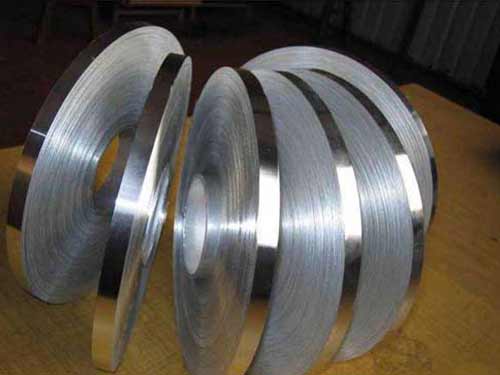
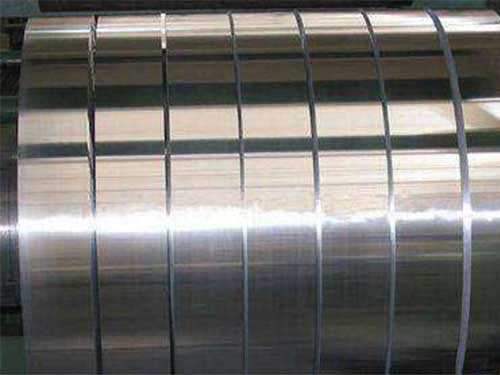
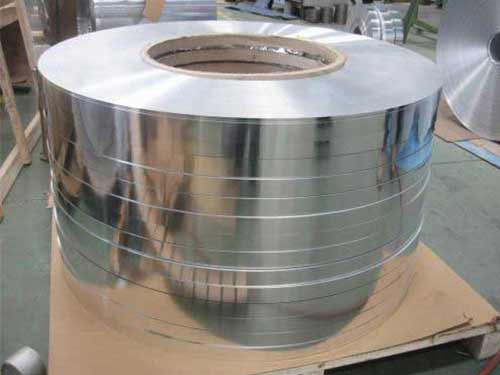
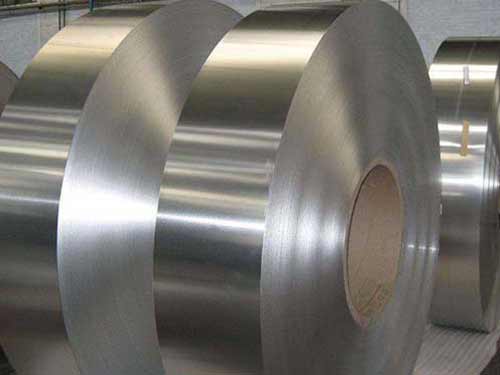
1060 1050 1100 Aluminum Strip Coils
1060, 1050, and 1100 aluminum strip coils belong to the commercially pure aluminum family, yet their value is not simply defined by a high aluminum percentage. Their real advantage appears on the production line: clean stamping, stable bending, reliable electrical behavior, bright finishing, and economical conversion into narrow strips.
For buyers of aluminum strip, these grades are often selected when corrosion resistance, thermal conductivity, electrical conductivity, and formability matter more than high structural strength. They are widely used in transformer windings, cable shielding, lighting parts, heat-transfer components, appliance trim, packaging closures, signage, cookware, and deep-drawn stamped products.
The Difference Is in the Purity Margin
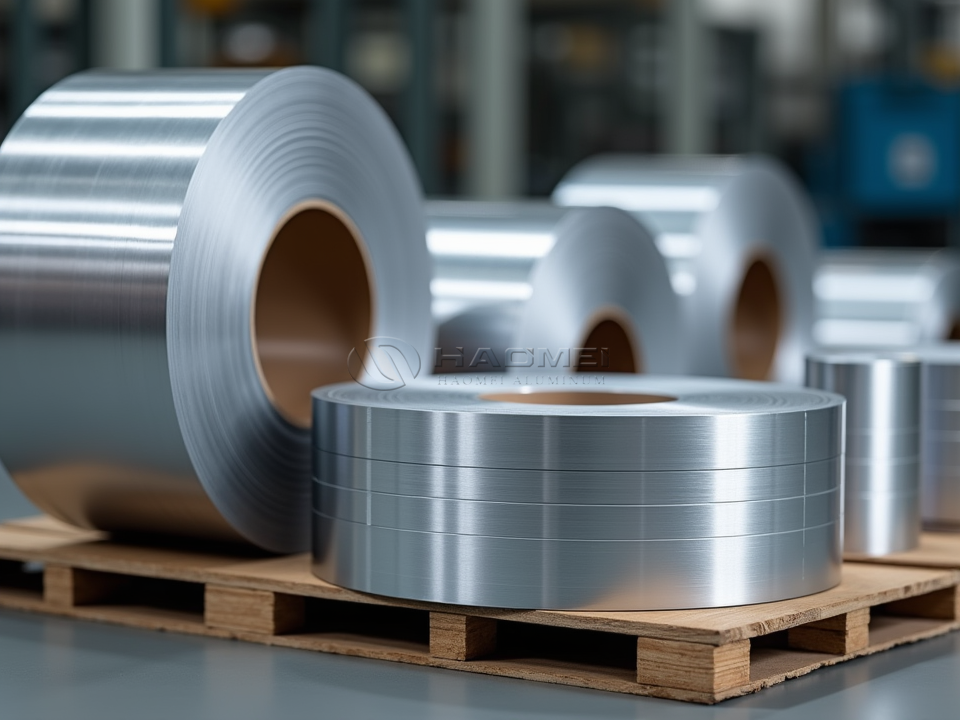
The grade number indicates minimum aluminum content. 1050 contains at least 99.50% aluminum, 1060 contains at least 99.60%, and 1100 contains at least 99.00%. This may look like a small difference, but alloying limits influence conductivity, softness, surface appearance, and behavior during deformation.
1050 aluminum strip coil is a balanced choice for general fabrication. It offers strong corrosion resistance and excellent workability at a practical cost. It is commonly used for reflectors, lamp components, decorative panels, cooking utensils, and general stamping.
1060 aluminum strip coil has slightly higher aluminum purity than 1050. It is especially suitable where electrical and thermal conductivity receive greater attention, such as transformer strips, cable-related components, heat sinks, and electrical bus applications. Customers seeking a dependable material for electrical conversion can explore 1050 / 1060 Aluminum Strip for common thicknesses and coil forms.
1100 aluminum strip coil has a different character. Although it has a lower minimum aluminum content than 1050 and 1060, its controlled copper content can provide useful strength while preserving excellent formability and corrosion resistance. It is often chosen for deep drawing, chemical equipment parts, nameplates, fin stock, kitchenware, and decorative applications.
Chemical Composition Requirements
Chemical composition should be verified through mill test certification because limits can vary slightly by applicable standard and product specification. The values shown are commonly used composition ranges for wrought aluminum alloys.
| Alloy | Al, Min. % | Si + Fe, Max. % | Cu, % | Mn, Max. % | Mg, Max. % | Zn, Max. % | Ti, Max. % |
|---|---|---|---|---|---|---|---|
| 1050 | 99.50 | 0.40 | 0.05 | 0.05 | 0.05 | 0.05 | 0.03 |
| 1060 | 99.60 | 0.35 | 0.05 | 0.03 | 0.03 | 0.05 | 0.03 |
| 1100 | 99.00 | 0.95 | 0.05-0.20 | 0.05 | 0.05 | 0.10 | 0.05 |
The remainder consists mainly of aluminum, subject to limits on individual and total trace elements. The low impurity content of 1050 and 1060 supports their bright surface potential and conductivity. In 1100, the controlled copper addition contributes to a slightly different balance of strength and processing behavior.
Temper: The Condition That Shapes the Coil
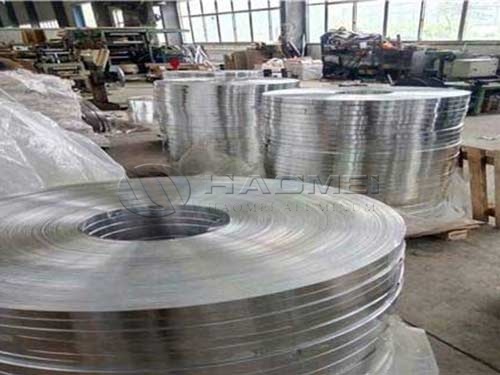
For pure aluminum strip coils, temper has as much influence on performance as alloy grade. Annealed tempers are soft and highly formable, while strain-hardened tempers provide improved resistance to denting and deformation.
The most requested tempers include O, H12, H14, H16, H18, H22, and H24. O temper is fully annealed material with maximum ductility. It is preferred for deep drawing, spinning, embossing, intricate bending, and parts with tight forming radii. H14 is half-hard, giving a useful middle ground between formability and strength. H18 is full-hard and generally selected for products requiring flatness, stiffness, or spring resistance rather than severe forming.
| Typical Temper | General Condition | Suitable Processing |
|---|---|---|
| O | Fully annealed, soft | Deep drawing, spinning, bending, stamping |
| H12 | Quarter-hard | Light forming and roll forming |
| H14 | Half-hard | General stamping, trim, appliance components |
| H16 | Three-quarter hard | Applications needing higher stiffness |
| H18 | Full-hard | Flat parts, rigid profiles, protective covers |
| H22 / H24 | Strain hardened and partially annealed | Improved forming with moderate strength |
Material selection should start with the actual manufacturing operation. A lamp cap that is deeply drawn needs a different coil condition from a narrow strip used in rigid edging. Choosing a harder temper to improve strength can create edge cracking during stamping; choosing an overly soft temper can cause distortion during assembly.
Standard Parameters for Aluminum Strip Coils
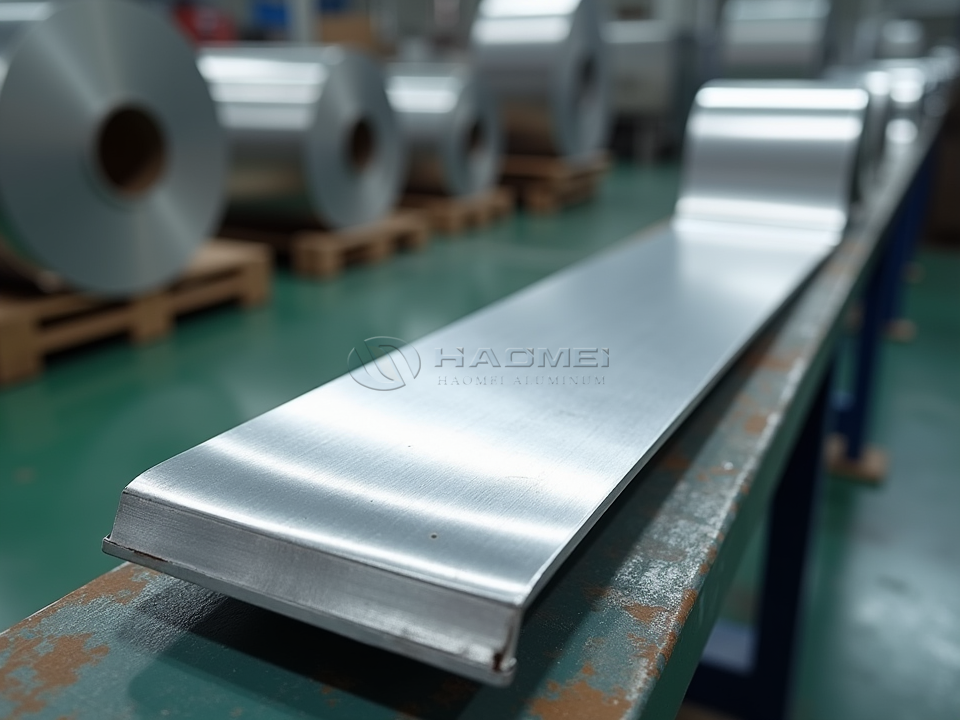
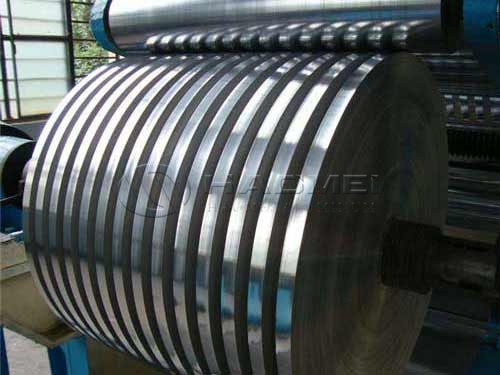
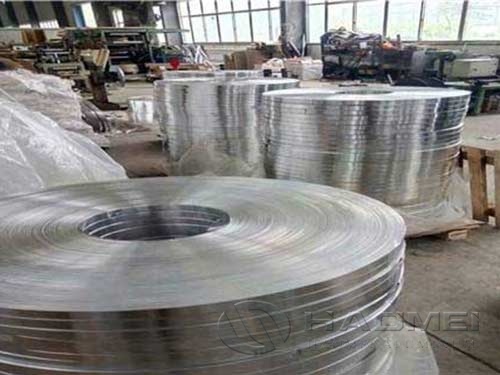
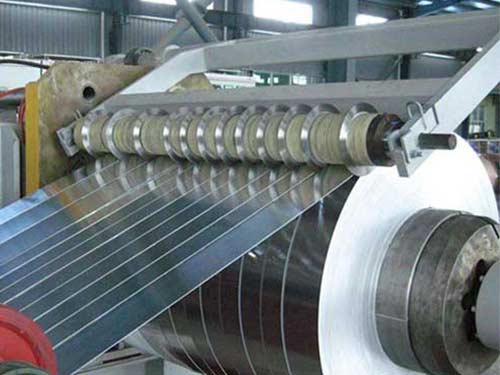
Aluminum strip is usually produced by slitting wide rolled coil into narrower widths. This means edge quality, burr control, camber, coil set, and width tolerance can be as important as nominal thickness.
| Parameter | Common Supply Range | Notes |
|---|---|---|
| Thickness | 0.10-6.00 mm | Thin gauges are common for electrical, packaging, and stamped parts |
| Width | 10-1,600 mm | Narrow slit strips can be supplied for automated feeding |
| Coil weight | 100-5,000 kg | Depends on inner diameter, width, and logistics limits |
| Inner diameter | 150 mm, 300 mm, 400 mm, 500 mm, 508 mm | Selected to suit processing equipment |
| Surface | Mill finish, bright, brushed, embossed, coated | Protective film can be added when needed |
| Edge condition | Slit edge, deburred edge, rounded edge | Match edge condition to stamping or winding requirements |
For transformer winding and electrical applications, the coil must unwind smoothly and retain consistent thickness across its width. For stamped consumer goods, surface cleanliness and low burrs help reduce tool wear and improve finished-part appearance. For decorative products, a bright, uniform mill finish is usually more valuable than maximum tensile strength.
Implementation Standards and Inspection Practice
1060, 1050, and 1100 aluminum strip coils can be supplied in accordance with internationally recognized requirements, depending on the destination market and customer drawings. Frequently referenced standards include ASTM B209 for aluminum sheet and plate products, EN 485 for tolerances and mechanical properties of wrought aluminum sheet and strip, EN 573 for chemical composition and alloy designation, and GB/T 3880 for aluminum and aluminum alloy sheets and strips.
A dependable purchase specification normally confirms alloy, temper, thickness tolerance, width tolerance, coil inner diameter, surface condition, edge condition, packaging method, and inspection documentation. Mill test certificates should state chemical composition, mechanical test data where required, dimensions, temper, coil identification, and applicable standard.
Practical Selection for Real Production Lines
Choose 1060 when conductivity, purity, and soft-forming behavior are priorities. It is an effective option for electrical strips, transformer conductors, heat-transfer components, and corrosion-resistant fabricated parts.
Choose 1050 when you need an economical, versatile strip for general metalworking. It performs well in bending, pressing, spinning, decorative finishing, and low-load fabricated components.
Choose 1100 when the process involves deeper drawing or when slightly improved strength from copper-bearing commercially pure aluminum is helpful. Its long history in cookware, lighting, chemical handling, and formed sheet parts makes it a practical industrial grade.
When a project requires substantially greater strength or improved resistance in demanding environments, a different alloy family may be more appropriate. For example, Alloy Aluminum Strip options can provide manganese- or magnesium-containing grades designed for more demanding mechanical service.
A Coil Is More Than a Rolled Metal Product
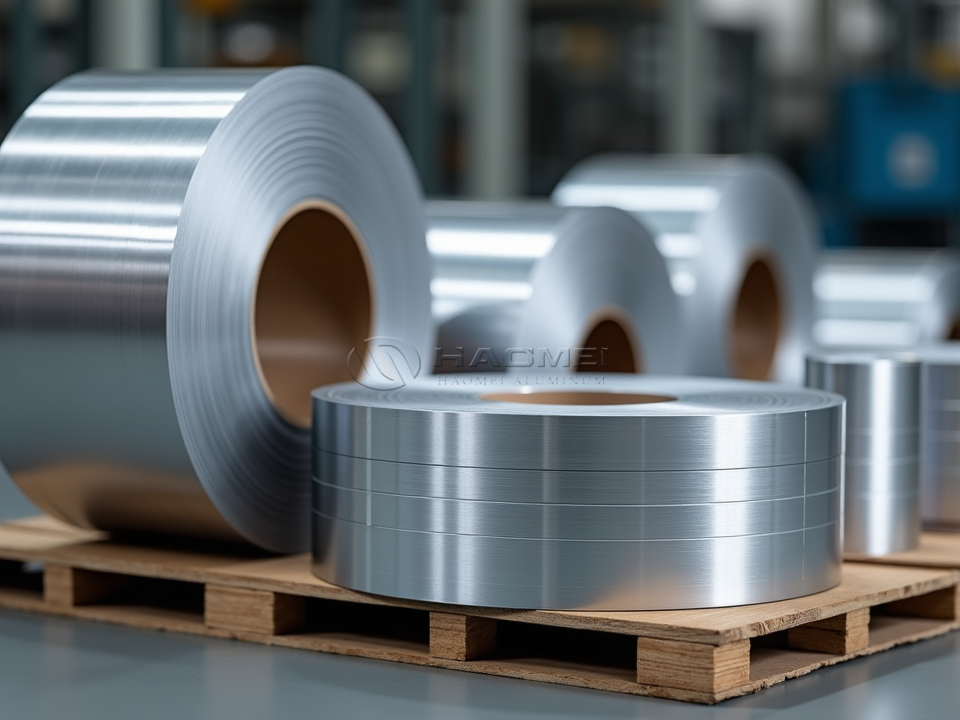
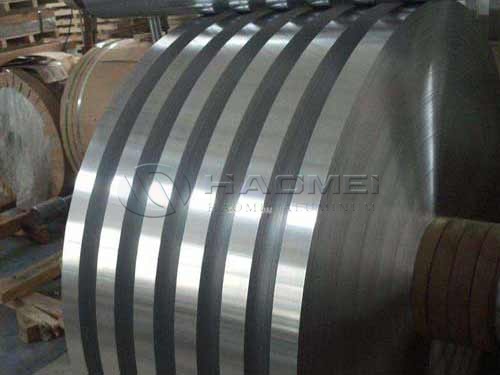
A good 1060, 1050, or 1100 aluminum strip coil arrives ready to run: evenly wound, correctly slit, protected from moisture, free of damaging edge burrs, and matched to the customer's press, winding machine, or roll-forming line. The alloy defines the material foundation, but temper, dimensions, tolerances, surface treatment, and packaging determine whether that foundation becomes efficient production.
For this reason, commercially pure aluminum strip is best selected as a processing material rather than merely a metal grade. When the coil condition matches the final operation, these aluminum grades deliver clean fabrication, dependable corrosion resistance, and consistent value across high-volume manufacturing.