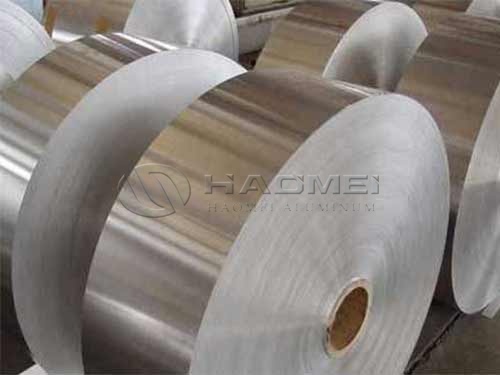
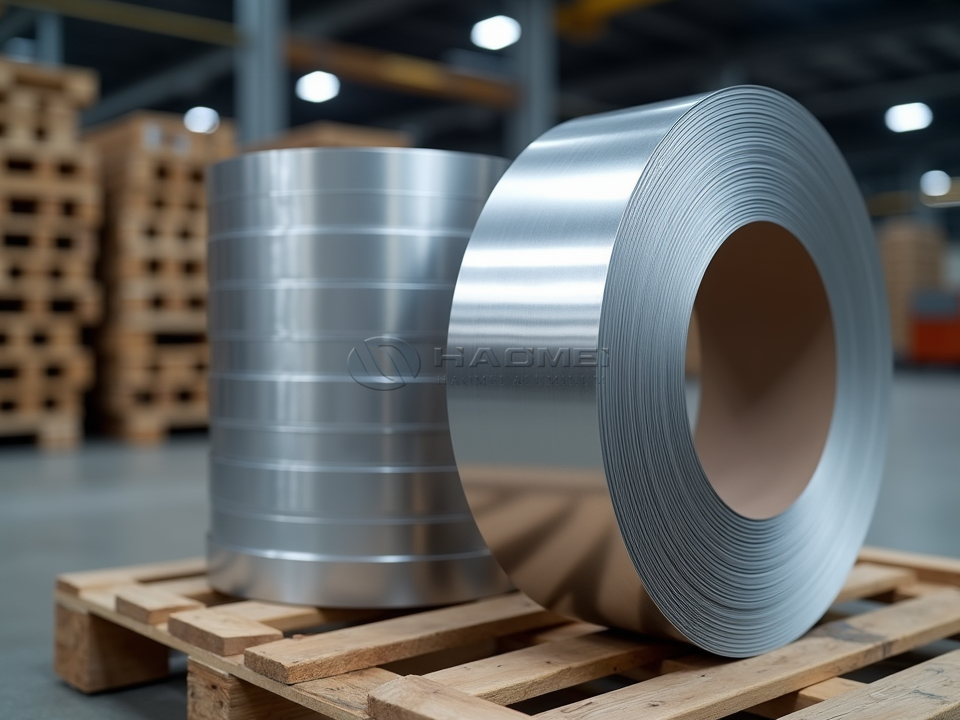
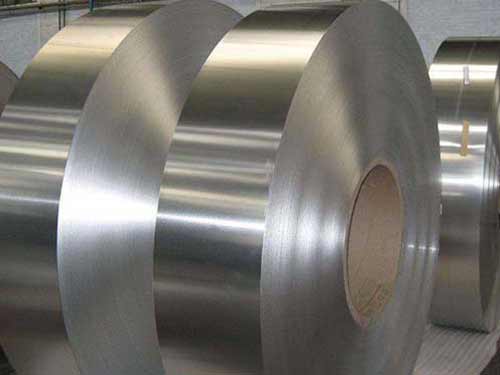
1000 Series Aluminum Strip Coils
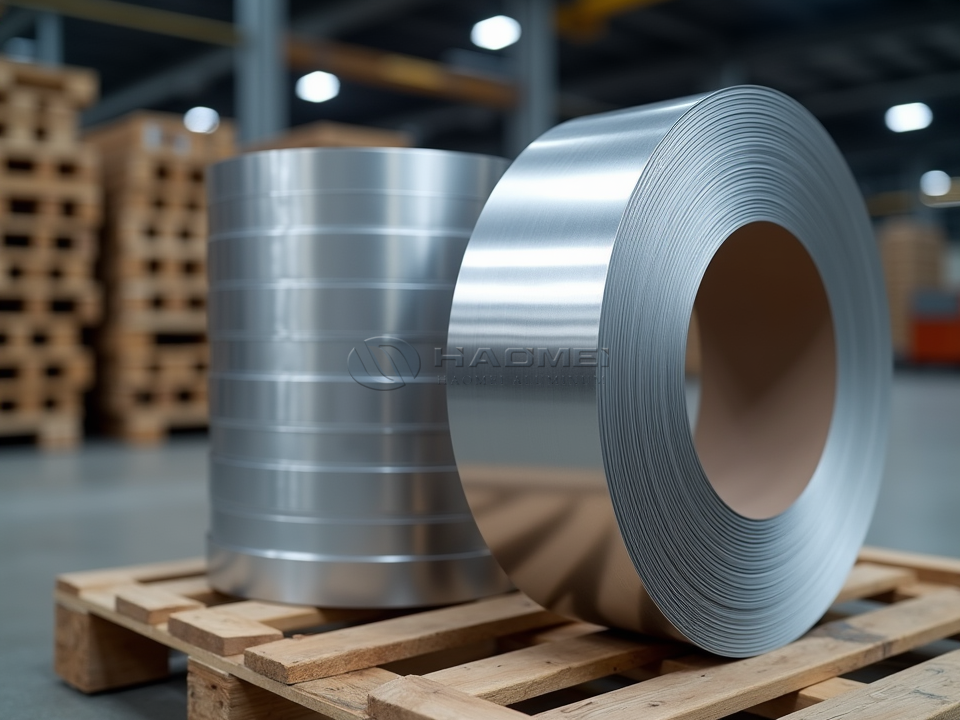
1000 Series aluminum strip coils are commercially pure aluminum products valued for high electrical conductivity, thermal transfer, corrosion resistance, light weight, and excellent forming performance. Produced from aluminum with a minimum purity generally ranging from 99.0% to 99.7%, these coils are widely used where conductivity, reflectivity, ductility, or economical fabrication matter more than high structural strength.
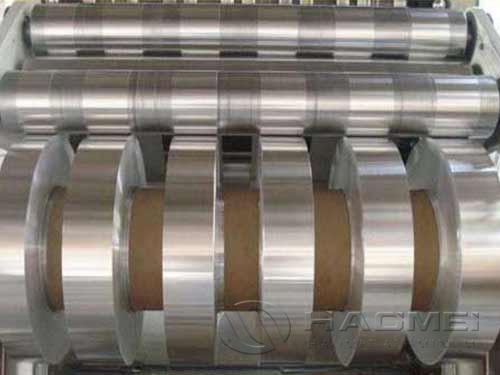
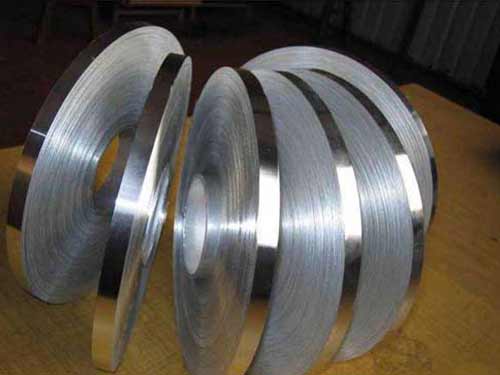
Common grades include 1050, 1060, 1070, and 1100 aluminum strip. They are supplied in rolled coils and can be slit into narrow widths for transformers, cable wrapping, lighting components, stamped parts, insulation systems, heat-transfer products, and packaging applications.
Material Characteristics and Functions
The 1000 Series is a non-heat-treatable aluminum family. Strength is adjusted primarily by cold rolling, while softness and formability are restored through annealing. Its clean aluminum-rich structure provides dependable workability for bending, drawing, punching, embossing, and roll forming.
| Function | Performance Benefit | Typical Use |
|---|---|---|
| Electrical conduction | Low electrical resistance supports efficient current transfer | Transformer windings, cable shielding, busbar components |
| Heat conduction | Transfers heat efficiently and evenly | Heat exchangers, lighting reflectors, thermal parts |
| Corrosion resistance | Natural oxide film protects the surface in many environments | Insulation cladding, decorative trim, appliance parts |
| Deep drawing and stamping | Soft tempers form without frequent cracking | Lamp caps, cookware components, drawn shells |
| Light reflection | Bright rolled or polished surfaces provide good reflectance | Lighting fixtures, reflectors, decorative panels |
| Low weight | Reduces handling and finished-product mass | Electrical equipment, packaging, lightweight fabrications |
For applications requiring reliable conductivity and flexible processing, 1050 / 1060 Aluminum Strip is commonly selected. Grade choice depends on required purity, conductivity, mechanical condition, thickness, and final forming method.
Common Alloy Grades
| Alloy Grade | Minimum Aluminum Content | General Character | Suitable Applications |
|---|---|---|---|
| 1050 | 99.50% | High ductility, good conductivity, smooth surface quality | Transformer strip, lamp caps, insulation, stamping |
| 1060 | 99.60% | Higher aluminum purity with excellent electrical and thermal behavior | Cable strip, conductive parts, heat-transfer products |
| 1070 | 99.70% | Very high purity and conductivity | Electrical conductors, capacitor components, specialty electronics |
| 1100 | 99.00% | Commercially pure aluminum with slightly higher copper allowance | Chemical equipment, decorative parts, deep-drawn products |
Chemical Composition
Chemical limits can vary slightly by national specification, product form, and customer agreement. The values shown are typical mass percentages for commonly supplied 1000 Series strip coil grades.
| Alloy | Al Min. | Si + Fe Max. | Cu | Mn Max. | Mg Max. | Zn Max. | Ti Max. | Other Elements Max. |
|---|---|---|---|---|---|---|---|---|
| 1050 | 99.50 | 0.40 | 0.05 max. | 0.05 | 0.05 | 0.05 | 0.03 | 0.03 each, 0.10 total |
| 1060 | 99.60 | 0.35 | 0.05 max. | 0.03 | 0.03 | 0.05 | 0.03 | 0.03 each, 0.10 total |
| 1070 | 99.70 | 0.20 | 0.04 max. | 0.03 | 0.03 | 0.04 | 0.03 | 0.03 each, 0.10 total |
| 1100 | 99.00 | 0.95 | 0.05-0.20 | 0.05 | 0.05 | 0.10 | - | 0.05 each, 0.15 total |
A higher aluminum percentage generally improves conductivity and reflectivity. Small quantities of iron, silicon, copper, and other elements influence strength, rolling response, surface appearance, and electrical performance.
Temper Conditions and Mechanical Performance
1000 Series aluminum strip coils are supplied in soft, half-hard, hard, and intermediate tempers. The right temper should match the subsequent processing route. O temper is preferred for deep drawing and complex forming, while H14 or H24 is frequently selected for general stamping, roll forming, and stable handling.
| Temper | Condition | Relative Strength | Formability | Common Uses |
|---|---|---|---|---|
| O | Fully annealed, soft | Low | Excellent | Deep drawing, bending, lamp caps, drawn parts |
| H12 | Quarter hard | Low to medium | Very good | Light forming, insulation strip |
| H14 | Half hard | Medium | Good | Stamping, general industrial strip |
| H16 | Three-quarter hard | Medium to high | Moderate | Trim, formed sections, rigid components |
| H18 | Full hard | High | Limited | Flat products, rigid applications, further processing |
| H24 | Strain hardened and partially annealed | Medium | Good | Appliance panels, stamped and shaped parts |
| Alloy and Temper | Tensile Strength, MPa | Yield Strength, MPa | Elongation | Typical Electrical Conductivity |
|---|---|---|---|---|
| 1050-O | 60-95 | 20 min. | 20% min. | Approx. 60% IACS |
| 1050-H14 | 85-115 | 65 min. | 3% min. | Approx. 60% IACS |
| 1060-O | 60-95 | 20 min. | 20% min. | Approx. 61% IACS |
| 1060-H14 | 85-115 | 65 min. | 3% min. | Approx. 61% IACS |
| 1070-O | 55-90 | 20 min. | 20% min. | Approx. 62% IACS |
| 1100-O | 75-110 | 20 min. | 20% min. | Approx. 59% IACS |
Mechanical values are indicative and change with thickness, coil width, test direction, production route, and applicable standard. Project specifications should define required tensile range, elongation, conductivity, and surface condition before production.
Technical Specifications for Aluminum Strip Coils
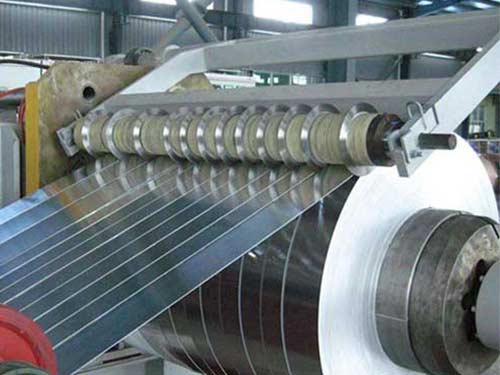
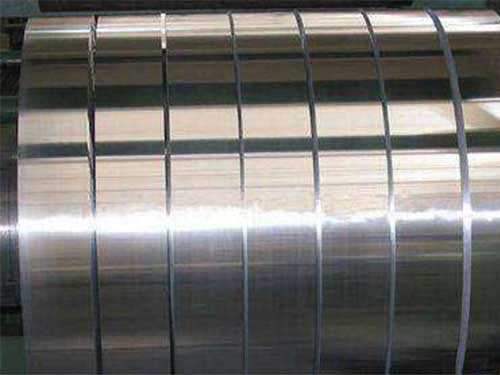
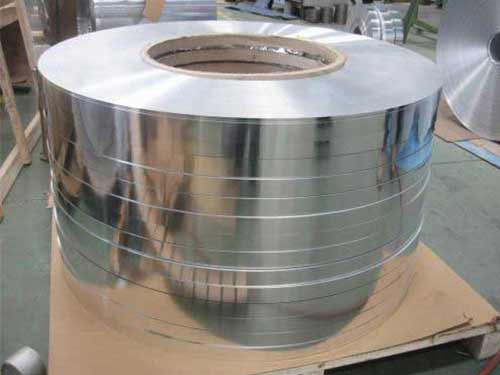
1000 Series strip can be produced in broad master coils and precision-slit narrow coils. Tolerance capability depends on thickness, width, edge condition, flatness requirements, and coil weight.
| Parameter | Common Supply Range | Notes |
|---|---|---|
| Alloy | 1050, 1060, 1070, 1100 | Other commercial-purity grades available by agreement |
| Thickness | 0.10-6.00 mm | Thin gauges are widely used for electrical and stamping strip |
| Width | 10-1,650 mm | Narrow slit coils can be prepared for winding and cable applications |
| Coil inner diameter | 150 mm, 300 mm, 400 mm, 500 mm, 505 mm, 610 mm | Selected to suit customer equipment |
| Coil weight | 100-5,000 kg | Depends on gauge, width, handling method, and transport limits |
| Surface finish | Mill finish, bright, brushed, embossed, coated | Protective film may be added for appearance-sensitive surfaces |
| Edge condition | Mill edge, slit edge, deburred edge | Burr control is important for winding and precision stamping |
| Flatness | Standard or controlled flatness | Defined according to end-use requirements |
Standards and Inspection Requirements
1000 Series aluminum strip coils can be manufactured and tested in accordance with internationally recognized material standards. The final requirement should be confirmed on the purchase specification, especially for electrical, food-contact, architectural, or safety-sensitive applications.
| Standard | Scope |
|---|---|
| ASTM B209 | Aluminum and aluminum-alloy sheet and plate requirements, often referenced for strip |
| EN 485 | Tolerances, mechanical properties, and technical delivery conditions for aluminum sheet, strip, and plate |
| EN 573 | Aluminum alloy designation and chemical composition |
| JIS H4000 | Japanese Industrial Standard for aluminum and aluminum alloy sheet, strip, and plate |
| GB/T 3880 | Chinese standard covering aluminum and aluminum-alloy sheet and strip |
| ASTM B479 | Annealed aluminum and aluminum-alloy foil and strip for flexible barrier and related uses |
Quality inspection commonly includes chemical composition analysis, thickness measurement, width measurement, tensile testing, surface examination, coil geometry inspection, edge-burr evaluation, and conductivity testing when specified.
Applications Across Industries
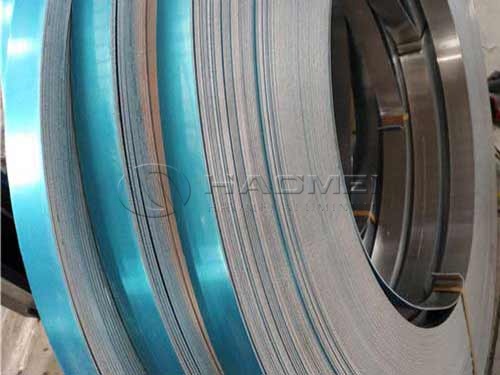
The balanced combination of purity, ductility, and conductivity gives 1000 Series aluminum strip coils a broad industrial role. In electrical equipment, 1050 and 1060 strip are used for transformer windings, conductor layers, cable shielding, and electromagnetic components. Smooth edges and consistent gauge help maintain stable winding tension and reduce insulation damage.
In lighting, soft aluminum strip is stamped or deep drawn into lamp caps, reflector components, and housings. Its high reflectivity can improve light distribution after polishing, anodizing, or coating. In packaging and insulation systems, thin aluminum strip provides moisture resistance, heat reflection, and a lightweight barrier layer.
| Industry | Typical Product Form | Preferred Features |
|---|---|---|
| Electrical | Transformer strip, conductor strip, cable wrap | Conductivity, burr control, stable dimensions |
| Lighting | Lamp caps, reflector parts, housings | Formability, reflectivity, surface finish |
| HVAC and insulation | Cladding strip, thermal barrier layers | Corrosion resistance, heat reflection, low weight |
| Packaging | Closure strip, sealing components, protective wrap | Clean surface, ductility, barrier performance |
| Appliance and decoration | Trim, panels, nameplates | Bright appearance, embossing response, corrosion resistance |
| General fabrication | Stamped parts, bent profiles, drawn shells | Easy processing and economical material cost |
Selecting the Right Coil
A well-matched 1000 Series aluminum strip coil begins with the end-use process. Select O temper for demanding drawing operations, H14 or H24 for parts needing more rigidity, and high-purity 1060 or 1070 when electrical performance is the priority. Specify alloy, temper, thickness, width, coil ID, allowable burr, surface finish, packaging method, and relevant standard to support consistent production results.
With adaptable coil dimensions and dependable processing behavior, 1000 Series aluminum strip coils remain a practical material choice for electrical, thermal, decorative, and formed aluminum components.