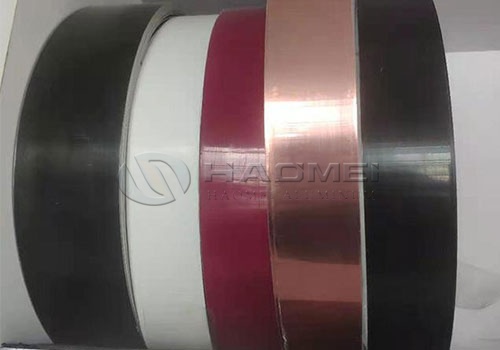
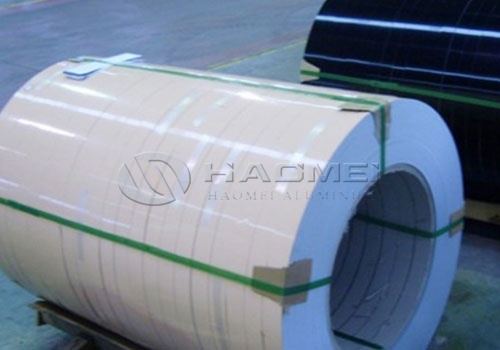
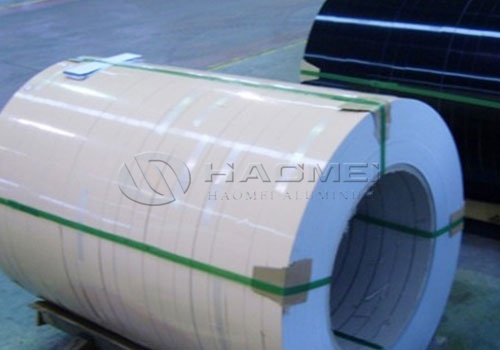
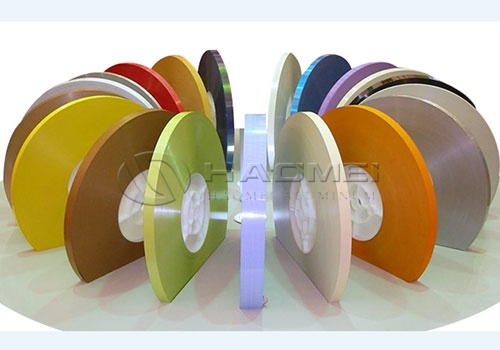
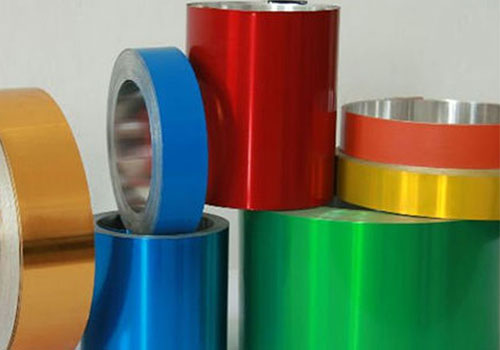
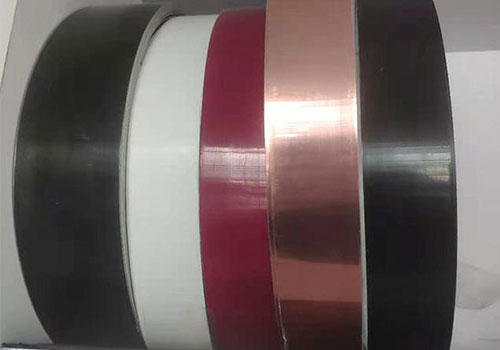
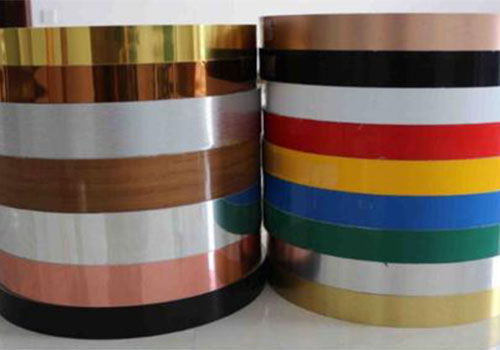
Thin Coated Al Aluminum Strips
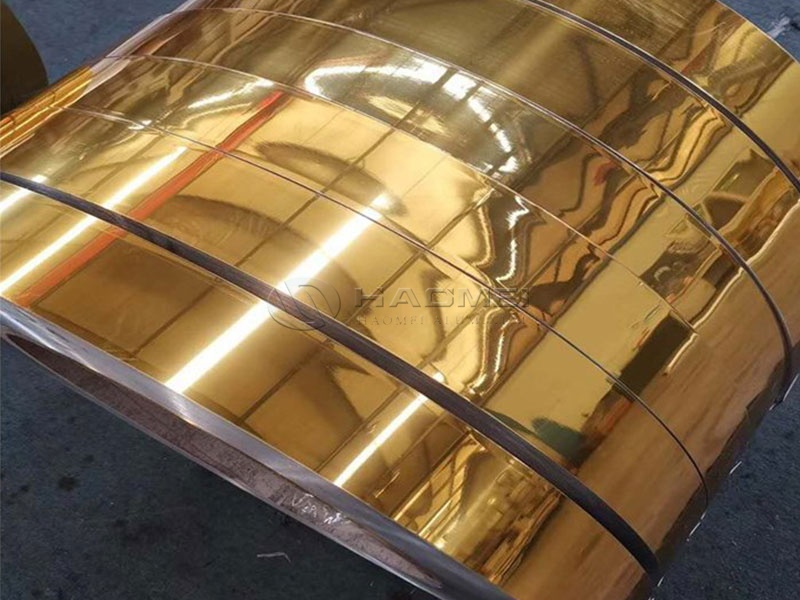
Thin coated Al aluminum strips are often selected for their appearance, but their greater value lies in how the coating changes the working behavior of thin aluminum. A bare strip is lightweight, conductive, formable, and corrosion resistant. Once a controlled coating system is applied, it becomes a material that can also manage color, reflectivity, friction, insulation, chemical exposure, and visual consistency.
This makes thin coated aluminum strip more than a decorative coil product. In many finished goods, it acts as the visible skin, protective barrier, and forming substrate at the same time. It can be roll formed into profiles, stamped into components, slit into narrow bands, wrapped around insulation, or used as a clean-facing finish for consumer products.
Why Thin Gauge Changes the Material's Role
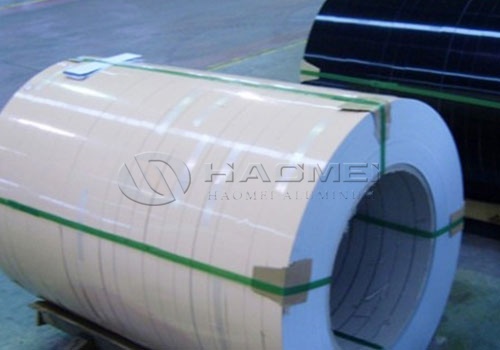
Thin coated aluminum strips commonly range from 0.10 mm to 0.80 mm in thickness. At this gauge, the strip responds quickly to bending and surface pressure. The coating must therefore move with the aluminum rather than merely sit on it. A coating that is too brittle may crack at a bend radius. A coating that is too soft may scratch during slitting, stamping, or protective-film removal.
The most effective product design considers the strip as a layered system:
- Aluminum alloy provides strength, formability, thermal conductivity, and low weight.
- Pretreatment improves adhesion and reduces the risk of under-film corrosion.
- Primer creates a stable bond between the metal and topcoat.
- Topcoat provides color, gloss, weather resistance, stain resistance, or surface hardness.
- Optional back coating supports processing, reduces abrasion, or protects the reverse side.
For this reason, choosing a Coated Aluminum Strip requires more than selecting a color card. Coil thickness, alloy family, temper, paint chemistry, and forming method should be matched before production begins.
Typical Parameters for Thin Coated Aluminum Strip
| Parameter | Common Range or Condition | Practical Effect |
|---|---|---|
| Base metal thickness | 0.10-0.80 mm | Determines stiffness, drawability, and finished weight |
| Width | 10-1,600 mm | Narrow slit strips or wide master coils can be supplied |
| Alloy | 1050, 1060, 1100, 3003, 3004, 3105, 5052 | Balances formability, strength, and corrosion resistance |
| Temper | O, H12, H14, H16, H18, H24, H26 | Controls hardness and bending behavior |
| Coating thickness | 10-25 μm, customized when required | Affects color depth, scratch resistance, and durability |
| Surface finish | Glossy, matte, textured, embossed, brushed-look | Supports decorative and functional surface needs |
| Coil inner diameter | 150 mm, 300 mm, 405 mm, 508 mm | Must suit customer decoiling equipment |
| Coating side | Single side or double side | Chosen according to exposure and assembly design |
Thickness tolerance, width tolerance, camber, edge condition, and coil set should be defined in the purchase specification. For narrow strips used in automated feeding equipment, burr control is especially important. A rough slit edge may damage tools, disturb winding, or create handling risks.
Alloy and Temper Selection in Real Processing
The alloy and temper determine whether a thin strip becomes a smooth formed part or a costly source of cracks and springback.
The 1000 series, such as 1050, 1060, and 1100, is known for high aluminum content, excellent workability, and good electrical and thermal conductivity. These grades suit reflective panels, lighting components, cable-related uses, decorative trim, and insulation cladding where deep strength is not the primary demand.
The 3000 series, particularly 3003, 3004, and 3105, contains manganese and offers higher strength than commercially pure aluminum. It is frequently used for building trim, appliance panels, roofing accessories, shutter components, and HVAC-related parts. H14 and H24 tempers are common choices where moderate rigidity is needed while retaining practical bending performance.
The 5000 series, such as 5052, contains magnesium and is selected when improved strength and corrosion resistance are required. It is suitable for demanding indoor or semi-exposed environments, although forming conditions should be checked carefully because harder tempers may require a larger bend radius.
Soft O temper is preferred for tight bending, spinning, or more complex stamping. H14 offers a useful middle ground for roll forming and general fabrication. H18 provides a firmer strip for flat panels and applications where shape retention matters more than severe forming.
Chemical Composition Reference
The chemical composition of the base aluminum affects strength, corrosion behavior, and processing response. Values shown are typical maximum limits or nominal ranges, depending on the applicable alloy specification.
| Alloy | Si | Fe | Cu | Mn | Mg | Zn | Al |
|---|---|---|---|---|---|---|---|
| 1050 | ≤0.25% | ≤0.40% | ≤0.05% | ≤0.05% | ≤0.05% | ≤0.05% | ≥99.50% |
| 1060 | ≤0.25% | ≤0.35% | ≤0.05% | ≤0.03% | ≤0.03% | ≤0.05% | ≥99.60% |
| 1100 | Si+Fe ≤0.95% | Included | 0.05-0.20% | ≤0.05% | - | ≤0.10% | ≥99.00% |
| 3003 | ≤0.60% | ≤0.70% | 0.05-0.20% | 1.0-1.5% | - | ≤0.10% | Balance |
| 3105 | ≤0.60% | ≤0.70% | ≤0.30% | 0.30-0.80% | 0.20-0.80% | ≤0.40% | Balance |
| 5052 | ≤0.25% | ≤0.40% | ≤0.10% | ≤0.10% | 2.2-2.8% | ≤0.10% | Balance |
The coating itself also has a chemical function. Polyester and PE systems are widely used for indoor panels, appliance trim, packaging-related components, and ordinary architectural interiors. They provide economical color coverage and good forming behavior. Where stronger resistance to ultraviolet radiation, humidity, industrial pollution, and long-term outdoor exposure is needed, PVDF Coated Aluminum Strip is often the better specification.
Functions Across Different Applications
In HVAC and insulation systems, thin coated aluminum strip provides a clean exterior finish while protecting the metal from condensation-related staining and handling marks. Its low weight supports efficient installation, while the paint film helps maintain a consistent appearance across long runs of duct trim or insulation jacketing.
For lighting products, aluminum's reflectivity and heat dissipation are valuable. White-coated strips can improve visual brightness in housings, while matte finishes reduce glare in selected fixtures. The thin gauge allows efficient stamping into channels, reflectors, and decorative frames.
In household appliances, the strip may become an edge band, control-panel detail, ventilation grille, or visible trim element. Here, scratch resistance, fingerprint behavior, color consistency, and bend adhesion often matter as much as corrosion protection.
Electronics and electrical equipment benefit from aluminum's thermal conductivity and low mass. Coated strips can be used in non-critical housings, decorative covers, cable protection systems, and thermal management structures where an electrically isolating surface layer is desired. Electrical requirements must always be evaluated separately, since coating thickness and chemistry affect dielectric behavior.
For architectural components, color coated strip is commonly roll formed into shutters, fascia elements, ceiling accessories, rainwater goods, and interior profiles. A Color Coated Aluminum Strip can provide stable color matching across multiple fabricated parts while reducing the need for post-forming painting.
Standards and Quality Controls
Production and supply requirements may be aligned with ASTM B209 for aluminum sheet and strip, EN 485 for wrought aluminum strip tolerances and mechanical properties, and GB/T 3880 for aluminum and aluminum alloy sheet and strip. Prepainted products for building-related applications may also reference EN 1396, while coating performance tests can follow EN 13523 methods.
Important inspection items include coating thickness, color difference, gloss, pencil hardness, T-bend performance, impact resistance, adhesion, solvent resistance, salt spray behavior, and boiling-water resistance where required. For formed products, bend testing is especially informative because it reveals whether the paint film remains bonded during real fabrication.
Thin coated Al aluminum strips perform best when specifications reflect the final operation. A strip intended for tight roll forming needs different temper and coating flexibility than a flat decorative panel. When alloy, temper, pretreatment, and coating system work together, thin aluminum becomes a reliable finished surface rather than simply a lightweight metal substrate.