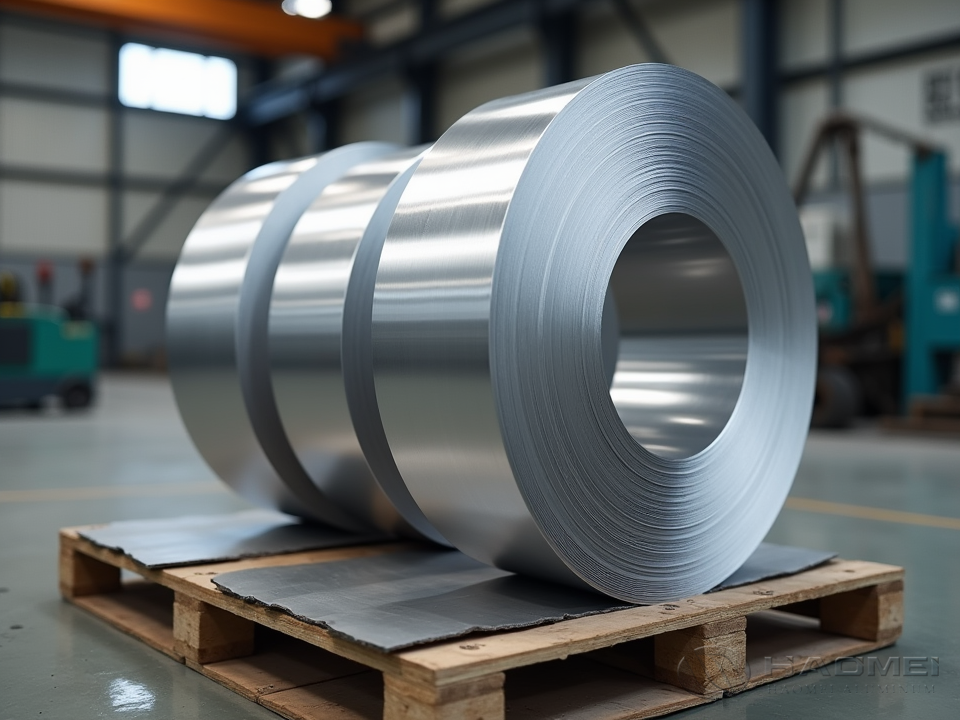
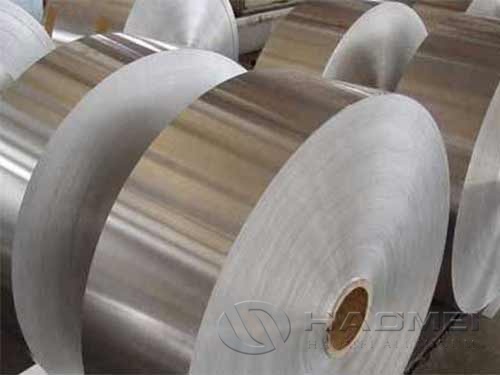
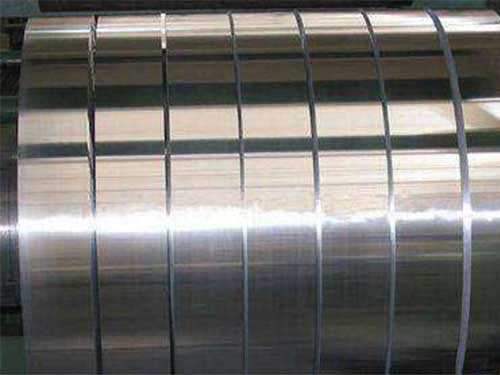
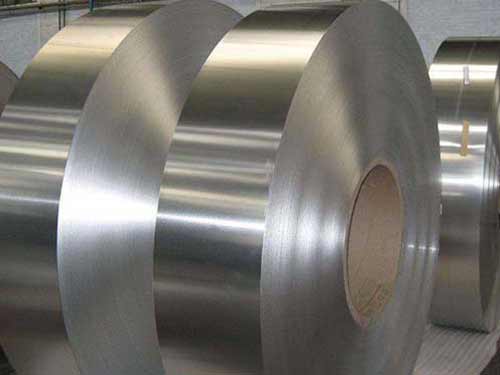
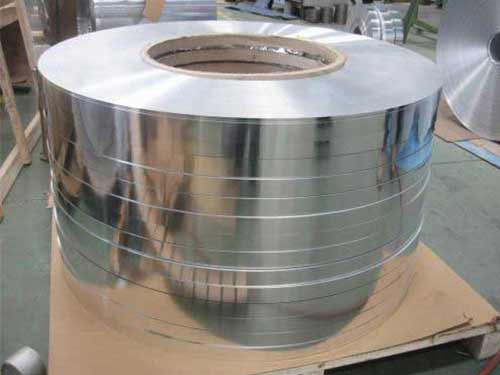
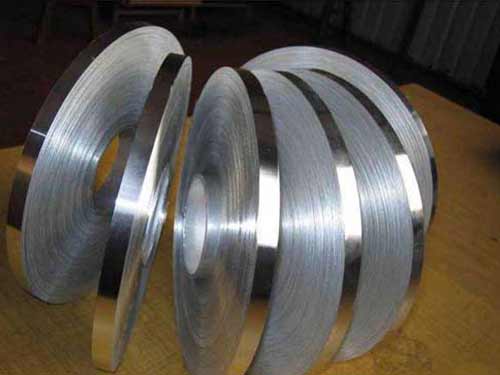
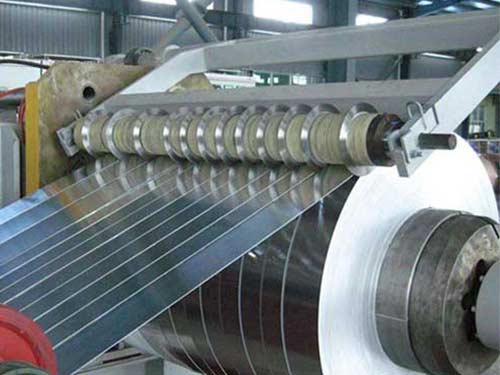
1060, 1050, 1070 1100 Aluminum Coil Strip
1060, 1050, 1070 and 1100 aluminum coil strip belong to the 1xxx series of commercially pure aluminum materials. With aluminum content from 99.0% to 99.7%, these strips offer high electrical and thermal conductivity, excellent corrosion resistance, low density, bright surface quality and reliable forming performance.
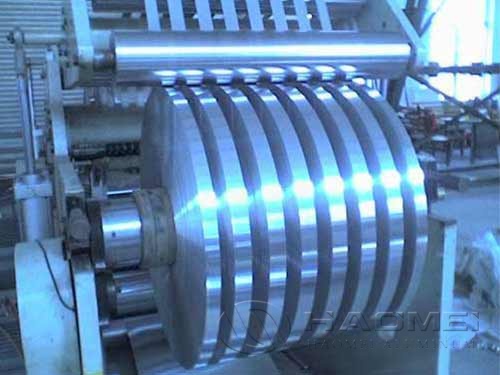
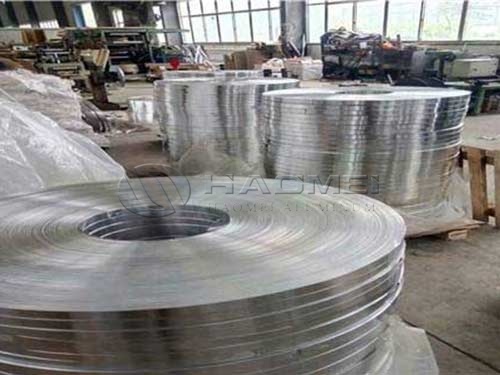
They are widely slit from rolled aluminum coil into narrow or medium-width strips for transformers, cable shielding, lamp caps, heat-transfer parts, packaging, stamping, chemical equipment and decorative components. Their non-heat-treatable structure means strength is controlled primarily by cold-working temper rather than solution heat treatment.
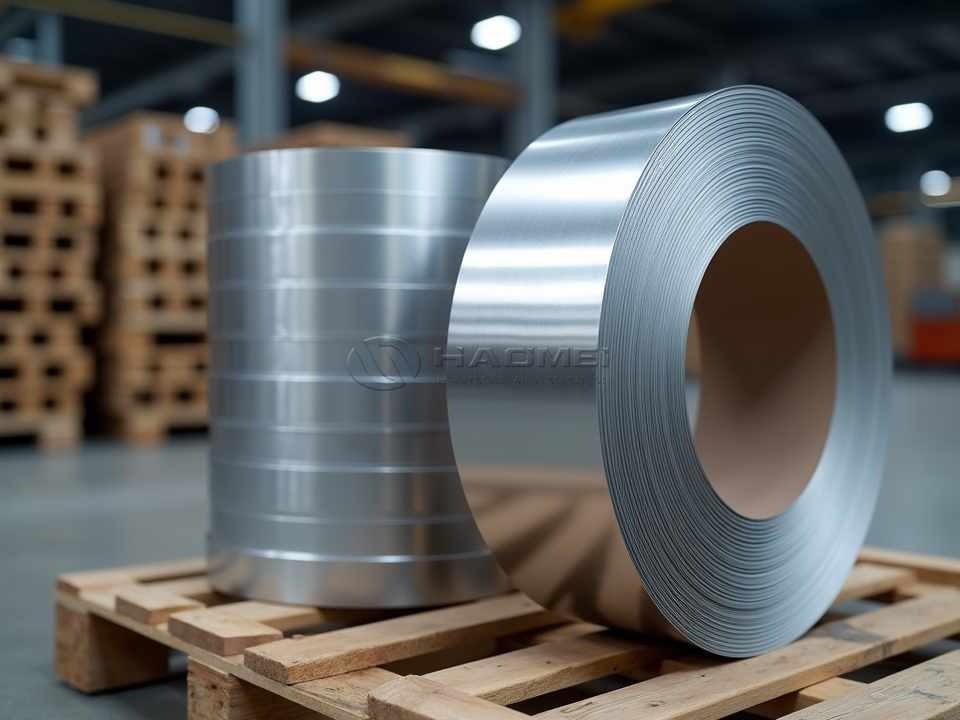
Material Characteristics and Functions
The main function of 1xxx aluminum strip is to deliver a lightweight, conductive and formable metal base for industrial conversion. Compared with higher-alloy aluminum grades, 1050, 1060 and 1070 provide higher purity and conductivity. Grade 1100 contains a controlled copper addition that gives slightly improved strength while retaining strong workability and corrosion resistance.
| Feature | Performance Benefit | Typical Value to Customers |
|---|---|---|
| High aluminum purity | Improves electrical and thermal transfer | Suitable for conductors, transformer windings and heat exchangers |
| Low density | Reduces component weight | Approx. 2.70 g/cm³ |
| Excellent ductility | Supports bending, deep drawing and spinning | Lower risk of cracking in formed parts |
| Natural corrosion resistance | Aluminum oxide film protects the surface | Suitable for humid and general industrial environments |
| Reflective surface | Supports lighting and decorative uses | Available in mill finish, bright finish or coated finish |
| Recyclability | Supports lower-material-waste production | Fully recyclable aluminum alloy |
For projects focused on everyday electrical and forming applications, 1050 / 1060 Aluminum Strip provides an effective combination of purity, processability and cost control.
Available Alloy Grades
| Alloy | Minimum Aluminum Content | Main Character | Common Applications |
|---|---|---|---|
| 1050 | 99.50% | Good conductivity and very high formability | Transformer strip, lamp parts, reflectors, signage |
| 1060 | 99.60% | Higher purity with excellent electrical performance | Cable strip, capacitor components, electrical connectors |
| 1070 | 99.70% | Very high conductivity and softness in annealed temper | High-purity electrical and chemical applications |
| 1100 | 99.00% | Improved strength through controlled copper content | Deep drawing, cooking utensils, chemical equipment, fins |
Chemical Composition
The chemical composition is generally controlled according to EN, ASTM, JIS or GB requirements. Values shown are mass percentages and represent commonly used specification limits.
| Alloy | Al Min. | Si + Fe Max. | Cu | Mn Max. | Mg Max. | Zn Max. | Ti Max. | Other Elements Max. |
|---|---|---|---|---|---|---|---|---|
| 1050 | 99.50 | 0.40 | 0.05 max. | 0.05 | 0.05 | 0.05 | 0.03 | 0.03 each, 0.10 total |
| 1060 | 99.60 | 0.35 | 0.05 max. | 0.03 | 0.03 | 0.05 | 0.03 | 0.03 each, 0.10 total |
| 1070 | 99.70 | 0.20 | 0.04 max. | 0.03 | 0.03 | 0.04 | 0.03 | 0.03 each, 0.10 total |
| 1100 | 99.00 | 0.95 | 0.05-0.20 | 0.05 | 0.05 | 0.10 | - | 0.05 each, 0.15 total |
The balance is aluminum. Actual mill test certificate values can be provided for each production batch when composition traceability is required.
Technical Specifications
Aluminum coil strip can be supplied in standard dimensions or slit to a customer-required width. Thickness, coil weight, inside diameter and edge condition should be selected according to the downstream stamping, winding or roll-forming process.
| Parameter | Typical Supply Range | Notes |
|---|---|---|
| Alloy | 1050, 1060, 1070, 1100 | Other 1xxx grades available on request |
| Thickness | 0.10-6.00 mm | Thin gauges are commonly used for electrical and packaging strip |
| Width | 10-1,650 mm | Narrow slit coils can be produced for winding and stamping |
| Coil weight | 0.5-8.0 metric tons | Determined by thickness, width and handling equipment |
| Coil inner diameter | 150 mm, 300 mm, 400 mm, 500 mm, 505 mm, 508 mm | Custom inner diameters may be arranged |
| Surface | Mill finish, bright, brushed, embossed, coated | Protective film available for sensitive surfaces |
| Edge | Slit edge or mill edge | Deburred edge can reduce handling and forming issues |
| Flatness | Controlled according to application | Important for precision stamping and automated feeding |
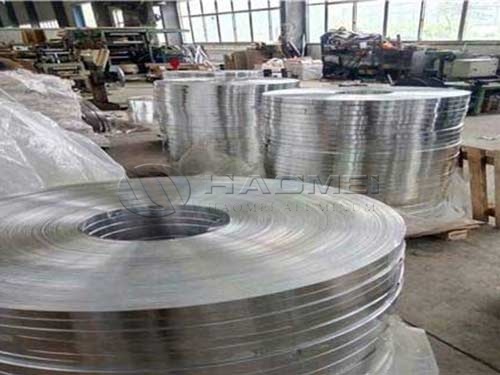
Temper Conditions and Mechanical Data
Because these grades are non-heat-treatable, temper designations indicate the degree of cold work or annealing. O temper is fully annealed and best suited to deep drawing. H14 and H24 tempers provide a useful balance between strength and bendability. Harder tempers are selected where shape retention is more important than severe forming.
| Temper | Condition | Typical Use |
|---|---|---|
| O | Fully annealed, soft | Deep drawing, spinning, bending, complex stamping |
| H12 | Quarter hard | Light forming with improved handling strength |
| H14 | Half hard | General stamping, lamp caps, insulation strip |
| H16 | Three-quarter hard | Parts requiring more rigidity |
| H18 | Full hard | Flat components, packaging and non-severe forming |
| H24 | Strain hardened and partially annealed | Formed panels and moderate drawing operations |
| Alloy and Temper | Tensile Strength, MPa | Yield Strength, MPa | Elongation, % | Electrical Conductivity, % IACS |
|---|---|---|---|---|
| 1050-O | 60-95 | 20 min. | 25 min. | Approx. 61 |
| 1050-H14 | 85-115 | 75 min. | 3 min. | Approx. 61 |
| 1060-O | 60-95 | 20 min. | 25 min. | Approx. 62 |
| 1060-H14 | 85-115 | 75 min. | 3 min. | Approx. 62 |
| 1070-O | 60-90 | 15 min. | 25 min. | Approx. 62-63 |
| 1100-O | 75-110 | 20 min. | 25 min. | Approx. 59 |
| 1100-H14 | 95-135 | 75 min. | 5 min. | Approx. 59 |
Mechanical figures are typical reference values. Final requirements should be confirmed according to thickness, width, governing standard and intended application.
Implementation Standards
| Standard | Scope |
|---|---|
| ASTM B209 | Aluminum and aluminum-alloy sheet and plate requirements, commonly referenced for coil strip |
| EN 485 | European requirements for wrought aluminum sheet, strip and plate |
| EN 573 | Aluminum alloy chemical composition and alloy designation |
| GB/T 3880 | Chinese standard for aluminum and aluminum-alloy sheet and strip |
| JIS H4000 | Japanese industrial standard for aluminum and aluminum-alloy sheet, strip and plate |
| RoHS / REACH | Material compliance documentation when required for regulated markets |
Applications Across Industries
1050, 1060, 1070 and 1100 aluminum coil strip perform well wherever low weight, corrosion resistance and easy fabrication matter. Electrical-grade strip is commonly used for transformer windings, cable wrapping, busbar-related parts, capacitor shells and conductive shields. High-purity grades help reduce resistance in electrical pathways while remaining easier to bend and wind than many harder alloys.
In lighting production, aluminum strip is stamped into lamp caps, reflectors and heat-dissipation components. The material accepts anodizing, painting, printing and lamination, making it suitable for decorative trim, channel letters, appliance panels and signage. In food, pharmaceutical and consumer packaging, thin-gauge aluminum strip can be processed into closures, seals and formed packaging components.
1100 aluminum strip is often chosen for deeper drawn items because it combines strong ductility with slightly higher strength than ultra-pure grades. It is suitable for kitchenware, fin stock, chemical storage parts and fabricated sheet-metal products exposed to normal atmospheric or mildly corrosive conditions.
Processing and Purchasing Considerations
Select O temper when the finished part requires aggressive stretching, deep drawing or repeated bending. Choose H14 or H24 when the strip must retain shape after forming. For transformer and conductor applications, confirm conductivity, burr control, coil winding direction, insulation compatibility and surface cleanliness before production.
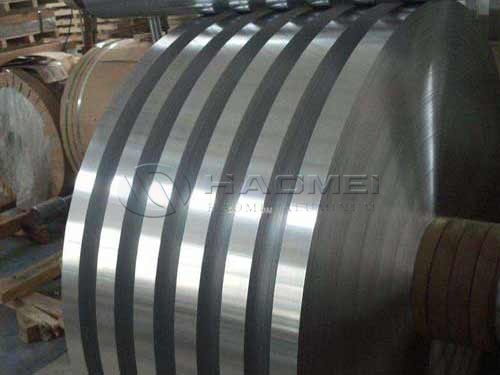
A reliable aluminum coil strip order should define alloy, temper, thickness tolerance, width tolerance, edge type, coil inner diameter, coil weight, surface condition and applicable standard. Export coils are commonly wrapped with moisture-proof paper, plastic film, protective board and reinforced pallets or wooden supports to reduce transit damage.
With the right grade and temper selection, 1060, 1050, 1070 and 1100 aluminum coil strip delivers stable performance from coil processing through finished-product fabrication.