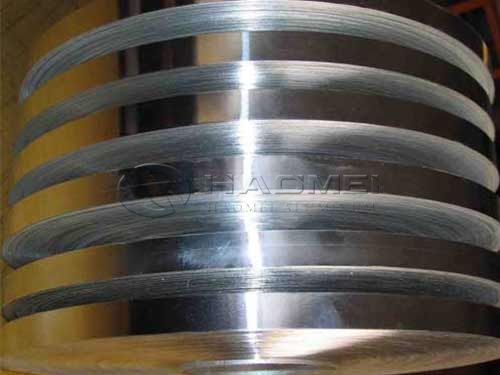
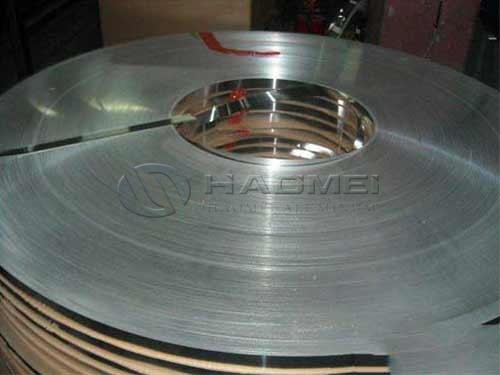
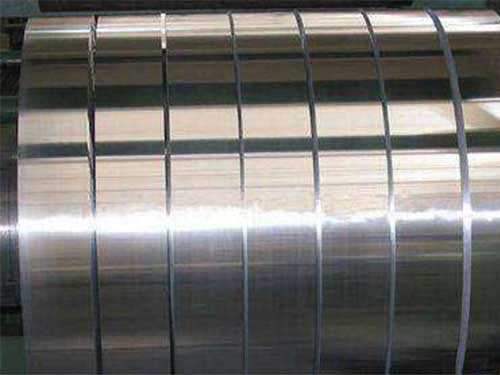
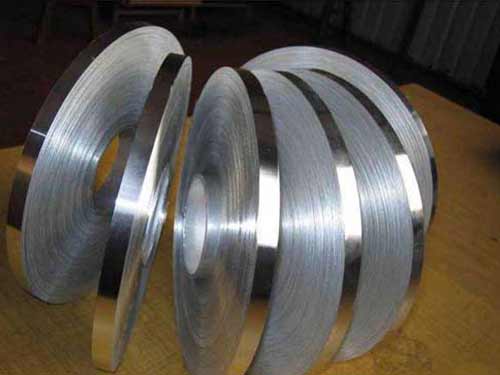
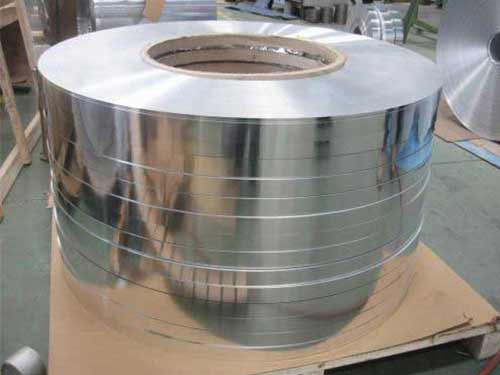
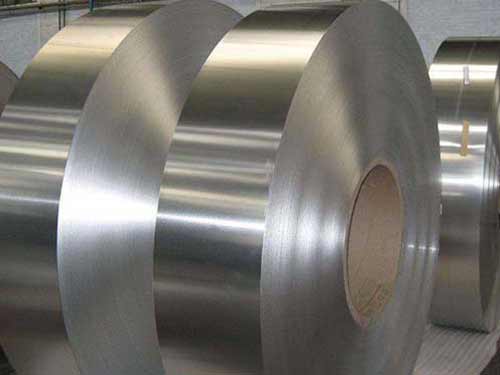
0.30*1250mm Aluminum Strip Coil
A 0.30*1250mm aluminum strip coil is defined by a combination that demands careful control: a thin 0.30 mm gauge across a wide 1250 mm coil width. This is not merely lightweight aluminum sheet in coil form. At this thickness, every production detail can influence downstream performance, including thickness consistency, flatness, edge condition, coil tension, surface cleanliness, and alloy selection.
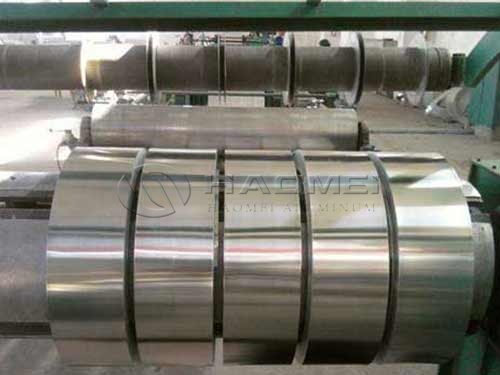
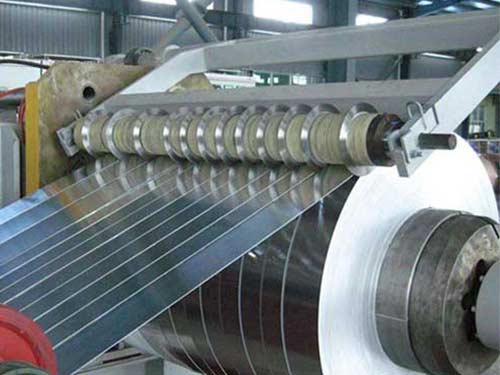
Although it is often called aluminum strip coil, 1250 mm is a relatively wide parent-coil dimension. Many buyers use this width directly for panel production, insulation facing, packaging stock, stamped parts, or laminated products. Others purchase it as feedstock for longitudinal slitting into narrower coils for cable wrapping, fin stock, profiles, lighting components, and formed accessories.
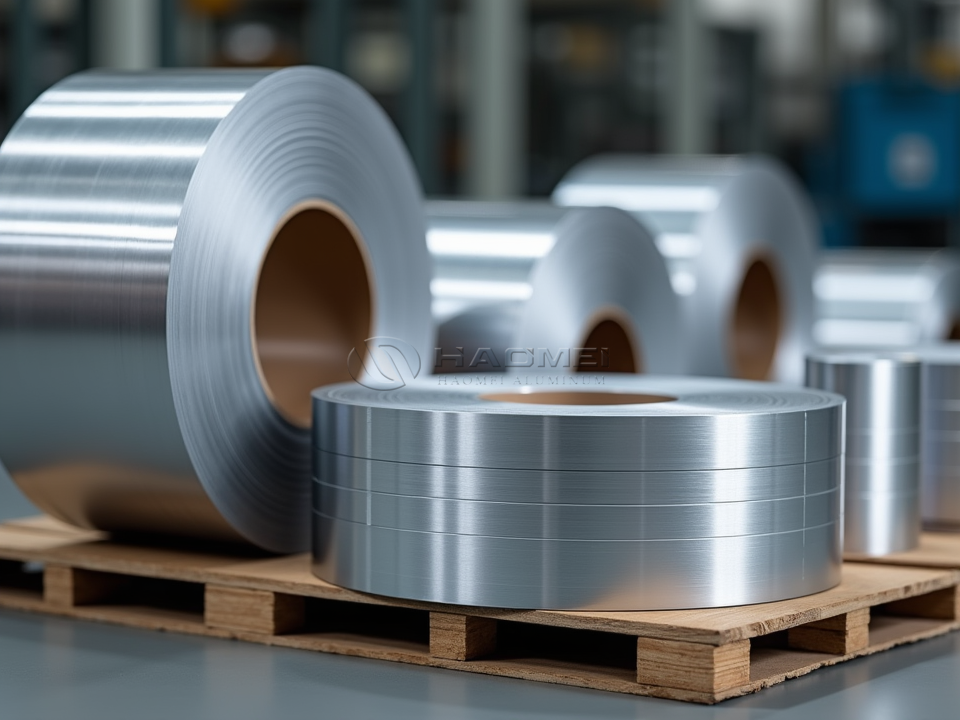
Product Parameters
The nominal size of this material is 0.30 mm thick by 1250 mm wide. Actual supply requirements should always state acceptable tolerances, intended processing method, alloy, temper, inner diameter, outer diameter, and surface expectations. Thin coils can look visually satisfactory while still causing issues in automated feeding if camber, edge wave, or coil set is not controlled.
| Parameter | Typical Requirement |
|---|---|
| Product name | 0.30*1250mm aluminum strip coil |
| Thickness | 0.30 mm |
| Thickness tolerance | Typically agreed by standard and order specification |
| Width | 1250 mm |
| Width tolerance | Commonly controlled within ±1.0 mm or as agreed |
| Coil inner diameter | 150 mm, 200 mm, 300 mm, 400 mm, 500 mm, or 508 mm |
| Coil outer diameter | According to coil weight and transport limits |
| Coil weight | Commonly 1-8 metric tons, depending on handling equipment |
| Surface | Mill finish, brushed, embossed, coated, laminated, or treated |
| Edge condition | Mill edge, slit edge, deburred edge, or rounded edge |
| Rolling direction | Longitudinal to coil length |
A 0.30 mm gauge is particularly sensitive to handling. Excessive payoff tension may stretch the material; insufficient tension can produce unstable feeding. For this reason, the coil should be matched to the customer's decoiling equipment, press line, laminator, or slitting machine rather than selected by dimension alone.
Alloy Selection: Matching Metal Behavior to the Job
The alloy determines whether the coil behaves more like a soft, highly conductive skin or a stronger, more corrosion-resistant forming material. For general industrial use, 1050, 1060, 1100, 3003, 3004, 3105, 5052, and 8011 are common options.
Pure aluminum grades such as 1050 and 1060 are valued for excellent electrical conductivity, reflectivity, workability, and corrosion resistance. They are frequently selected for transformer windings, insulation layers, decorative surfaces, cable-related applications, and light-duty forming. Customers requiring high aluminum content may consider 1050 / 1060 Aluminum Strip for thin-gauge processing.
3003 aluminum contains manganese, giving it greater strength than the 1xxx series while retaining good formability. It is a practical choice for roofing components, heat-transfer parts, building accessories, cookware-related stock, and stamped products where a modest strength increase is needed. For applications balancing formability with structural stability, 3003 Aluminum Strip is often a suitable material route.
5052 aluminum provides stronger corrosion resistance, especially in humid, marine, and chemically demanding environments. It is generally chosen when 0.30 mm material must resist corrosion while maintaining better strength than 1xxx or 3xxx grades. 8011 is widely used in packaging, caps, closures, insulation, and foil-related products because of its workable nature and stable processing characteristics.
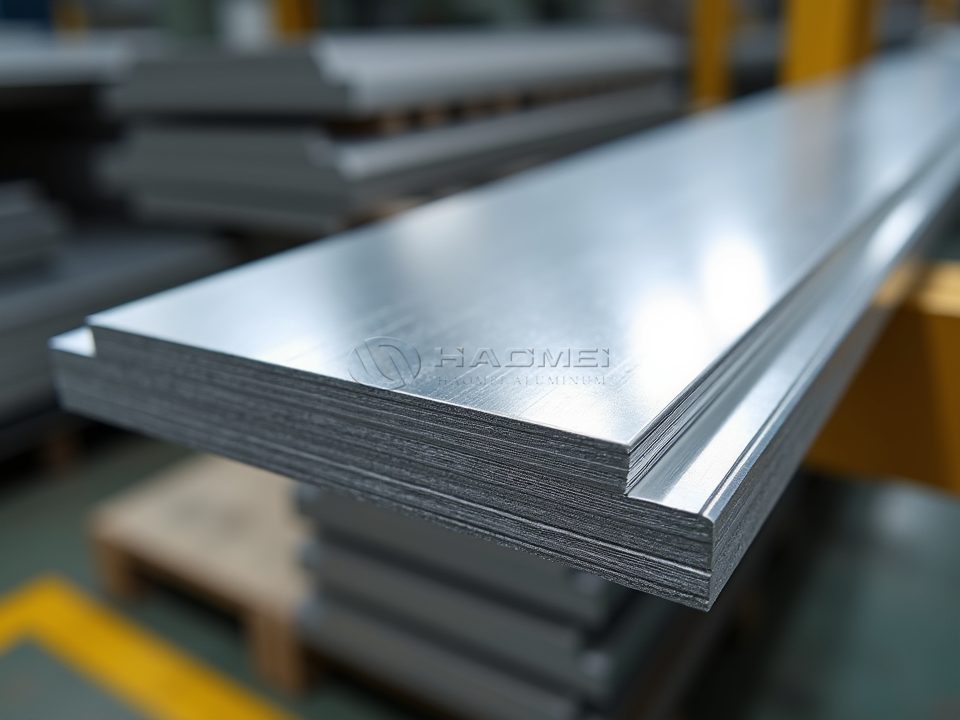
Common Alloy and Temper Conditions
Temper is as influential as alloy. A thin coil may need to bend repeatedly, pass through rollers, undergo deep drawing, or retain shape after stamping. Selecting an inappropriate temper can lead to cracking, wrinkling, springback, or uneven formed surfaces.
| Alloy | Common Tempers | Typical Characteristics | Suitable Uses |
|---|---|---|---|
| 1050 | O, H14, H18, H24 | High ductility, strong conductivity, excellent corrosion resistance | Transformer strip, reflectors, insulation, general forming |
| 1060 | O, H14, H18, H24 | High aluminum content and smooth processing performance | Electrical applications, lamps, decorative sheet |
| 1100 | O, H14, H16, H18 | Soft, workable, corrosion resistant | Chemical equipment covers, nameplates, formed parts |
| 3003 | O, H14, H16, H18, H24 | Moderate strength and good drawing behavior | Roofing, heat exchangers, stamping |
| 3105 | H14, H16, H18, H24 | Better strength for painted and building products | Roofing, siding, coated coil |
| 5052 | O, H32, H34 | High corrosion resistance and stronger mechanical performance | Marine components, tanks, appliance parts |
| 8011 | O, H14, H18 | Reliable forming and packaging performance | Closures, insulation, packaging stock |
For deep drawing or bending around small radii, O temper is usually preferred because it offers maximum softness. H14 and H24 provide a balanced condition for moderate forming and improved rigidity. H18 is harder and more suitable for applications where shape retention is more important than extensive deformation.
Chemical Properties of Common Alloys
Chemical composition should comply with the selected standard and mill certificate. The figures shown are typical maximum or nominal ranges in percent by weight. Aluminum represents the balance unless otherwise specified.
| Alloy | Si | Fe | Cu | Mn | Mg | Zn | Al |
|---|---|---|---|---|---|---|---|
| 1050 | ≤0.25 | ≤0.40 | ≤0.05 | ≤0.05 | ≤0.05 | ≤0.07 | ≥99.50 |
| 1060 | ≤0.25 | ≤0.35 | ≤0.05 | ≤0.03 | ≤0.03 | ≤0.05 | ≥99.60 |
| 1100 | Si+Fe ≤0.95 | Included | 0.05-0.20 | ≤0.05 | - | ≤0.10 | ≥99.00 |
| 3003 | ≤0.60 | ≤0.70 | 0.05-0.20 | 1.0-1.5 | - | ≤0.10 | Balance |
| 3105 | ≤0.60 | ≤0.70 | ≤0.30 | 0.30-0.80 | 0.20-0.80 | ≤0.40 | Balance |
| 5052 | ≤0.25 | ≤0.40 | ≤0.10 | ≤0.10 | 2.2-2.8 | ≤0.10 | Balance |
| 8011 | 0.50-0.90 | 0.60-1.00 | ≤0.10 | ≤0.20 | ≤0.05 | ≤0.10 | Balance |
Standards and Quality Expectations
0.30*1250mm aluminum strip coil can be manufactured according to internationally recognized standards, depending on customer location and end-use regulations. ASTM B209 is commonly referenced for aluminum and aluminum-alloy sheet and plate. EN 485 covers tolerances and mechanical properties for aluminum sheet, strip, and plate, while EN 573 addresses chemical composition and alloy designation. GB/T 3880 is frequently used for rolled aluminum and aluminum-alloy sheet and strip products.
A complete purchase specification should identify the required standard, alloy, temper, dimensional tolerance, mechanical property range, surface class, packaging method, and inspection documents. Mill test certificates can confirm chemical composition, tensile strength, yield strength where applicable, elongation, thickness measurements, and coil identification.
Surface, Edges, and Packaging Matter at 0.30 mm
At thin gauge, surface quality is part of production efficiency. Oil stains, scratches, roller marks, pinholes, oxidation spots, and embedded particles may affect painting, lamination, anodizing, printing, or bonding. For exposed architectural or decorative use, buyers should specify the acceptable surface grade and whether minor coil marks are permitted.
Edges also deserve attention. Slit edges should be clean and controlled to reduce burr-related injuries, coating damage, and feeding interruptions. Coils are normally protected with moisture-proof paper, plastic film, edge guards, wooden supports, steel strapping, and seaworthy export packaging when shipment conditions require added protection.
A well-specified 0.30*1250mm aluminum strip coil delivers more than thin, wide aluminum. It becomes a stable production input: easy to process, consistent from coil to coil, and tailored to the actual demands of forming, slitting, coating, stamping, or laminating operations.