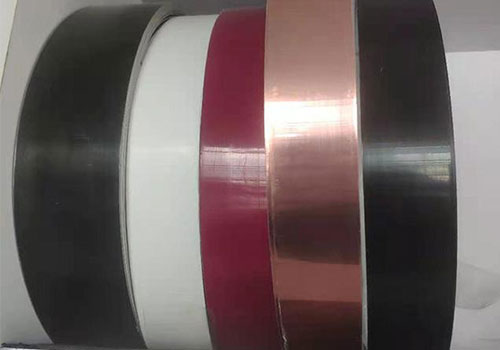
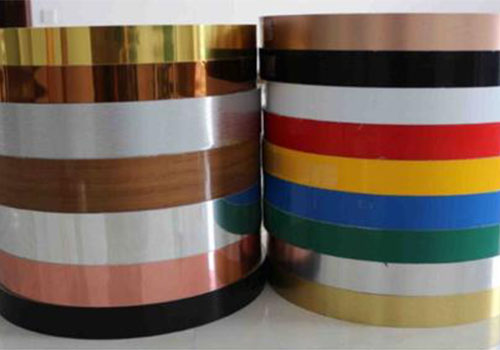
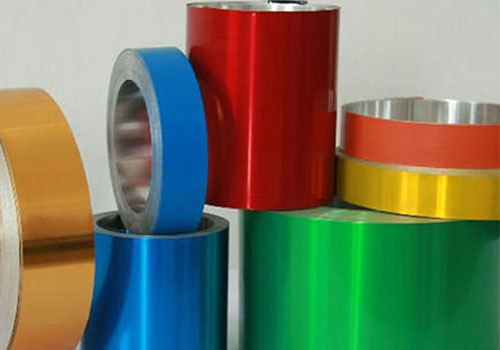
Mirror Surface Gold Colored Aluminum Strip
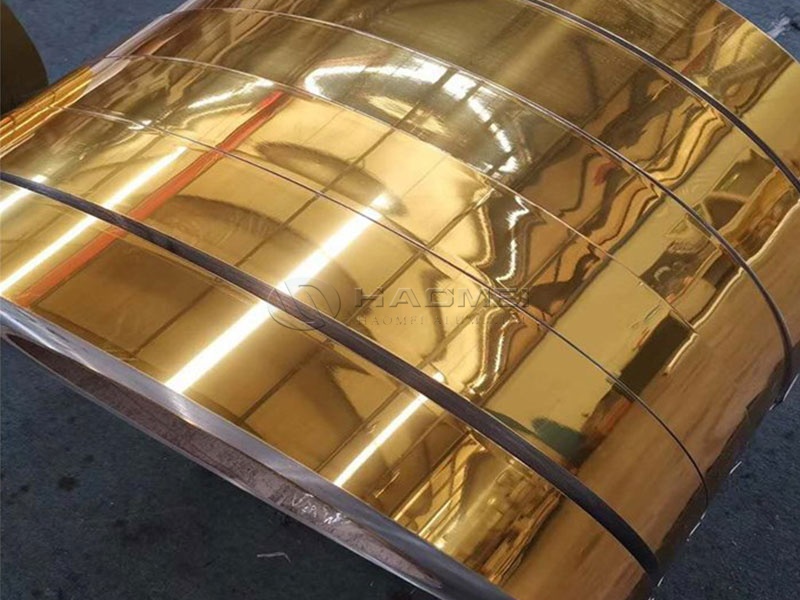
Mirror Surface Gold Colored Aluminum Strip is designed for projects where metal must do more than cover a surface. Its polished, highly reflective appearance creates a premium gold effect while aluminum keeps the material lightweight, corrosion-resistant, and easy to process. The strip can serve as a visual accent, a protective trim, a light-reflecting component, or a formed decorative element.

Unlike ordinary gold-painted coil, mirror-finish gold aluminum relies on two connected layers of performance. The aluminum substrate provides formability and strength, while the surface treatment creates brightness, gold tone, stain resistance, and weather protection. This combination makes the material suitable for furniture edging, ceiling systems, lighting reflectors, appliance panels, sign frames, packaging components, and architectural interior details.
A Gold Surface Designed to Manage Light
The most noticeable function of gold mirror aluminum strip is optical control. A smooth mirror surface reflects ambient light and makes narrow trims, profiles, and decorative channels appear wider and more dimensional. In commercial interiors, it can bring warmth to retail displays, elevator decoration, hotel partitions, and wall panels without the weight or cost associated with brass, stainless steel, or plated metal.
For lighting products, reflectivity is not only an aesthetic matter. Gold mirror strip can redirect light inside decorative lamps, LED fixtures, display cabinets, and recessed lighting assemblies. The gold finish produces a softer, warmer reflected effect than silver mirror aluminum, making it especially suitable for hospitality spaces and premium consumer products.
The surface may be produced through polished aluminum combined with clear anodizing, gold anodizing, vacuum metallization, laminated film, or color coating. The selection depends on whether the priority is mirror brilliance, color consistency, outdoor durability, scratch resistance, or deep-drawing performance. For indoor decorative use, PE and laminated systems are common. For exterior facades or harsh environments, fluorocarbon protection may be preferred through PVDF Coated Aluminum Strip solutions.
Common Product Parameters
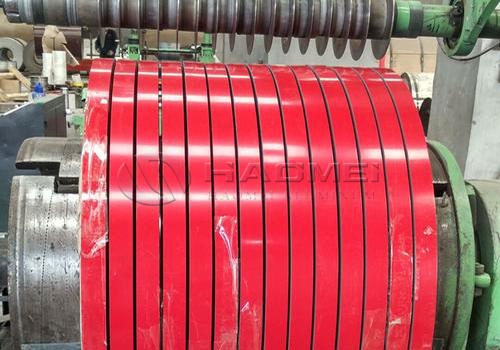
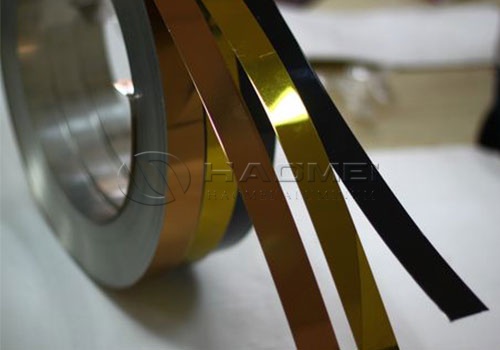
Mirror Surface Gold Colored Aluminum Strip is generally supplied in coil form, slit to the width needed for production lines, roll forming, stamping, or edge-banding equipment. Tolerances should be confirmed according to the final application because a narrow appliance trim and a wide ceiling strip have very different flatness and edge requirements.
| Parameter | Typical Range or Option |
|---|---|
| Alloy | 1050, 1060, 1100, 3003, 3105, 5052 |
| Temper | O, H12, H14, H16, H18, H24, H26 |
| Thickness | 0.18 mm to 1.50 mm |
| Width | 10 mm to 1,600 mm |
| Coil inner diameter | 150 mm, 300 mm, 405 mm, 508 mm |
| Surface finish | Mirror polished, gold anodized, gold coated, gold laminated |
| Color tone | Champagne gold, bright gold, titanium gold, brushed gold effect |
| Protective film | Optional PE film, commonly 30 to 80 microns |
| Coil weight | Customized according to handling equipment and order requirements |
The O temper is normally selected when the strip will undergo deep drawing, bending, embossing, or complicated profiling. H14 and H24 offer a balanced combination of rigidity and workability for general decorative components. H18 provides greater hardness for applications that need stronger shape retention but have limited forming demands.
Alloy Selection and Chemical Composition
The alloy affects how the gold mirror strip bends, resists corrosion, and maintains shape after fabrication. Pure aluminum grades such as 1050 and 1060 provide excellent reflectivity and ductility. Alloy 1100 is also widely used for decorative strip and general fabrication. For improved strength, 3003 and 3105 contain manganese, while 5052 offers stronger corrosion resistance in humid or coastal conditions.
| Alloy | Si | Fe | Cu | Mn | Mg | Zn | Al |
|---|---|---|---|---|---|---|---|
| 1050 | 0.25% max | 0.40% max | 0.05% max | 0.05% max | 0.05% max | 0.05% max | Balance |
| 1060 | 0.25% max | 0.35% max | 0.05% max | 0.03% max | 0.03% max | 0.05% max | Balance |
| 1100 | Si + Fe 0.95% max | Included | 0.05% to 0.20% | 0.05% max | - | 0.10% max | Balance |
| 3003 | 0.60% max | 0.70% max | 0.05% to 0.20% | 1.0% to 1.5% | - | 0.10% max | Balance |
| 3105 | 0.60% max | 0.70% max | 0.30% max | 0.30% to 0.80% | 0.20% to 0.80% | 0.40% max | Balance |
| 5052 | 0.25% max | 0.40% max | 0.10% max | 0.10% max | 2.2% to 2.8% | 0.10% max | Balance |
Chemical composition limits can vary slightly by governing specification and customer agreement. Material certificates should state the actual melt analysis, alloy designation, temper, dimensions, and applicable standard.
Standards and Surface Quality Expectations
Production and inspection commonly follow ASTM B209, EN 485, EN 573, GB/T 3880, JIS H4000, or comparable customer specifications. These standards address alloy composition, dimensional tolerance, mechanical properties, and delivery condition. Coated surfaces may also be evaluated through coating-thickness measurement, adhesion testing, pencil hardness, gloss testing, salt-spray exposure, and color difference measurement.
A mirror surface needs careful handling because its appearance can reveal small defects that would be invisible on matte aluminum. Typical acceptance controls include surface cleanliness, uniform gold tone, freedom from roller marks, controlled waviness, burr management, and consistent protective film coverage. During slitting, a clean edge is especially important for trim profiles, decorative channels, and automated assembly processes.
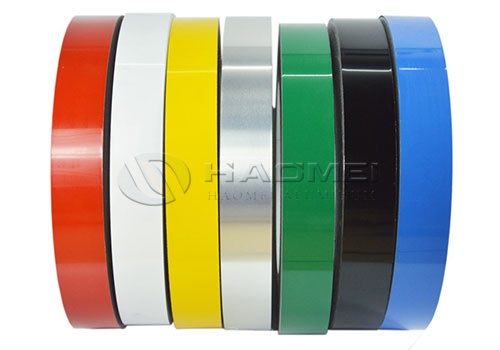
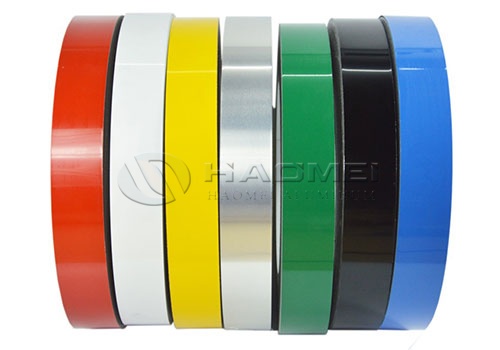
For projects requiring a broad palette beyond gold, Color Coated Aluminum Strip options can provide coordinated finishes in white, black, bronze, red, blue, and other architectural colors.
Processing Guidance for Better Finished Parts
Mirror gold aluminum strip should be processed with clean rollers, non-marking guides, and protective-film-compatible tooling. Scratches are more visible on bright surfaces than on brushed or embossed materials. When bending, use a suitable radius based on thickness, alloy, and temper. Softer O temper material supports tighter forming, while harder tempers require more generous bend radii to avoid cracking or surface stress.
For adhesive bonding, the surface should be free from oil, dust, and film residue. For mechanical fastening, avoid excessive pressure around rivets or screws because concentrated force can distort the reflective layer. If the strip will be exposed to moisture, dissimilar-metal contact should be managed to reduce galvanic corrosion risk.
Mirror Surface Gold Colored Aluminum Strip brings together visual impact and practical engineering. With the proper alloy, temper, coating system, and handling method, it becomes a durable material for refined metal details that reflect both light and product value.