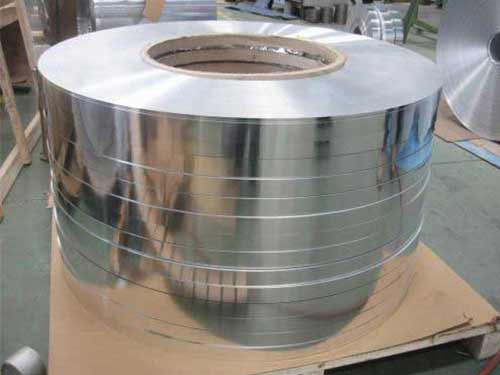
5052 Aluminum Strip for Cable Armouring
In a cable factory, armouring is often judged by a simple question: will the cable survive the route from drum to trench, from installation tension to decades of vibration, moisture and soil pressure? 5052 aluminum strip for cable armouring answers this question not by being the hardest metal in the room, but by acting as a balanced mechanical skin. It bends with the cable, resists corrosion, reduces weight and shields the inner layers from the rough world outside.
Unlike conductor aluminum, which is selected mainly for electrical flow, 5052 aluminum strip is chosen for its behavior under forming, wrapping and long-term exposure. Its magnesium-rich composition gives it higher strength than 1xxx series aluminum while keeping excellent ductility. For cable makers, that means smoother helical wrapping, fewer edge cracks, lower drum weight and dependable protection for low-voltage, medium-voltage, control, instrumentation, optical fiber and marine cables.
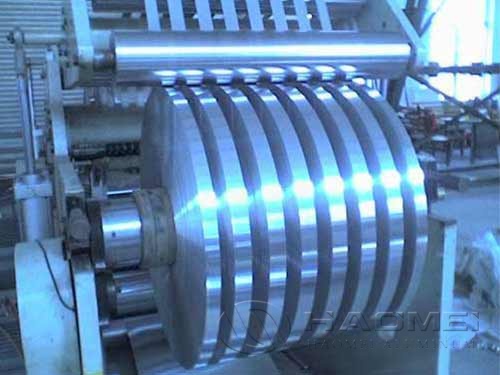
Why 5052 Works Well as Cable Armour
A cable armour layer must accept repeated bending without opening gaps or cutting into the sheath. 5052 aluminum strip has a practical combination of strain hardening response, corrosion resistance and non-magnetic performance. Compared with galvanized steel tape, it is much lighter and produces lower magnetic loss in AC cable systems. Compared with softer pure aluminum grades, it offers better resistance to denting and external pressure.
The alloy is especially useful where cables face moisture, salt air, industrial atmosphere or underground conditions. Magnesium in 5052 improves resistance to marine corrosion, while chromium helps stabilize the microstructure and supports consistent mechanical properties. In real cable production, this consistency matters: a strip that changes hardness across the coil can cause unstable wrapping tension, uneven overlap and higher scrap.
For buyers comparing different grades, 5052 Aluminum Strip is often selected when the project needs stronger armour than 1050 or 1060 but still requires easy forming. In applications where conductivity or ultra-soft forming is more important than strength, 1050 / 1060 Aluminum Strip may be considered instead.
Functions in the Cable Structure
The first function is mechanical protection. A helically wrapped 5052 strip distributes impact force around the cable body, helping protect insulation, shielding, water-blocking tape and optical fiber elements. It works like a flexible shell rather than a rigid pipe, allowing the cable to bend while resisting crushing and abrasion.
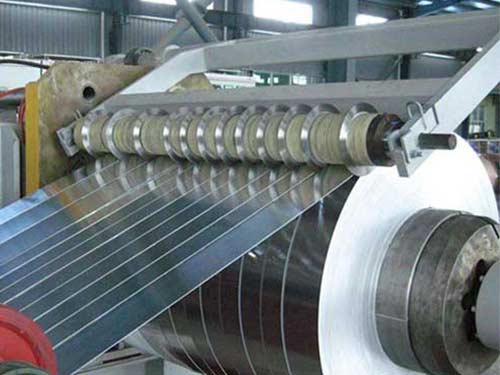
The second function is installation security. During pulling, laying, backfilling or tray mounting, the armour layer reduces damage caused by stones, tools, clamps and friction. The strip edge quality is therefore not a minor detail. Burrs, waves or side cracks can damage polymer sheaths or create stress points during bending. Good 5052 cable armour strip is slit with controlled edge condition, stable camber and clean surface.
The third function is environmental endurance. In outdoor, tunnel, railway, petrochemical and coastal projects, armour may meet humid air, alkaline soil, salt spray or condensation. 5052 aluminum does not need heavy zinc coating to resist corrosion, and its natural oxide film helps protect the strip during service.
The fourth function is weight control. Cable drums become easier to transport and install when aluminum armour replaces heavier steel armour. This advantage is visible in long-distance power cables, offshore cables, high-rise building feeders and movable industrial cables where every kilogram affects handling cost.
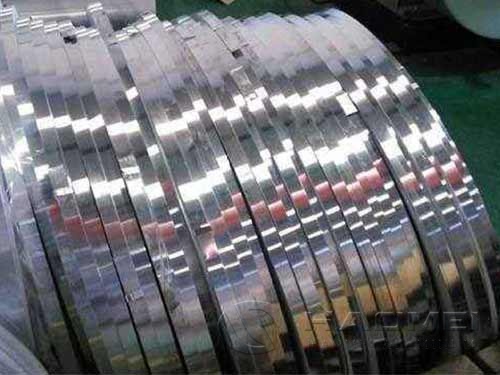
Common Product Parameters
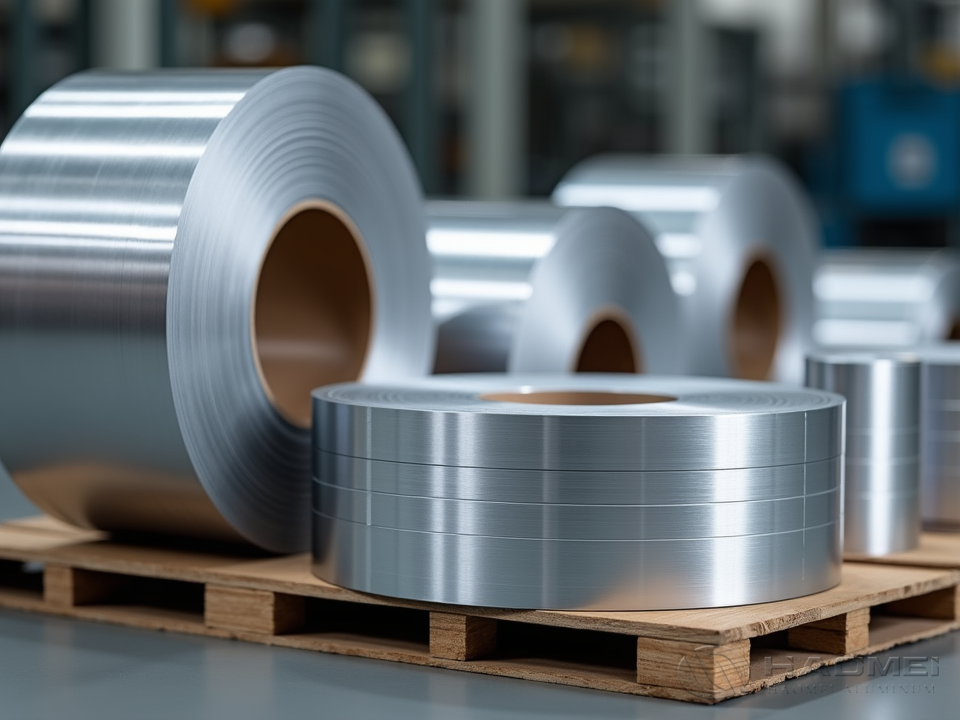
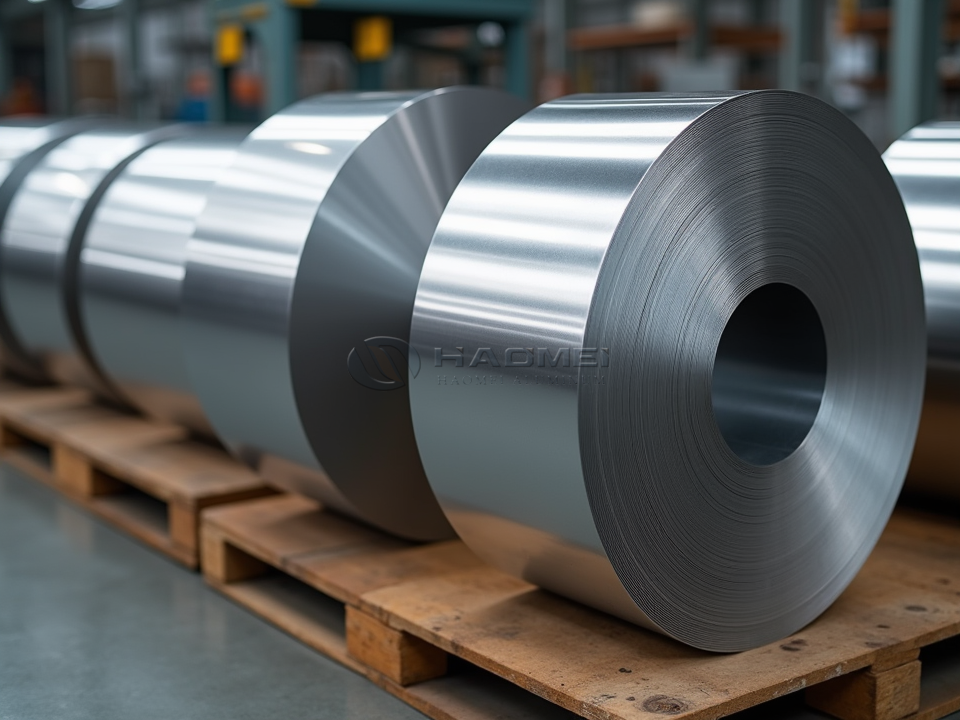
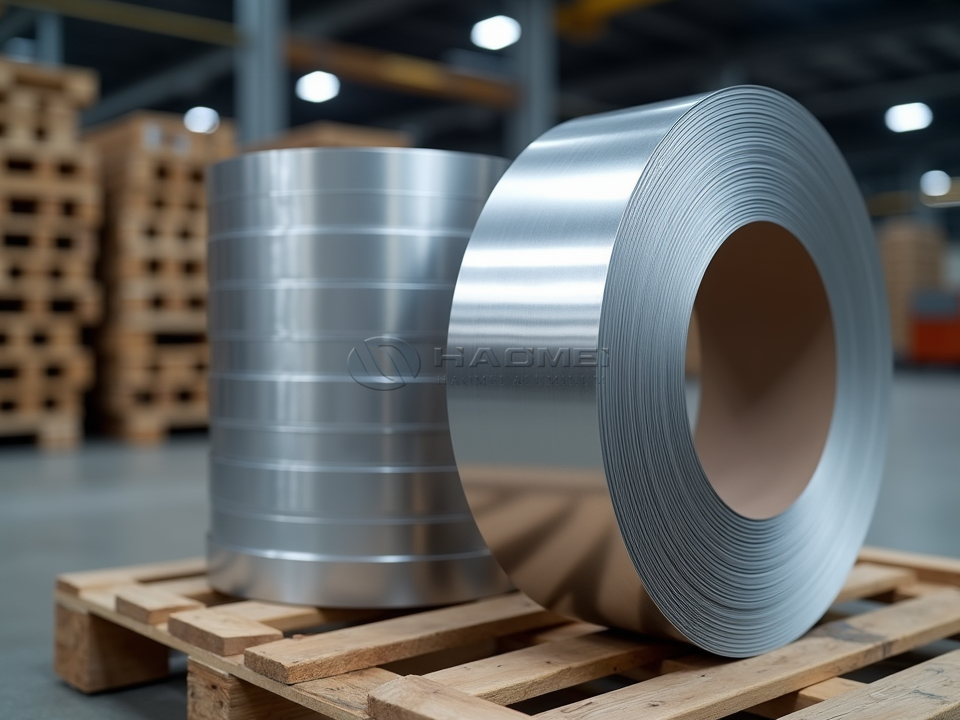
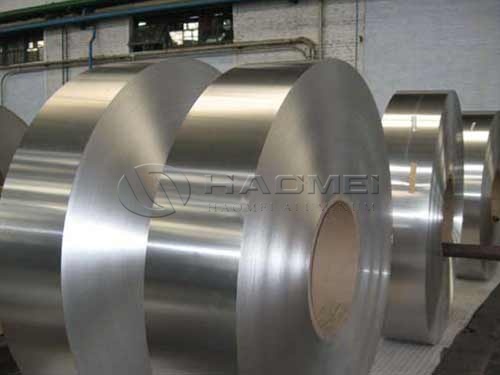
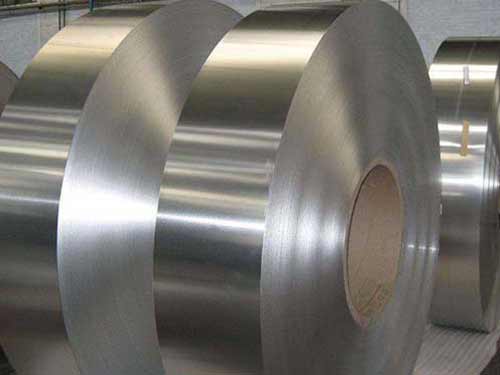
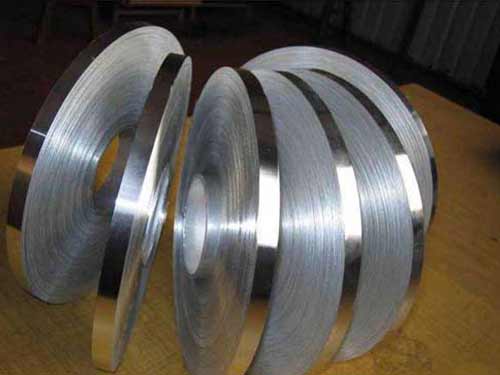
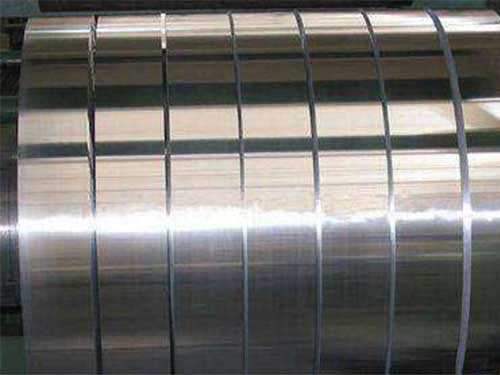
The final size depends on cable diameter, armour design, wrapping pitch and overlap. Typical supply ranges for 5052 aluminum strip for cable armouring include thickness from 0.20 mm to 1.50 mm, width from 10 mm to 600 mm, and coil inner diameter of 300 mm, 400 mm, 500 mm or 508 mm. Narrow strip is usually supplied in precision-slit coils, while wider strip can be used for longitudinal wrapping or special cable protection structures.
Typical surface options include mill finish, degreased surface, chromate-free treated surface or lubricated surface according to forming requirements. For cable plants, the ideal strip surface is clean, dry and free from oil stains, black spots, oxide patches, scratches, roll marks, lamination and heavy edge burrs. Coil winding should be tight and even, with no telescoping that may interrupt automatic pay-off.
Recommended tolerances are usually agreed between supplier and cable manufacturer. For high-speed armouring lines, strict width tolerance, low camber and stable mechanical properties are more important than general commodity strip requirements. A common target is smooth pay-off, continuous wrapping and predictable overlap without strip wandering.
Alloy Tempers and Forming Behavior
5052 is a non-heat-treatable aluminum-magnesium alloy. Its strength is adjusted mainly through cold working and partial annealing. For cable armouring, the most practical tempers are O, H22, H24, H32 and H34, depending on the balance between bendability and armour strength.
O temper offers the best ductility and is suitable for tight bending or special cable designs with small diameters. H24 and H32 provide a common balance for helical armour, giving enough strength to resist indentation while still wrapping smoothly. H34 is used when higher resistance to deformation is required, but the cable design must allow for greater forming force and springback.
Typical mechanical property ranges are shown for reference. Final values should be confirmed by the mill certificate and project specification.
| Temper | Tensile Strength MPa | Yield Strength MPa | Elongation % | Practical Use in Cable Armour |
|---|---|---|---|---|
| O | 170-215 | 65 min | 12-20 | Small bending radius, soft forming |
| H22 | 190-240 | 110 min | 8-14 | Flexible armour with moderate strength |
| H24 | 220-270 | 145 min | 5-10 | General power cable armouring |
| H32 | 210-260 | 130 min | 6-12 | Stable wrapping and balanced performance |
| H34 | 235-285 | 160 min | 4-8 | Higher dent resistance and firm armour |
Chemical Composition of 5052 Aluminum Strip
The performance of 5052 begins with chemistry. Magnesium is the main strengthening element, while chromium improves stability and corrosion resistance. Low copper content is one reason the alloy performs well in corrosive environments.
| Element | Composition % |
|---|---|
| Si | 0.25 max |
| Fe | 0.40 max |
| Cu | 0.10 max |
| Mn | 0.10 max |
| Mg | 2.20-2.80 |
| Cr | 0.15-0.35 |
| Zn | 0.10 max |
| Others, each | 0.05 max |
| Others, total | 0.15 max |
| Al | Balance |
Standards and Quality Conditions
5052 aluminum strip for cable armouring is commonly produced according to ASTM B209/B209M, EN 485, GB/T 3880 and customer technical agreements. Cable use may also be matched to project requirements related to IEC 60502, BS 5467, BS 6724, BS 7870 or other power cable standards, although these standards usually define the cable structure rather than only the metal strip.
Quality control should include chemical composition testing, tensile testing, hardness inspection, thickness and width measurement, surface inspection, edge burr control and coil winding assessment. For long-run cable production, traceability is valuable. Coil number, alloy, temper, size, net weight, standard, test results and packaging condition should appear clearly on the quality certificate.
Packaging also affects usability. Coils are generally wrapped with moisture-proof paper, plastic film and protective boards, then fixed on wooden pallets or in wooden cases. For export, strong sea-worthy packing helps prevent oxidation, collision damage and edge deformation during transport.
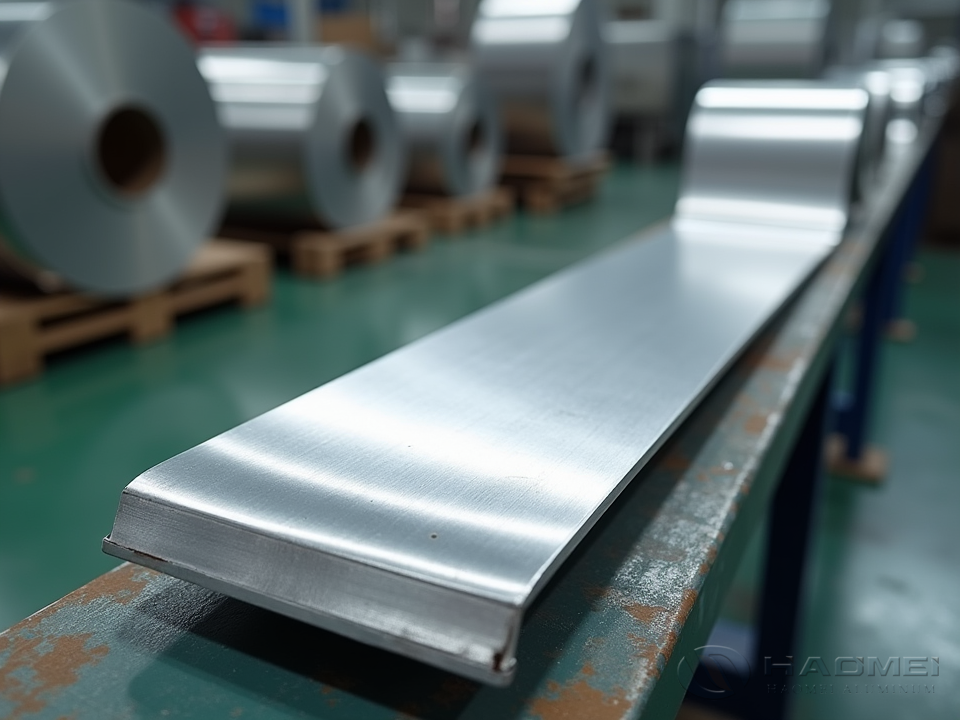
Where It Is Applied
5052 aluminum strip is used in armoured power cables for building distribution, mining, petrochemical plants, rail transit, wind farms, solar stations, ports, ships, offshore platforms and communication networks. It is suitable for single-core and multi-core cable structures where non-magnetic, lightweight armour is preferred. In single-core AC cables, aluminum armour can help reduce magnetic heating compared with ferromagnetic armour materials.
It is also used in optical fiber composite cables where strength is required but excessive weight must be avoided. In coastal data centers, smart grid projects and industrial automation systems, the alloy supports durable cable designs without making installation unnecessarily heavy.
Buying Notes for Cable Manufacturers
When purchasing 5052 aluminum strip for cable armouring, the discussion should not stop at alloy and price. The cable design team should confirm thickness, width, temper, coil ID, OD limit, burr direction, surface cleanliness, winding method and packaging. If the strip will run on automatic armouring equipment, trial coils are useful for checking pay-off stability, overlap control and edge behavior.
A well-made 5052 strip does more than cover a cable. It protects production efficiency, installation reliability and service life. For customers seeking a durable, light and corrosion-resistant armour material, 5052 aluminum strip remains one of the most practical choices in modern cable manufacturing.