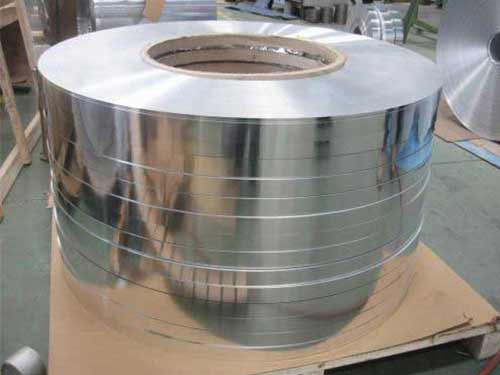
Mill Finish Polished Anodized Aluminum Strip
Mill finish, polished, and anodized aluminum strip provide adaptable material choices for manufacturers requiring light weight, corrosion resistance, formability, and controlled surface appearance. Produced from rolled aluminum coil and precision-slit to width, these strips are widely used in lighting, decoration, appliances, transportation, electrical systems, packaging, and fabricated components.
The selected surface condition affects more than appearance. It can influence reflectivity, coating adhesion, wear resistance, cleanliness, conductivity, and long-term outdoor performance. Selecting the appropriate alloy, temper, thickness, and surface finish helps balance production efficiency with finished-part requirements.
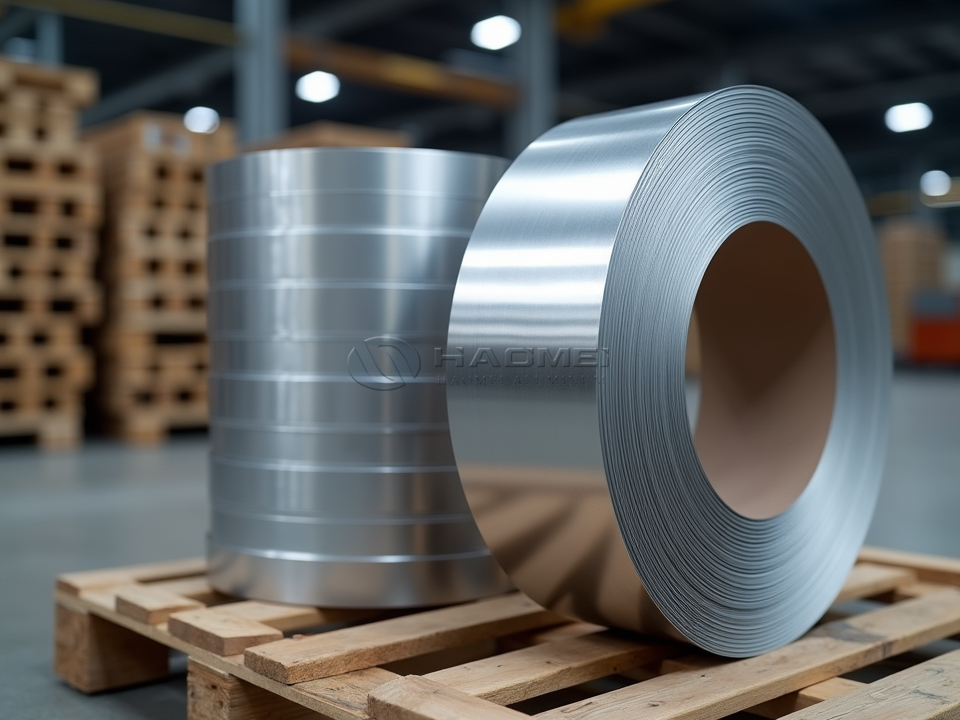
Surface Conditions and Functional Differences
| Surface condition | Production method | Surface character | Main functions | Typical uses |
|---|---|---|---|---|
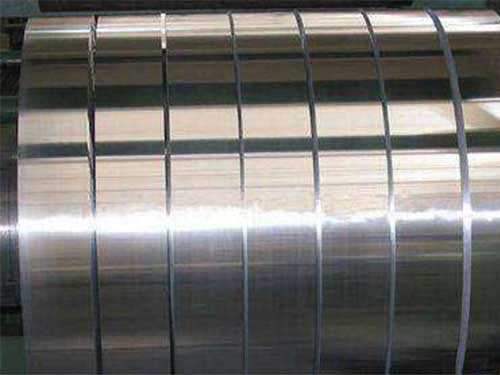
| Mill finish | Rolled aluminum supplied without decorative finishing | Natural rolling marks and metallic matte appearance | Economical substrate, good forming, suitable for further coating or processing | Stamping, insulation, cable wrap, general fabrication |
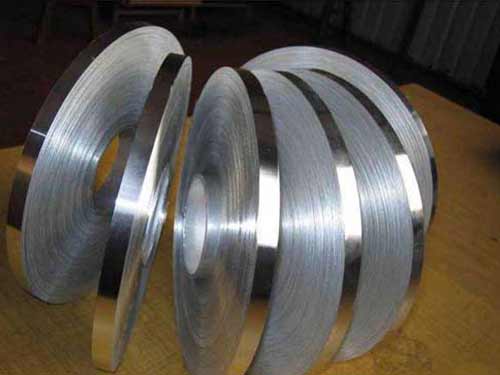
| Polished finish | Mechanical polishing, brushing, buffing, or bright rolling | Bright, satin, mirror-like, or brushed texture | Higher reflectivity and decorative appeal | Lighting reflectors, trim, appliance panels, signage |
| Anodized finish | Electrochemical oxidation creates an aluminum oxide film | Uniform metallic appearance with enhanced hardness | Improved corrosion, abrasion, and weather resistance | Architectural trim, electronics, transport interiors, nameplates |
Mill finish aluminum strip is often the preferred starting material where the strip will be painted, laminated, embossed, deep drawn, or assembled into non-visible parts. It offers cost efficiency and excellent compatibility with downstream processing. Surface oil level, flatness, edge quality, and coil winding should be specified when automated feeding or stamping is involved.
Polished aluminum strip is valued where controlled light reflection or an attractive metallic face is required. Bright rolled material can provide a clean industrial shine, while mirror polishing is used for reflector and decorative applications. Protective interleaving paper or film is commonly applied to reduce scratching during transport and fabrication.
Anodized aluminum strip has a dense oxide layer integrated with the base metal. Unlike paint, the anodic film does not peel in normal service because it is formed from the aluminum surface itself. Clear anodizing preserves the metal appearance, while colored anodizing can create bronze, black, gold, champagne, or other architectural tones.
Common Alloys and Temper Conditions
Alloy selection depends on the required strength, corrosion environment, conductivity, and forming method. Commercially pure 1xxx alloys are frequently selected for conductivity, brightness, and ductility. 3xxx alloys provide improved strength and are common in building and appliance applications. Magnesium-bearing 5xxx alloys offer strong corrosion resistance, especially in humid or marine-adjacent environments.
| Alloy | Typical temper options | Principal characteristics | Suitable finish options | Common applications |
|---|---|---|---|---|
| 1050 | O, H14, H18, H24 | High aluminum purity, excellent formability and conductivity | Mill, polished, anodized | Lighting, chemical equipment, electrical parts |
| 1060 | O, H14, H18, H24 | High ductility, thermal and electrical conductivity | Mill, bright, anodized | Transformer winding, reflectors, decorative parts |
| 1070 | O, H14, H18 | Very high purity and conductivity | Mill, polished | Electrical, capacitor and precision formed parts |
| 1100 | O, H14, H16, H18, H24 | Good corrosion resistance and workability | Mill, polished, anodized | Cookware, signage, heat-transfer components |
| 3003 | O, H14, H16, H18, H24 | Higher strength than 1xxx with good formability | Mill, brushed, anodized | Roofing, appliance trim, heat exchangers |
| 5052 | O, H32, H34, H36 | Strong corrosion resistance and medium strength | Mill, brushed, anodized | Marine fittings, transport, cabinets |
| 6061 | O, T4, T6 | Higher mechanical strength and machinability | Mill, polished, anodized | Structural trim, equipment and engineered parts |
For applications requiring excellent bright finish and easy forming, 1050 / 1060 Aluminum Strip is a practical choice. For deeper drawing, temper O provides maximum softness. H14 and H24 tempers offer a balanced combination of strength and formability, while H18 is chosen when greater hardness is more important than severe forming.
Chemical Composition Reference
The values in this table are typical maximum or nominal limits in accordance with widely used aluminum alloy specifications. Purchase requirements should identify the governing standard and the required alloy registration.
| Alloy | Si | Fe | Cu | Mn | Mg | Zn | Al |
|---|---|---|---|---|---|---|---|
| 1050 | ≤0.25 | ≤0.40 | ≤0.05 | ≤0.05 | ≤0.05 | ≤0.05 | ≥99.50 |
| 1060 | ≤0.25 | ≤0.35 | ≤0.05 | ≤0.03 | ≤0.03 | ≤0.05 | ≥99.60 |
| 1100 | Si + Fe ≤0.95 | Included | 0.05-0.20 | ≤0.05 | - | ≤0.10 | ≥99.00 |
| 3003 | ≤0.60 | ≤0.70 | ≤0.20 | 1.0-1.5 | - | ≤0.10 | Balance |
| 5052 | ≤0.25 | ≤0.40 | ≤0.10 | ≤0.10 | 2.2-2.8 | ≤0.10 | Balance |
| 6061 | 0.40-0.80 | ≤0.70 | 0.15-0.40 | ≤0.15 | 0.80-1.20 | ≤0.25 | Balance |
Values are percentages by mass. Trace elements and individual limits may vary according to the selected implementation standard.
Technical Specifications
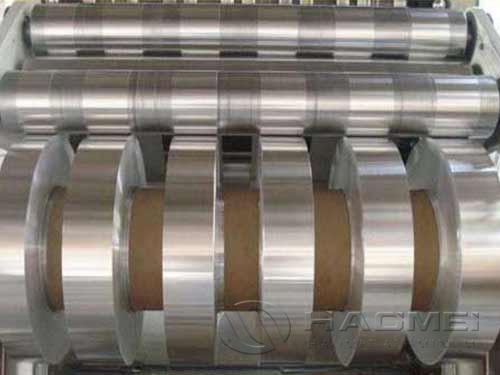
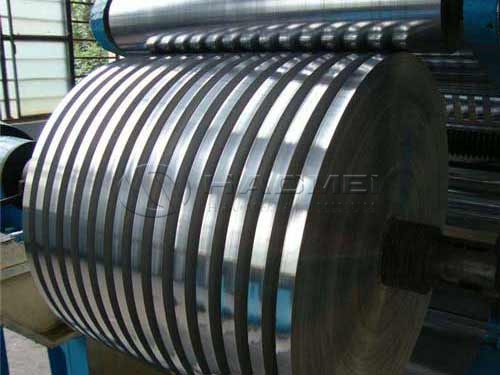
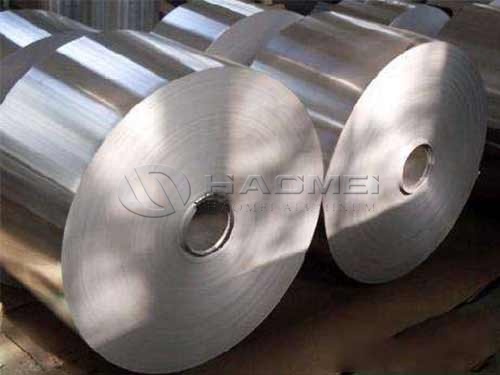
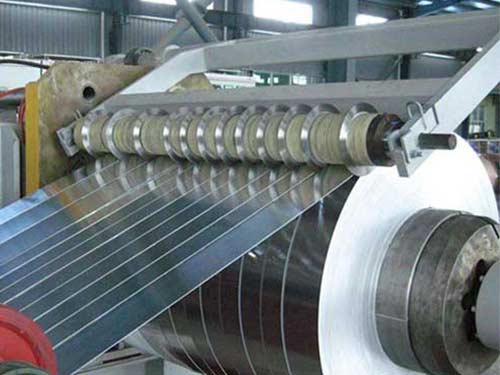
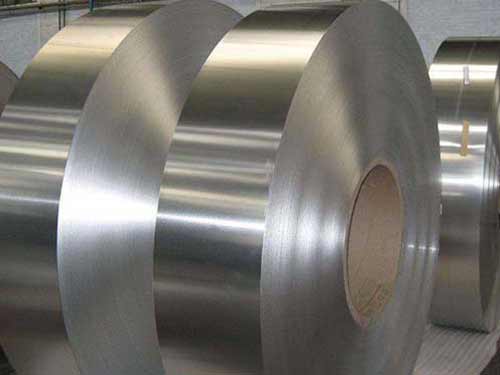
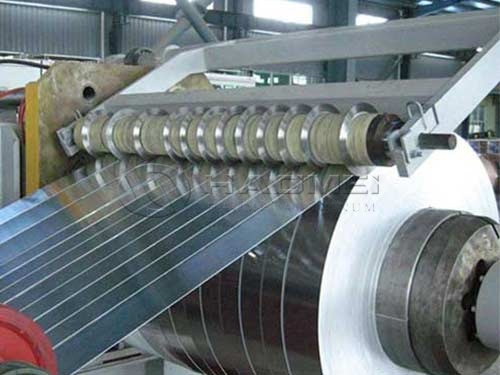
Aluminum strip can be supplied in coils, oscillated coils, or cut lengths. Precision slitting supports narrow widths for automated lines, electrical components, and stamped goods. Dimensional tolerances should be agreed according to the intended process, particularly for close-fitting assemblies and progressive dies.
| Parameter | Typical supply range | Notes |
|---|---|---|
| Thickness | 0.20-6.00 mm | Thinner gauges available for specialty coil applications |
| Width | 10-1,600 mm | Narrow slit strip commonly supplied from 10 mm upward |
| Coil inner diameter | 150 mm, 300 mm, 400 mm, 500 mm, 505 mm, 610 mm | Selected to suit customer decoiling equipment |
| Coil outer diameter | Up to 2,000 mm | Depends on thickness, width, coil weight, and packaging |
| Coil weight | 0.5-10 metric tons | Small coils and customized weights available |
| Anodic film thickness | 5-25 μm | Interior decorative use commonly uses lighter films; exterior service may require thicker film |
| Surface roughness | Ra 0.10-1.50 μm | Depends on mill, brushed, bright, or polished requirement |
| Reflectivity | 70-95% | Varies with alloy, polish grade, and protective treatment |
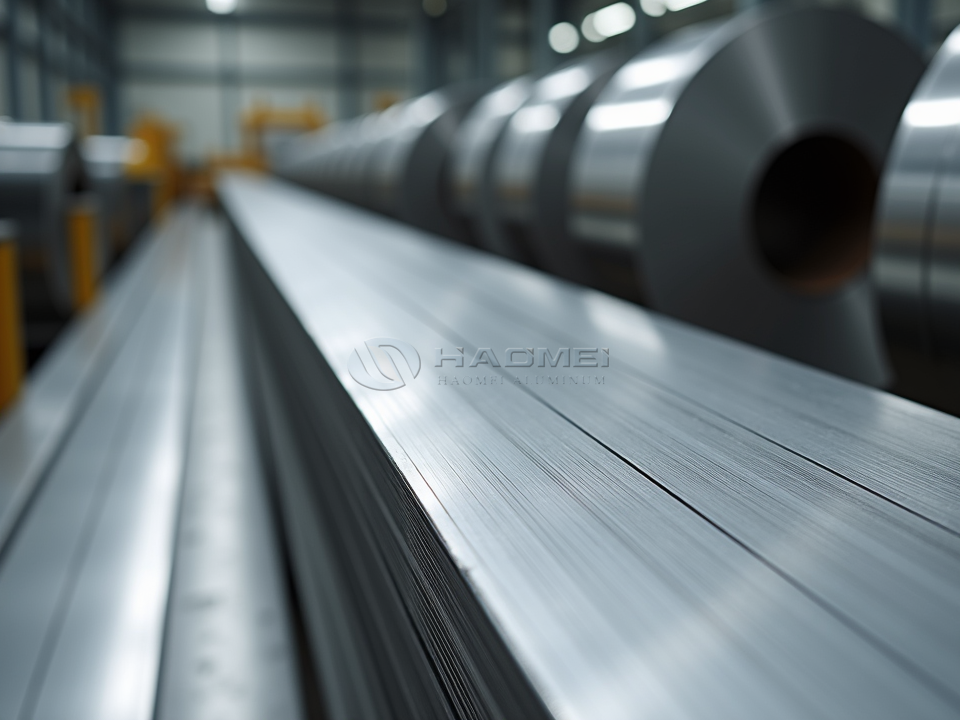
Standards and Quality Control
Mill finish, polished, and anodized aluminum strip may be manufactured to international material and surface standards. The applicable document depends on alloy family, product form, market destination, and surface treatment requirement.
| Standard | Scope |
|---|---|
| ASTM B209 | Aluminum and aluminum-alloy sheet and plate requirements, often referenced for strip material |
| EN 485 | Tolerances, mechanical properties, and technical delivery conditions for wrought aluminum products |
| EN 573 | Chemical composition and designation system for aluminum alloys |
| EN 515 | Temper designations for wrought aluminum and aluminum alloys |
| ISO 7599 | General specifications for anodic oxidation coatings on aluminum |
| AA Standards | Aluminum Association alloy and temper designation practices |
Quality checks can include chemical analysis, thickness and width measurement, burr inspection, camber evaluation, tensile testing, elongation testing, surface cleanliness review, and anodic film thickness measurement. For polished grades, visual inspection under controlled lighting is useful for identifying scratches, roll marks, color variation, and surface irregularities.
Mechanical and Physical Properties
Mechanical values vary with thickness, temper, and manufacturing standard. The figures shown are practical reference ranges rather than contractual limits.
| Material condition | Tensile strength | Yield strength | Elongation | Density | Melting range |
|---|---|---|---|---|---|
| 1050-O | 65-95 MPa | 20-35 MPa | ≥25% | 2.71 g/cm³ | 646-657°C |
| 1060-H14 | 95-125 MPa | 75-105 MPa | ≥5% | 2.70 g/cm³ | 646-657°C |
| 3003-H14 | 130-170 MPa | 115-150 MPa | ≥5% | 2.73 g/cm³ | 643-654°C |
| 5052-H32 | 195-245 MPa | 130-180 MPa | ≥8% | 2.68 g/cm³ | 605-650°C |
| 6061-T6 | 260-310 MPa | 240-280 MPa | ≥8% | 2.70 g/cm³ | 582-652°C |
Processing, Protection, and Purchasing Considerations
Aluminum strip performs well in bending, blanking, punching, roll forming, drawing, riveting, and bonding. Softer tempers reduce cracking risk during tight-radius bends. For anodized material, avoid excessive tool pressure and abrasive handling that may damage the oxide film. Film-laminated polished strip should be processed with clean rollers and non-marking tools.
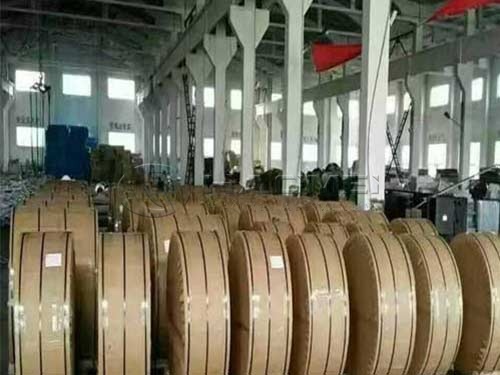
Moisture-resistant export packaging, edge protectors, coil wrapping, and wooden pallets help preserve surface quality. Store coils in a dry, ventilated area away from corrosive chemicals. Condensation between layers can cause water staining, particularly on bright or polished surfaces.
When ordering, specify alloy, temper, thickness, width, coil dimensions, finish grade, film thickness for anodized material, protective film requirement, edge condition, applicable standard, and final application. Clear specifications enable consistent production and reduce finishing losses during fabrication.
Mill finish, polished, and anodized aluminum strip combine practical fabrication performance with surface options suited to functional and decorative markets. With the right alloy and temper, the material can deliver reliable strength, clean appearance, controlled reflectivity, and durable corrosion protection across demanding industrial environments.