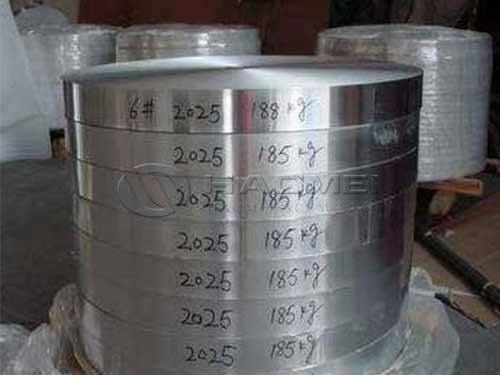
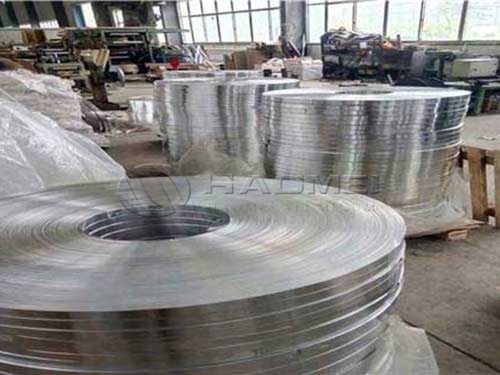
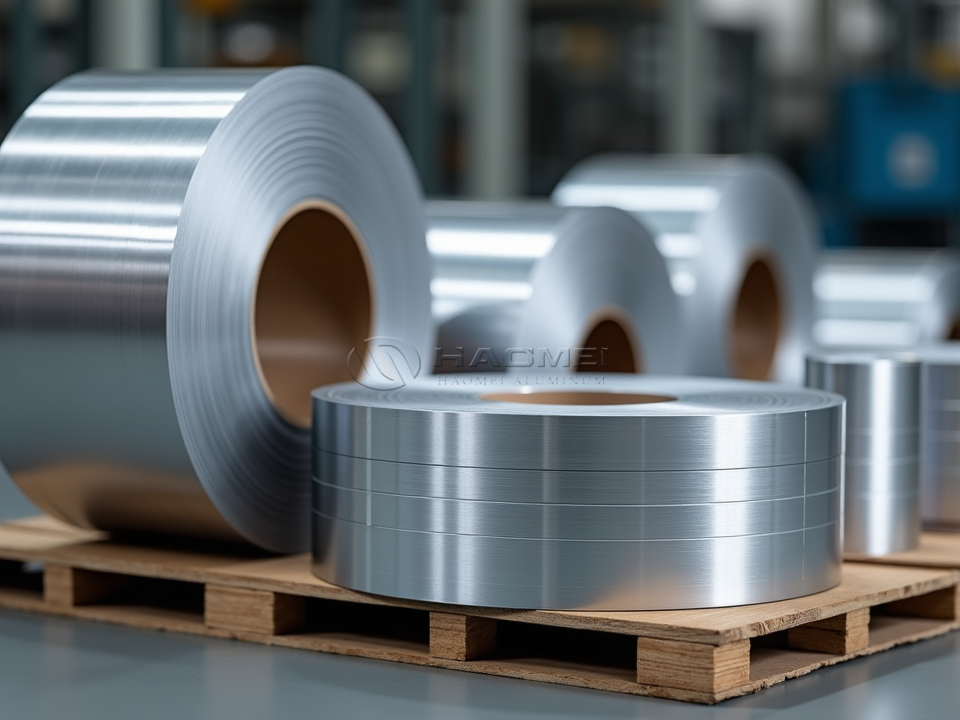
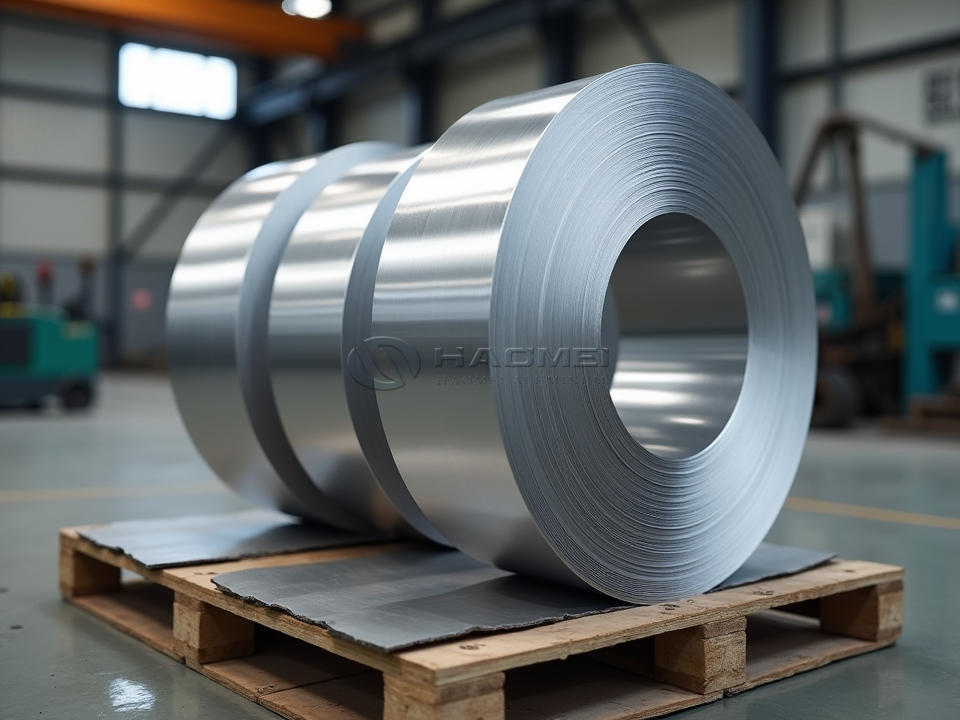
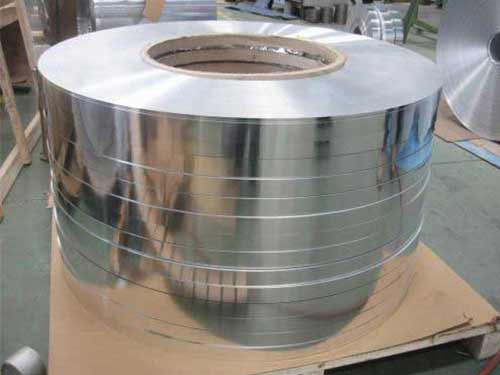
Adhesive Backed Aluminum Foil A8011 Strips
Adhesive backed aluminum foil A8011 strips are often selected not because they are simply metallic tapes, but because they combine two different working systems in one thin product. The A8011 aluminum foil layer manages heat, moisture, light, vapor, and surface protection. The pressure-sensitive adhesive layer creates immediate placement on a prepared substrate. Together, they form a practical sealing material for insulation joints, duct wrapping, appliance components, packaging closures, cable protection, and reflective surface applications.
Unlike a thicker sheet used for structural support, adhesive backed A8011 foil is designed to conform. It follows curves, corners, seams, and irregular interfaces while retaining the barrier behavior of aluminum. This makes it especially useful when mechanical fastening would be slow, bulky, or likely to damage a finished surface.
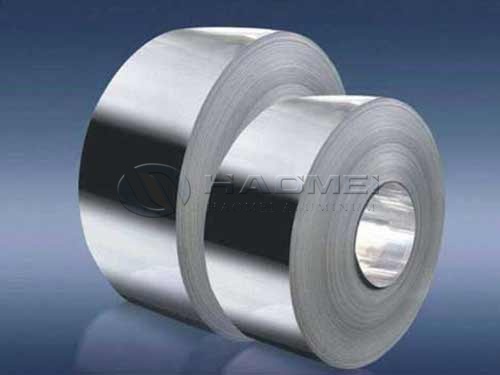
The Product Works as a Layered System
The performance of adhesive backed foil cannot be judged by alloy alone. It should be viewed as a composite construction consisting of aluminum foil, surface treatment, adhesive, and release liner. Each layer has a specific job.
The A8011 foil substrate provides formability, opacity, corrosion resistance, and a bright or matte metallic surface. A pressure-sensitive acrylic adhesive is commonly used where aging resistance, stable tack, and moderate temperature performance are required. Rubber-based adhesive may be selected for stronger initial tack on rough surfaces, while modified high-temperature adhesive systems can be used for insulation, HVAC, and thermal shielding conditions. A silicone-coated paper or film release liner protects the adhesive until application.
This layered design means that foil thickness and total tape thickness are not the same. A 0.030 mm aluminum foil may become a 0.070 mm to 0.120 mm finished adhesive strip after adhesive and liner construction. Buyers should therefore specify both foil gauge and finished product thickness when the strip must fit a narrow gap or overlap a controlled seam.
Why A8011 Is Well Suited to Adhesive Foil Strips
A8011 is an aluminum-iron-silicon alloy widely used in foil products. It offers a useful balance between strength and flexibility, helping the strip resist tearing during unwinding while remaining easy to press into joints and contours. Compared with very soft high-purity aluminum grades, A8011 can provide more reliable handling in high-speed converting, slitting, and tape application.
For projects requiring related foil stock, 8011 Aluminum Strip can be specified in different widths, gauges, and temper conditions before adhesive lamination. Broader material choices are also available through Alloy Aluminum Strip options for applications demanding altered strength, corrosion resistance, or forming behavior.
Typical Technical Parameters
| Property | Typical Range or Requirement |
|---|---|
| Alloy | AA 8011 / A8011 |
| Foil thickness | 0.012 mm to 0.080 mm |
| Finished strip thickness | 0.050 mm to 0.150 mm, depending on adhesive and liner |
| Width | 10 mm to 1,250 mm; slit widths customized |
| Coil length | 10 m to 1,000 m or customized |
| Temper | O, H14, H16, H18, H22, H24 |
| Surface | Mill finish, bright, matte, lacquered, embossed, printed, or treated |
| Adhesive type | Acrylic, rubber-resin, hot melt, or high-temperature modified adhesive |
| Adhesive coat weight | Commonly 20 g/m² to 60 g/m² |
| Peel adhesion | Determined by adhesive grade, substrate, dwell time, and test method |
| Operating temperature | Commonly -20°C to 80°C; specialized grades may exceed this range |
| Core inner diameter | 76 mm or 152 mm, subject to coil specification |
The final adhesive performance depends heavily on the receiving surface. Clean, dry, smooth substrates provide the most consistent bond. Dust, oil, release agents, condensation, powder coating defects, and low-energy plastics can reduce adhesion even when the tape itself is correctly manufactured.
Chemical Composition of A8011 Aluminum Alloy
The chemical balance of A8011 supports foil rolling performance and practical mechanical stability. Values are normally controlled according to applicable alloy standards and customer technical agreements.
| Element | Typical Composition, % |
|---|---|
| Silicon, Si | 0.50-0.90 |
| Iron, Fe | 0.60-1.00 |
| Copper, Cu | 0.10 max |
| Manganese, Mn | 0.20 max |
| Magnesium, Mg | 0.05 max |
| Zinc, Zn | 0.10 max |
| Titanium, Ti | 0.08 max |
| Other elements, each | 0.05 max |
| Other elements, total | 0.15 max |
| Aluminum, Al | Remainder |
Iron and silicon are particularly important in A8011. They contribute to strength and processing behavior, allowing the foil to remain workable after rolling and slitting. The alloy is not intended as a heavy structural material; its value lies in thin-gauge coverage, controlled flexibility, and barrier performance.
Temper Selection Changes How the Strip Behaves
Temper is more than a label on a coil. It determines the balance between softness, tensile behavior, elongation, and resistance to wrinkling.
O temper is fully annealed and highly pliable. It is suited to deep conforming work, hand-applied sealing, shaped insulation sections, and delicate surfaces where easy forming matters more than stiffness. H14 and H16 offer semi-hard behavior, often useful for general foil tape production where the strip needs stable handling without becoming difficult to bend. H18 is harder and more rigid, making it appropriate for applications requiring sharper slit edges, improved tear resistance, or flatter unwinding.
For adhesive products, the selected temper should match the application method. Manual application around pipe elbows, duct corners, and insulation overlaps usually benefits from O or softer H-temper foil. Automated laminating, die cutting, and high-speed converting may favor H14 to H18 material because it maintains better dimensional control.
Applications That Depend on Both Reflection and Adhesion
In HVAC and insulation systems, adhesive backed A8011 foil strips seal vapor barriers, close insulation facing overlaps, and protect joints from dust or moisture entry. The reflective aluminum surface can support thermal management by reflecting radiant heat, while the adhesive eliminates the need for separate clips or mechanical fasteners.
In appliance production, the material can shield heat-sensitive areas, cover seams, support insulation assemblies, or provide a clean reflective facing around components. In cable and electronics work, it may be used for localized electromagnetic shielding, grounding-related structures when electrically designed for that purpose, or protective wrapping. Electrical conductivity should never be assumed through adhesive, since many adhesives are insulating unless a conductive adhesive is specifically requested.
In packaging and closure applications, narrow foil strips can provide tamper indication, decorative metallic surfaces, light blocking, or moisture-resistant sealing. For construction and roofing details, thicker foil constructions with weather-resistant adhesive can help seal joints around insulation boards, ducts, flashing interfaces, and reflective membranes.
Standards, Inspection, and Practical Implementation
A8011 foil strip production may reference ASTM B479 for aluminum and aluminum-alloy foil, EN 546 for foil technical conditions and tolerances, and EN 573 for alloy chemical composition. Finished adhesive tape properties are typically verified through customer-agreed test methods for peel adhesion, tack, shear holding power, thickness, release force, and aging behavior.
Before installation, the substrate should be dry and free of oil, dust, rust, and loose coatings. Apply the strip with uniform pressure from the center outward to prevent trapped air. For long seams, maintain an overlap appropriate to service conditions and avoid excessive stretching, which can cause edge lift after relaxation. Cold surfaces may require improved pressure and longer dwell time because adhesive wet-out develops more slowly at low temperatures.
Adhesive backed aluminum foil A8011 strips deliver their best value when specified as a complete functional assembly rather than as foil plus glue. Alloy, temper, gauge, adhesive chemistry, liner type, width tolerance, and service environment should all be matched to the intended joint. This approach produces a strip that is easy to apply, stable in service, and dependable as a thin protective barrier.