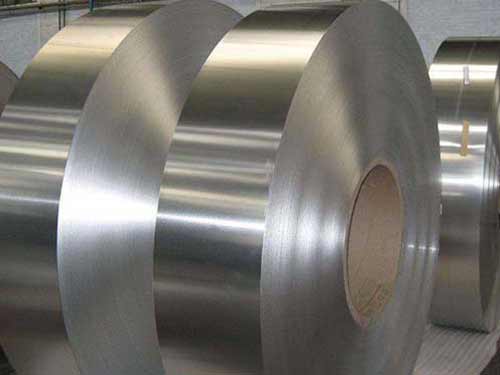
Aluminum Strip Panel Wooden Grain Coil
Aluminum strip panel wooden grain coil is designed for projects that want the warmth of timber without accepting timber's routine maintenance burden. It is not simply an aluminum strip with a decorative print. It is a formed-material system in which alloy selection, temper, pretreatment, coating adhesion, wood-grain transfer, and coil geometry must work together.
For ceiling systems, wall cladding, soffits, shutters, fascia, garage doors, and decorative panel profiles, the material offers a practical contrast: it carries the visual rhythm of oak, walnut, teak, or maple while retaining aluminum's light weight, corrosion resistance, and predictable forming behavior. The result is especially valuable where humidity, sunlight, insects, or fire-safety requirements make natural wood less suitable.
The Product Is Built from the Substrate Outward
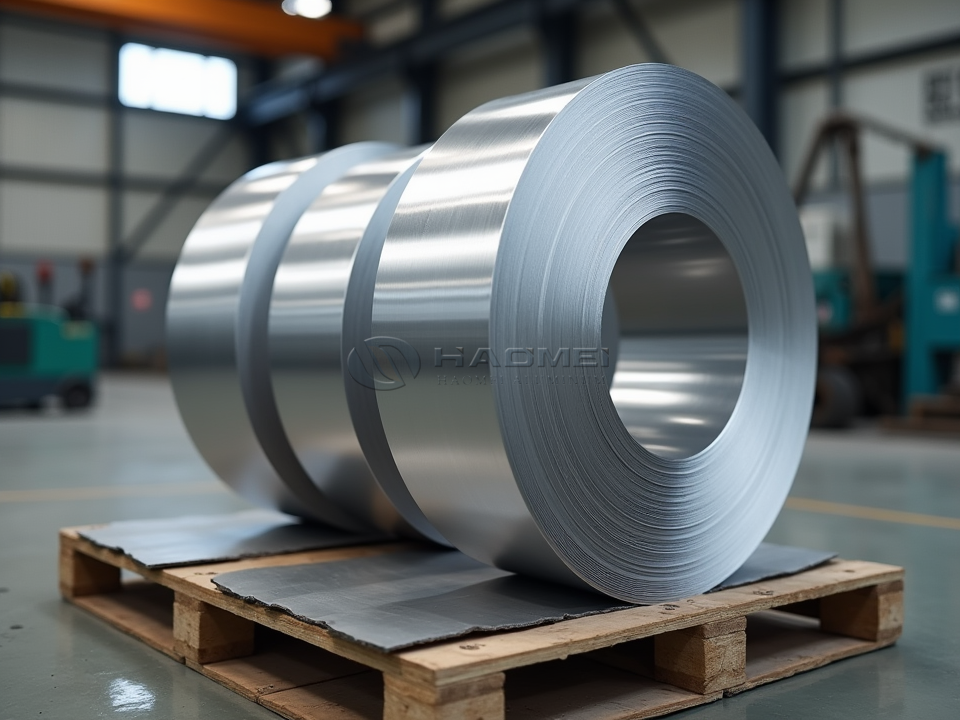
A convincing wood-grain finish starts with a stable aluminum strip. If the base metal has excessive waviness, uneven thickness, poor flatness, or unsuitable hardness, the finished panel may show roller marks, coating distortion, or cracking after bending. In this sense, the decorative surface is only as reliable as the coil beneath it.
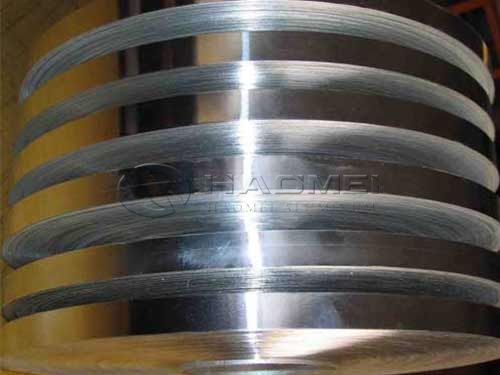
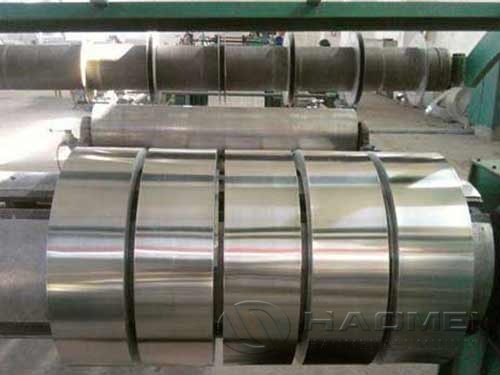
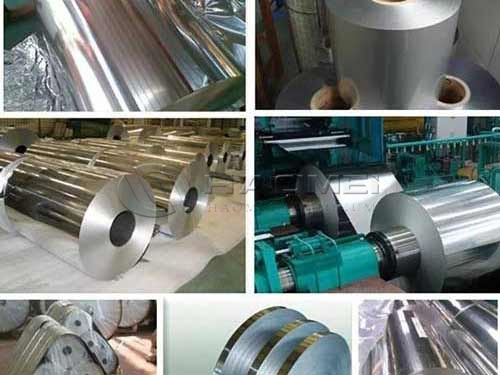
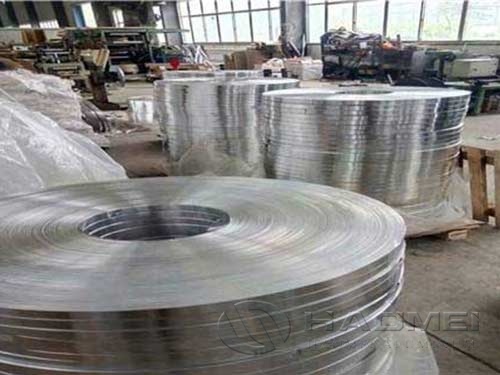
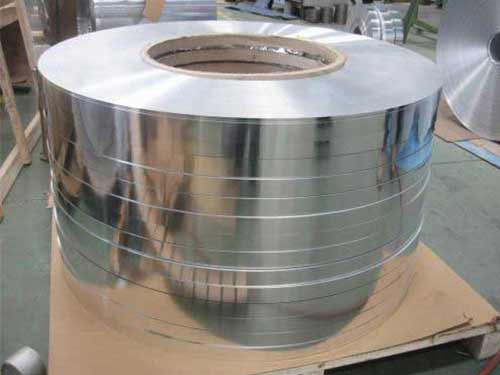
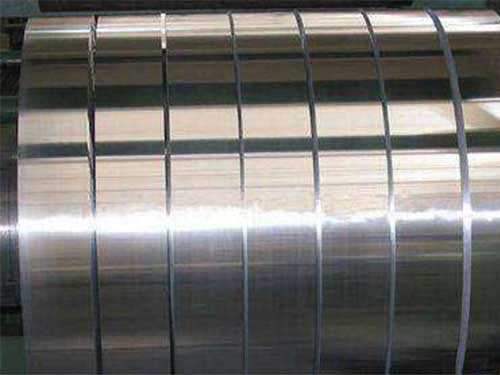
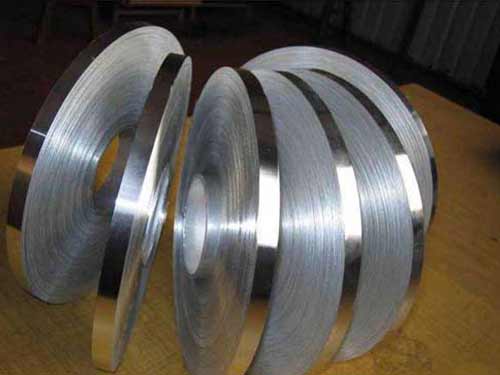
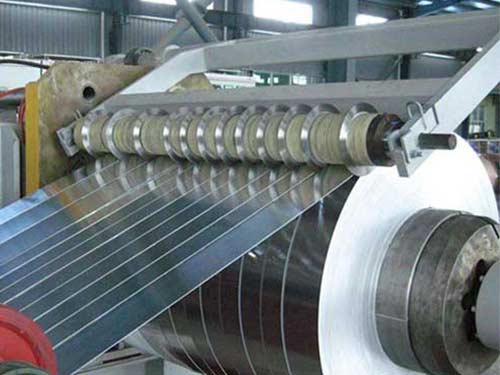
The usual production route begins with aluminum coil slitting to the required panel width. The strip is cleaned and chemically pretreated, then coated with a base color, generally by polyester, SMP, PVDF, or fluorocarbon coating. A wood-grain film is applied through heat-transfer printing or roller coating, followed by baking. The grain can be matte, brushed, embossed, glossy, or lightly textured to better resemble natural wood fibers.
For architectural exposure, coating choice should match the local climate. Polyester is commonly selected for indoor ceilings and sheltered decorative applications. SMP offers stronger weathering performance. PVDF or fluorocarbon systems are more appropriate for long-term exterior façades, coastal regions, strong UV environments, and areas with significant temperature variation.
Typical Aluminum Strip Panel Wooden Grain Coil Parameters
| Property | Common Range or Option |
|---|---|
| Alloy | 1100, 1060, 3003, 3004, 3105, 5052 |
| Temper | O, H14, H16, H18, H22, H24, H26 |
| Thickness | 0.20-2.00 mm |
| Common panel thickness | 0.40-1.20 mm |
| Width before slitting | Up to 1,600 mm, subject to mill capability |
| Slit strip width | 20-1,500 mm |
| Coil inner diameter | 150 mm, 300 mm, 405 mm, 505 mm, or customized |
| Coil weight | Typically 1-5 tonnes |
| Coating type | PE, SMP, HDP, PVDF, fluorocarbon, transfer-print coating |
| Coating thickness | Usually 15-35 microns, project dependent |
| Finish | Oak, walnut, teak, maple, pine, ash, custom grain |
| Surface form | Smooth, embossed, matte, brushed, protective film optional |
For roll-formed ceiling strips and folded trims, H24 is often an effective balance between stiffness and bendability. For deeper shaping or profiles with small radii, O or H22 temper may reduce the chance of bend-edge cracking. H16 or H18 can provide a firmer feel for flatter panel designs, though the forming allowance must be reviewed before production.
Alloy and Temper Selection for Real Panel Conditions
Alloy 3003 is widely used because manganese improves strength while preserving good workability and corrosion resistance. It is a dependable choice for wood-grain wall panels, suspended ceilings, and decorative strips. Customers needing this balance can evaluate 3003 Aluminum Strip for coil-based panel fabrication.
Alloy 3105 is another frequent architectural option. Its aluminum-manganese-magnesium composition supports coated sheet applications and provides good performance in formed building products. It is often selected when panel rigidity and coating compatibility matter at the same time.
Alloy 5052 contains magnesium and offers stronger corrosion resistance than 3003 or 3105. It is suitable for humid zones, coastal structures, exterior soffits, and locations where salt-laden air is a concern. For demanding environmental conditions, 5052 Aluminum Strip can provide a more robust substrate option.
Pure aluminum grades such as 1050, 1060, and 1100 offer excellent ductility and surface quality. They are useful for lightweight interior decorative strips, although they have lower mechanical strength than manganese- or magnesium-containing alloys.
Chemical Composition of Common Substrates
The following table presents typical composition limits in percent by weight. Actual values should be confirmed against the mill certificate and the selected standard.
| Alloy | Si | Fe | Cu | Mn | Mg | Zn | Ti | Al |
|---|---|---|---|---|---|---|---|---|
| 1060 | 0.25 max | 0.35 max | 0.05 max | 0.03 max | 0.03 max | 0.05 max | 0.03 max | Balance |
| 1100 | Si + Fe 0.95 max | Included | 0.05-0.20 | 0.05 max | - | 0.10 max | - | Balance |
| 3003 | 0.60 max | 0.70 max | 0.05-0.20 | 1.0-1.5 | - | 0.10 max | - | Balance |
| 3105 | 0.60 max | 0.70 max | 0.30 max | 0.30-0.80 | 0.20-0.80 | 0.40 max | 0.10 max | Balance |
| 5052 | 0.25 max | 0.40 max | 0.10 max | 0.10 max | 2.2-2.8 | 0.10 max | - | Balance |
The chemistry matters because it influences more than strength. Magnesium supports corrosion resistance, manganese raises strength and assists form stability, while controlled iron and silicon levels contribute to consistent rolling and finishing behavior. A coating line benefits from a uniform substrate because surface energy, cleanliness, and thermal response remain more stable during baking.
Applicable Standards and Quality Controls
Aluminum strip panel wooden grain coil can be produced in accordance with ASTM B209 for aluminum and aluminum-alloy sheet and plate, EN 485 for tolerances and mechanical properties, EN 1396 for coil-coated aluminum sheet, and GB/T 3880 for aluminum and aluminum-alloy sheet and strip. Coating performance may also be assessed against architectural coating specifications such as AAMA 2603, AAMA 2604, or AAMA 2605, depending on the coating system and project exposure level.
Quality control should cover thickness tolerance, width tolerance, edge burr, coil telescoping, flatness, surface cleanliness, color consistency, gloss, coating thickness, adhesion, pencil hardness, impact resistance, bend performance, and solvent resistance. For wood-grain products, visual consistency deserves special attention. The grain repeat, print alignment, color batch, and direction of pattern should be agreed before mass production, particularly when panels will be installed side by side across a large façade.
Fabrication and Installation Considerations
The coil should be stored indoors in a dry, ventilated place and protected from condensation. Avoid direct contact between wet packaging and the coil edge. During roll forming, select bending radii appropriate for thickness, alloy, temper, and coating type. A hard temper can create a sharp profile, but an overly tight bend may damage the coating or expose the substrate at the edge.
Protective film is useful during fabrication and installation, yet it should not remain on the panel longer than recommended. Sunlight and heat can make aged film difficult to remove. When installing exterior panels, allow for thermal expansion, use compatible fasteners, and prevent prolonged water trapping at joints.
Wooden grain aluminum strip panels succeed because they treat appearance as an engineering outcome rather than a decorative afterthought. With the right alloy, temper, coating system, and fabrication method, the coil can deliver the character of wood with the dimensional stability and service life expected from architectural aluminum.