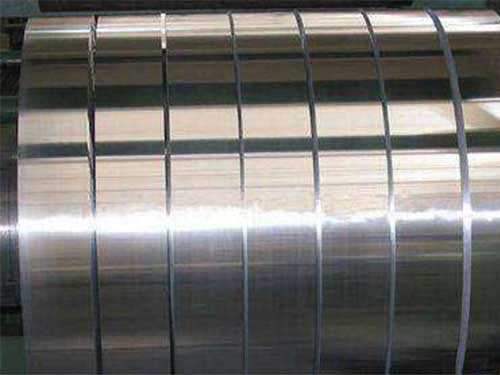
5456 Aluminum Strip
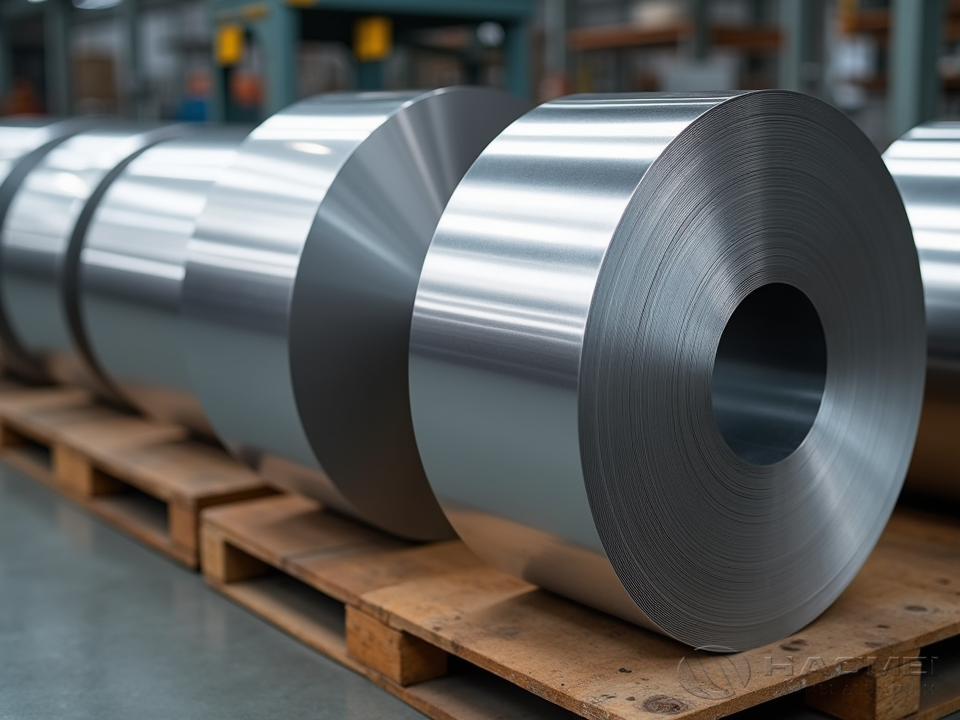
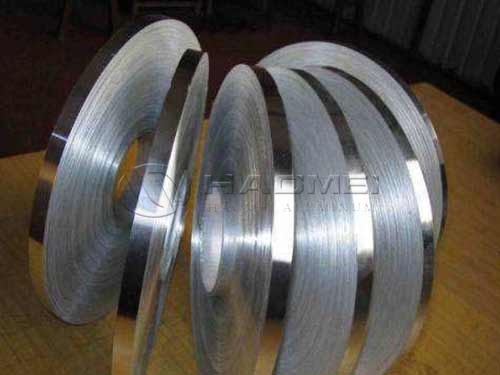
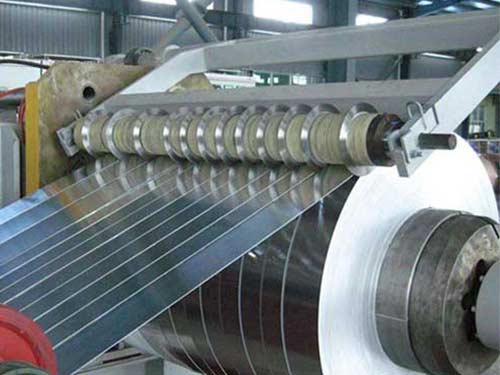
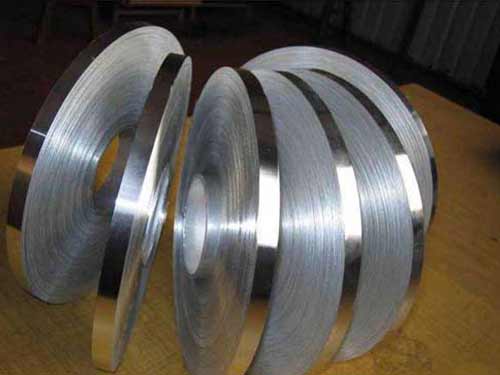
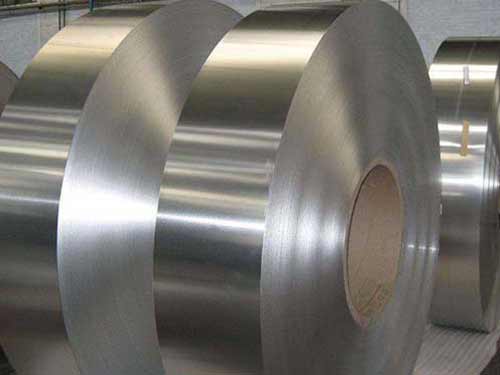
5456 aluminum strip is best understood as a narrow, coil-fed structural material rather than simply a cut-down sheet. Its value appears when a part must be light, strong, weldable, and resistant to wet or salt-rich environments. In production, the strip form gives engineers a continuous metal path: it can be slit, stamped, roll formed, welded, bent, or wound into repeatable components with less handling waste than plate or sheet blanks.
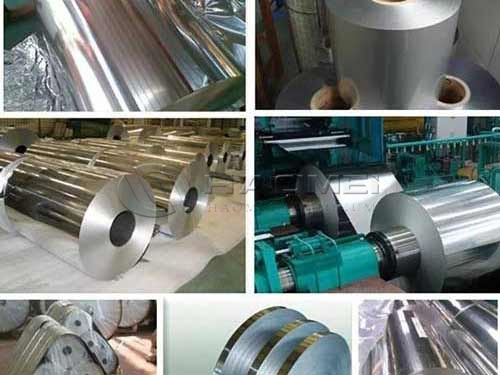
This alloy belongs to the 5xxx aluminum-magnesium family. Magnesium is the main strengthening element, while manganese and chromium help refine performance under forming, welding, and marine exposure. Compared with lower-magnesium grades, 5456 aluminum strip offers higher strength. Compared with heat-treatable grades, it keeps fabrication simpler because its strength comes from composition and strain hardening, not solution heat treatment.
Why 5456 Aluminum Strip Works Like a Structural Skin
In many applications, strip is asked to do more than cover a surface. It may work as a tension band, a stiffening rib, a formed bracket, a welded reinforcement, or a corrosion-resistant barrier. 5456 performs well in these roles because it combines moderate formability with high strength for a non-heat-treatable aluminum alloy.
Its marine character is especially important. In shipbuilding, offshore equipment, tank structures, and coastal hardware, corrosion is not a side issue; it is part of the design load. 5456 aluminum strip resists seawater attack better than many general-purpose metals while remaining much lighter than steel. It is also compatible with many welding processes, making it suitable for continuous assemblies where bolting or riveting would add weight and leak paths.
Compared with 5052 Aluminum Strip, 5456 generally provides higher strength due to its richer magnesium level. The tradeoff is that process control becomes more important, especially when the finished part will see long-term stress, heat, or marine exposure.
Typical Product Parameters
The actual supply range depends on mill capability and order requirements, but 5456 aluminum strip is commonly specified by thickness, width, temper, surface, and coil condition.
| Parameter | Common Supply Range or Condition |
|---|---|
| Alloy | 5456, EN AW-5456, UNS A95456 |
| Product form | Strip, narrow coil, slit coil, flat strip |
| Thickness | About 0.20 mm to 6.00 mm, depending on temper and width |
| Width | About 20 mm to 1600 mm after slitting |
| Coil inner diameter | 300 mm, 405 mm, 505 mm, or customized |
| Surface | Mill finish, degreased, brushed, coated, film protected on request |
| Edge condition | Slit edge, deburred edge, round edge on request |
| Flatness | Controlled for stamping, roll forming, or welding lines |
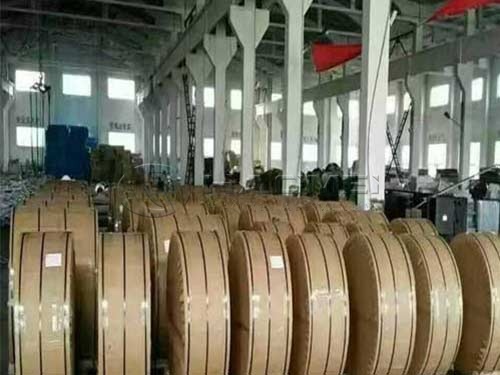
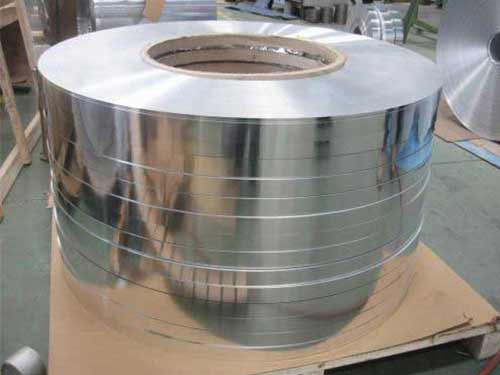
| Packaging | Moisture-resistant paper, wooden pallet or wooden case, eye-to-wall or eye-to-sky |
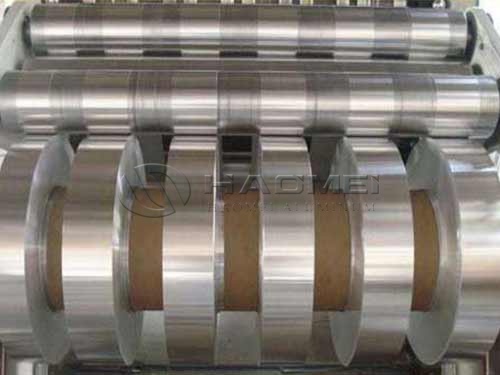
For precision stamping or roll forming, burr height, camber, oil level, and coil telescoping matter as much as nominal thickness. A good strip order should state both the alloy and the way the coil will run through the customer's line.
Chemical Composition of 5456 Aluminum Strip
The chemistry of 5456 is built around magnesium strength with supporting elements that improve stability and corrosion behavior. The following values are typical specification limits by weight percent and may vary slightly by standard.
| Element | Content, wt.% |
|---|---|
| Silicon, Si | Max 0.25 |
| Iron, Fe | Max 0.40 |
| Copper, Cu | Max 0.10 |
| Manganese, Mn | 0.50 - 1.00 |
| Magnesium, Mg | 4.70 - 5.50 |
| Chromium, Cr | 0.05 - 0.20 |
| Zinc, Zn | Max 0.25 |
| Titanium, Ti | Max 0.20 |
| Other elements, each | Max 0.05 |
| Other elements, total | Max 0.15 |
| Aluminum, Al | Balance |
The high magnesium content is the main reason 5456 has stronger mechanical performance than many common 5xxx strips. Manganese contributes to strength and grain structure, while chromium helps control recrystallization and improves resistance to certain corrosion modes.
Tempers and What They Mean in Use
5456 aluminum strip is not strengthened by heat treatment. Its usable strength is controlled by annealing and cold work, then sometimes by stabilization. This makes temper selection a practical design decision.
| Temper | Practical Meaning | Typical Use Direction |
|---|---|---|
| O | Fully annealed, softest condition | Deep forming, bending, parts needing maximum ductility |
| H111 | Slight strain hardening after annealing | Light forming, welded structures, general marine parts |
| H112 | Strain hardened by fabrication process | Structural parts with moderate forming needs |
| H32 / H34 | Strain hardened and stabilized | Higher strength strip for formed components |
| H116 | Special marine corrosion-resistant temper | Seawater service, hull and offshore components |
| H321 | Stabilized marine temper | Welded marine assemblies requiring corrosion control |
For marine service, H116 and H321 are often preferred because 5xxx alloys with more than about 3% magnesium can become sensitized if exposed to elevated temperatures for long periods. Sensitization may reduce resistance to intergranular corrosion or stress corrosion cracking. In simple terms, the correct temper helps the alloy keep its seawater durability after forming and welding.
Mechanical and Physical Reference Data
Mechanical properties vary with thickness, temper, and standard. The values here are practical references for material discussion, not a replacement for a certified mill test report.
| Property | Typical Range or Value |
|---|---|
| Density | About 2.66 g/cm3 |
| Elastic modulus | About 70 GPa |
| Melting range | About 570 - 640°C |
| Electrical conductivity | About 28 - 32% IACS |
| Thermal conductivity | About 120 - 140 W/m·K |
| Tensile strength, O temper | About 260 - 330 MPa |
| Tensile strength, H116 / H321 | About 310 - 380 MPa |
| Yield strength, depending on temper | About 120 - 300 MPa |
| Elongation | Higher in O temper, lower in harder H tempers |
These figures explain why 5456 strip is often chosen when 1xxx or 3xxx aluminum is too soft and when steel would add too much weight.
Implementation Standards and Inspection Points
5456 aluminum strip can be supplied according to internationally recognized standards, depending on market and application. Common references include ASTM B209/B209M for aluminum sheet and plate products, EN 485 for sheet, strip, and plate requirements, EN 573 for chemical composition, EN 515 for temper designation, and relevant marine or customer engineering specifications.
Inspection usually focuses on chemical composition, tensile properties, dimensions, surface quality, edge quality, flatness, and coil winding condition. For marine or pressure-related use, certification and traceability become especially important. Buyers sourcing within the broader Alloy Aluminum Strip category should separate general commercial strip from marine-grade controlled temper strip during inquiry.
Functions in Real Applications
In ship and boat construction, 5456 aluminum strip may be used for hull reinforcements, deck fittings, welded ribs, brackets, trim, and corrosion-resistant structural details. Its low density reduces vessel weight, while its weldability supports modular fabrication.
In offshore and coastal equipment, it works in enclosures, frames, clamps, platforms, and protective bands. The strip format is helpful when components are repetitive and narrow, such as formed channels or reinforcement strips.
In transportation, 5456 strip can serve in lightweight structural parts, trailer components, rail vehicle fittings, and high-strength formed profiles. Where vibration, moisture, and salt spray appear together, the alloy's balance of toughness and corrosion resistance becomes valuable.
In industrial fabrication, it may be selected for welded tanks, cryogenic-related supports, pressure-adjacent components, and heavy-duty stamped parts. Its performance at low temperatures is better than many materials that lose toughness in cold environments.
Fabrication Notes for Better Results
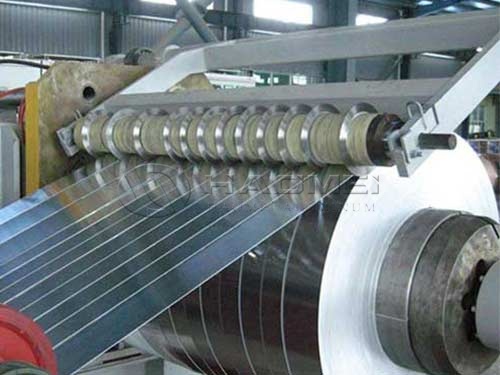
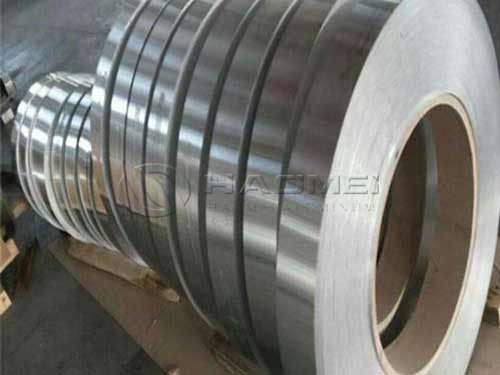
5456 aluminum strip can be sheared, slit, punched, stamped, bent, roll formed, and welded. For welding, 5356 or 5556 filler metals are often considered, depending on design requirements. Since the alloy is non-heat-treatable, post-weld heat treatment is normally not used to restore strength. Instead, the design should account for weld zone behavior from the start.
Bending performance depends strongly on temper. O and H111 bend more easily, while H34, H116, or H321 require larger bend radii and better tooling control. Lubrication, burr direction, grain direction, and edge quality can decide whether a part bends cleanly or cracks at the outside radius.
For long service life, avoid unnecessary prolonged exposure above roughly 65°C in stressed marine structures unless the temper and application have been reviewed. This is not a weakness of 5456 alone; it is a design rule for high-magnesium 5xxx aluminum alloys.
How to Specify 5456 Aluminum Strip Clearly
A complete inquiry should include alloy, temper, thickness, width, tolerance, coil weight, inner diameter, surface requirement, edge condition, standard, test certificate need, and end use. If the strip will be welded, stamped, or used in seawater, mention that early. The best 5456 aluminum strip is not only chemically correct; it is matched to the forming line, joining method, and service environment.
For customers who need a strong marine aluminum strip with reliable weldability and practical coil processing, 5456 offers a capable middle ground: lighter than steel, stronger than many common aluminum strips, and ready for demanding environments when ordered in the proper temper and standard.