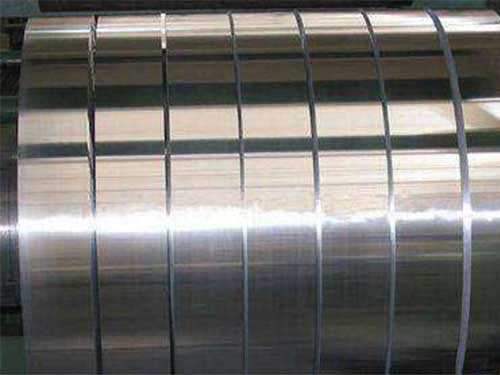
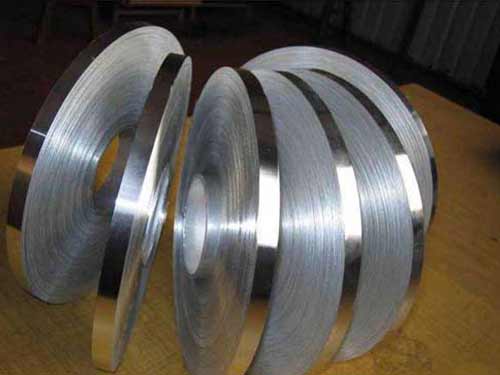
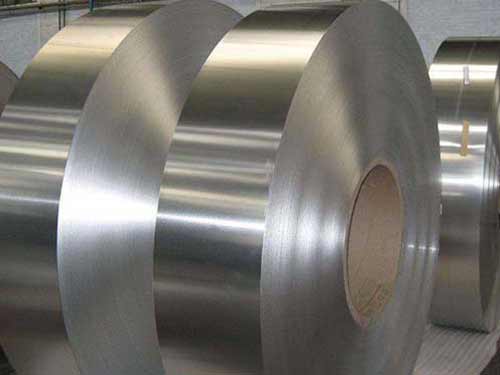
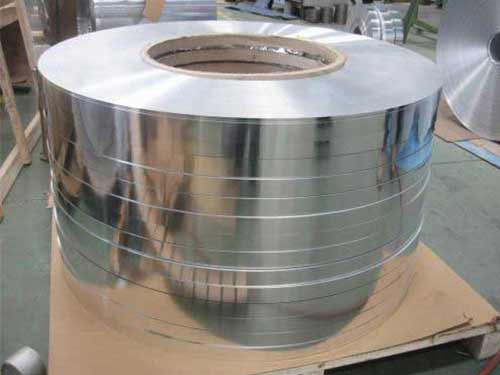
Factory Produce Aluminum Strips
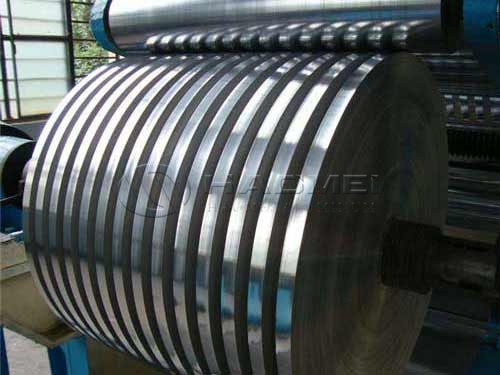
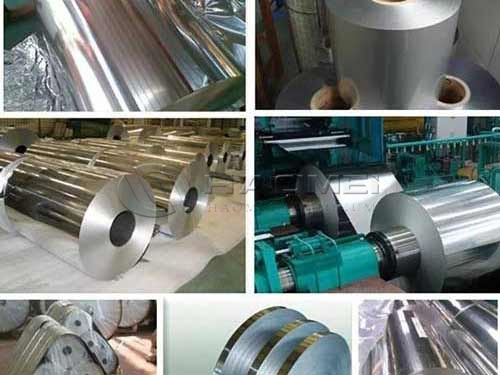
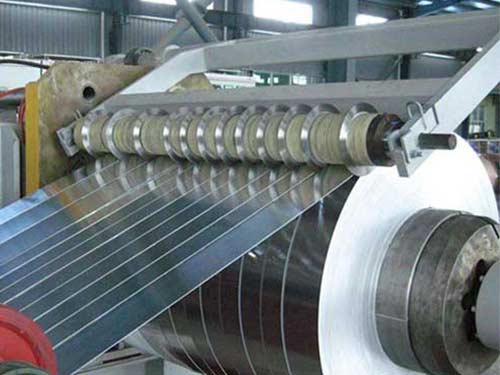
Haomei Aluminum CO., LTD., Inc. supplies factory produce aluminum strips designed for customers who need stable dimensions, consistent coil quality, and dependable performance in continuous production. Aluminum strip is produced by rolling, annealing, tension leveling, and precision slitting aluminum coil into narrow widths. The result is a lightweight, corrosion-resistant, and highly workable material used in electrical products, packaging, stamping, heat exchange, cable wrapping, lighting components, and automotive parts.
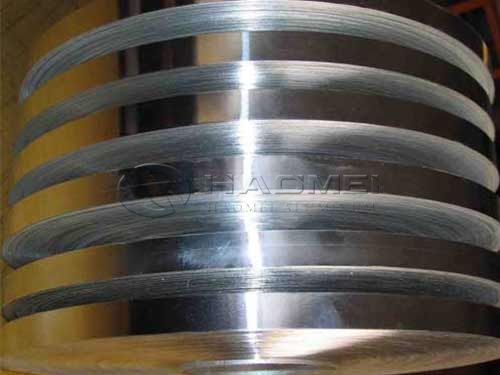
Aluminum strip offers a strong balance of formability, conductivity, surface quality, and cost efficiency. Compared with many steel strip products, it reduces component weight, improves oxidation resistance, and supports fast forming or winding operations. For customers with automated lines, stable strip edge quality and coil geometry are often just as critical as alloy selection. Proper slitting control helps reduce burrs, telescoping, coil collapse, and feeding interruption.
Product Features Customers Notice First
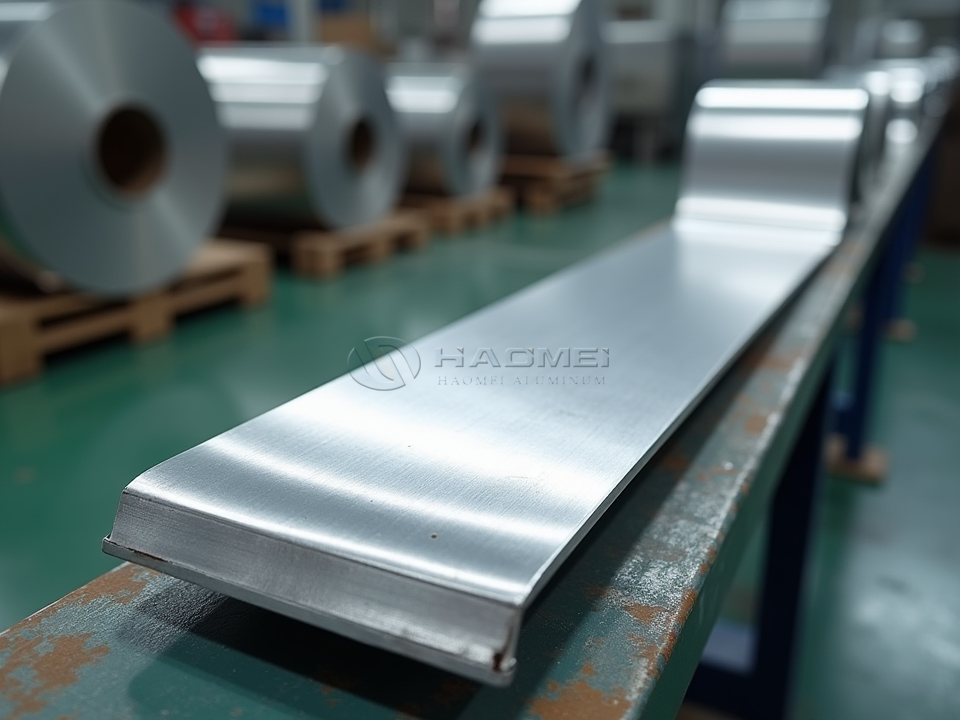
Factory produce aluminum strips are valued because they can be tailored to different production needs without sacrificing consistency. Common features include smooth surfaces, tight width tolerance, controlled temper, excellent flatness, and clean edges suitable for high-speed processing.
| Feature | Practical Value for Customers |
|---|---|
| Lightweight density | Helps reduce final product weight and transportation cost |
| Good corrosion resistance | Suitable for humid, outdoor, packaging, and electrical environments |
| High conductivity | Useful for transformer winding, cable shielding, bus components, and lamp bases |
| Excellent formability | Supports stamping, bending, deep drawing, rolling, and folding |
| Precision slit edge | Improves feeding stability and reduces tool wear |
| Recyclability | Supports sustainable production and lower material waste |
For general-purpose soft strip, customers often choose 1050 / 1060 Aluminum Strip because of its high aluminum purity, strong conductivity, and easy forming performance. For applications requiring better strength and corrosion resistance, 3003 Aluminum Strip is a practical choice for stamping, packaging, and heat-transfer components.
Common Alloy Options
Different aluminum strip alloys are selected according to strength, conductivity, forming depth, corrosion resistance, and surface requirements. The table shows typical options used in industrial production.
| Alloy | Main Characteristics | Typical Applications |
|---|---|---|
| 1050 | High purity, excellent conductivity, soft forming | Transformer winding, cable strip, labels, lamp parts |
| 1060 | Very good elongation, bright surface, easy bending | Electrical strip, battery tabs, soft packaging parts |
| 1070 | Higher aluminum purity, superior conductivity | Transformer foil strip, capacitor parts, conductive components |
| 1100 | Good formability and corrosion resistance | Heat exchanger fins, nameplates, kitchenware parts |
| 3003 | Medium strength, good anti-rust behavior | Stamping parts, packaging, radiator components |
| 3004 | Higher strength than 3003, good forming | Can stock, lamp cap material, building parts |
| 5052 | Strong corrosion resistance, higher strength | Marine parts, hardware, enclosure strip, automotive parts |
| 8011 | Good barrier behavior and processability | Packaging strip, bottle caps, food container materials |
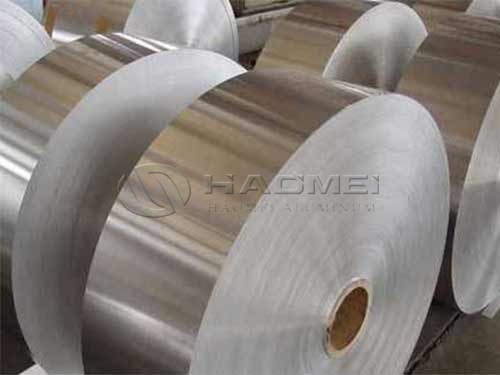
Typical Chemical Composition
Chemical composition affects conductivity, strength, hardness, corrosion resistance, and forming behavior. Actual values can be adjusted according to applicable standards such as ASTM, EN, JIS, or customer specifications.
| Alloy | Si % | Fe % | Cu % | Mn % | Mg % | Zn % | Al % |
|---|---|---|---|---|---|---|---|
| 1050 | 0.25 max | 0.40 max | 0.05 max | 0.05 max | 0.05 max | 0.05 max | 99.50 min |
| 1060 | 0.25 max | 0.35 max | 0.05 max | 0.03 max | 0.03 max | 0.05 max | 99.60 min |
| 1100 | Si + Fe 0.95 max | Si + Fe 0.95 max | 0.05-0.20 | 0.05 max | - | 0.10 max | 99.00 min |
| 3003 | 0.60 max | 0.70 max | 0.05-0.20 | 1.00-1.50 | - | 0.10 max | Balance |
| 5052 | 0.25 max | 0.40 max | 0.10 max | 0.10 max | 2.20-2.80 | 0.10 max | Balance |
| 8011 | 0.50-0.90 | 0.60-1.00 | 0.10 max | 0.20 max | 0.05 max | 0.10 max | Balance |
Technical Specifications
Aluminum strips can be produced in soft, semi-hard, and hard tempers. Selection depends on whether the strip will be wound, stamped, punched, folded, or deep drawn. Stable mechanical performance reduces cracking, springback variation, and dimensional drift.
| Parameter | Standard Supply Range | Customization Notes |
|---|---|---|
| Thickness | 0.10-3.00 mm | Thinner or thicker strip available after review |
| Width | 8-600 mm | Narrow slit coils available for cable and transformer use |
| Inner diameter | 150 mm, 300 mm, 400 mm, 500 mm | Matched to decoiler or winding equipment |
| Outer diameter | 500-1,500 mm | Adjusted for coil weight and transport limits |
| Temper | O, H12, H14, H16, H18, H22, H24 | Chosen by forming and hardness requirements |
| Surface | Mill finish, bright, degreased, coated, brushed | Protective film can be added when required |
| Edge condition | Slit edge, round edge, deburred edge | Burr control for high-speed stamping and winding |
| Tolerance | According to EN, ASTM, GB, or custom drawing | Precision tolerance available for automated lines |
Mechanical Performance Reference
Mechanical values vary by alloy, thickness, temper, and testing standard. The table provides practical reference data for material planning.
| Alloy and Temper | Tensile Strength MPa | Yield Strength MPa | Elongation % | Typical Use |
|---|---|---|---|---|
| 1060-O | 60-95 | 20-45 | 25-35 | Deep bending, transformer winding, soft forming |
| 1060-H18 | 120-150 | 110-140 | 2-5 | Rigid electrical strip and flat components |
| 3003-O | 95-130 | 35-60 | 20-30 | Drawing and stamping applications |
| 3003-H14 | 140-180 | 115-155 | 3-8 | Packaging, panels, light structural strip |
| 5052-O | 170-215 | 70-95 | 18-25 | Corrosion-resistant formed components |
| 5052-H32 | 210-260 | 160-210 | 6-12 | Enclosures, hardware, transport parts |
| 8011-O | 80-110 | 30-55 | 18-28 | Packaging, caps, flexible forming |
Production Control at the Factory
Reliable aluminum strip begins with clean rolling stock and careful process control. During production, coil surface quality, strip crown, flatness, edge burr, and mechanical properties are inspected at several stages. Slitting knives must be matched to alloy hardness and strip thickness to prevent ragged edges, excessive burr height, or edge wave.
| Process Stage | Control Point | Customer Benefit |
|---|---|---|
| Cold rolling | Thickness and surface uniformity | Stable strip gauge and smooth appearance |
| Annealing | Temper and grain structure | Better forming, bending, and conductivity control |
| Tension leveling | Flatness and residual stress | Reduced feeding problems in stamping and winding |
| Slitting | Width, burr, camber, edge shape | Cleaner processing and less equipment downtime |
| Packing | Moisture protection and coil fixation | Safer storage and long-distance shipment |
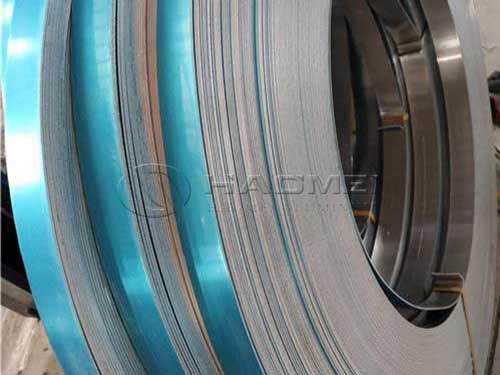
Application Fields
Factory produce aluminum strips serve many industries because they can be engineered for both appearance and function. In electrical manufacturing, high-purity 1050, 1060, and 1070 strips are widely used for transformer winding, cable shielding, capacitor parts, and conductive connectors. These products need consistent conductivity, low burr, and clean surfaces to avoid insulation damage.
In packaging, 8011 and 3003 aluminum strips are used for bottle caps, food containers, sealing parts, and flexible package components. Aluminum provides a clean surface, good barrier properties, and strong compatibility with coating, printing, and laminating.
In stamping and deep drawing, 3003, 3004, 5052, and 5754 strips are commonly used for lamp caps, closures, appliance parts, brackets, and decorative hardware. Proper temper selection helps prevent cracking while maintaining enough strength for service life.
Automotive and transport users prefer aluminum strip for lightweight brackets, trim, heat shields, battery components, and formed covers. For these applications, dimensional consistency supports robotic feeding and repeatable assembly.
Benefits for Purchasing and Production Teams
The value of aluminum strip is not limited to raw material price. A stable coil can improve production yield, reduce scrap, protect tools, and shorten setup time. When coil inner diameter, winding direction, weight, surface treatment, and edge condition are matched to customer equipment, the strip runs more smoothly from decoiling to final forming.
| Customer Goal | How Aluminum Strip Helps |
|---|---|
| Lower component weight | Aluminum density is about one-third that of steel |
| Better corrosion resistance | Natural oxide film protects the surface in many environments |
| Faster forming speed | Soft and semi-hard tempers support efficient stamping or winding |
| Reduced scrap | Tight tolerance and clean edges improve process stability |
| Attractive finish | Bright, brushed, coated, or mill surfaces suit visible parts |
| Sustainable sourcing | Aluminum can be repeatedly recycled with high material recovery |
Packaging and Delivery
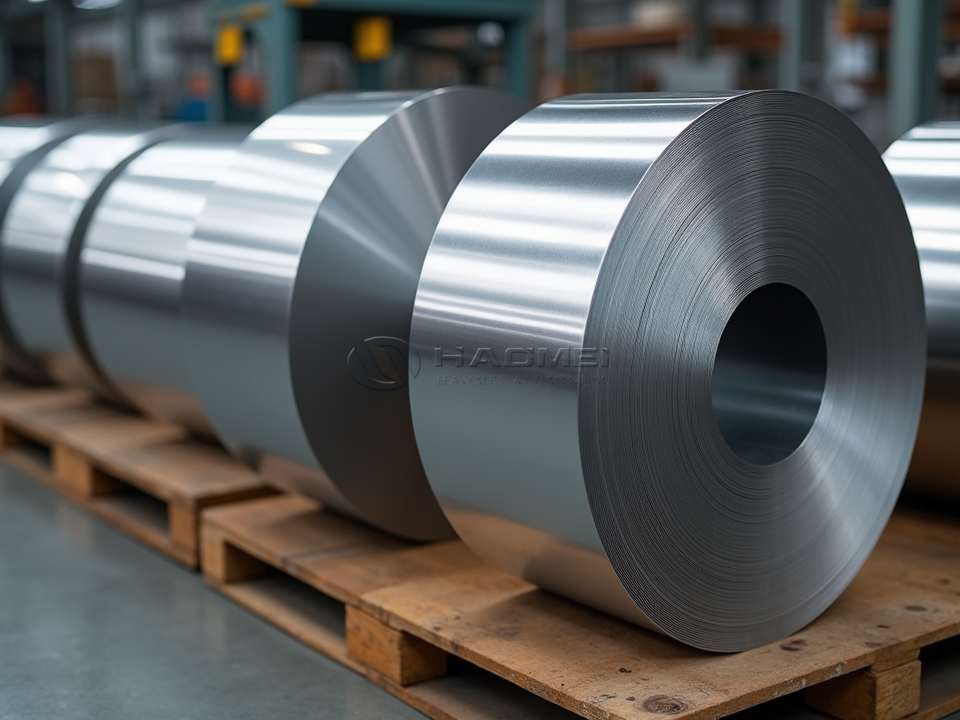
Coils are commonly packed with moisture-proof paper, plastic film, edge protectors, wooden pallets, and steel or plastic strapping. For export shipment, reinforced packing reduces vibration damage, oxidation risk, and coil deformation. Labels can show alloy, temper, size, coil number, net weight, gross weight, and inspection status.
Choosing the Right Aluminum Strip
To select the best product, customers should confirm alloy, temper, thickness, width, surface finish, edge requirement, coil weight, inner diameter, and final application. If the strip will be stamped, bending radius and elongation are critical. If it will be wound for electrical use, conductivity, burr height, and surface cleanliness become more important. For decorative parts, surface uniformity and scratch control should be prioritized.
Haomei Aluminum CO., LTD., Inc. supports customized factory produce aluminum strips for trial orders, batch supply, and long-term production programs. With accurate alloy selection, careful slitting, and controlled packing, aluminum strip becomes a dependable material for efficient, lightweight, and high-quality manufacturing.