5052 Aluminium Strip Tape Band For
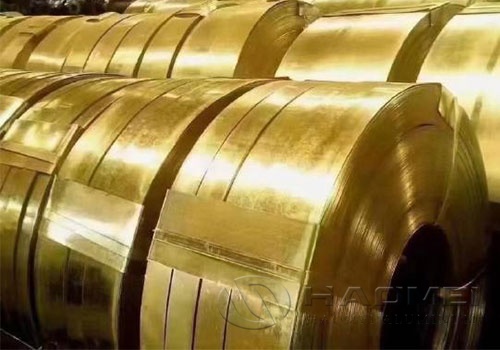
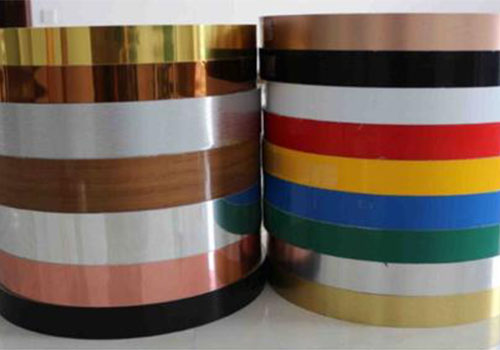
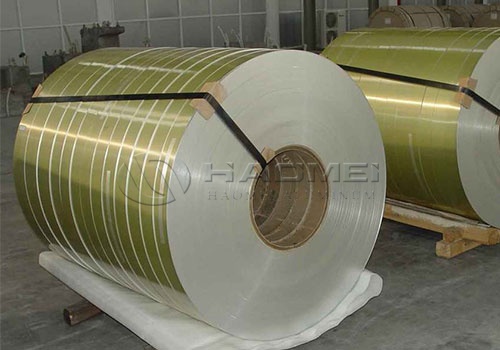
5052 aluminium strip tape band is a magnesium-containing aluminum alloy strip made for applications requiring corrosion resistance, stable forming performance, moderate strength, and low weight. Supplied in slit coils, narrow bands, or tape-width rolls, it is widely used in transport components, duct wrapping, electrical shielding, appliance panels, packaging closures, decorative trim, and fabricated metal parts.
Unlike ordinary soft aluminum tape, 5052 alloy strip retains dependable mechanical strength after bending, rolling, stamping, and light drawing. Its magnesium and chromium content improves resistance to humid air, freshwater, industrial atmospheres, and marine exposure. This balance makes 5052 aluminum strip a practical material where a thin metal band must remain durable during service.
What 5052 Aluminium Strip Tape Band Is Used For
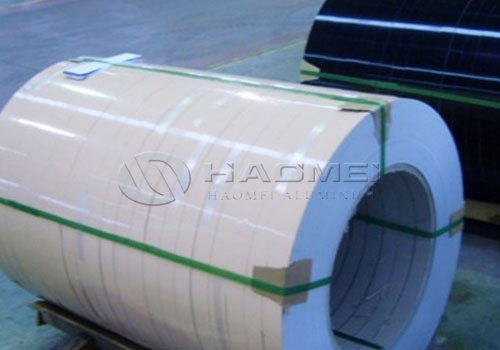
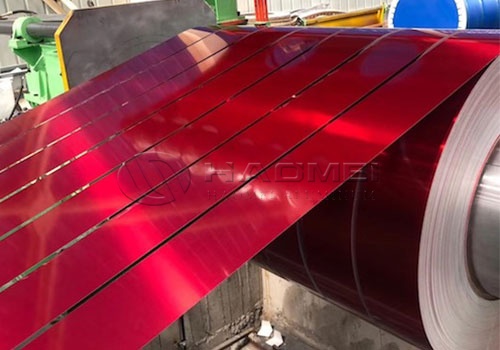
The term "tape band" commonly describes a narrow aluminum strip supplied in coils for continuous processing. Depending on thickness, temper, surface condition, and coating, it can be used as a forming material, protective wrapping band, sealing layer, edging strip, or conductive shielding component. It is not necessarily pressure-sensitive adhesive tape; adhesive backing can be added when a specific bonding system is required.
| Application Area | Typical Function of 5052 Strip Tape Band | Preferred Properties |
|---|---|---|
| HVAC and ventilation | Duct reinforcement, insulation jacketing, seam covering | Corrosion resistance, bendability, clean surface |
| Automotive and transport | Trim bands, brackets, interior components, tank-related parts | Low weight, fatigue resistance, formability |
| Electrical equipment | Shielding bands, enclosures, cable wraps | Conductivity, non-magnetic behavior, workability |
| Appliance production | Panels, edging, liners, decorative bands | Smooth finish, stamping response, coating adhesion |
| Marine equipment | Covers, fittings, protective strips | Saltwater and humidity resistance |
| Packaging and closures | Sealing bands, caps, container components | Light gauge rolling, clean surface, drawing capability |
| Construction | Flashing, cladding bands, joint covers | Outdoor durability, paint compatibility |
Alloy Chemistry and Corrosion Behavior
5052 belongs to the Al-Mg alloy family. Magnesium is the primary strengthening element, while chromium supports grain structure and corrosion performance. The alloy is not heat treatable for significant strengthening. Instead, its mechanical condition is developed through cold working and stabilization tempers such as H32 or H34.
| Element | Composition, % by Weight |
|---|---|
| Silicon, Si | 0.25 max |
| Iron, Fe | 0.40 max |
| Copper, Cu | 0.10 max |
| Manganese, Mn | 0.10 max |
| Magnesium, Mg | 2.20-2.80 |
| Chromium, Cr | 0.15-0.35 |
| Zinc, Zn | 0.10 max |
| Titanium, Ti | 0.15 max |
| Other elements, each | 0.05 max |
| Other elements, total | 0.15 max |
| Aluminum, Al | Remainder |
This chemical balance provides very good resistance to atmospheric corrosion and many mildly alkaline or neutral environments. For marine service, 5052 is often selected over general-purpose 1xxx aluminum because it has greater strength while maintaining strong resistance to salt-containing moisture. Contact with strongly acidic or strongly alkaline chemicals should be evaluated for the actual service environment.
Common Temper Conditions
Temper selection determines how easily the strip can be bent or formed. Softer tempers are suited to deep bends and shaped profiles, while harder tempers provide better dent resistance and spring performance.
| Temper | Condition | Typical Use for Tape Band |
|---|---|---|
| O | Fully annealed, soft | Deep forming, complex bending, drawn parts |
| H22 | Strain hardened and partially annealed | Moderate forming with improved strength |
| H24 | Strain hardened and partially annealed | Appliance panels, formed bands, general fabrication |
| H32 | Strain hardened and stabilized | Duct bands, marine trim, transport components |
| H34 | Higher strain-hardened and stabilized condition | Stiffer edging, protective strips, formed profiles |
| H36 | High-strength cold-worked condition | Applications needing increased rigidity |
| H38 | Full-hard condition | Flat bands, rigid tapes, limited-forming parts |
| Temper | Typical Tensile Strength, MPa | Typical Yield Strength, MPa | Typical Elongation, % | Formability |
|---|---|---|---|---|
| O | 170-215 | 65 min | 12-25 | Excellent |
| H24 | 195-245 | 115 min | 8-14 | Good |
| H32 | 210-260 | 130 min | 7-12 | Good |
| H34 | 230-280 | 160 min | 5-10 | Moderate |
| H38 | 255-305 | 220 min | 3-6 | Limited |
Mechanical values vary with strip thickness, test direction, production route, and the applicable standard. Material certification should state the exact temper, gauge, mechanical test results, and inspection requirements.
Technical Specifications for Slit Coil and Tape Band
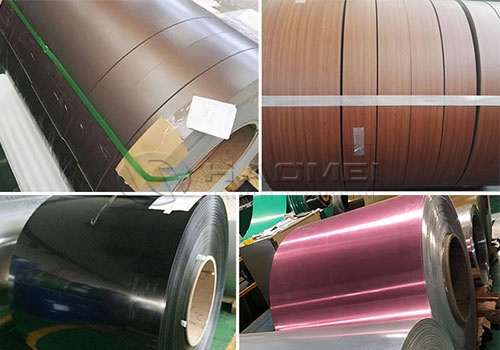
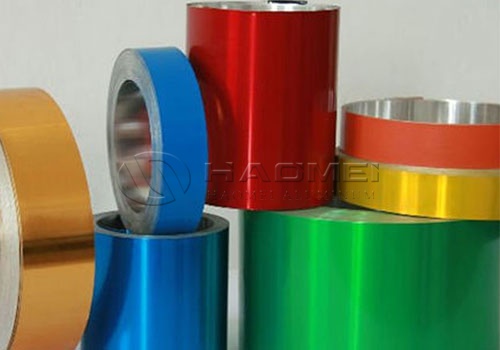
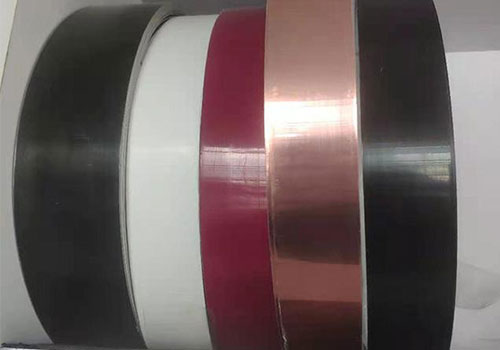
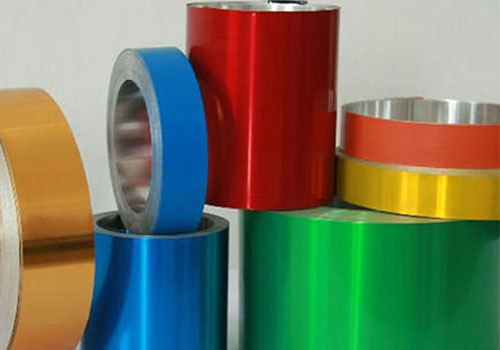
5052 aluminium strip can be produced in mill finish, brushed, polished, embossed, anodized, or coated surfaces. For applications exposed to weather, chemicals, or visible interiors, paint-coated options add appearance and surface protection. A Color Coated Aluminum Strip can be specified when the tape band must combine 5052 alloy performance with a controlled decorative finish.
| Parameter | Common Supply Range | Notes |
|---|---|---|
| Thickness | 0.10-6.00 mm | Thin gauges suit wrapping and tape-width bands; thicker gauges suit formed parts |
| Width | 10-1,600 mm | Narrow slit widths can be produced to customer tolerance |
| Coil inner diameter | 150 mm, 200 mm, 300 mm, 405 mm, 508 mm | Selected according to processing equipment |
| Coil outer diameter | Up to approximately 1,800 mm | Depends on gauge, weight, and packing method |
| Coil weight | 50-5,000 kg | Small coils available for manual handling or compact lines |
| Surface finish | Mill, bright, brushed, coated, embossed | Protective film may be applied for cosmetic surfaces |
| Edge condition | Mill edge, slit edge, deburred edge | Burr control is important for winding and assembly |
| Flatness | As agreed by specification | Critical for stamping, lamination, and roll forming |
| Physical Property | Typical Value |
|---|---|
| Density | 2.68 g/cm³ |
| Melting range | Approximately 607-649°C |
| Thermal conductivity | Approximately 138 W/m·K |
| Electrical conductivity | Approximately 35% IACS |
| Modulus of elasticity | Approximately 70 GPa |
| Coefficient of thermal expansion | Approximately 23.8 × 10⁻⁶ /°C |
Applicable Implementation Standards
Material can be ordered to regional or customer-specific standards. The selected standard should match the destination market, dimensional tolerance needs, and intended fabrication method.
| Standard | Scope |
|---|---|
| ASTM B209 / ASTM B209M | Aluminum and aluminum-alloy sheet and plate, commonly referenced for strip products |
| EN 485-1, EN 485-2, EN 485-4 | European requirements for wrought aluminum sheet, strip, tolerances, and mechanical properties |
| EN 573-3 | Chemical composition of aluminum alloys |
| JIS H4000 | Japanese standard for aluminum and aluminum alloy sheets, plates, and strips |
| GB/T 3880 | Chinese standard for aluminum and aluminum alloy plates and strips |
| ISO 6361 | Wrought aluminum and aluminum alloy sheets, strips, and plates |
Processing Guidance
Clean tooling and controlled bend radii help protect the strip surface. O and H24 tempers are preferred when the tape band must pass through tight forming rolls or complex stamped shapes. H32 and H34 are often selected for structural bands that need more stiffness after installation. When slit edges contact insulation, polymer films, or hands during assembly, deburring or edge conditioning can reduce the risk of cutting and surface damage.
For adhesive lamination, painting, or printing, the surface should be dry, oil-controlled, and compatible with the selected coating system. Pretreatment and primer selection are especially important in humid or outdoor installations. Where galvanic corrosion is possible, direct contact with dissimilar metals should be managed through sealants, coatings, insulating layers, or suitable fasteners.
Why Choose 5052 for Aluminum Tape Band Production
5052 aluminium strip tape band provides a practical middle ground between soft pure aluminum and stronger structural alloys. It is light enough for efficient handling, resistant enough for wet or coastal environments, and formable enough for continuous production lines. With the right temper, edge treatment, coil dimensions, and surface finish, it can support reliable fabrication across demanding industrial uses.
When requesting a quotation, specify alloy 5052, temper, thickness, slit width, coil ID, coil weight, surface finish, edge requirement, applicable standard, and end-use environment. Clear specifications help ensure that the supplied strip performs consistently from the first coil to the final installed component.