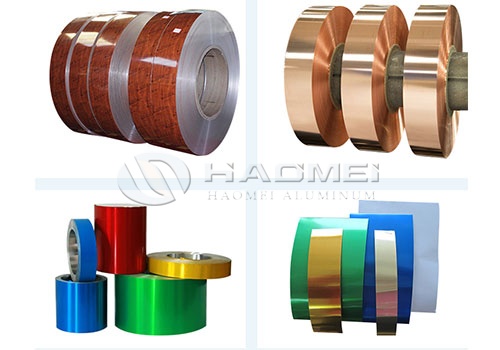
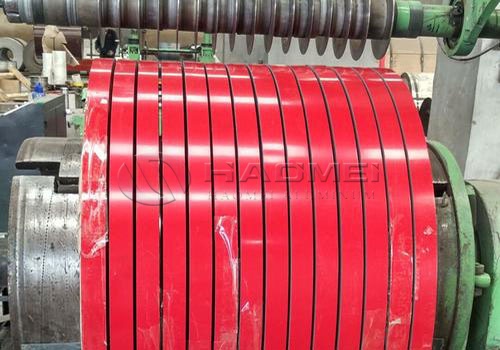
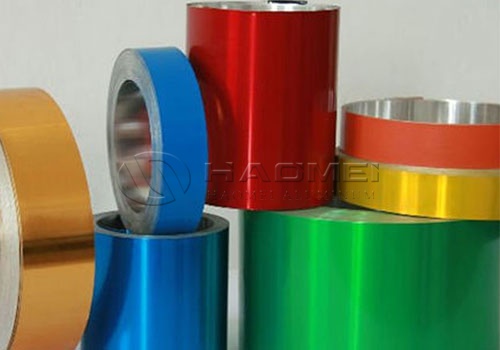
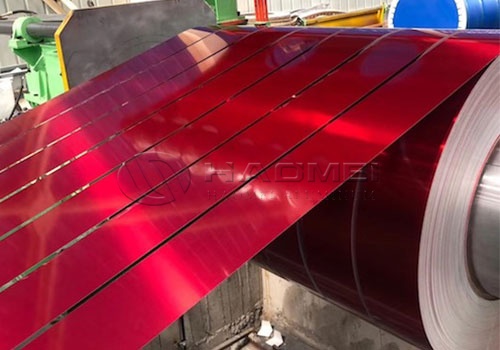
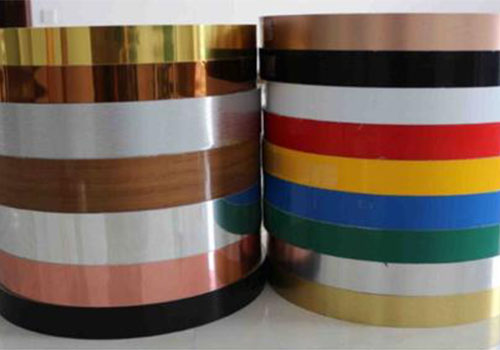
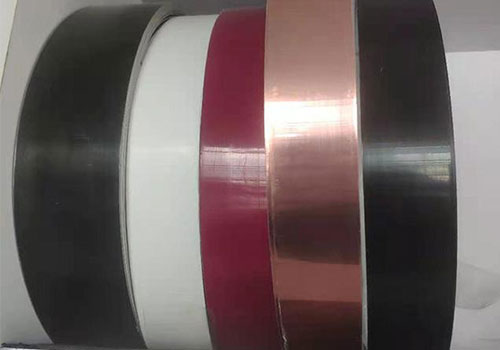
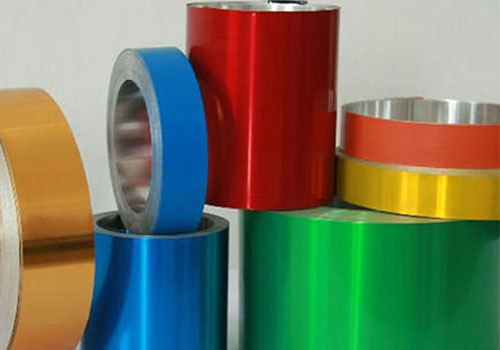
Trade Assurance RAL Colors Aluminium Strips
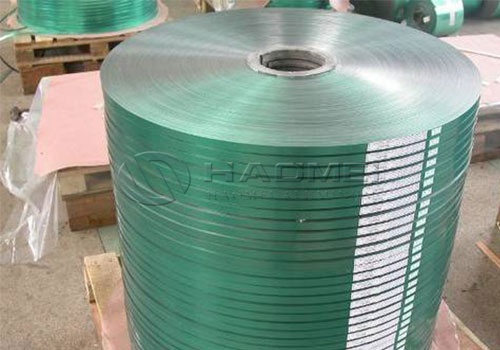
RAL color aluminium strips are more than painted coils cut into narrow widths. They are visual components, protective layers, and forming materials combined in one product. For buyers of architectural trims, roller shutters, channel letters, insulation cladding, ceiling systems, appliance panels, and decorative profiles, a consistent color finish is only valuable when the strip also arrives with dependable dimensions, coating adhesion, and documented quality.
Trade assurance adds an important commercial dimension to this material. It supports a clearer purchasing process by connecting product specifications, inspection expectations, delivery terms, and payment protection. For a color-sensitive project, this matters because a small difference in gloss, thickness, or RAL shade can become highly visible after installation.
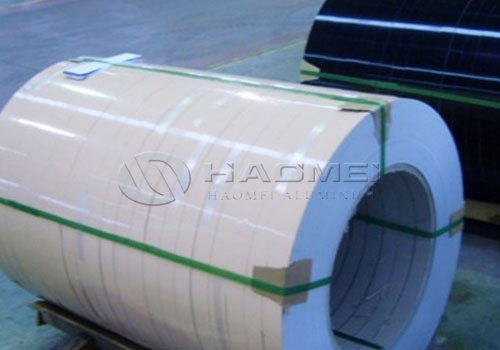
Why RAL Color Control Matters
The RAL system gives purchasers a shared color language. Instead of requesting a vague "bright white" or "deep red," customers can specify shades such as RAL 9016 Traffic White, RAL 3003 Ruby Red, RAL 1023 Traffic Yellow, or RAL 6005 Moss Green. This reduces interpretation gaps between the designer, fabricator, coating line, and final installer.
Still, a RAL code is not the entire coating specification. Gloss level, paint chemistry, surface texture, metallic effect, viewing angle, and production batch can influence perceived color. A matte RAL 7016 strip and a glossy RAL 7016 strip can look noticeably different in daylight. For this reason, approved color samples and batch-controlled production are recommended when strips will be installed side by side.
For applications requiring durable decorative surfaces, Color Coated Aluminum Strip can be selected with a finish designed around the required RAL shade, film thickness, and exposure environment.
Common Product Parameters
Trade assurance RAL colors aluminium strips can be produced to match both standard stock requirements and project-specific conversion needs. Typical parameters include:
| Property | Common Range or Option |
|---|---|
| Base alloy | 1050, 1060, 1100, 3003, 3004, 3105, 5052 |
| Temper | O, H12, H14, H16, H18, H19, H22, H24, H26, H32, H34 |
| Thickness | 0.20 mm to 3.00 mm |
| Strip width | 10 mm to 1,600 mm, slit to requirement |
| Coil inner diameter | 150 mm, 300 mm, 405 mm, 505 mm, 508 mm |
| Coil outer diameter | Usually up to 1,500 mm, subject to weight and thickness |
| Coil weight | Commonly 1 to 6 tonnes, or small coils for fabrication use |
| Coating type | PE, HDPE, SMP, PVDF, epoxy primer systems |
| Top coating thickness | Usually 15 to 35 microns, higher on request |
| Back coating thickness | Usually 5 to 10 microns |
| Surface | Smooth, high gloss, matte, textured, embossed, protective film |
| Color tolerance | Agreed against approved RAL sample or color standard |
Thickness tolerance, width tolerance, edge burr control, coil telescoping, and camber should be confirmed before production. Narrow strips for roll forming or automated stamping often require tighter dimensional control than general flashing materials.
Alloy and Temper Selection for Real Processing Conditions
The alloy is the metal foundation under the paint. Coating quality cannot compensate for an alloy temper that cracks during bending or lacks the strength needed for the finished part.
Alloy 1050, 1060, and 1100 are commercially pure aluminium grades with excellent corrosion resistance, thermal conductivity, and formability. They are suitable for decorative trims, heat shields, insulation jacketing, and lightly formed profiles. Their lower strength makes them less suitable for parts exposed to repeated mechanical loading.
Alloy 3003 and 3004 contain manganese, providing improved strength while retaining good workability. These grades are widely used for building components, cladding strips, gutters, appliance shells, and roll-formed sections. Temper H24 is often chosen when a balance between shape retention and bending performance is required.
Alloy 3105 is a popular choice for prepainted aluminium strip because it combines moderate strength with stable coating performance and practical forming behavior. It is frequently selected for shutters, roofing accessories, fascia systems, and painted profiles.
Alloy 5052 contains magnesium and offers stronger corrosion resistance, particularly in humid or mildly marine settings. It is useful where coated strips need higher mechanical durability, though it may cost more than 1xxx or 3xxx alternatives.
Annealed O temper is best for deep drawing, sharp bending, and complex shapes. H14 and H24 provide medium hardness for general fabrication. H18 or H19 tempers offer higher strength and flatter strip behavior but have less forming allowance. The correct temper should always be matched to bend radius, profile depth, and forming speed.
Chemical Composition of Common Aluminium Strip Alloys
The following table shows typical composition limits in percent by mass. Exact values should be verified against the relevant material standard and mill test certificate.
| Alloy | Si | Fe | Cu | Mn | Mg | Zn | Al |
|---|---|---|---|---|---|---|---|
| 1050 | ≤0.25 | ≤0.40 | ≤0.05 | ≤0.05 | ≤0.05 | ≤0.05 | ≥99.50 |
| 1060 | ≤0.25 | ≤0.35 | ≤0.05 | ≤0.03 | ≤0.03 | ≤0.05 | ≥99.60 |
| 1100 | Si+Fe ≤0.95 | Included | 0.05-0.20 | ≤0.05 | - | ≤0.10 | ≥99.00 |
| 3003 | ≤0.60 | ≤0.70 | 0.05-0.20 | 1.0-1.5 | - | ≤0.10 | Balance |
| 3004 | ≤0.30 | ≤0.70 | ≤0.25 | 1.0-1.5 | 0.8-1.3 | ≤0.25 | Balance |
| 3105 | ≤0.60 | ≤0.70 | ≤0.30 | 0.30-0.80 | 0.20-0.80 | ≤0.40 | Balance |
| 5052 | ≤0.25 | ≤0.40 | ≤0.10 | ≤0.10 | 2.2-2.8 | ≤0.10 | Balance |
Coating Systems and Outdoor Durability
A coating system should be chosen by service environment, not color alone. PE coating is economical and performs well for indoor panels, appliance parts, and sheltered construction uses. It offers good appearance and processing flexibility. PE Coated Aluminum Strip is often specified where the primary demand is clean color presentation at a controlled project cost.
PVDF coatings are preferred for demanding exterior locations, particularly high-UV climates, facades, coastal regions, and long-life architectural installations. Their resistance to chalking and fading supports better color retention over extended exposure. Primer selection is equally important because the primer promotes adhesion between the aluminium substrate and top paint layer.
A standard coated structure may include chemical pretreatment, corrosion-resistant primer, top coating, and reverse-side coating. The pretreatment stage improves adhesion and helps protect the aluminium from under-film corrosion. During purchasing, buyers should request coating thickness, pencil hardness, T-bend performance, impact resistance, adhesion results, gloss range, and salt spray requirements where applicable.
Applicable Standards and Inspection Practice
RAL color aluminium strips may be supplied in accordance with EN 485 for aluminium sheet and strip mechanical properties and tolerances, EN 573 for chemical composition and alloy designation, ASTM B209 for aluminium sheet and plate requirements, or GB/T 3880 for aluminium and aluminium alloy sheets and strips. Coating performance may be evaluated through methods such as ASTM D3359 for adhesion, ASTM D2794 for impact resistance, ASTM D3363 for pencil hardness, and ASTM B117 for salt spray testing.
Trade assurance works best when the purchase order states the full technical agreement: alloy, temper, thickness, width, RAL code, gloss level, coating system, coating thickness, protective film requirement, coil weight, packing method, inspection method, and shipment schedule. A pre-production color sample is especially valuable for decorative projects.
Practical Buying Perspective
The best RAL coated aluminium strip is not simply the brightest or lowest-cost coil. It is the strip that reaches the fabrication line without color disputes, edge damage, oil marks, telescoping, or coating cracks after bending. When buyers define the material from the final use backward, choosing exposure level, forming method, visual target, and required service life, trade assurance becomes a practical safeguard rather than just a transaction term.
For consistent RAL colors aluminium strips, confirm the approved sample, request test documents, retain a reference coil where color continuity matters, and specify packing that protects painted surfaces throughout transport and processing.