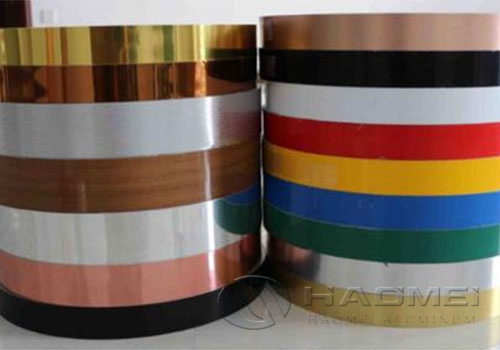
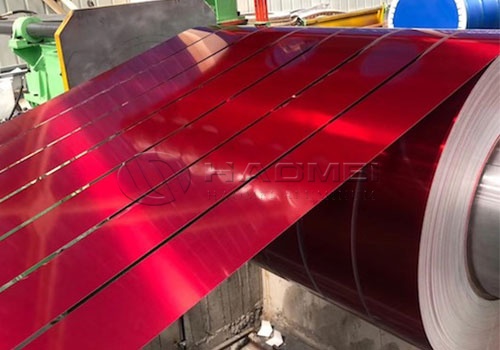
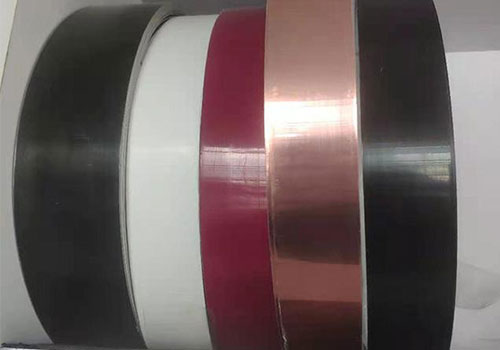
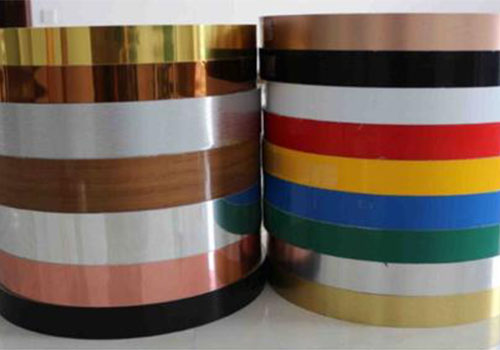
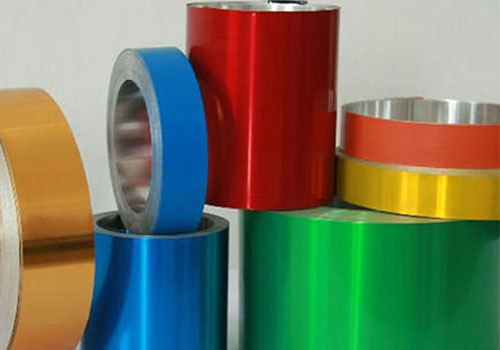
Color Brushed Aluminum Strip
Color brushed aluminum strip is often selected for its visual appeal, but its practical value goes further than decoration. The linear brushed grain changes how light travels across the metal, reducing glare, disguising minor handling marks, and creating a directional appearance that gives fabricated products a more deliberate finish. When this texture is combined with a durable color coating, the strip becomes a lightweight material for applications requiring both appearance stability and production efficiency.
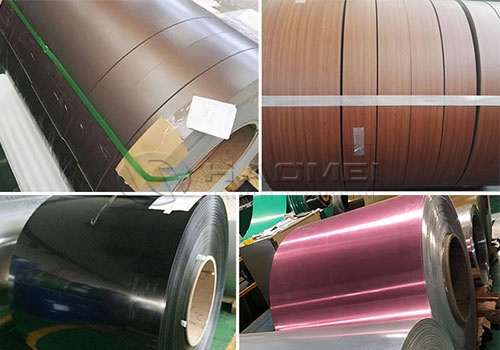
Rather than treating color and brushing as separate details, it is useful to view the surface as a functional system. The aluminum substrate supplies formability and corrosion resistance. The brushed pattern provides visual depth and helps conceal fine abrasion. The coating protects the grain while delivering controlled color, gloss, weatherability, and chemical resistance. This combination is especially valuable in products that are visible, frequently touched, or installed in long continuous lengths.
How the Brushed Colored Surface Is Created
The process normally begins with aluminum coil or strip in a selected alloy and temper. Mechanical brushing uses abrasive belts, non-woven wheels, or controlled sanding equipment to form fine, parallel lines along the rolling direction. Grain depth, line density, and consistency must be controlled carefully because uneven brushing can become more obvious after coating.
After brushing, the strip is cleaned and chemically pretreated to improve coating adhesion and corrosion performance. A primer is generally applied before the topcoat. The color layer may be polyester, high-durability polyester, polyurethane, SMP, or PVDF, chosen according to the service environment. Transparent or semi-transparent coatings may preserve more of the metallic grain, while opaque coatings produce stronger color coverage with a softer brushed effect.
A reliable Color Coated Aluminum Strip production route should maintain stable coating thickness across the strip width. This matters because inconsistent paint film can alter color appearance, flexibility, and long-term protection after bending or roll forming.
Functions Beyond Decoration
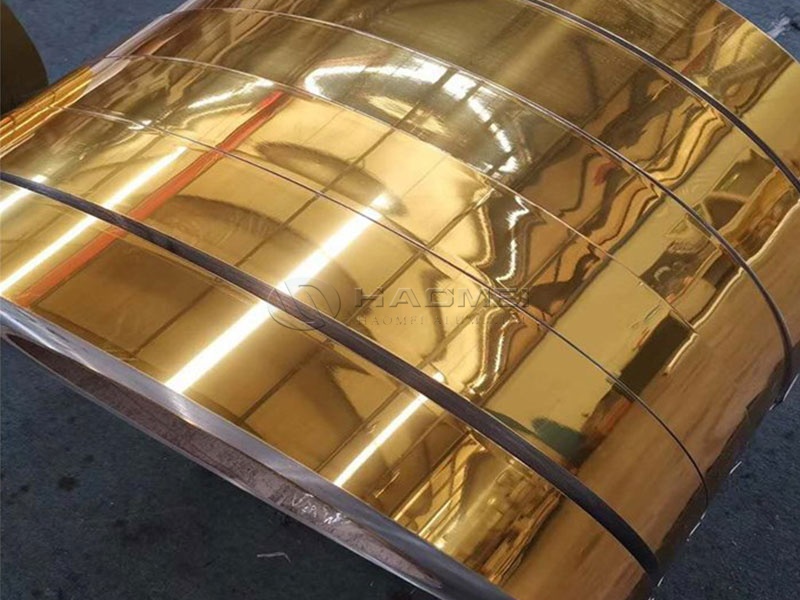
The brushed grain works like a controlled optical filter. Smooth coated aluminum can reflect light sharply, particularly under showroom, retail, and architectural lighting. A brushed surface diffuses reflection into a long, satin-like highlight. The result is a calmer appearance that can make panel systems, trims, appliance facings, and furniture components feel more refined without using heavy embossed patterns.
The directional texture also supports practical fabrication. Small contact marks that would be highly visible on mirror-finish metal may blend into the brushing direction. This can reduce rejection rates in processing, transportation, and assembly, provided that parts are handled in line with the grain. For this reason, manufacturers often specify a defined grain orientation when cutting blanks for visible components.
Color coating adds another layer of performance. It reduces the need for wet painting after fabrication, lowers solvent handling at the downstream plant, and supports consistent color from coil to coil. Prepainted strip is particularly effective for continuous roll forming, stamping, slitting, folding, and profiling operations.
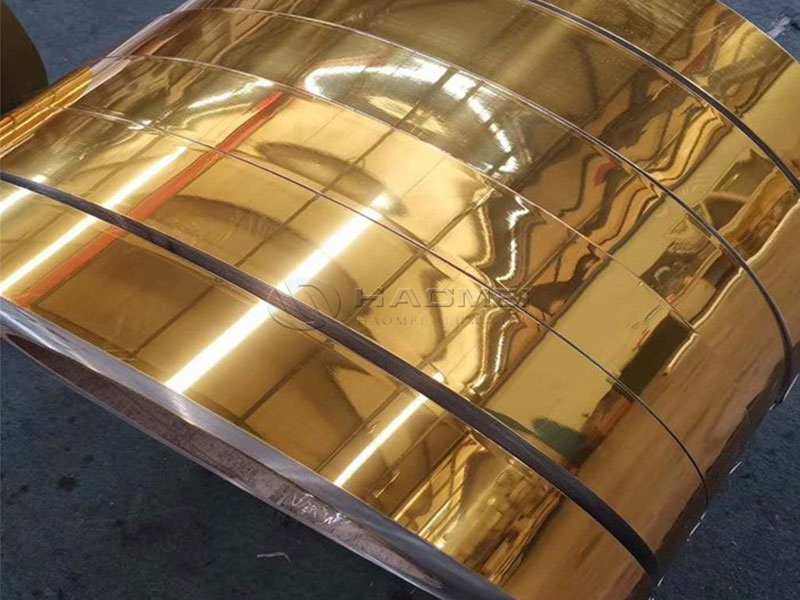
Common Applications of Color Brushed Aluminum Strip
Architectural trim and interior decorative panels are major users of this material. Bronze, champagne gold, graphite, black, silver, and dark gray brushed finishes can complement curtain-wall details, ceilings, elevator surrounds, wall cladding accessories, partition profiles, and door hardware.
In consumer goods, color brushed aluminum strip is used for appliance borders, cooker hood panels, refrigerator trims, audio equipment casings, lighting housings, display frames, and premium packaging components. The satin grain gives a metallic character without the fingerprint sensitivity associated with highly polished surfaces.
Transportation and equipment makers use coated brushed strip for interior fittings, caravan accessories, tool storage systems, signage, luggage parts, and light-duty enclosures. In these settings, low weight supports easier assembly and reduced transport mass. For outdoor-facing components, PVDF or other high-weatherability coatings are preferable. A PVDF Coated Aluminum Strip is often specified where ultraviolet exposure, humidity, pollution, and color retention are demanding factors.
Typical Material Parameters
Actual specifications should be confirmed against the drawing, forming method, coating requirement, and local standard. The ranges in the table represent frequently supplied conditions for color brushed aluminum strip.
| Parameter | Typical Range or Condition |
|---|---|
| Alloy | 1060, 1100, 3003, 3105, 5052 |
| Temper | O, H14, H16, H18, H24, H26, H32 |
| Thickness | 0.20 mm to 2.00 mm |
| Width | 20 mm to 1,600 mm |
| Coil inner diameter | 150 mm, 300 mm, 405 mm, 508 mm, or as agreed |
| Coil outer diameter | Usually up to 1,800 mm, subject to weight limits |
| Surface pattern | Fine hairline, medium brush, satin brush, directional grain |
| Coating system | PE, HDPE, SMP, PU, PVDF, clear protective lacquer |
| Dry film thickness | Commonly 15 to 35 μm total, with higher systems available |
| Gloss | Matte, satin, semi-gloss, or customized |
| Protective film | Optional, commonly 40 to 80 μm |
For deep drawing or tight-radius bending, softer O or H24 tempers may be more suitable. H14 and H16 are widely used where moderate rigidity and workable forming behavior are needed. H18 can provide a firmer strip for flatter panels and stiff trim, but it has lower elongation and must be assessed carefully for bending operations.
Alloy Chemistry and Selection
The choice of alloy affects strength, forming response, corrosion behavior, and surface consistency. The following table gives typical composition limits in percent by mass. Aluminum is the balance in each alloy.
| Alloy | Si | Fe | Cu | Mn | Mg | Zn | Other Elements | Al |
|---|---|---|---|---|---|---|---|---|
| 1060 | 0.25 max | 0.35 max | 0.05 max | 0.03 max | 0.03 max | 0.05 max | 0.03 max each | Balance |
| 1100 | Si + Fe 0.95 max | - | 0.05 to 0.20 | 0.05 max | - | 0.10 max | 0.05 max each | Balance |
| 3003 | 0.60 max | 0.70 max | 0.05 to 0.20 | 1.0 to 1.5 | - | 0.10 max | 0.05 max each | Balance |
| 3105 | 0.60 max | 0.70 max | 0.30 max | 0.30 to 0.80 | 0.20 to 0.80 | 0.40 max | 0.05 max each | Balance |
| 5052 | 0.25 max | 0.40 max | 0.10 max | 0.10 max | 2.2 to 2.8 | 0.10 max | 0.05 max each | Balance |
1060 and 1100 are preferred for high ductility and economical decorative work. 3003 provides improved strength through manganese content and is commonly used in architectural and general fabrication. 3105 offers a good balance of formability and strength for painted building products. 5052 has higher magnesium content and stronger corrosion resistance, making it suitable for more demanding humid, marine-adjacent, or equipment applications.
Standards and Inspection Conditions
Color brushed aluminum strip can be produced in accordance with ASTM B209, EN 485, EN 573, GB/T 3880, JIS H4000, or customer-specific technical agreements. Coating performance may be evaluated with reference to EN 13523 series methods, ASTM D3359 for adhesion, ASTM D2794 for impact resistance, ASTM D2244 for color difference, and ASTM B117 for salt-spray exposure when required.
Inspection should consider more than thickness and width. A complete check normally includes alloy certification, temper, tensile properties, coating thickness, color variation, gloss, adhesion, bend performance, pencil hardness, surface cleanliness, brush direction, and protective-film condition. For decorative orders, approved color samples or production standard panels are important because metallic and brushed finishes can appear different under daylight, warm indoor light, and cool LED light.
Color brushed aluminum strip performs best when material design and fabrication design support each other. Specify the grain direction, bending radius, coating class, film requirement, and intended environment before production. With these conditions defined early, the strip can move efficiently from coil to finished product while keeping its color, satin texture, and clean metallic character.