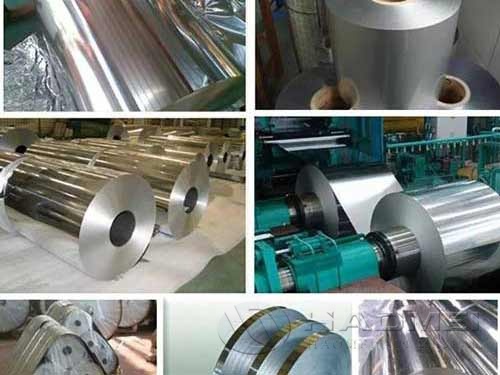
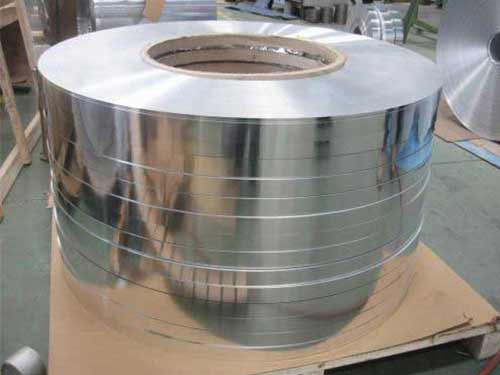
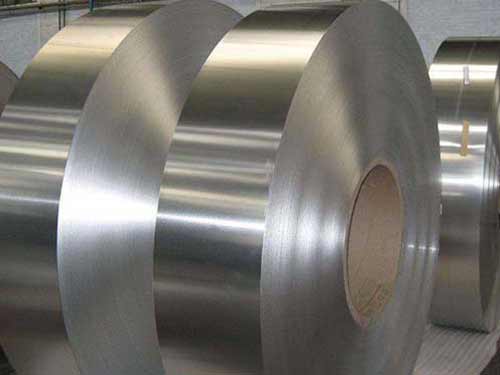
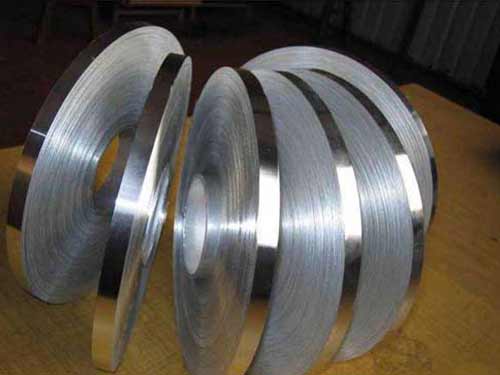
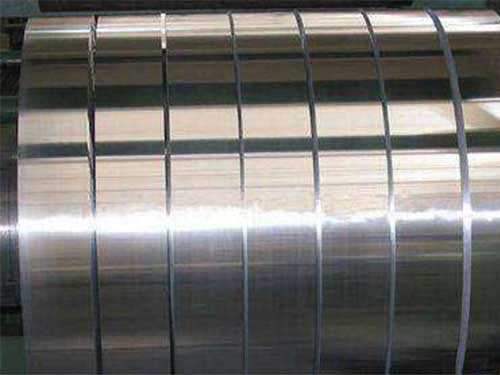
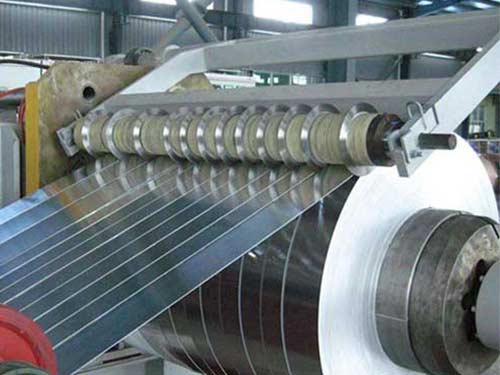
5052 5083 Blind Aluminum Strip
5052 and 5083 blind aluminum strip are designed for more than simply forming thin window-covering slats. They provide the structural backbone of Venetian blinds, aluminum shutters, interior louvers, architectural sunshades, and moisture-resistant curtain systems. Their function is to keep each slat straight, lightweight, corrosion resistant, and visually consistent after punching, roll forming, coating, and repeated opening or closing.
For blind production, aluminum strip must perform like a flexible spring during processing but remain stable after installation. A strip that is too soft may dent or lose flatness. A strip that is too hard can crack around punched cord holes, curved edges, or roll-formed profiles. This balance is where 5052 and 5083 aluminum alloys stand apart from ordinary pure aluminum material.
Why 5052 and 5083 Work for Blind Systems
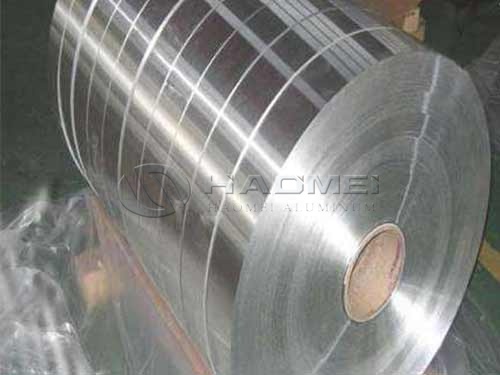
5052 is the more common choice for premium aluminum blind slats. Its moderate magnesium content gives it stronger dent resistance than 1050, 1060, or 3003 material while preserving good bending and stamping behavior. It is especially suitable for painted horizontal blinds, bathroom blinds, kitchen blinds, office partitions, and decorative louvers exposed to humid indoor conditions.
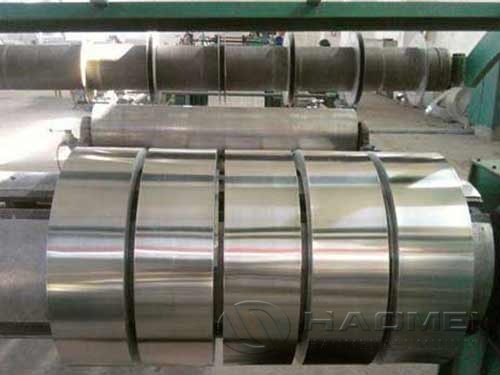
5052 Aluminum Strip is valued where the producer needs clean edges, stable roll-forming behavior, and a smooth surface for polyester, epoxy, PVDF, or baked enamel coatings. It can be slit into narrow coils without sacrificing shape control, helping manufacturers achieve consistent slat width and curvature.
5083 blind aluminum strip serves a different role. With higher magnesium content, it offers greater strength and corrosion resistance, particularly in coastal buildings, marine cabins, exterior shutters, and high-humidity facilities. It is often selected when blind slats must withstand wind movement, salt-bearing air, temperature changes, or accidental impact. Because 5083 is stronger and less economical than 5052, it is generally used for demanding architectural or industrial blind applications rather than standard household blinds.
Product Parameters for Blind Aluminum Strip
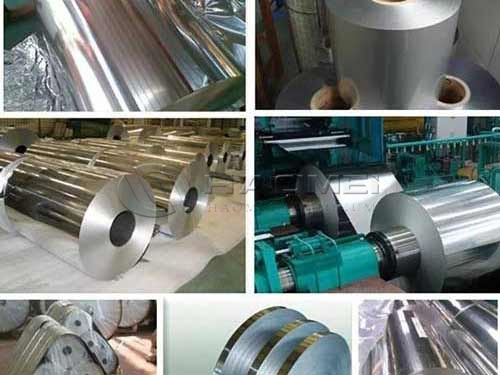
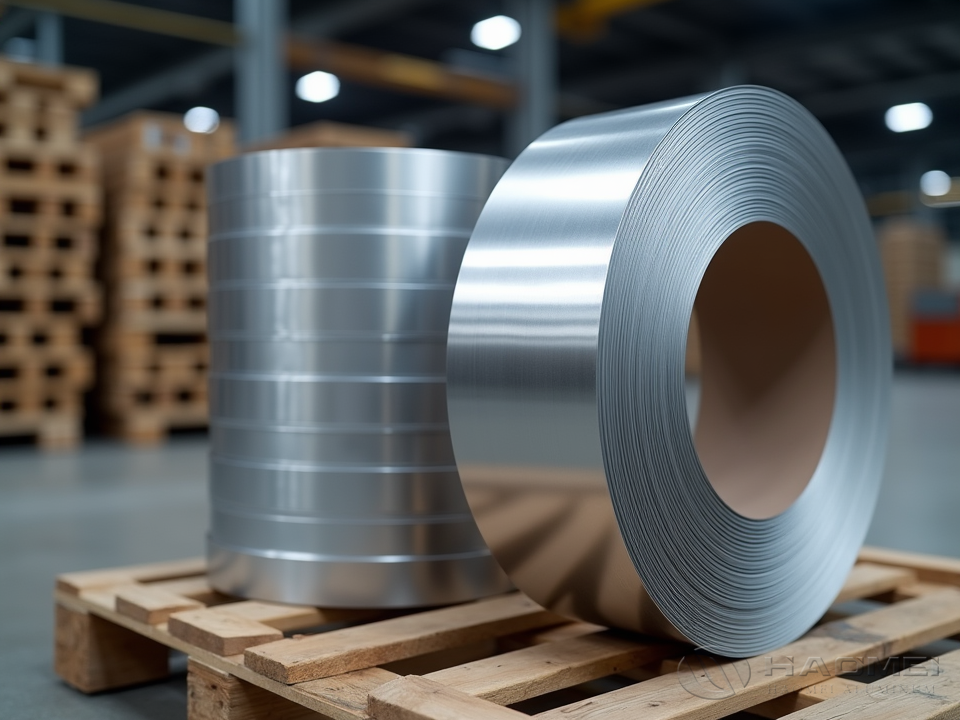
Blind aluminum strip is usually supplied as slit coil. Exact dimensions depend on slat geometry, tooling, coating line capability, and packaging requirements.
| Parameter | Typical Range for 5052 / 5083 Blind Strip |
|---|---|
| Alloy | 5052, 5083 |
| Thickness | 0.18 mm to 1.20 mm |
| Common blind thickness | 0.20 mm to 0.50 mm |
| Width | 10 mm to 1,600 mm before or after slitting |
| Common slat widths | 15 mm, 16 mm, 25 mm, 35 mm, 50 mm |
| Coil inner diameter | 150 mm, 300 mm, 405 mm, 505 mm, or customized |
| Surface | Mill finish, degreased, polished, embossed, color coated, laminated |
| Edge condition | Slit edge, deburred edge, rounded edge where required |
| Coil weight | Customized according to forming equipment and handling limits |
Tight thickness tolerance is important for blind manufacturing because small variation changes the forming pressure and the final slat curvature. A consistent coil also reduces paint shade variation and helps automatic assembly lines maintain smooth operation.
Alloy Temper and Forming Behavior
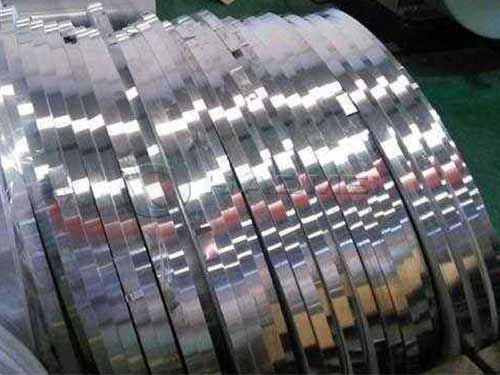
Neither 5052 nor 5083 gains strength through heat treatment. Their temper is created mainly through cold working and stabilization. Selecting the proper temper is therefore a practical decision about how the strip will be punched, shaped, and used.
| Temper | Condition | Suitable Blind Strip Use |
|---|---|---|
| O | Fully annealed, soft | Deep profiles, complex bending, special decorative forming |
| H111 | Lightly strain hardened | Wide louvers, medium-forming requirements, general fabrication |
| H12 / H22 | Quarter hard | Blinds requiring easy roll forming with improved stiffness |
| H14 / H24 | Half hard | Standard blind slats, balanced formability and dent resistance |
| H32 | Strain hardened and stabilized | Premium 5052 slats, coated blinds, humid-environment applications |
| H34 | Higher strength stabilized condition | Stronger slats and shutter components with controlled forming |
| H116 / H321 | Marine corrosion-resistant tempers | Exterior 5083 louvers, coastal shutters, marine blind systems |
For ordinary Venetian blinds, 5052 H24 or H32 is often an efficient specification. It has enough body to resist waviness after forming while allowing punched holes and curled edges to remain clean. For exterior shutter systems, 5083 H111, H116, or H321 may be considered according to required strength, profile design, and corrosion exposure.
Chemical Properties That Shape Performance
The magnesium level is the central difference between these alloys. 5052 contains enough magnesium to improve strength and corrosion performance without making the strip difficult to form. 5083 contains substantially more magnesium, producing higher strength and stronger resistance to marine or industrial atmospheres.
| Element, % | 5052 Aluminum Strip | 5083 Aluminum Strip |
|---|---|---|
| Silicon, Si | 0.25 max | 0.40 max |
| Iron, Fe | 0.40 max | 0.40 max |
| Copper, Cu | 0.10 max | 0.10 max |
| Manganese, Mn | 0.10 max | 0.40-1.00 |
| Magnesium, Mg | 2.20-2.80 | 4.00-4.90 |
| Chromium, Cr | 0.15-0.35 | 0.05-0.25 |
| Zinc, Zn | 0.10 max | 0.25 max |
| Titanium, Ti | - | 0.15 max |
| Other elements | 0.05 each, 0.15 total max | 0.05 each, 0.15 total max |
| Aluminum, Al | Balance | Balance |
Magnesium also supports the natural oxide film that protects aluminum in damp service. For blinds installed near swimming pools, coastal windows, laundries, laboratories, or food-processing spaces, this corrosion resistance extends appearance retention and reduces premature staining.
Standards and Inspection Requirements
5052 and 5083 blind aluminum strip can be produced in accordance with widely used material standards, depending on the destination market and contract requirements. Typical implementation standards include ASTM B209, EN 485, EN 573, JIS H4000, and GB/T 3880. These standards address chemical composition, mechanical properties, dimensional tolerance, temper designation, and inspection methods.
Mechanical requirements should be agreed according to thickness and temper. As a guide, 5052 H32 commonly provides tensile strength around 210-260 MPa, while 5083 H321 can reach approximately 305-385 MPa. Actual values vary with strip gauge and applicable standard. For blind production, buyers should also specify flatness, burr height, edge quality, coating adhesion, color tolerance, and allowable coil set.
A broader Alloy Aluminum Strip program can also support matching components such as headrails, bottom rails, brackets, decorative trims, and shutter frames. Using compatible aluminum alloys across the system simplifies finishing and improves visual consistency.
Functional Applications Beyond Window Blinds
5052 and 5083 strip are suitable for horizontal and vertical blind slats, blackout blind supports, plantation shutter inserts, adjustable air vents, facade louvers, equipment covers, light-diffusing grilles, and interior partition blades. Coated 5052 is especially effective where color, cleanability, and lightweight handling matter. High-strength 5083 is better suited to exposed louvers and shutter profiles facing severe weather or salt spray.
The best selection depends on the working environment rather than alloy strength alone. Choose 5052 when smooth forming, painted appearance, and economical corrosion resistance are priorities. Choose 5083 when the blind component must carry higher loads or survive aggressive outdoor exposure. With a properly selected temper, controlled slit edge, and reliable coating system, both alloys deliver long-lasting blind slats that remain straight, attractive, and easy to operate.