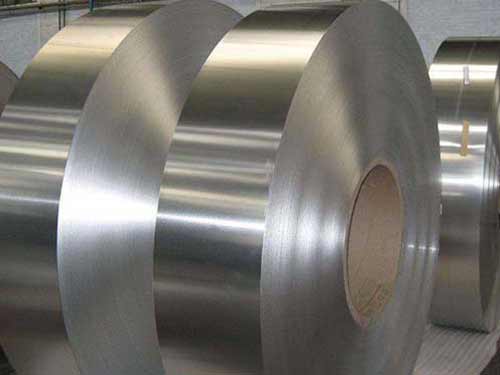
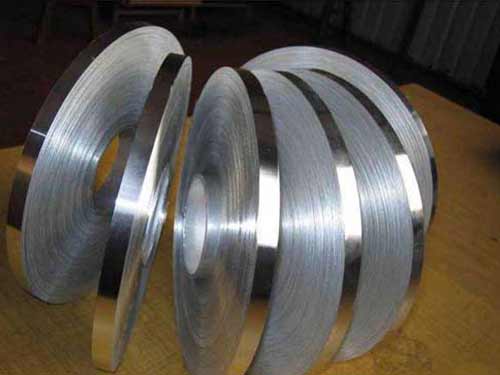
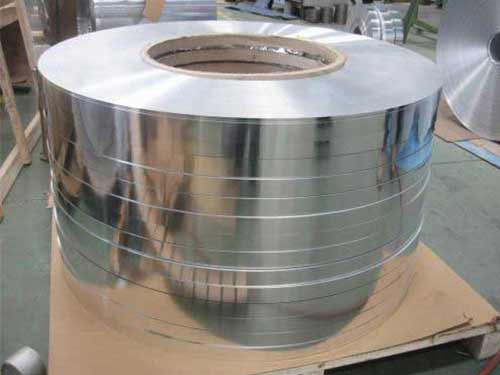
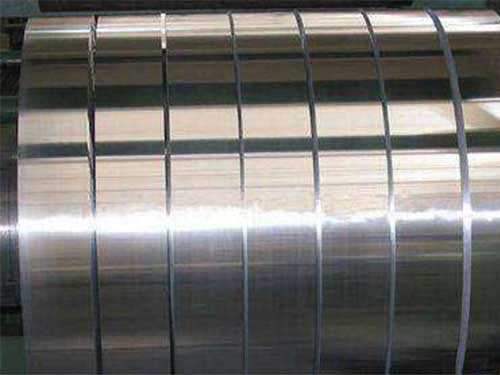
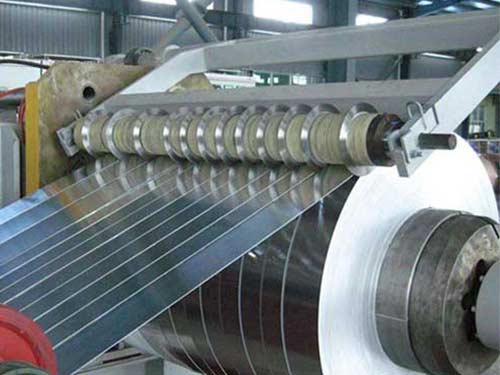
Round Edge Aluminum Strip Transformer Winding
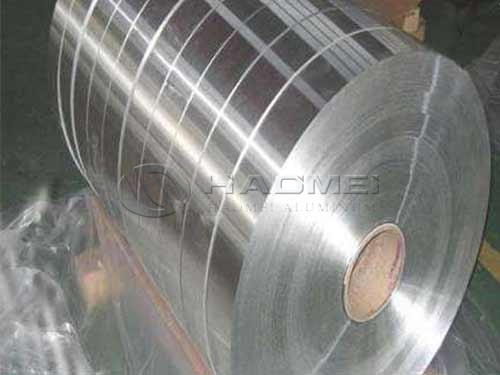
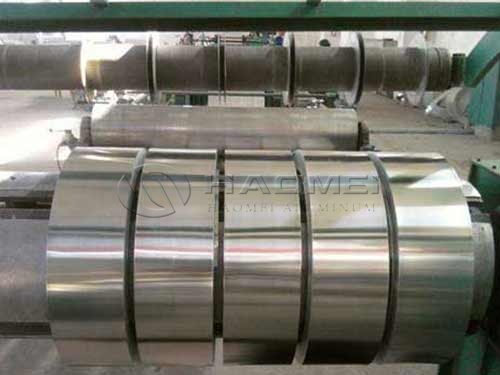
Round edge aluminum strip for transformer winding is a precision-processed conductive strip designed for oil-immersed transformers, dry-type transformers, reactors, voltage stabilizers, and power distribution equipment. Compared with ordinary slit strip, the rounded edge profile reduces stress concentration, protects insulation paper or film, and supports compact, stable winding geometry.
For manufacturers focused on electrical performance, heat control, insulation safety, and repeatable coil production, round edge aluminum strip is a practical material choice. It combines the low density of aluminum with excellent conductivity, clean surface quality, and carefully controlled dimensional tolerance.
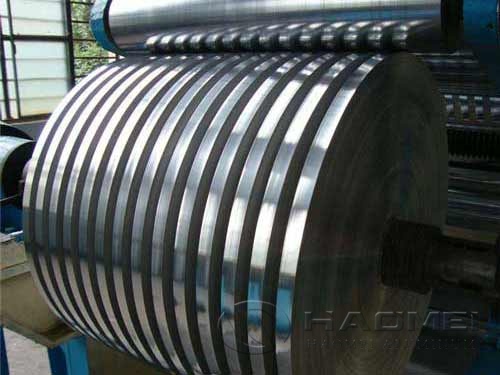
Product Characteristics
Round edge aluminum strip is usually produced from high-purity aluminum alloys such as 1050, 1060, 1070, or electrical-grade aluminum. The material is cast, hot rolled, cold rolled, annealed, slit, edge-conditioned, cleaned, and packed for transformer coil production.
The round edge treatment is the main difference from standard sharp-edge strip. During winding, sharp burrs can cut insulation layers, create partial discharge risks, or cause uneven coil pressure. A smooth radius edge helps the strip move more safely through winding machines and improves long-term electrical reliability.
| Item | Practical Value for Transformer Winding |
|---|---|
| Rounded strip edges | Reduces insulation damage during winding and service |
| High electrical conductivity | Helps lower winding loss and temperature rise |
| Soft temper options | Improves formability for tight coil winding |
| Smooth surface | Supports uniform insulation contact and clean assembly |
| Stable width tolerance | Keeps coil geometry consistent layer by layer |
| Low density | Reduces transformer weight compared with copper designs |
Many transformer producers choose high-purity 1050 / 1060 Aluminum Strip when balancing conductivity, formability, and cost efficiency for distribution transformer windings.
Recommended Alloy Grades
The most common grades for transformer winding are pure aluminum series materials. Their low alloy content supports good conductivity and excellent rolling performance.
| Alloy | Typical Use | Main Advantage |
|---|---|---|
| 1050 | General transformer winding | Good conductivity and economical supply |
| 1060 | Distribution transformer coils | Higher aluminum purity with stable forming |
| 1070 | High-conductivity winding | Improved conductivity for efficient designs |
| 1350 | Electrical conductor applications | Designed for conductor-grade electrical use |
The final selection depends on transformer capacity, loss requirement, temperature rise limit, winding process, and customer standard.
Chemical Composition
Chemical composition control is important because impurities reduce electrical conductivity. Iron and silicon are the main controlled elements in pure aluminum strip. The table shows typical reference ranges; exact values can be adjusted according to EN, ASTM, GB, or customer specifications.
| Alloy | Al Min. | Si Max. | Fe Max. | Cu Max. | Mn Max. | Mg Max. | Zn Max. | Ti Max. |
|---|---|---|---|---|---|---|---|---|
| 1050 | 99.50% | 0.25% | 0.40% | 0.05% | 0.05% | 0.05% | 0.05% | 0.03% |
| 1060 | 99.60% | 0.25% | 0.35% | 0.05% | 0.03% | 0.03% | 0.05% | 0.03% |
| 1070 | 99.70% | 0.20% | 0.25% | 0.04% | 0.03% | 0.03% | 0.04% | 0.03% |
| 1350 | 99.50% | 0.10% | 0.40% | 0.05% | 0.01% | 0.01% | 0.05% | 0.02% |
Technical Specifications
Round edge aluminum strip for transformer winding is supplied in coil form. Width, thickness, inner diameter, outer diameter, edge radius, and temper are matched to the winding equipment and transformer design.
| Parameter | Common Range |
|---|---|
| Thickness | 0.20 mm to 3.00 mm |
| Width | 10 mm to 1600 mm |
| Temper | O, H12, H14, H18, custom soft temper |
| Edge type | Round edge, deburred edge, radius edge |
| Edge radius | Typically 0.10 mm to 0.80 mm, based on thickness |
| Coil inner diameter | 150 mm, 300 mm, 400 mm, 500 mm, 508 mm |
| Coil outer diameter | Up to 1600 mm, depending on weight limit |
| Surface | Bright, clean, oil-free or light-oiled as required |
| Conductivity | Typically 60% IACS or higher for pure aluminum grades |
| Width tolerance | Commonly +/-0.05 mm to +/-0.20 mm |
| Thickness tolerance | Commonly +/-0.005 mm to +/-0.03 mm |
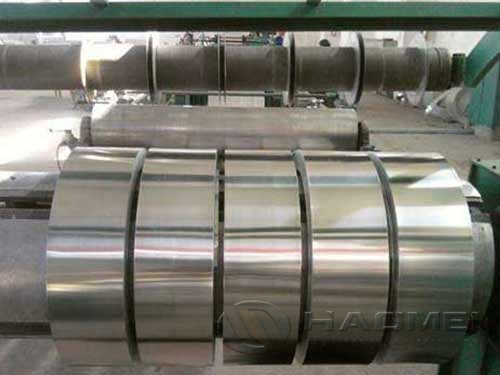
Mechanical and Electrical Performance
Transformer winding strip must be soft enough for coil forming yet stable enough to resist handling deformation. Annealed aluminum strip is widely used because it bends smoothly without edge cracking.
| Property | Typical Value | Benefit in Winding |
|---|---|---|
| Tensile strength, O temper | 60 MPa to 95 MPa | Easy forming and reduced springback |
| Elongation | 20% to 35% | Supports tight radius winding |
| Electrical conductivity | 60% to 62% IACS | Helps reduce electrical loss |
| Density | About 2.70 g/cm3 | Lower coil weight than copper |
| Thermal conductivity | About 230 W/m.K | Helps heat transfer from winding |
| Surface roughness | Ra 0.2 to 0.6 micrometer | Better insulation contact |
| Burr height | Typically less than 0.02 mm | Safer for insulation layers |
The rounded edge improves local electric field distribution at the strip boundary. This is especially valuable when the winding uses thin insulation films or when the transformer operates under frequent load variation.
Why Round Edge Matters
During coil winding, the strip edge repeatedly contacts insulation material. If the edge is sharp, even a small burr can scratch enamel, kraft paper, NOMEX, polyester film, or composite insulation. This damage may not be visible during assembly but can grow into partial discharge, dielectric breakdown, or hot spots during operation.
Round edge aluminum strip reduces this risk through controlled edge finishing. The smoother profile also helps winding tension remain more uniform. Better layer alignment means fewer gaps, improved coil compactness, and more predictable thermal paths.
| Edge Condition | Winding Influence | Risk Level |
|---|---|---|
| Sharp slit edge | May cut insulation under tension | High |
| Deburred edge | Better than slit edge, but profile may vary | Medium |
| Round edge | Smooth contact with insulation and guides | Low |
Common Applications
Round edge aluminum strip is suitable for a wide range of electrical equipment where stable conductivity and winding safety are required.
| Application | Material Requirement |
|---|---|
| Oil-immersed distribution transformers | High conductivity, clean surface, stable coil width |
| Dry-type transformers | Smooth edge, reliable insulation compatibility |
| Foil windings | Tight thickness tolerance and low burr height |
| Reactors and inductors | Good formability and consistent electrical path |
| Voltage regulators | Repeatable winding tension and dimensional stability |
| UPS and power supply transformers | Lightweight conductive material with controlled heat rise |
For customers requiring broader alloy choices for electrical or industrial strip production, Alloy Aluminum Strip options can be matched to strength, corrosion resistance, or forming demands beyond transformer winding.
Surface Quality and Cleanliness
Cleanliness is critical because oxide powder, rolling oil residue, metal particles, and scratches can affect insulation adhesion and dielectric reliability. High-quality transformer winding strip is inspected for surface defects before packaging.
| Surface Requirement | Control Target |
|---|---|
| Oil stain | No heavy residue affecting insulation |
| Scratch | No deep scratch across conductive path |
| Edge burr | Strictly minimized after edge rounding |
| Wave and camber | Controlled for smooth winding feed |
| Oxidation | Uniform natural oxide, no severe discoloration |
| Foreign particles | Prevented by cleaning and protected packing |
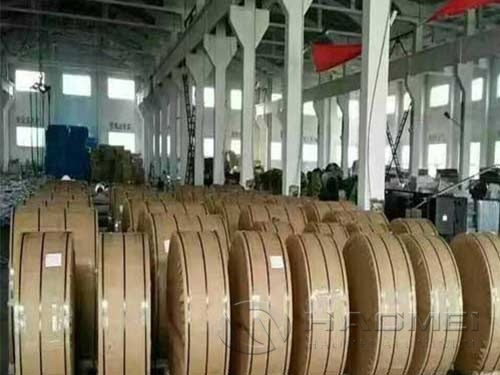
Packaging and Handling
Transformer winding strip is usually delivered in moisture-proof packaging. Coils are separated with protective materials, wrapped with plastic film, secured with straps, and packed on wooden pallets or cases. Proper packaging prevents edge impact, coil collapse, oxidation, and contamination during transport.
Recommended handling includes using coil lifters or shaft-mounted unwinding systems, avoiding direct contact with sharp tools, and storing coils in a dry indoor area. Before winding, the coil should be acclimated to workshop temperature to reduce condensation risk.
Customer Benefits
Round edge aluminum strip supports both manufacturing efficiency and transformer service reliability. Its value is not limited to raw material cost; it also helps reduce hidden production losses caused by insulation damage, coil rejection, winding interruption, and inconsistent electrical performance.
| Benefit | Customer Impact |
|---|---|
| Lower material weight | Easier handling and lighter transformer design |
| High conductivity | Reduced winding loss in optimized designs |
| Smooth rounded edge | Better insulation protection |
| Stable tolerances | More consistent coil dimensions |
| Good formability | Faster winding with fewer strip breaks |
| Clean surface | Improved compatibility with insulation systems |
Purchasing Notes
When ordering round edge aluminum strip for transformer winding, buyers should confirm alloy grade, temper, thickness, width, coil inner diameter, coil weight, edge radius, conductivity requirement, surface condition, and packing method. If the transformer has strict loss limits, conductivity and thickness tolerance should be specified clearly. If the winding machine runs at high speed, edge smoothness, camber, and coil tension quality become even more important.
Round edge aluminum strip gives transformer manufacturers a reliable balance of conductivity, insulation safety, processing stability, and cost control. With the right alloy selection and precision edge treatment, it becomes a dependable conductor material for efficient and durable transformer winding production.