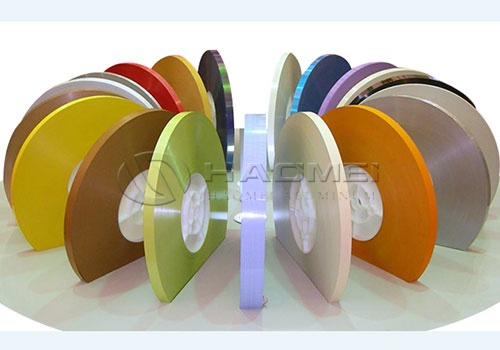
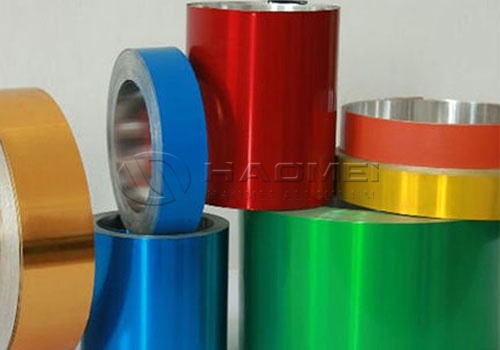
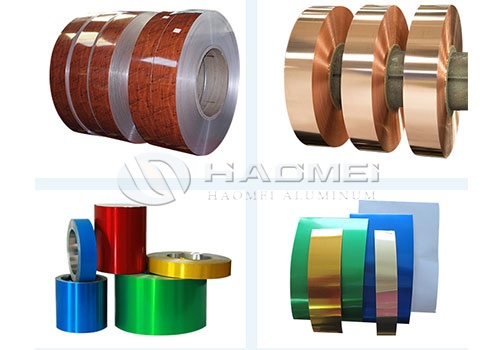
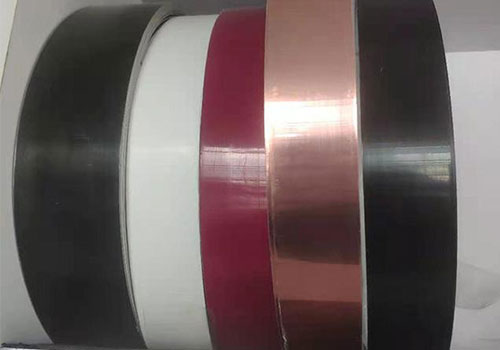
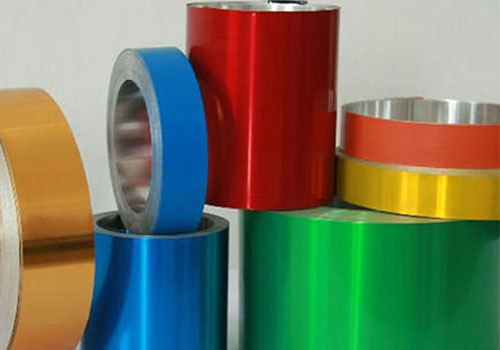
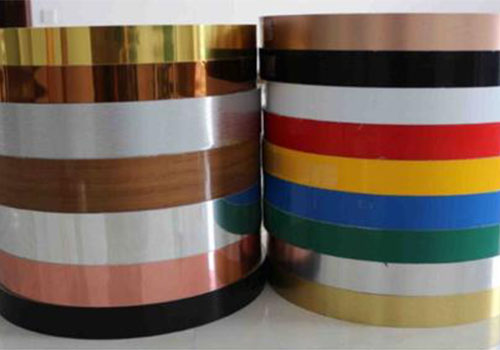
Solid Colors Painted Aluminium Strips
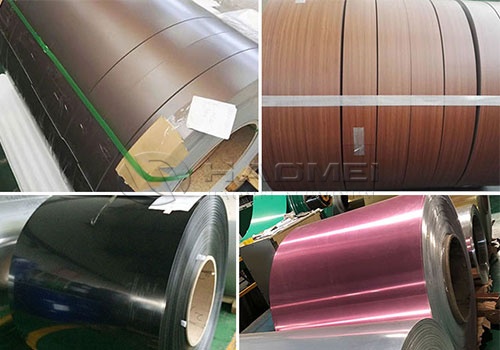
Solid colors painted aluminium strips are engineered coil products designed to provide a stable, finished surface before fabrication begins. Rather than treating color as a final cosmetic step, pre-painted aluminium makes the coating part of the material system. The result is a strip that can be slit, bent, roll formed, stamped, or wrapped while retaining a clean and consistent visual identity.
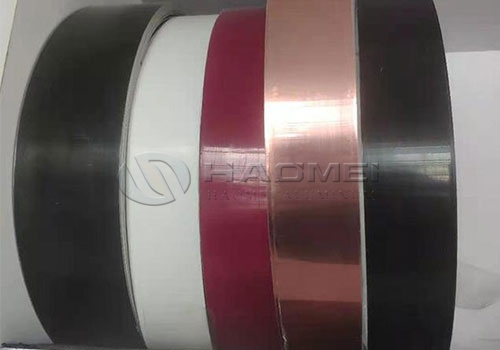
This approach is especially valuable where narrow metal components remain visible: ceiling grids, decorative trims, roller shutters, window accessories, sign borders, electrical enclosures, appliance details, lighting parts, and insulated panel systems. A red, white, black, grey, green, yellow, or custom-color strip does more than establish appearance. It helps identify products, separate functional zones, improve corrosion resistance, and reduce downstream painting work.
A Functional Surface, Not Just a Colored Surface
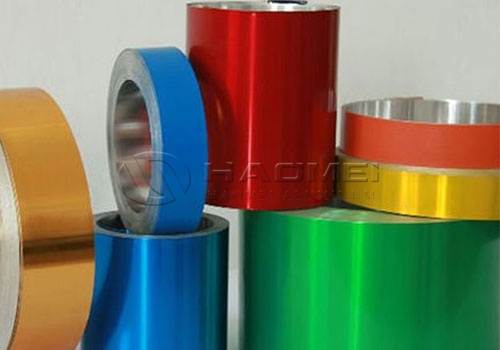
The performance of solid colors painted aluminium strips comes from the relationship between aluminium substrate, surface pretreatment, primer, topcoat, and optional back coating. Each layer has a specific task. The substrate supplies formability and lightweight strength. Chemical pretreatment enhances paint adhesion and corrosion resistance. Primer supports bond strength and coating flexibility. The finish coat provides the selected color, gloss, weathering behavior, and surface feel.
For indoor components, polyester or PE coating is commonly selected for its smooth appearance, economical cost, and practical processing performance. PE Coated Aluminum Strip is suitable for indoor ceilings, decorative profiles, appliance parts, packaging components, and light-duty architectural fittings.
For demanding exterior exposure, PVDF coating is often preferred. It delivers stronger resistance to ultraviolet radiation, color fading, chalking, humidity, and industrial pollutants. PVDF Coated Aluminum Strip is a reliable option for façade trims, outdoor signage, curtain-wall accessories, transportation panels, and construction products exposed to changing weather.
Typical Product Parameters
Solid colors painted aluminium strips can be supplied in coils, slit coils, or cut lengths. The practical specification depends on the finished part, forming radius, coating system, and service environment.
| Parameter | Common Range or Option |
|---|---|
| Alloy grade | 1050, 1060, 1100, 3003, 3105, 3004, 5052 |
| Temper | O, H12, H14, H16, H18, H22, H24, H26, H32, H34 |
| Thickness | 0.20 mm to 3.00 mm |
| Strip width | 20 mm to 1,600 mm before slitting |
| Coil inner diameter | 150 mm, 300 mm, 400 mm, 500 mm, or customized |
| Coil weight | Commonly 0.5 to 5 tonnes, subject to handling requirements |
| Top coating thickness | Usually 15 to 30 microns for PE; 25 to 35 microns or more for PVDF |
| Back coating thickness | Usually 5 to 10 microns |
| Surface finish | Glossy, matte, high gloss, textured, embossed, brushed, or smooth |
| Color control | RAL, Pantone, customer sample, or approved production standard |
Thickness tolerance, width tolerance, camber, edge condition, coil telescoping, and coating thickness should be agreed before production. This matters because a narrow strip for automated roll forming may require tighter dimensional control than a wider strip intended for simple bending.
Alloy and Temper Selection for Forming Behavior
Alloy selection should begin with the application rather than color. Pure aluminium grades such as 1050, 1060, and 1100 offer excellent corrosion resistance and good ductility. They are frequently used for decorative strips, insulation cladding, channel letters, lamp reflectors, and light fabricated parts.
3003 and 3105 contain manganese, which increases strength while preserving useful formability. These alloys are widely used in roofing accessories, ceiling systems, shutters, gutter products, and painted architectural profiles. 3004 can offer added strength for selected building and industrial components.
5052, containing magnesium, provides better strength and corrosion resistance, particularly in humid, coastal, or transport-related environments. It is appropriate when a painted strip must withstand vibration, more severe bending loads, or contact with moisture.
Temper determines how the strip responds under fabrication. O temper is soft and highly formable, making it suitable for deep bending and complex contours. H14 and H24 offer a balanced combination of stiffness and workability for general roll forming. H18 provides a harder surface and higher strength but has less tolerance for severe shaping. Choosing an overly hard temper can create coating cracks at tight bend radii, while an overly soft temper may not maintain the desired profile geometry.
Chemical Composition of Common Aluminium Alloys
The following table shows typical compositional limits in percent by mass. Actual material certificates should govern final procurement requirements.
| Alloy | Si | Fe | Cu | Mn | Mg | Zn | Al |
|---|---|---|---|---|---|---|---|
| 1050 | ≤0.25 | ≤0.40 | ≤0.05 | ≤0.05 | ≤0.05 | ≤0.05 | ≥99.50 |
| 1060 | ≤0.25 | ≤0.35 | ≤0.05 | ≤0.03 | ≤0.03 | ≤0.05 | ≥99.60 |
| 1100 | Si + Fe ≤0.95 | Included | 0.05-0.20 | ≤0.05 | - | ≤0.10 | ≥99.00 |
| 3003 | ≤0.60 | ≤0.70 | 0.05-0.20 | 1.0-1.5 | - | ≤0.10 | Balance |
| 3105 | ≤0.60 | ≤0.70 | ≤0.30 | 0.30-0.80 | 0.20-0.80 | ≤0.40 | Balance |
| 5052 | ≤0.25 | ≤0.40 | ≤0.10 | ≤0.10 | 2.2-2.8 | ≤0.10 | Balance |
Standards and Quality Controls
Production can follow recognized aluminium and coating requirements, including ASTM B209 for aluminium sheet and strip, EN 485 for tolerances and mechanical properties, EN 573 for alloy chemical composition, and relevant coil-coating practices under EN 13523 testing methods. Depending on the market, RoHS, REACH, and fire-performance requirements may also be specified.
Coating quality is generally assessed through film thickness, color difference, gloss, pencil hardness, adhesion, impact resistance, T-bend performance, solvent resistance, and salt spray testing. For exterior materials, accelerated weathering and UV exposure tests provide additional confidence in long-term color stability.
A good inspection process also checks strip edges. Burrs, uneven slitting, and damaged coil edges can interrupt automated processing or create visible defects in finished profiles. Protective film may be added when polished painted surfaces need protection during transport, stamping, or installation.
Applications Where Solid Color Adds Value
In building systems, painted aluminium strips become fascia trims, ceiling carriers, downspout components, roofing edges, louvers, shutters, and sandwich-panel accessories. Their low weight makes handling easier, while the factory-applied finish reduces on-site paint work.
In consumer and industrial products, the strips are used for appliance edging, furniture bands, display racks, cable channels, HVAC components, electrical cabinet trims, and equipment identification panels. Color can separate product families, indicate operating zones, or support brand consistency without adding labels or secondary coating operations.
For signage and display fabrication, solid colors create crisp borders, channel letter returns, frame elements, and shop-fitting accents. Consistent coating thickness and controlled gloss help different batches appear visually aligned under retail lighting.
Practical Selection Notes
Specify the end environment first: indoor, sheltered outdoor, marine, industrial, or high-UV exposure. Then match the alloy, temper, pretreatment, and coating chemistry to that environment. Confirm the minimum bend radius and forming route before choosing hardness. Finally, define the visual standard through a RAL reference, physical color sample, gloss target, and acceptable color tolerance.
Solid colors painted aluminium strips work best when color, mechanical behavior, and corrosion protection are treated as one coordinated material decision. That is what turns a narrow painted coil into a dependable, production-ready component.