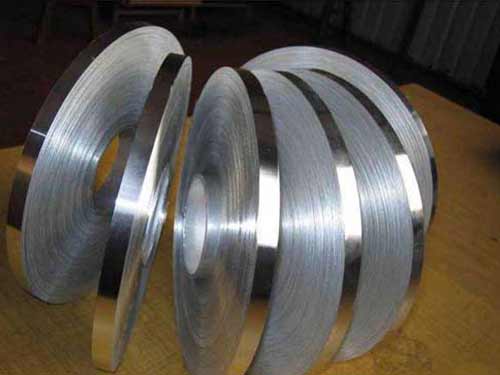
China Aluminum Supplying for 1050 Aluminum Strip
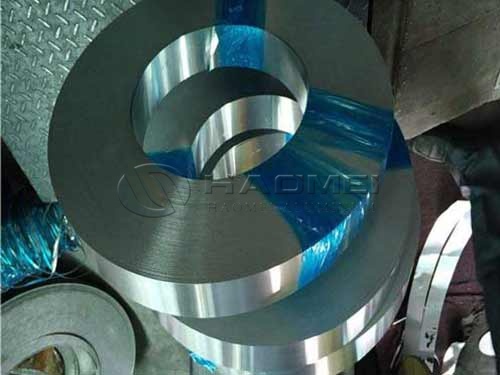
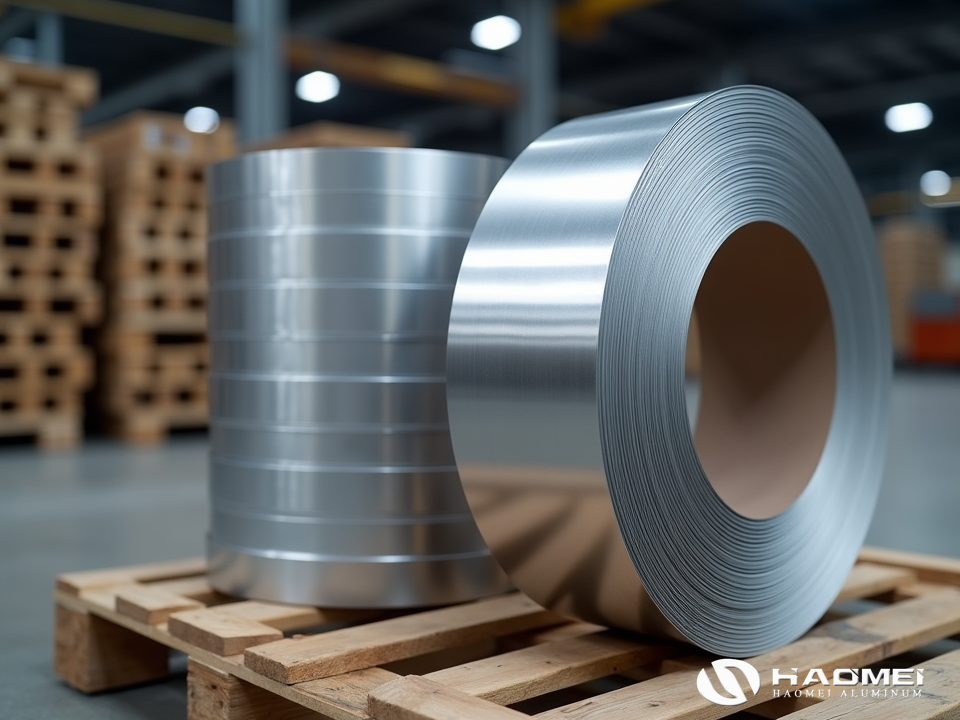
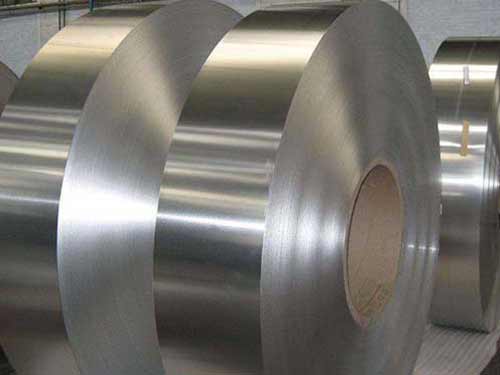
In many factories, 1050 aluminum strip does not look dramatic. It arrives as a bright coil, waits beside a slitting line, passes through stamping dies, wraps around cable cores, or becomes part of a transformer winding. Its value is not in visual complexity, but in stable purity, repeatable width, clean edges, and predictable forming behavior. That is why China aluminum supplying for 1050 aluminum strip has become closely connected with electrical, packaging, lighting, insulation, decoration, and precision fabrication industries.
1050 aluminum strip belongs to the commercially pure aluminum family. With aluminum content generally at 99.50% or higher, it offers excellent electrical conductivity, high thermal transfer, good corrosion resistance, and soft forming performance. It is not selected when high strength is the main demand. It is selected when manufacturers need reliable conductivity, easy bending, clean surface quality, and consistent processing from coil to finished component.
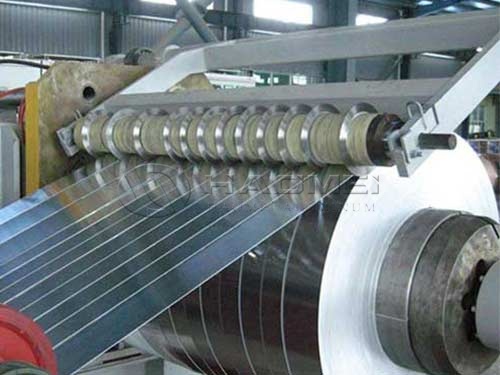
A Production-Line View of 1050 Aluminum Strip
Imagine the strip not as raw material, but as a moving part in a factory rhythm. In a transformer workshop, it must unwind smoothly without sudden camber. In a stamping plant, it must enter the die with even thickness and controlled hardness. In a cable shielding line, it must bend around a conductor without cracking. In packaging production, it must accept surface treatment and maintain a neat appearance.
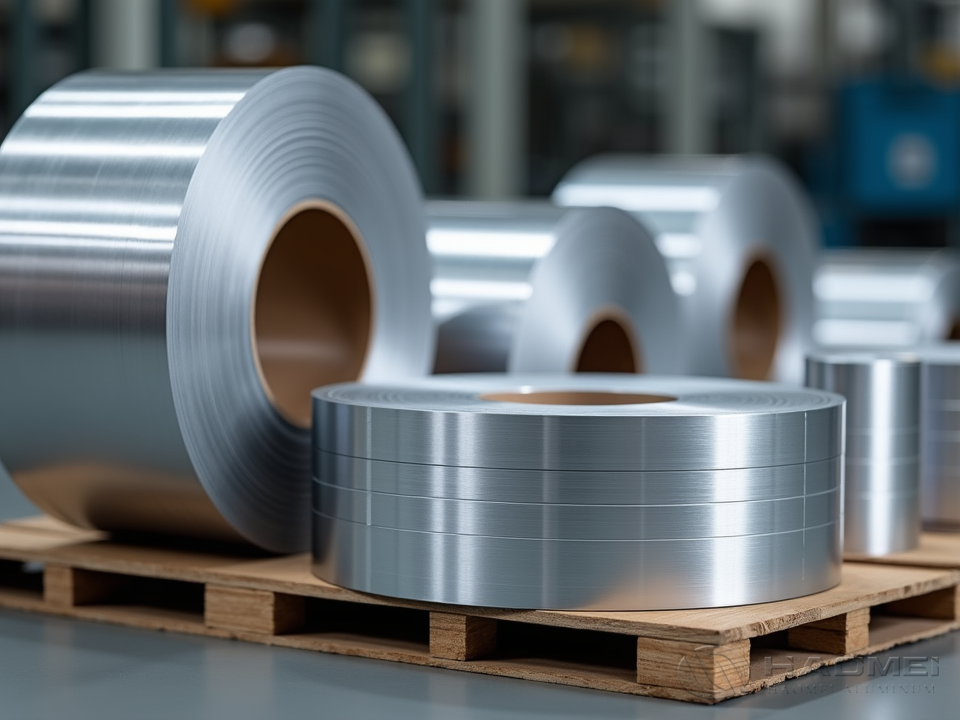
This is where supply quality matters. A good coil is measured not only by alloy certificate, but also by flatness, burr control, coil tension, surface cleanliness, and packing protection. Chinese aluminum mills often support large-volume orders and customized slitting, making 1050 strip suitable for both wide industrial coils and narrow precision strips. For buyers comparing grades, 1050 / 1060 Aluminum Strip is often reviewed together because both are pure aluminum series materials, while 1050 is favored where stable purity and cost-efficient formability are required.
Main Functions in Real Applications
The first function is electrical conduction. 1050 aluminum strip has high conductivity compared with many alloyed aluminum grades. This makes it practical for transformer windings, electrical bus components, cable wrapping, capacitor shells, battery components, and conductive parts where moderate strength is acceptable.
The second function is formability. In soft tempers such as O and H12, 1050 strip can be bent, drawn, stamped, folded, and rolled with low risk of cracking. This supports lamp caps, bottle closures, sealing strips, decoration strips, nameplates, kitchenware parts, and deep-drawn lightweight components.
The third function is corrosion resistance. Because the alloy has very low additions of other elements, it naturally forms a protective oxide layer. For indoor electrical parts, packaging strips, and many general industrial uses, this corrosion resistance helps reduce maintenance and surface failure.
The fourth function is thermal transfer. 1050 aluminum strip is used in heat exchange components, radiators, insulation jacketing, and thermal conductive assemblies because it transfers heat efficiently while remaining easy to fabricate.
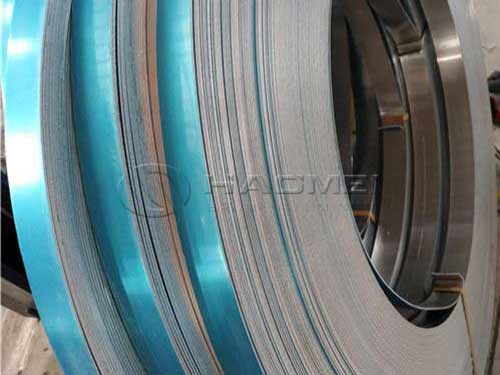
Typical Parameters for China-Supplied 1050 Aluminum Strip
| Item | Common Supply Range |
|---|---|
| Alloy | 1050, 1050A |
| Temper | O, H12, H14, H16, H18, H19, H22, H24 |
| Thickness | 0.10 mm-3.00 mm, customized by application |
| Width | 10 mm-1600 mm, narrow slitting available |
| Coil ID | 300 mm, 405 mm, 500 mm, 508 mm, or as requested |
| Coil OD | Usually 800 mm-1600 mm, depending on weight and packing |
| Surface | Mill finish, bright, degreased, coated, anodizing quality on request |
| Edge | Slit edge, deburred edge, round edge available for electrical use |
| Tolerance | According to GB/T, ASTM, EN, JIS, or buyer drawing |
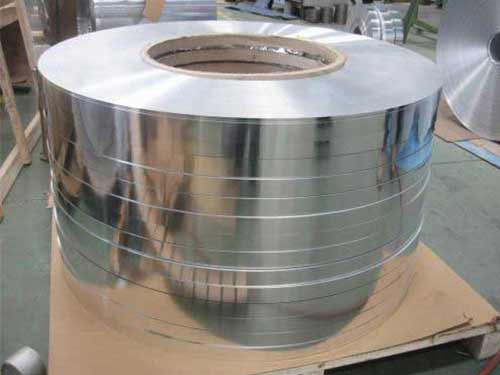
| Packing | Eye-to-wall or eye-to-sky coil packing, wooden pallet or wooden case |
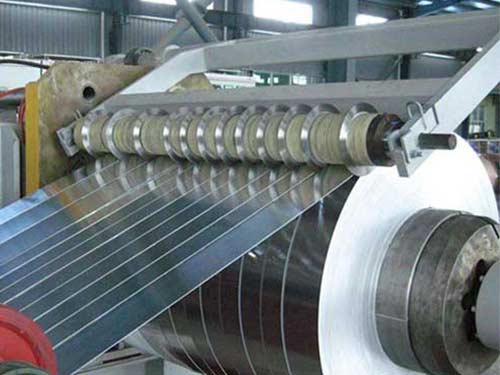
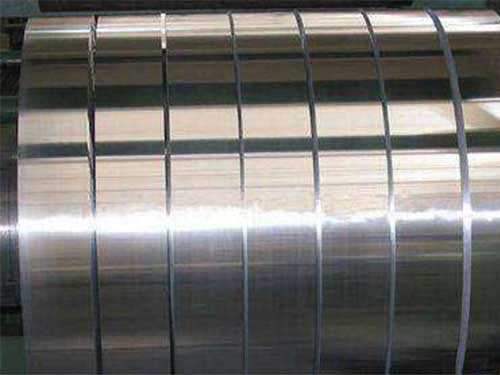
For narrow applications such as cable armoring, transformer winding, fin stock, and precision stamping, edge quality becomes as important as chemistry. Burrs may damage insulation layers or cause uneven winding tension. For decorative or packaging uses, surface marks, oil residue, and oxidation color must be carefully controlled.
Alloy Tempering and Mechanical Behavior
Temper selection changes how 1050 strip behaves in production. O temper is fully annealed and soft, giving the best elongation and bending ability. H12 and H14 provide a balance between formability and handling strength. H16 and H18 are harder, suitable for parts requiring better dimensional stability. H19 is extra hard and used where the strip must keep shape under tension.
| Temper | Typical Character | Common Use |
|---|---|---|
| O | Soft, high elongation, excellent bending | Deep drawing, soft wrapping, flexible components |
| H12 | Quarter hard, good formability | General stamping, packaging, light forming |
| H14 | Half hard, balanced strength | Lamp caps, closures, nameplates, covers |
| H16 | Three-quarter hard, stronger handling | Decorative strip, fixed components |
| H18 | Full hard, better rigidity | Flat parts, stable strips, electrical pieces |
| H19 | Extra hard, high strip tension resistance | Transformer winding and selected electrical uses |
Typical tensile strength varies with temper. Soft 1050-O may have tensile strength around 60-100 MPa, while H18 can reach about 120-160 MPa depending on thickness and production route. Elongation is higher in O temper and lower in hard temper. Buyers should match temper with actual forming radius, stamping speed, winding tension, and final part stress.
Chemical Properties Table
1050 aluminum is defined by high aluminum purity and very low alloying additions. Exact limits may vary slightly by standard, but common chemical composition is shown here.
| Element | Typical Limit for 1050 Aluminum Strip |
|---|---|
| Al | 99.50% min |
| Si | 0.25% max |
| Fe | 0.40% max |
| Cu | 0.05% max |
| Mn | 0.05% max |
| Mg | 0.05% max |
| Zn | 0.05% max |
| Ti | 0.03% max |
| V | 0.05% max, when specified |
| Others each | 0.03% max |
| Others total | 0.15% max |
This chemistry explains the material's behavior. Low copper and magnesium keep corrosion resistance strong. High aluminum content improves conductivity and thermal transfer. Controlled iron and silicon help maintain process stability during rolling and slitting.
Implementation Standards and Inspection Focus
Common standards for 1050 aluminum strip include GB/T 3880, GB/T 3190, ASTM B209, EN 485, EN 573, and JIS H4000. In international purchasing, it is normal for Chinese suppliers to provide mill test certificates with chemical composition, temper, dimensions, mechanical data, and batch traceability.
Inspection usually covers thickness tolerance, width tolerance, diagonal deviation, surface defects, coil weight, inner diameter, tensile strength, elongation, hardness, burr height, and flatness. For electrical use, conductivity may also be requested. For transformer winding, buyers often add stricter requirements for edge rounding, interlayer paper compatibility, and uniform coil tension.
Application Scenes That Define the Grade
In transformer production, 1050 strip is valued for electrical conductivity and winding performance. It can reduce weight compared with copper while supporting efficient electrical design. Many users also compare it with other conductive strip grades in the wider Alloy Aluminum Strip category, especially when strength, coating, or corrosion conditions change.
In cable manufacturing, 1050 strip works as shielding, wrapping, and moisture-barrier material. Soft temper allows tight wrapping, while stable width supports continuous production. In lamp cap manufacturing, its formability allows fast stamping and drawing. In packaging, it can be used for closures, sealing components, and decorative bands. In insulation and construction, it serves as jacketing strip, flashing, spacer strip, and trim material.
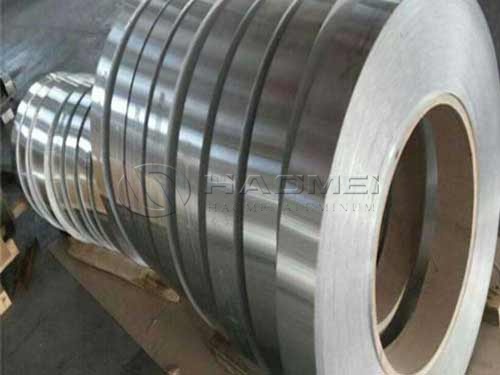
Why China Supply Is Practical for Global Buyers
China aluminum supplying for 1050 aluminum strip is not only about price. It is also about coil customization, broad temper selection, surface treatment options, export packing, and flexible minimum order planning. Large rolling capacity allows stable delivery for repeated orders, while slitting lines can prepare narrow strips for electrical, packaging, and stamping customers.
For smooth purchasing, buyers should provide alloy, temper, thickness, width, tolerance standard, coil ID, coil weight, surface requirement, edge condition, packing method, and end use. End use is especially important because the same 1050-H14 strip may need different surface oil, burr limits, or flatness depending on whether it enters a stamping die, winding machine, coating line, or packaging press.
1050 aluminum strip proves that a simple alloy can perform many precise roles. When purity, temper, slitting quality, and packing are controlled together, the coil becomes more than metal stock. It becomes a dependable working material for electrical efficiency, clean forming, corrosion resistance, and high-speed industrial production.