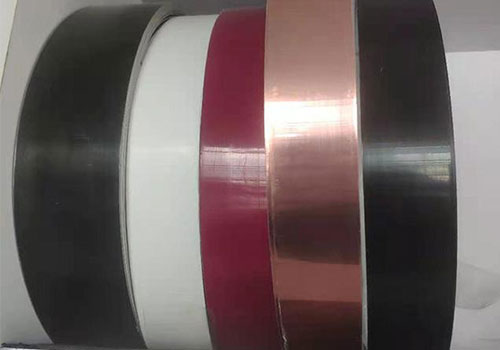
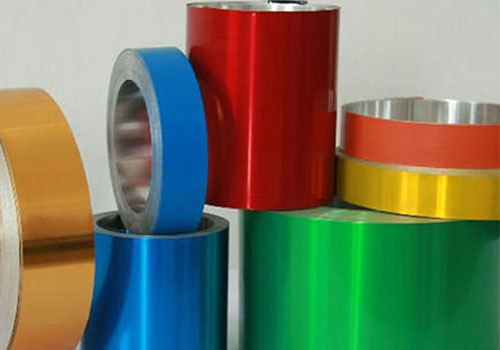
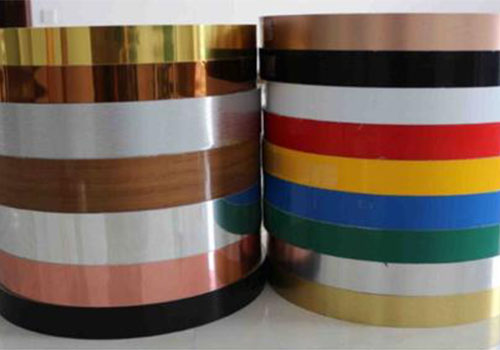
Jumbo Roll RAL Color Aluminium Strips
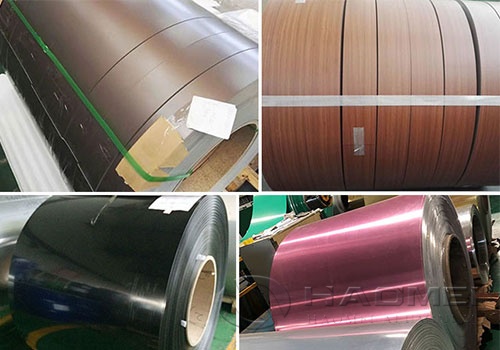
Jumbo roll RAL color aluminium strips are designed for manufacturers that do not simply buy metal by weight. They buy stable appearance, reliable forming behavior, and efficient continuous production. A wide, heavy master coil allows converters to slit material into narrower strips for roofing accessories, shutters, cable wrapping, insulation cladding, channel letters, lighting components, appliances, and decorative profiles.
The value of a jumbo roll is not merely its size. It is the ability to carry the same RAL shade, gloss level, coating thickness, and mechanical condition across long production runs. When a fabricator runs thousands of meters through a roll-forming line, even a slight difference in color or hardness can become visible in the finished installation. For this reason, color-coated aluminium is best considered a controlled surface system built on a carefully selected alloy substrate.
What Makes a RAL Color Jumbo Roll Different
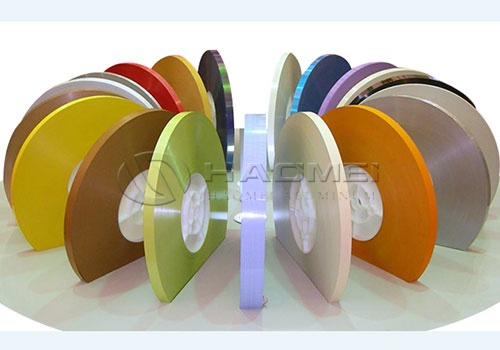
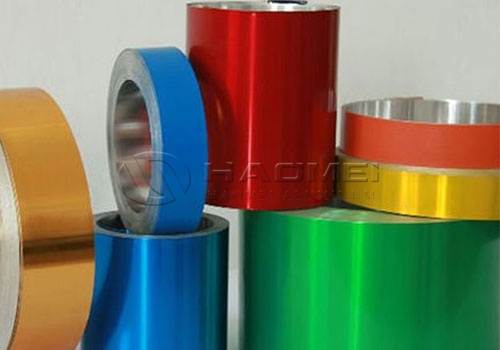
RAL is a widely recognized color-reference system used in architecture, construction, transport, machinery, and consumer products. Common choices include RAL 9016 Traffic White, RAL 9005 Jet Black, RAL 7016 Anthracite Grey, RAL 3005 Wine Red, RAL 6005 Moss Green, and RAL 1023 Traffic Yellow. A RAL designation provides a color target, while the final visual result also depends on gloss, texture, coating chemistry, viewing angle, and lighting conditions.
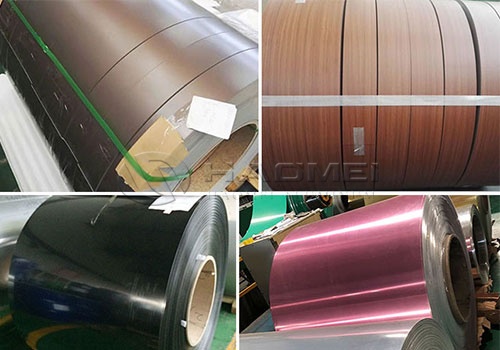
Jumbo roll RAL color aluminium strips are normally produced by continuous coil coating. The aluminium coil is cleaned, chemically pretreated, primed, top-coated, and oven cured before it is slit to the required width. This factory-applied process gives more even film build and better productivity than post-painting narrow strips.
For applications requiring flexible finishes and economical indoor durability, PE Coated Aluminum Strip is a practical choice. For façades, roofing trims, and exposed outdoor applications where color retention is more demanding, PVDF Coated Aluminum Strip offers stronger weathering resistance.
Typical Jumbo Roll Parameters
The right specification starts with the downstream process. A deep-drawn part needs a softer temper than a stiff cladding strip. A narrow slitting operation needs controlled edge quality and stable coil winding. Typical commercial parameters are shown here.
| Property | Common Range or Option |
|---|---|
| Base alloy | 1050, 1060, 1100, 3003, 3105, 5052 |
| Temper | O, H12, H14, H16, H18, H24, H26 |
| Aluminium thickness | 0.20-1.50 mm |
| Jumbo coil width | 800-1,650 mm |
| Slit strip width | Usually 10-1,500 mm |
| Coil inner diameter | 405 mm, 505 mm, 508 mm, 610 mm |
| Coil outer diameter | According to thickness and handling capacity |
| Coil weight | Commonly 2-8 tonnes, subject to equipment limits |
| Coating system | PE, HDP, SMP, PVDF, epoxy primer system |
| Top-coat thickness | Typically 15-35 μm |
| Back-coat thickness | Typically 5-12 μm |
| Gloss | Matte, low gloss, semi-gloss, high gloss |
| Surface finish | Smooth, textured, embossed, orange-peel effect, film-laminated |
Actual dimensional tolerances should be agreed before ordering, especially for thin gauges, precision slitting, and high-speed forming. Width tolerance, thickness tolerance, camber, burr direction, coil telescoping, and splice policy all affect line efficiency.
Alloy and Temper Selection
Alloy selection is where appearance meets function. The coating may be the visible layer, but the substrate determines how the strip bends, stretches, resists corrosion, and holds its shape.
The 1050, 1060, and 1100 series are commercially pure aluminium grades with excellent corrosion resistance and high formability. They are frequently selected for decorative trim, lighting reflectors, insulation jacketing, and general-purpose coated strips where moderate strength is sufficient.
Alloy 3003 contains manganese and provides higher strength than pure aluminium while retaining good workability. It is commonly used for building trims, ceiling systems, heat-transfer components, and painted sheet-metal parts. Alloy 3105 is particularly popular in painted building products because it combines formability, strength, and coating compatibility.
Alloy 5052 contains magnesium and provides stronger corrosion resistance, especially in humid or mildly marine environments. It suits applications requiring more strength and improved resistance to deformation, although tighter bend radii may require a softer temper.
| Alloy | Principal Alloying Elements | Typical Characteristics | Suitable Uses |
|---|---|---|---|
| 1050 | Al ≥ 99.5% | Soft, highly formable, corrosion resistant | Decorative strips, insulation, lighting |
| 1060 | Al ≥ 99.6% | High ductility and electrical conductivity | Cable wrapping, trim, general forming |
| 1100 | Al ≥ 99.0% | Good workability and chemical resistance | Signage, panels, household products |
| 3003 | Mn 1.0-1.5% | Moderate strength, good formability | Roofing accessories, cladding, shutters |
| 3105 | Mn 0.3-0.8%, Mg 0.2-0.8% | Strong painted-sheet performance | Building profiles, rainwater systems |
| 5052 | Mg 2.2-2.8% | Higher strength and corrosion resistance | Transport, marine-adjacent components |
Temper describes the hardness condition of the strip. O temper is fully annealed and offers the best forming ability. H14 is half-hard and widely used where the strip must balance stiffness with bendability. H24 refers to strain hardened and partially annealed material, often selected when more controlled forming is required. H18 is harder and is suitable for applications where flatness and rigidity matter more than deep forming.
Chemical Properties and Substrate Control
Chemical composition is not just a certificate item. It influences grain structure, strength, corrosion behavior, and consistency during bending. Typical composition limits are listed in weight percent. Values may vary according to the ordered standard and grade.
| Alloy | Si | Fe | Cu | Mn | Mg | Zn | Al |
|---|---|---|---|---|---|---|---|
| 1050 | ≤0.25 | ≤0.40 | ≤0.05 | ≤0.05 | ≤0.05 | ≤0.05 | Balance, min. 99.50 |
| 1060 | ≤0.25 | ≤0.35 | ≤0.05 | ≤0.03 | ≤0.03 | ≤0.05 | Balance, min. 99.60 |
| 1100 | Si+Fe ≤0.95 | Included | 0.05-0.20 | ≤0.05 | - | ≤0.10 | Balance, min. 99.00 |
| 3003 | ≤0.60 | ≤0.70 | 0.05-0.20 | 1.0-1.5 | - | ≤0.10 | Balance |
| 3105 | ≤0.60 | ≤0.70 | ≤0.30 | 0.30-0.80 | 0.20-0.80 | ≤0.40 | Balance |
| 5052 | ≤0.25 | ≤0.40 | ≤0.10 | ≤0.10 | 2.2-2.8 | ≤0.10 | Balance |
Standards and Coating Performance
Jumbo RAL color aluminium strips may be manufactured and inspected in accordance with EN 485 for aluminium sheet and strip tolerances and mechanical properties, EN 573 for alloy chemical composition, and EN 1396 for coil-coated aluminium products used in general applications. ASTM B209 can also be referenced for customers using North American material specifications.
Coating performance is commonly evaluated through EN 13523 test methods. These tests can cover gloss, color difference, coating thickness, flexibility, impact resistance, adhesion, pencil hardness, salt-spray resistance, humidity resistance, and resistance to solvents. Exterior projects may also require accelerated weathering evaluation, such as QUV testing, depending on the paint system and service environment.
A good RAL coating is more than a color match. It needs firm adhesion after bending, stable gloss after curing, clean edges after slitting, and protection against chalking or fading during use. For projects with visible joined panels, coil batches should be controlled carefully so that color variation is minimized across the same installation.
Processing and Ordering Considerations
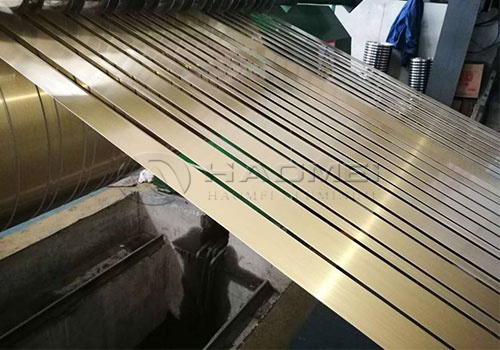
Jumbo rolls improve material yield because a converter can slit several widths from one master coil. This reduces the need to stock many narrow coils and gives greater flexibility when production schedules change. However, the master coil must be matched to the slitting line's maximum weight, decoiler capacity, blade condition, and tension settings.
When specifying RAL color aluminium strips, state the RAL code, coating type, gloss level, alloy, temper, thickness, width, coil ID, maximum coil weight, protective film requirement, and intended end use. If the strip will be roll formed, folded, stamped, or embossed, provide the minimum bend radius and tooling conditions. These details allow the coating and substrate to work together rather than compete during fabrication.
Jumbo roll RAL color aluminium strips give manufacturers a practical route to high-volume, visually consistent production. With the correct alloy, temper, coating system, and dimensional control, one master coil becomes a dependable source for many finished products while preserving the color character customers expect.