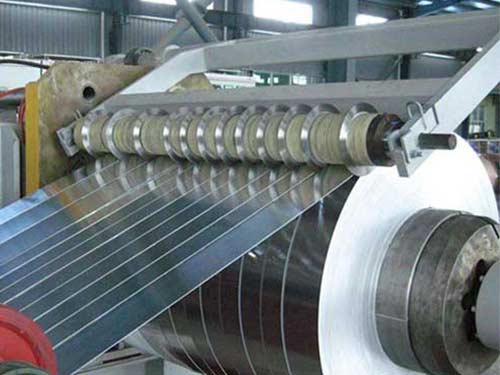
Extruded Supply Aluminium Strip for Building
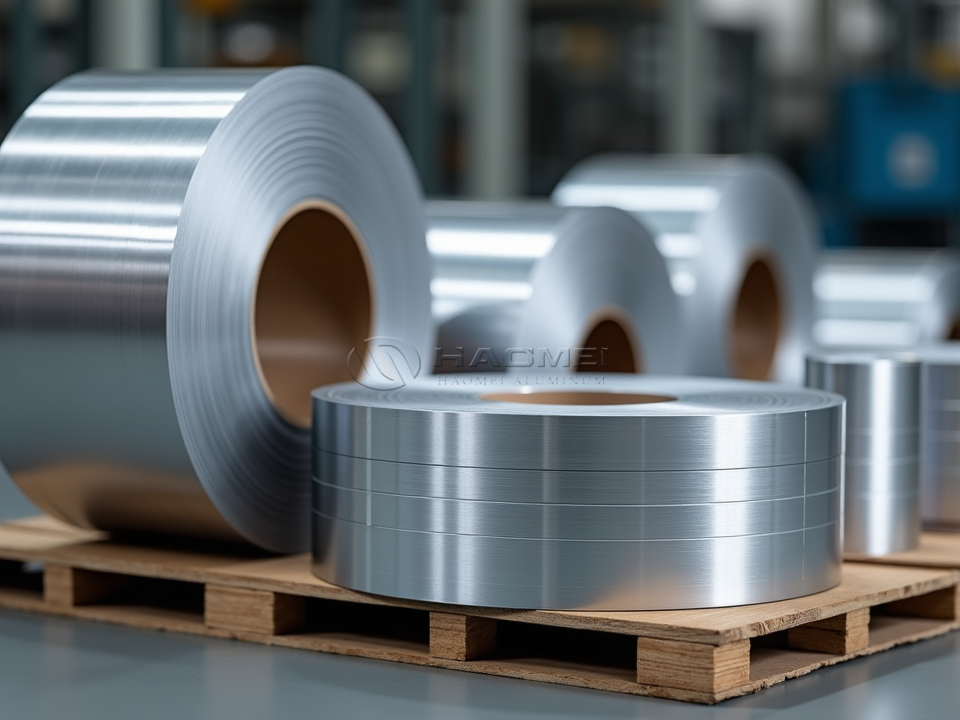
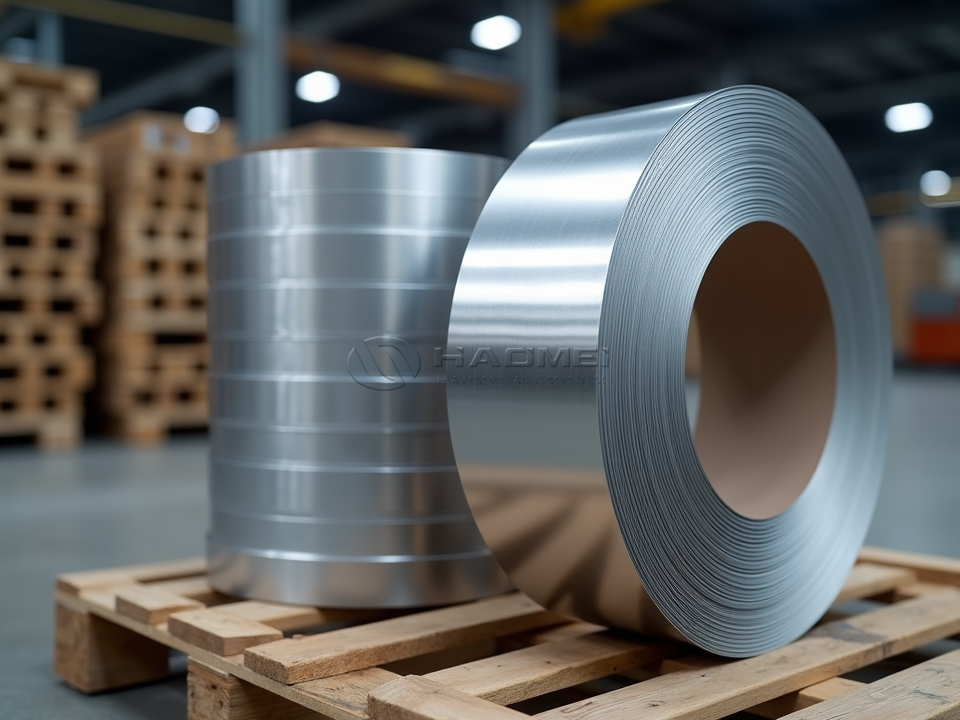
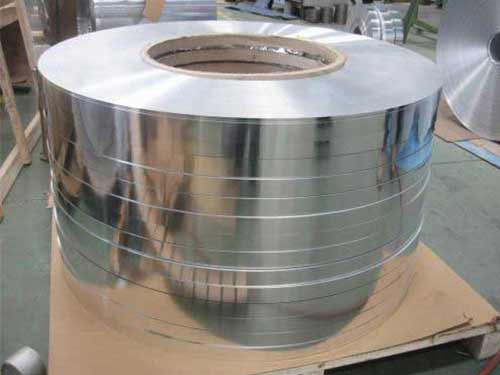
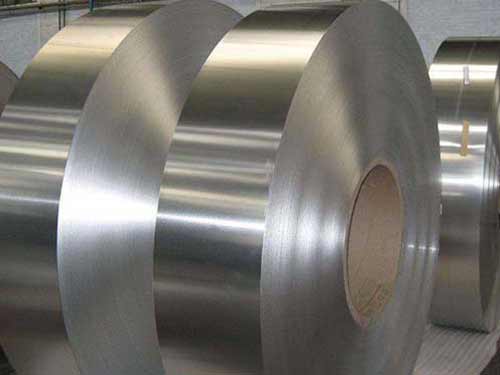
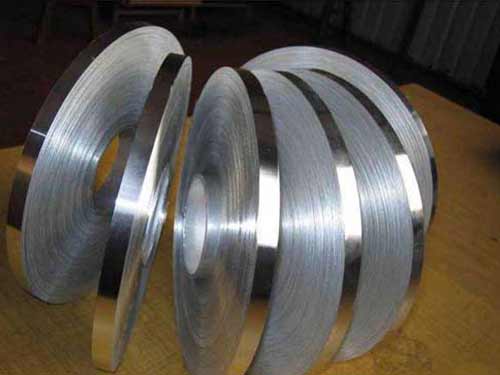
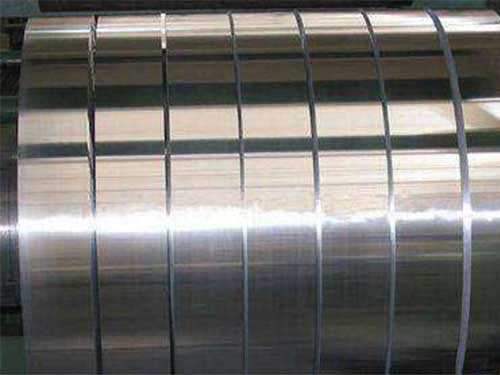
Extruded supply aluminium strip for building is a versatile flat aluminium product used where low weight, weather resistance, clean appearance, and reliable fabrication are needed. It can be supplied as slit coil, cut-to-length strip, or extruded flat bar-style sections depending on the design requirement. In construction, the material supports durable details without adding unnecessary structural load to the building envelope.
Architects, fabricators, and contractors use aluminium strip in facade elements, roof edging, partition systems, window and door components, ceiling grids, insulation cladding, flashings, decorative trims, and equipment housings. Its naturally formed oxide film helps resist atmospheric corrosion, while anodizing, powder coating, PVDF coating, or painted finishes can further improve service life and visual consistency.
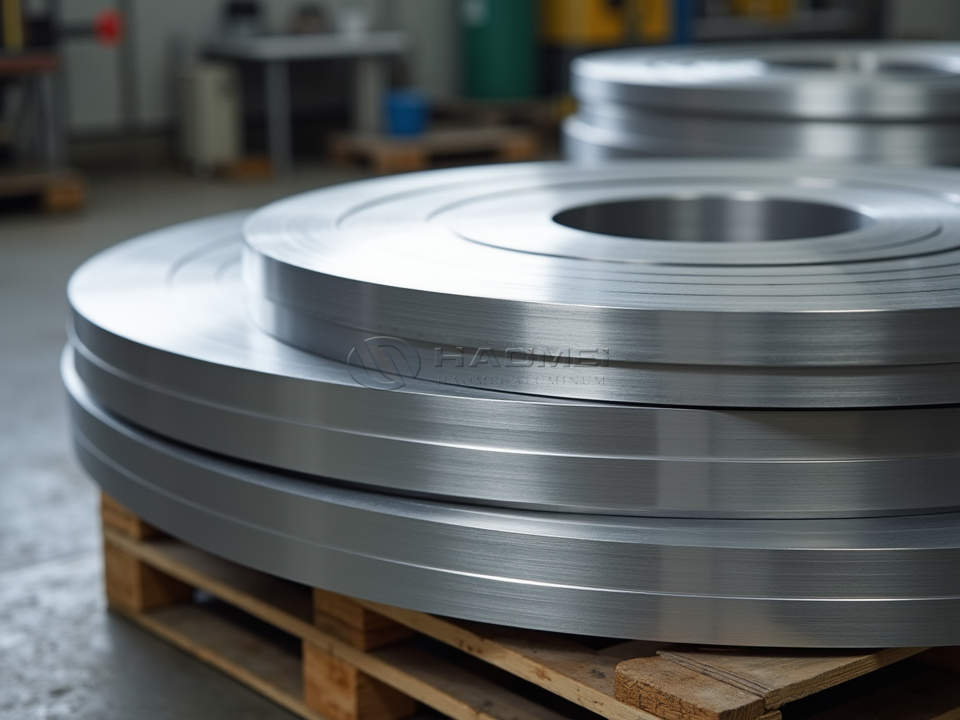
Functions in Building Systems
Aluminium strip performs both practical and aesthetic roles in modern building assemblies. Thin, formable grades can be roll-formed, folded, stamped, or bent into flashing and trim profiles. Medium-strength grades are suitable for siding, rain-screen panels, gutter components, and formed architectural covers. Heat-treatable 6xxx alloys are preferred when an extruded flat section requires higher strength and stable geometry.
| Building function | How aluminium strip contributes | Typical alloy choices |
|---|---|---|
| Weather protection | Forms flashings, caps, drip edges, gutters, and roofing transitions | 3003, 3105, 5052 |
| Facade finishing | Creates trims, reveal strips, panel borders, and cover plates | 3105, 5005, 5052 |
| Window and door systems | Supports spacers, reinforcement strips, cladding, and extruded details | 6061, 6063, 5052 |
| Interior finishing | Used in ceiling systems, wall trims, partitions, and lighting channels | 1060, 3003, 3105 |
| Thermal insulation cladding | Covers pipe insulation, ductwork, and HVAC equipment | 1060, 3003, 3004 |
| Structural-adjacent details | Provides durable brackets, stiffeners, rails, and flat extruded members | 6061-T6 |
Alloy Selection and Temper Conditions
The right grade depends on forming method, exposure conditions, coating system, and load requirement. Non-heat-treatable 1xxx, 3xxx, and 5xxx series alloys gain strength through cold working. Their tempers are commonly marked H14, H24, H32, or H34. Heat-treatable 6xxx series material gains strength through solution treatment and artificial aging, represented by T4, T5, or T6.
| Alloy | Common tempers | Construction advantages | Typical building use |
|---|---|---|---|
| 1060 | O, H14, H24 | High aluminium content, strong conductivity, excellent forming | Insulation jacketing, decorative sheet, light trim |
| 3003 | O, H14, H24 | Manganese improves strength and corrosion performance | Roofing accessories, cladding, formed flashings |
| 3105 | H14, H24, H26 | Good coating response and moderate strength | Painted siding, fascia, soffit, rainwater goods |
| 5005 | H14, H24, H34 | Smooth anodized appearance and outdoor durability | Architectural panels, anodized trim |
| 5052 | H32, H34 | Strong resistance to moisture and salt-laden atmospheres | Coastal facade parts, gutters, equipment covers |
| 6061 | T4, T5, T6 | Higher mechanical strength and good machinability | Extruded flat strips, reinforcing members, brackets |
For coated facade and roofing work, 3105 Aluminum Strip is often selected because it combines practical formability with dependable paint adhesion. For aggressive coastal exposure, 5052 may offer a more suitable corrosion-resistance margin. Where the strip is functioning as a rigid extruded element rather than a thin formed skin, 6061-T6 is a frequent choice.
Chemical Composition
Chemical composition controls strength, corrosion behavior, weldability, and response to finishing. Values shown are typical maximum limits or specified ranges by mass percentage. Project specifications should confirm the applicable alloy standard and certified mill test data.
| Alloy | Si | Fe | Cu | Mn | Mg | Cr | Zn | Ti | Al |
|---|---|---|---|---|---|---|---|---|---|
| 1060 | 0.25 | 0.35 | 0.05 | 0.03 | 0.03 | - | 0.05 | 0.03 | 99.60 min |
| 3003 | 0.60 max | 0.70 max | 0.05-0.20 | 1.0-1.5 | - | - | 0.10 max | - | Balance |
| 3105 | 0.60 max | 0.70 max | 0.30 max | 0.30-0.80 | 0.20-0.80 | 0.20 max | 0.40 max | 0.10 max | Balance |
| 5005 | 0.30 max | 0.70 max | 0.20 max | 0.20 max | 0.50-1.10 | 0.10 max | 0.25 max | 0.20 max | Balance |
| 5052 | 0.25 max | 0.40 max | 0.10 max | 0.10 max | 2.20-2.80 | 0.15-0.35 | 0.10 max | - | Balance |
| 6061 | 0.40-0.80 | 0.70 max | 0.15-0.40 | 0.15 max | 0.80-1.20 | 0.04-0.35 | 0.25 max | 0.15 max | Balance |
Technical Specifications and Physical Data
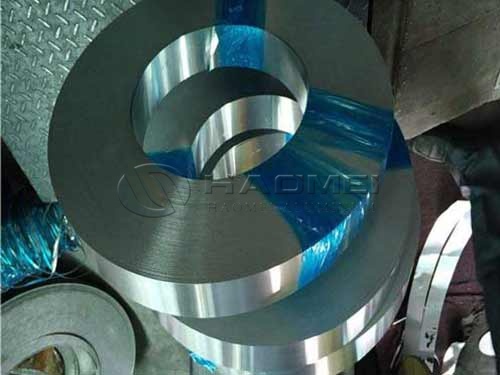
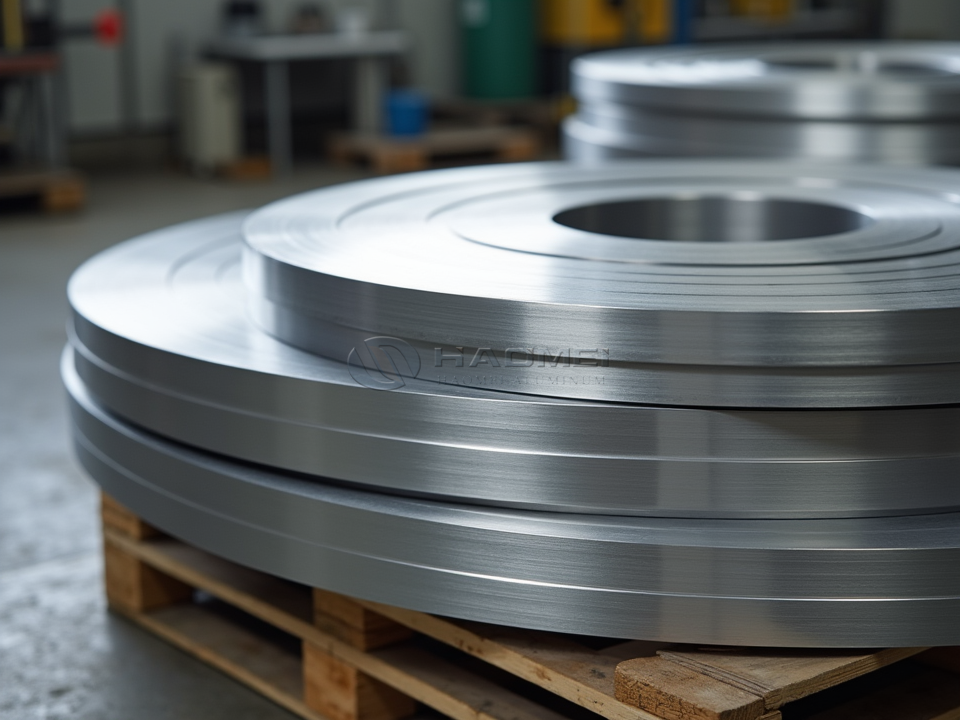
Extruded supply aluminium strip can be tailored to a drawing, forming process, or installation method. Slit strip is normally specified by thickness, width, coil weight, inner diameter, and edge condition. Extruded flat strip is generally controlled by section width, thickness, straightness, twist, length, and temper.
| Parameter | Typical supply range | Notes |
|---|---|---|
| Rolled strip thickness | 0.20-6.00 mm | Thin gauges suit flashing and cladding; heavier gauges improve rigidity |
| Extruded flat strip thickness | 2.00-25.00 mm | Dependent on extrusion die and section design |
| Width | 10-1,650 mm | Narrow slit coils or wide cut-to-length material available |
| Standard coil inner diameter | 150 mm, 300 mm, 405 mm, 508 mm | Selected to suit forming and decoiling equipment |
| Coil weight | 500-5,000 kg | Controlled by safe handling limits and line capacity |
| Density | Approximately 2.70 g/cm3 | About one-third the density of steel |
| Melting range | Approximately 580-660 C | Varies by alloy composition |
| Thermal conductivity | Approximately 117-235 W/m.K | Higher for 1xxx grades, lower for alloyed grades |
| Linear expansion coefficient | Approximately 23 x 10^-6 /K | Allow for movement in long facade and roof details |
| Surface options | Mill finish, stucco, brushed, anodized, coated | Finish should match exposure and design intent |
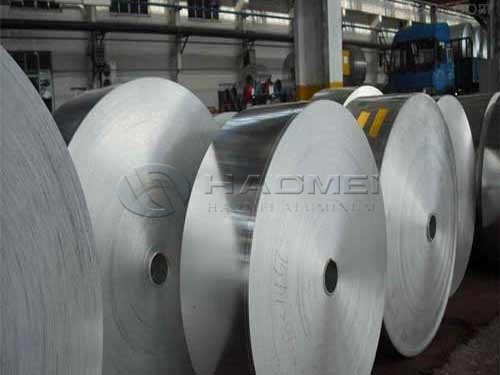
Mechanical Performance
Mechanical values vary with thickness, temper, test direction, and governing specification. The figures provide a practical comparison for preliminary material selection rather than design approval.
| Alloy and temper | Tensile strength, MPa | Yield strength, MPa | Elongation, typical | Forming behavior |
|---|---|---|---|---|
| 1060-H14 | 95-135 | 75 min | 3-10% | Good for light bends and formed covers |
| 3003-H14 | 130-170 | 115 min | 3-10% | Suitable for roll forming and flashing |
| 3105-H24 | 145-185 | 125 min | 2-8% | Practical for coated architectural profiles |
| 5052-H32 | 195-255 | 130 min | 8-15% | Strong, corrosion resistant, good bendability |
| 6061-T6 | 260-310 | 240 min | 8-12% | Rigid, machinable, less suitable for tight cold bends |
Standards, Fabrication, and Installation Notes
Material should be ordered against a recognized product standard, with alloy, temper, dimensions, tolerances, surface condition, and inspection requirements stated clearly. EN standards are widely used in European construction work, while ASTM standards are common in North American projects.
| Standard | Scope for aluminium strip or extruded product |
|---|---|
| EN 485 | Tolerances and mechanical properties for aluminium sheet, strip, and plate |
| EN 573 | Chemical composition and designation of wrought aluminium alloys |
| EN 755 | Technical conditions, mechanical properties, and tolerances for extruded products |
| EN 12020 | Tolerances for precision extruded 6060 and 6063 architectural profiles |
| ASTM B209 | Aluminium and aluminium-alloy sheet and plate, including strip applications |
| ASTM B221 | Aluminium-alloy extruded bars, rods, wire, profiles, and tubes |
During fabrication, use clean tooling to prevent surface marking and avoid embedding carbon steel particles that can cause staining. Bend radii should match alloy and temper: softer O or H14 material accepts tighter bends, while 6061-T6 needs a more generous radius. Aluminium expands more than steel, concrete, and glass, so facade trims and long roof strips should include sliding points, expansion gaps, or appropriate sealant joints.
For long-term durability, isolate aluminium from wet copper, untreated steel, and highly alkaline fresh concrete where direct contact may create galvanic or chemical attack. Use compatible membranes, coatings, nonconductive separators, or approved fasteners. These practical controls help building aluminium strip retain its appearance and service performance across demanding exterior and interior environments.