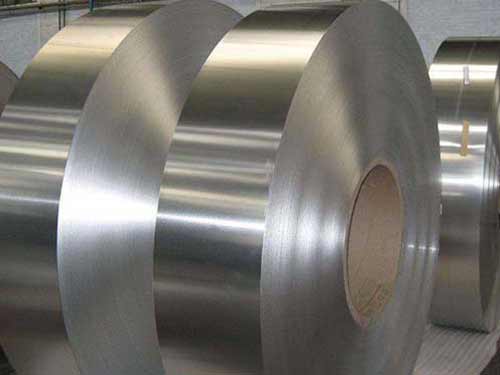
Export Aluminum Strip Aluminum Direct Sales Custom Aluminum Sheet
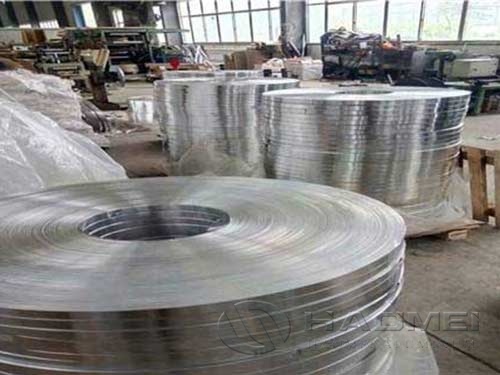
For many factories, aluminum is not purchased as a metal alone. It is purchased as a production rhythm. A transformer plant needs stable conductivity from coil to coil. A stamping workshop needs edges that do not crack the die schedule. A packaging line needs strip that unwinds cleanly at speed. This is where export aluminum strip, aluminum direct sales and custom aluminum sheet become more than product names. They become a way to reduce uncertainty before the material reaches the press, slitter, laminator or assembly line.
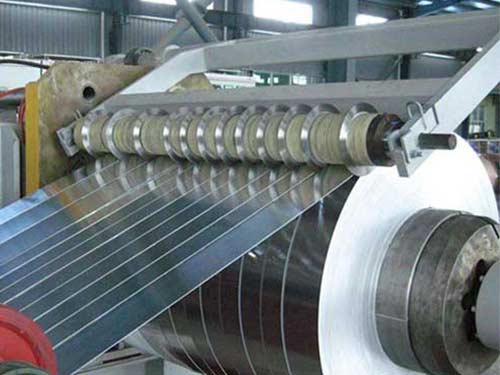
Direct sales from the aluminum mill shortens the path between technical demand and finished material. Instead of adapting your process to a stock coil, the coil can be planned around alloy, temper, width, surface, edge condition, packing method and export documentation from the beginning.
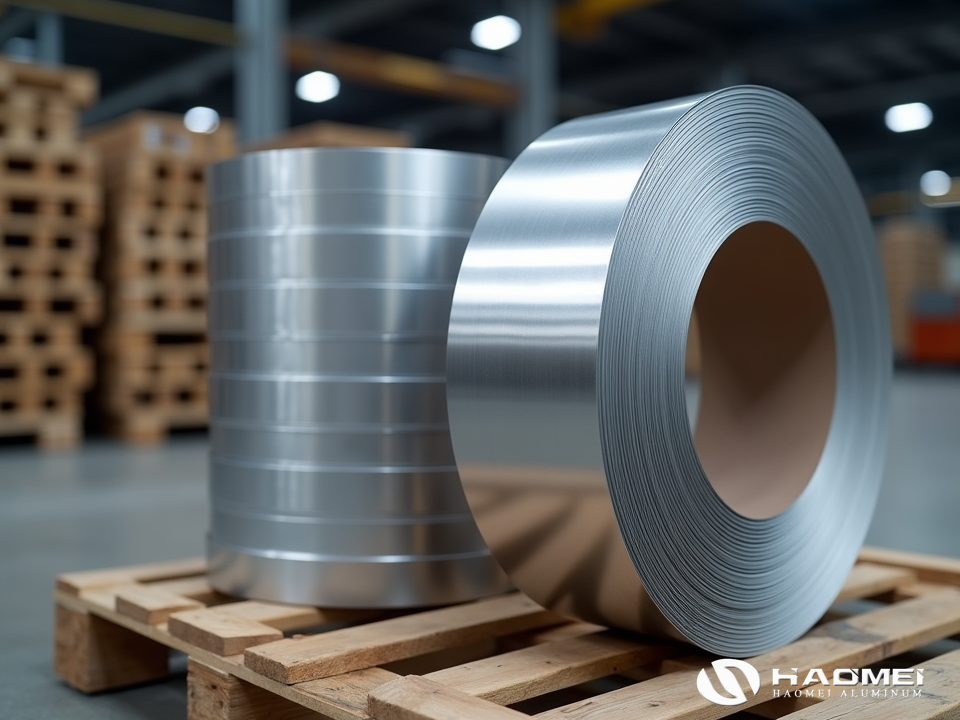
Why Direct Sales Changes the Buying Experience
In indirect purchasing, technical details often pass through several hands. A small misunderstanding in temper, burr direction or surface oil can become a large problem on arrival. With aluminum direct sales, the buyer can discuss the application directly with the producer: whether the material will be deep drawn, bent, anodized, laminated, insulated, stamped or used as a conductor.
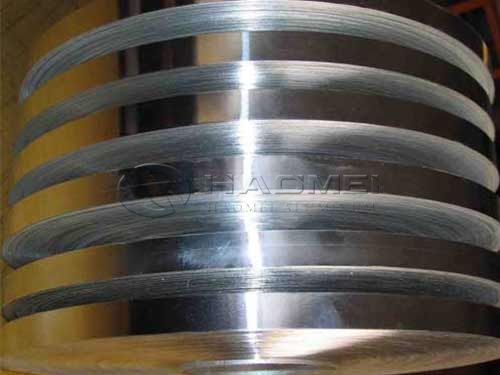
This is especially valuable for custom aluminum sheet and narrow aluminum strip. A width tolerance of ±0.05 mm may be unnecessary for one customer but critical for another. A soft O temper may be ideal for deep drawing, while H18 may be preferred for flatness and stiffness. Direct communication helps match cost with function instead of over-specifying or under-specifying the order.
For electrical, lamp cap, heat exchanger and decorative applications, commercially pure grades such as 1050 / 1060 Aluminum Strip are often selected for conductivity, formability and corrosion resistance. For food packaging, bottle caps and flexible container materials, 8011 Aluminum Strip is widely used because it balances strength, cleanliness and foil-related processing behavior.
Common Supply Parameters for Export Orders
| Item | Typical Supply Range |
|---|---|
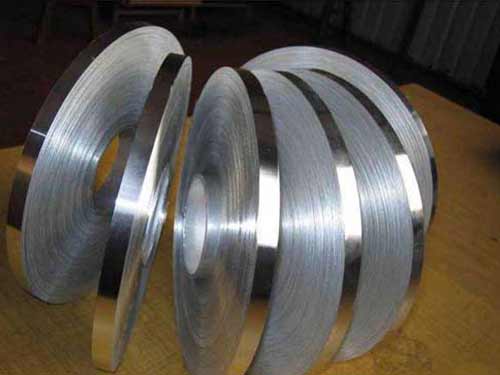
| Product form | Aluminum strip coil, slit coil, flat sheet, custom cut sheet |
| Alloy series | 1000, 3000, 5000, 6000, 8000 series |
| Thickness | 0.10 mm to 6.00 mm for strip and sheet, thinner gauges by project |
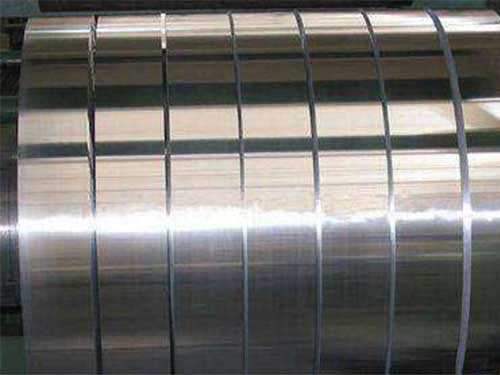
| Width | 10 mm to 1600 mm, narrow strip available by precision slitting |
| Coil inner diameter | 150 mm, 300 mm, 405 mm, 508 mm or customized |
| Coil weight | 50 kg to 5000 kg depending on width and handling equipment |
| Surface | Mill finish, bright finish, degreased, coated, film protected, anodizing quality by request |
| Edge | Slit edge, trimmed edge, deburred edge, round edge by special order |
| Tolerance | According to ASTM, EN, GB/T, JIS or customer drawing |
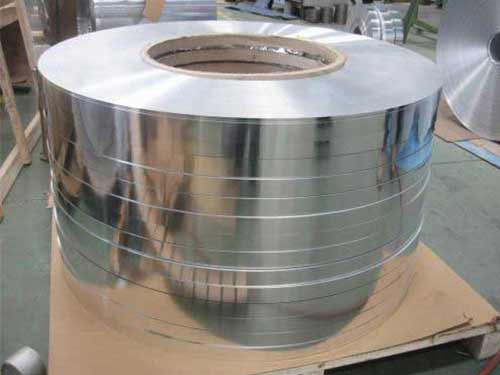
| Packing | Eye-to-sky or eye-to-wall coil packing, seaworthy wooden pallet or case |
The most successful export orders usually begin with the final operation. If the aluminum strip will be stamped, burr height and edge crack control matter. If it will be used in cable wrapping, coil winding quality and surface cleanliness matter. If it will be cut into custom aluminum sheet panels, flatness and diagonal tolerance become more important.
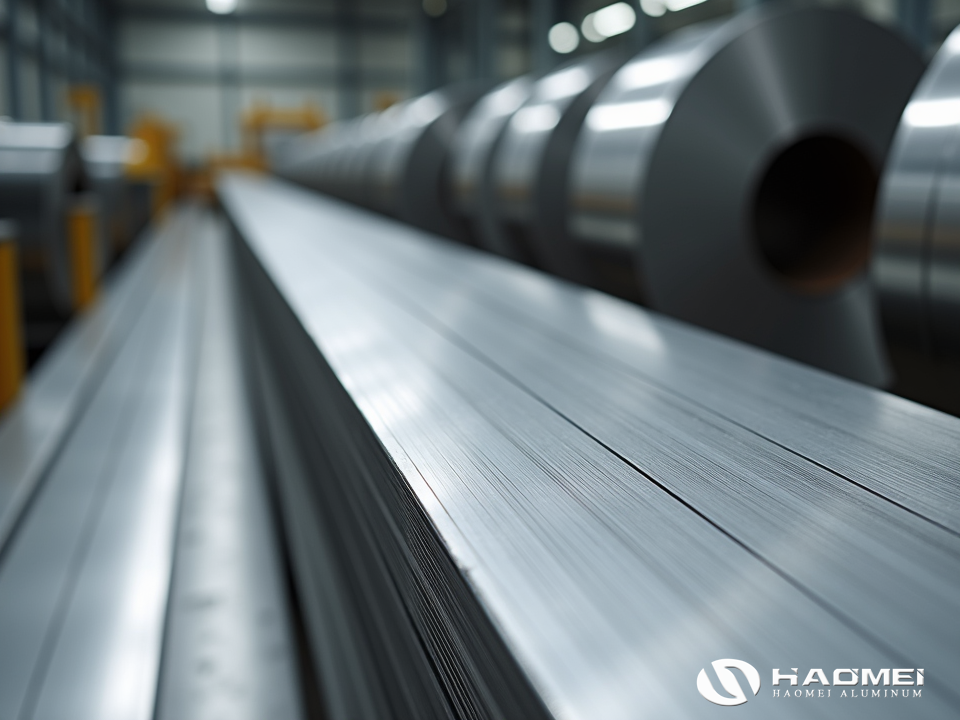
Alloy and Temper Selection in Practical Terms
Aluminum alloy choice is a balance between purity, strength, forming ability, corrosion resistance, surface finish and price. Temper then adjusts the behavior of the same alloy. A soft coil bends differently from a hard coil, even when the chemistry is identical.
| Alloy | Common Tempers | Typical Use |
|---|---|---|
| 1050, 1060 | O, H12, H14, H18 | Electrical strip, transformer winding, heat sinks, lamp caps |
| 1100 | O, H14, H16, H18 | General sheet metal, nameplates, cookware, insulation jacketing |
| 3003 | O, H14, H16, H24 | Heat exchangers, roofing, storage tanks, stamping parts |
| 3004, 3105 | H14, H24, H26 | Building panels, caps, coated sheet, decorative parts |
| 5052, 5754 | O, H32, H34, H111 | Marine parts, vehicle panels, structural sheet, anti-rust components |
| 6061 | O, T4, T6 | Machined parts, brackets, structural panels, frames |
| 8011 | O, H14, H18, H22, H24 | Packaging strip, closures, container stock, foil-related products |
O temper gives the best softness and forming response. H tempers are strain hardened, with higher numbers generally indicating higher hardness. H24 and H32 tempers combine work hardening with stabilization, which helps maintain dimensional behavior during later processing. T tempers apply mainly to heat-treatable alloys such as 6061, where solution treatment and aging increase strength.
Chemical Composition Reference
Actual chemical composition should follow the confirmed standard and mill certificate. The table gives common reference ranges or maximum values by mass percent.
| Alloy | Si | Fe | Cu | Mn | Mg | Zn | Al |
|---|---|---|---|---|---|---|---|
| 1050 | 0.25 max | 0.40 max | 0.05 max | 0.05 max | 0.05 max | 0.05 max | 99.50 min |
| 1060 | 0.25 max | 0.35 max | 0.05 max | 0.03 max | 0.03 max | 0.05 max | 99.60 min |
| 1100 | Si+Fe 0.95 max | Si+Fe 0.95 max | 0.05-0.20 | 0.05 max | - | 0.10 max | 99.00 min |
| 3003 | 0.60 max | 0.70 max | 0.05-0.20 | 1.00-1.50 | - | 0.10 max | Balance |
| 3004 | 0.30 max | 0.70 max | 0.25 max | 1.00-1.50 | 0.80-1.30 | 0.25 max | Balance |
| 5052 | 0.25 max | 0.40 max | 0.10 max | 0.10 max | 2.20-2.80 | 0.10 max | Balance |
| 5754 | 0.40 max | 0.40 max | 0.10 max | 0.50 max | 2.60-3.60 | 0.20 max | Balance |
| 6061 | 0.40-0.80 | 0.70 max | 0.15-0.40 | 0.15 max | 0.80-1.20 | 0.25 max | Balance |
| 8011 | 0.50-0.90 | 0.60-1.00 | 0.10 max | 0.20 max | 0.05 max | 0.10 max | Balance |
Aluminum naturally forms a dense oxide film in air, giving good corrosion resistance in many environments. Higher purity grades offer excellent electrical and thermal conductivity. Manganese-containing 3000 series alloys improve strength while keeping good workability. Magnesium-containing 5000 series alloys improve marine and atmospheric corrosion resistance. For food or pharmaceutical contact, buyers should confirm surface oil type, cleaning requirements and compliance documents before shipment.
Standards, Testing and Export Control Points
Export aluminum strip and custom aluminum sheet can be produced according to ASTM B209/B209M, EN 485, GB/T 3880, JIS H4000 or agreed customer drawings. Mechanical testing may include tensile strength, yield strength, elongation, hardness and bend performance. Dimensional inspection normally checks thickness, width, camber, flatness, coil ID, coil weight and telescoping.
Surface inspection is equally important. Common acceptance items include oil stain, black line, roller mark, scratch, oxidation spot, pinhole, wave, dent and edge burr. For high-speed stamping or lamination, the surface should not merely look acceptable; it should run smoothly under tension.
Mill test certificates can show alloy, temper, coil number, chemical composition, mechanical properties and standard compliance. Export documents may include commercial invoice, packing list, certificate of origin, bill of lading, fumigation certificate when required and third-party inspection report if requested.
Packing Designed for Ocean Freight
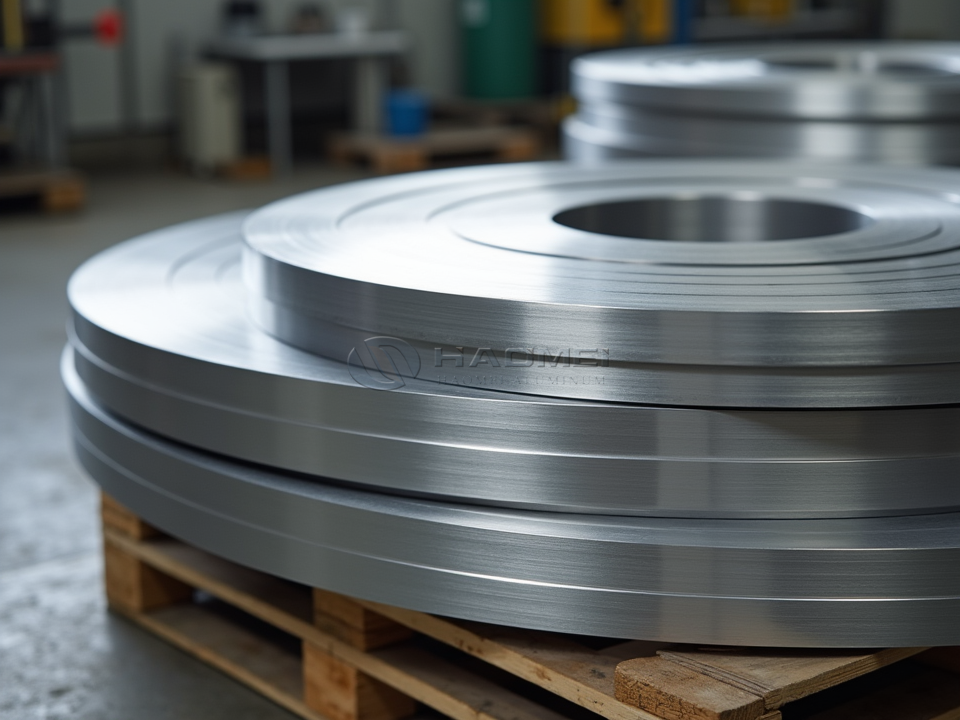
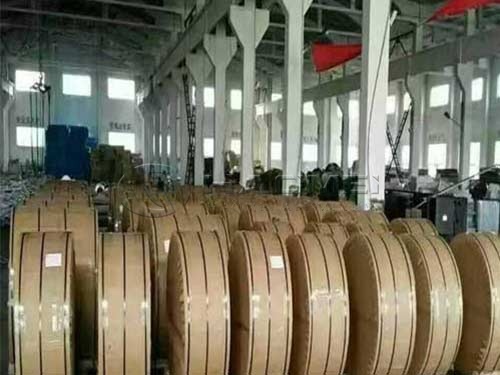
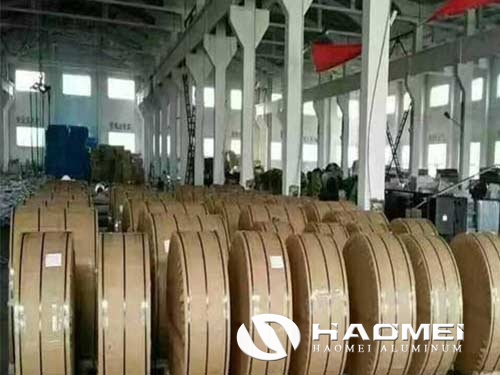
Good packing protects the value created during rolling and slitting. Aluminum strip coils are usually wrapped with moisture-proof paper, plastic film, hardboard, steel or plastic straps and wooden pallets. Desiccant and VCI materials can be added for humid routes. Custom aluminum sheet is commonly packed in bundles with interleaving paper or protective film, then fixed inside wooden cases or on pallets.
Labels should show alloy, temper, size, net weight, gross weight, coil number and order number. For customers receiving many specifications in one container, clear labeling prevents warehouse confusion and reduces time before production.
A Practical Buying Note
The best price is not always the lowest price per ton. It is the price that delivers usable yield, stable processing and fewer claims. When ordering export aluminum strip or custom aluminum sheet, share the end use, machine speed, forming depth, bending radius, required surface, edge demand and packing preference. A direct mill sales team can then recommend the alloy, temper and tolerance range that fit the job without unnecessary cost.
From narrow slit coil to wide custom sheet, aluminum becomes reliable when specification, production and shipment speak the same language. That is the real advantage of buying from a direct aluminum strip supplier focused on export projects.