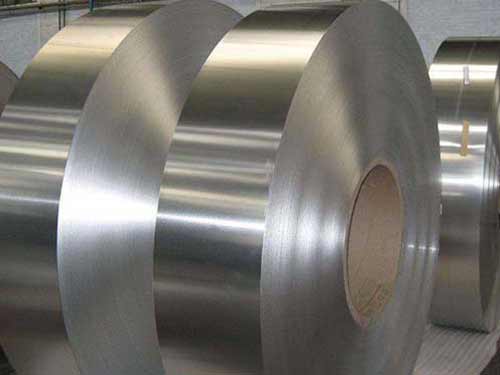
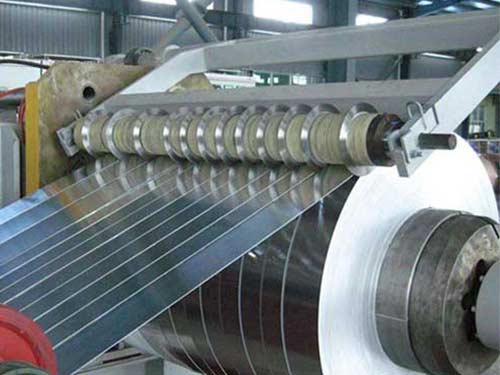
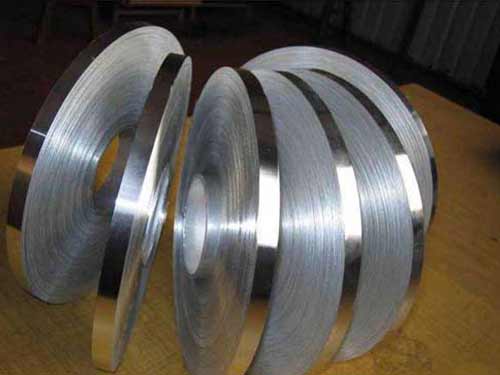
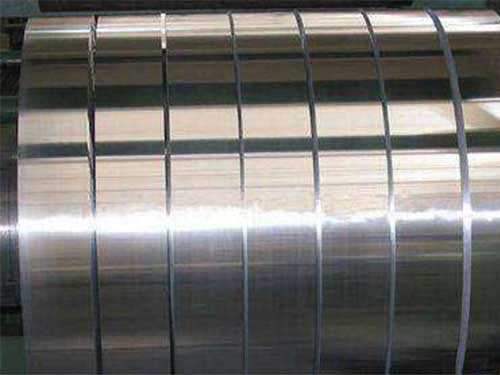
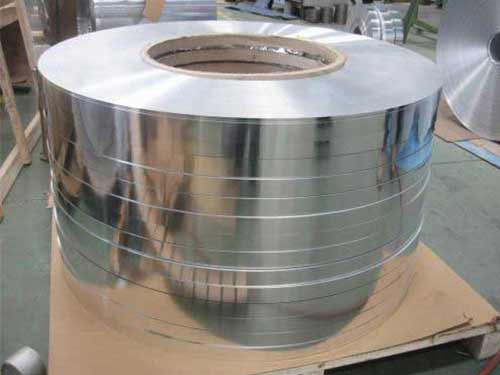
Bending for Aluminum Strip
Bending for aluminum strip is not only a forming step; it is the moment when a flat coil begins to act like a product. A strip may become a lamp cap, a cable armoring layer, a transformer winding, a heat exchanger fin, a stamped housing, or a curved decorative profile. The success of that bend depends on alloy chemistry, temper, thickness, grain direction, edge condition, surface finish, tooling radius, and the way stress travels through the metal.
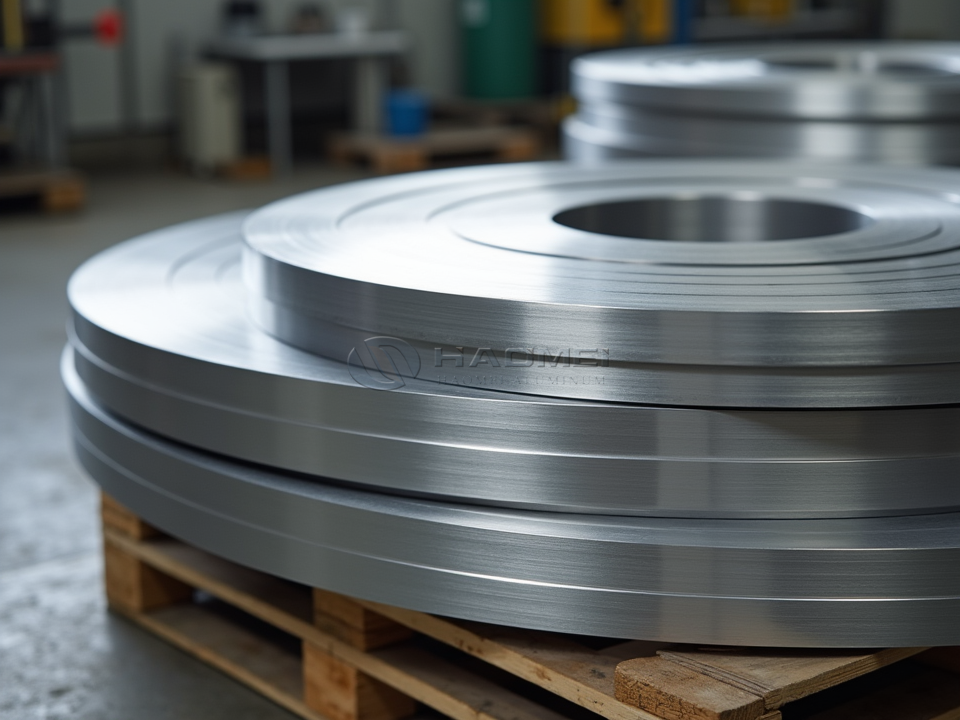
Aluminum strip is favored for bending because it combines low density, corrosion resistance, electrical conductivity, thermal conductivity, and clean surface performance. Yet aluminum is not all the same. A soft 1060-O strip can wrap around a tight radius with little resistance, while 5052-H34 needs more radius but offers better strength and fatigue resistance. A heat-treatable 6061 strip can form well in T4 condition, then gain strength after aging, but may crack if bent sharply in T6 condition.
Reading the Bend Before Forming
A good bend starts before the press brake, roll former, stamping die, or continuous forming line begins working. For aluminum strip, the inside surface is compressed and the outside surface is stretched. If the outside fiber exceeds its elongation limit, orange peel, whitening, micro-cracks, or open cracking can appear. This is why bend radius is not a random setting; it is a material decision.
For routine planning, the inside bend radius is often expressed as a multiple of strip thickness. Soft commercial-purity alloys may accept a radius near 0t to 1t, where t is thickness. Work-hardened 3003 or 5052 usually needs a larger radius, often 1t to 3t depending on temper. High-strength tempers, rough slit edges, or bending parallel to rolling direction may require even more allowance.
When customers compare Alloy Aluminum Strip options, bendability should be evaluated together with strength, surface requirement, conductivity, and corrosion environment. The most economical alloy is not always the easiest to bend, and the easiest to bend is not always strong enough after forming.
Typical Bending Parameters for Aluminum Strip
| Parameter | Common Range or Control Point | Why It Matters |
|---|---|---|
| Strip thickness | 0.10 mm to 6.00 mm | Controls bend force, springback, radius, and tooling clearance |
| Strip width | 5 mm to 1600 mm | Narrow strip needs stable edge quality; wide strip needs flatness control |
| Inside bend radius | 0t to 4t typical | Prevents cracking and controls part geometry |
| Bend angle | 15 degrees to 180 degrees | Used for clips, caps, channels, rings, shells, and closures |
| Surface roughness | Mill finish, bright, brushed, coated | Affects appearance, coating adhesion, and friction during forming |
| Edge condition | Slit, deburred, rounded | Poor edges can start cracks during bending |
| Grain direction | Across grain preferred for tight bends | Bending across rolling direction improves crack resistance |
| Springback allowance | Higher in harder tempers | Die angle and over-bending must compensate |
In production, bending force rises with thickness, width, yield strength, and smaller die openings. Lubrication may be used when the strip surface must stay bright or when forming speed is high. For coated aluminum strip, the forming process must protect the coating from peeling, compression wrinkling, or surface marking.
Alloy Tempering and Bending Behavior
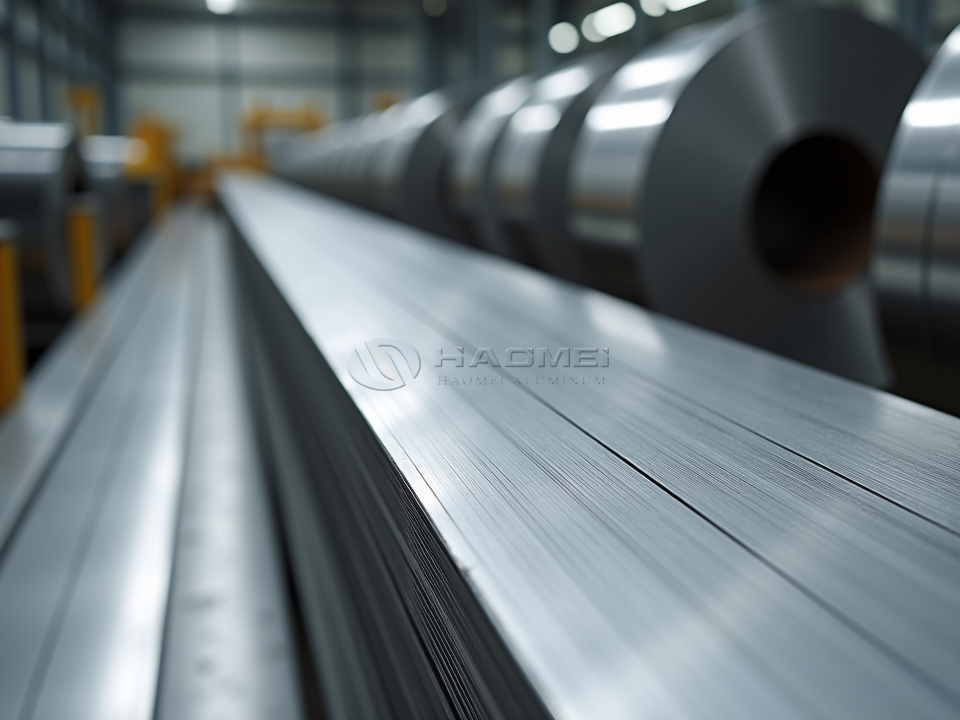
Temper is the hidden language of aluminum strip bending. The same alloy can behave like soft foil or springy sheet depending on processing history. O temper means annealed and soft, suitable for deep bending, drawing, and crimping. H tempers mean strain-hardened, with strength increasing as the number rises. H12 and H14 offer balanced formability, while H18 is harder and less forgiving. H22, H24, H32, and H34 include partial annealing or stabilization, improving consistency for formed parts.
| Alloy | Common Tempers | Bending Character | Typical Applications |
|---|---|---|---|
| 1050 / 1060 | O, H12, H14, H18 | Excellent in O and H12; strong conductivity | Transformer strip, cable strip, lamp caps, signs |
| 1100 | O, H14, H16 | Very good formability with clean finish | Nameplates, reflectors, cookware, trim |
| 3003 | O, H14, H24 | Better strength than pure aluminum; reliable bending | Heat exchanger fins, shells, roofing accessories |
| 3004 / 3105 | H14, H24, H26 | Good forming with added strength | Painted strip, closure parts, building panels |
| 5052 | O, H32, H34 | Good marine corrosion resistance; radius should be managed | Cable armor, brackets, cases, automotive parts |
| 6061 | O, T4, T6 | Best formed in O or T4; T6 needs generous radius | Structural profiles, machined formed components |
| 8011 | O, H14, H16 | Good for thin strip and packaging-related bends | Packaging strip, closures, pharmaceutical uses |
For tight bends, 1050 / 1060 Aluminum Strip is often selected because high aluminum purity gives excellent ductility and electrical conductivity. For parts requiring greater strength and better resistance to moisture or chemicals, 5052 Aluminum Strip offers a stronger balance, especially in H32 and H34 tempers.
Chemical Composition Reference
Chemical composition shapes how aluminum strip bends, hardens, resists corrosion, and conducts heat or electricity. Values vary by standard and order specification, so mill certificates should be checked for final confirmation.
| Alloy | Al | Si | Fe | Cu | Mn | Mg | Cr | Zn | Other Notes |
|---|---|---|---|---|---|---|---|---|---|
| 1060 | 99.60 min | 0.25 max | 0.35 max | 0.05 max | 0.03 max | 0.03 max | - | 0.05 max | High conductivity and high ductility |
| 1100 | 99.00 min | Si+Fe 0.95 max | Si+Fe 0.95 max | 0.05-0.20 | 0.05 max | - | - | 0.10 max | Soft, corrosion resistant, easy to form |
| 3003 | Balance | 0.60 max | 0.70 max | 0.05-0.20 | 1.00-1.50 | - | - | 0.10 max | Mn improves strength without severe loss of formability |
| 5052 | Balance | 0.25 max | 0.40 max | 0.10 max | 0.10 max | 2.20-2.80 | 0.15-0.35 | 0.10 max | Mg and Cr improve strength and corrosion resistance |
| 6061 | Balance | 0.40-0.80 | 0.70 max | 0.15-0.40 | 0.15 max | 0.80-1.20 | 0.04-0.35 | 0.25 max | Heat treatable, strong after aging |
| 8011 | Balance | 0.50-0.90 | 0.60-1.00 | 0.10 max | 0.20 max | 0.05 max | - | 0.10 max | Used for thin strip, closures, and packaging fields |
Implementation Standards and Inspection Points
Bending-grade aluminum strip is commonly supplied according to ASTM B209/B209M, EN 485, GB/T 3880, JIS H4000, and customer-specific technical agreements. These standards help define chemical composition, mechanical properties, dimensional tolerance, surface quality, and delivery condition.
For bending applications, inspection should focus on tensile strength, yield strength, elongation, thickness tolerance, width tolerance, camber, burr height, flatness, and surface defects. Small burrs can become large cracks after forming. Uneven hardness can make springback inconsistent from coil to coil. Surface scratches may become visible after bending because the outer radius stretches and highlights imperfections.
Packaging also matters. Moisture staining, coil collapse, and edge damage reduce bending reliability. Good aluminum strip is usually packed with moisture-proof materials, solid core support, edge protection, and clear labeling for alloy, temper, size, coil number, and standard.
Applications Where Bending Defines Performance
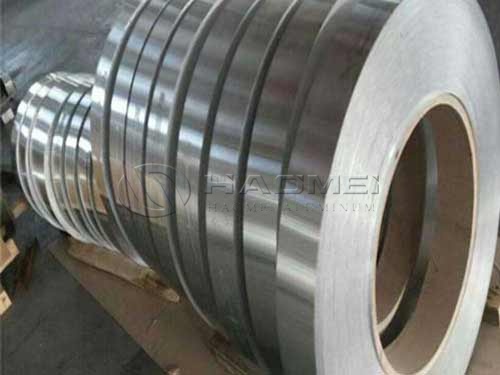
In transformer manufacturing, aluminum strip must bend smoothly around winding cores without edge cracking. Conductivity, cleanliness, and dimensional accuracy are central. In lamp caps and closures, the strip must combine bendability with surface brightness and stable stamping behavior. In cable applications, strip may be wrapped, folded, or interlocked, so fatigue resistance and edge smoothness are vital.
For heat exchangers, thin aluminum strip is bent or corrugated into fins that increase thermal transfer area. Here, springback control and consistent thickness allow precise fin geometry. For automotive and appliance parts, bent strip may become brackets, trims, shields, or formed channels, where strength and appearance must work together.
The best bending result comes from matching alloy, temper, radius, and tooling before mass production begins. Trial bending is recommended when the part has a tight radius, a coated surface, high cosmetic demand, or a hardened temper. With the right material condition, aluminum strip changes shape cleanly, keeps its surface, and delivers the function the finished part was designed to perform.