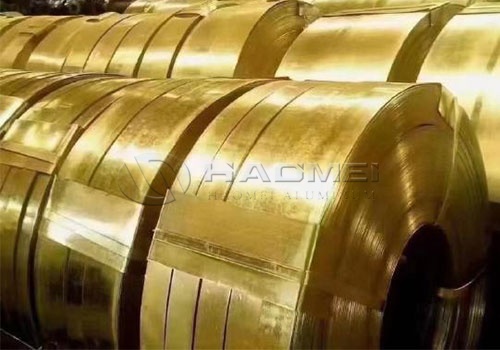
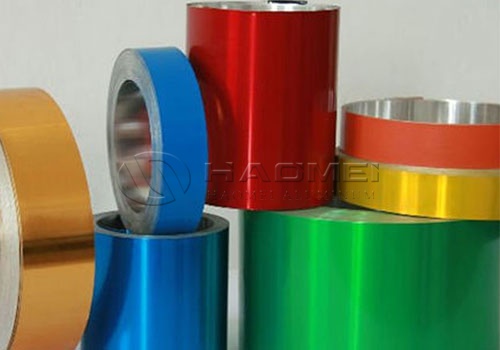
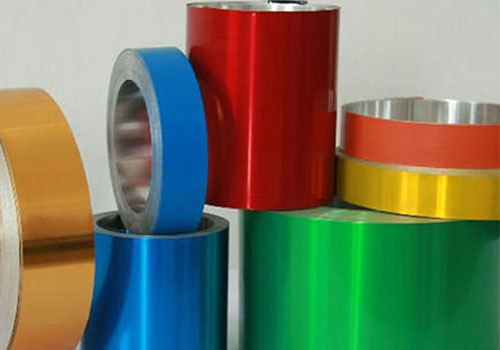
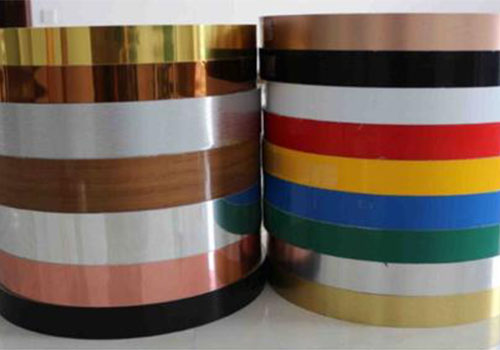
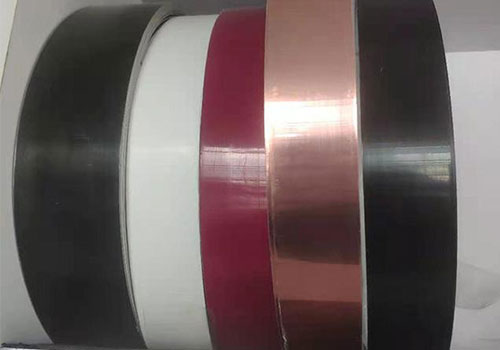
Color Coated 1050 Aluminum Strip
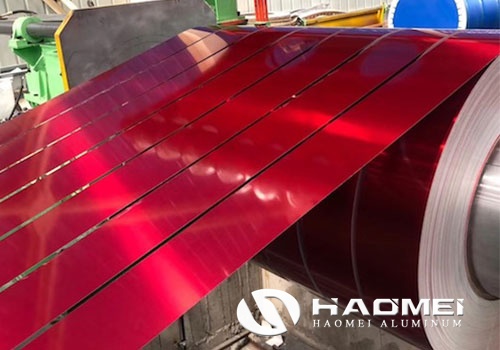
Color Coated 1050 Aluminum Strip is a prepainted aluminum strip made from commercially pure 1050 aluminum, then coated with PE, PVDF, epoxy, polyester, or other paint systems through continuous coil coating. It combines the clean surface, high aluminum content, and excellent formability of 1050 alloy with a durable colored finish for decoration, identification, corrosion resistance, and processing efficiency.
For buyers who need stable color, smooth edges, easy bending, and reliable batch consistency, this material is widely selected for signage, lighting, shutters, ceilings, bottle caps, trims, electrical parts, and many light industrial components.
What Makes 1050 Aluminum Suitable for Color Coating
1050 aluminum contains not less than 99.50% aluminum. Compared with harder aluminum alloys, it offers better ductility, easier roll forming, stronger corrosion resistance in normal atmospheric environments, and excellent surface response during pretreatment and painting.
The color coated layer is not only decorative. It helps protect the metal surface from oxidation, fingerprints, moisture, and mild chemical exposure. Because the strip is coated before slitting or forming, manufacturers can reduce secondary painting, improve production speed, and keep a cleaner working environment.
| Material Feature | Practical Value for Customers |
|---|---|
| High aluminum purity | Better corrosion resistance and clean appearance |
| Soft to medium tempers available | Suitable for bending, stamping, roll forming, and profiling |
| Smooth coated surface | Improves decorative effect and product consistency |
| Lightweight density | Reduces part weight in trim, signage, and panels |
| Good thermal conductivity | Useful for lamps, heat-related covers, and HVAC accessories |
| Good electrical conductivity | Suitable for selected electrical identification or shielding parts |
Main Functions of Color Coated 1050 Aluminum Strip
Color Coated 1050 Aluminum Strip serves several functions in one material. It provides a ready-to-use colored surface, a corrosion-resistant barrier, a lightweight structural layer, and a formable metal base. The coating can be selected according to indoor decoration, outdoor weathering, anti-fingerprint performance, or special visual effects such as matte, glossy, metallic, embossed, or wood grain finishes.
In continuous production, the strip can be uncoiled, punched, bent, laminated, or assembled directly. This makes it attractive for factories seeking shorter processing routes and more stable color control than post-painting individual parts.
Common Applications
The excellent formability of 1050 aluminum makes it especially useful where the strip must be bent or shaped without cracking. The coated surface also improves visual appeal and surface protection.
| Application Field | Typical Products | Preferred Properties |
|---|---|---|
| Signage and advertising | Channel letters, sign edges, display frames | Bright color, easy bending, weather resistance |
| Interior decoration | Ceiling strips, wall trims, curtain rails | Smooth finish, light weight, color matching |
| Lighting industry | Lampshade edges, reflector trims, decorative rings | Formability, clean coating, thermal conductivity |
| Packaging and closures | Bottle cap strips, cosmetic cap parts | Shallow drawing ability, surface uniformity |
| Home appliances | Decorative strips, panel trims, control panel edges | Color stability, scratch resistance |
| HVAC and building parts | Vent trims, shutter strips, gutter accessories | Corrosion resistance, roll forming performance |
| Electrical and electronics | Identification strips, shielding covers, cable markers | Conductivity of substrate, coated insulation effect |
For customers comparing different coated strip options, Color Coated Aluminum Strip can be specified by alloy, temper, coating type, color, thickness, width, and end-use performance.
Technical Specifications
Actual tolerances can be customized according to order quantity, strip width, thickness, temper, edge requirement, and coating system. Precision slitting is often used when the material is supplied for automatic feeding lines.
| Parameter | Common Supply Range |
|---|---|
| Alloy | 1050, 1050A, EN AW-1050A |
| Temper | O, H12, H14, H16, H18, H22, H24, H26 |
| Thickness | 0.15 mm to 3.00 mm |
| Width | 10 mm to 1600 mm |
| Coil ID | 300 mm, 405 mm, 508 mm, or customized |
| Coil OD | Usually 800 mm to 1800 mm |
| Surface finish | Glossy, matte, embossed, brushed, metallic, wood grain |
| Coating type | PE, HDPE, PVDF, epoxy, polyurethane, acrylic |
| Top coating thickness | 5 um to 35 um, depending on paint system |
| Back coating thickness | 3 um to 15 um |
| Color system | RAL, Pantone, customer sample matching |
| Edge type | Mill edge, slit edge, deburred edge on request |
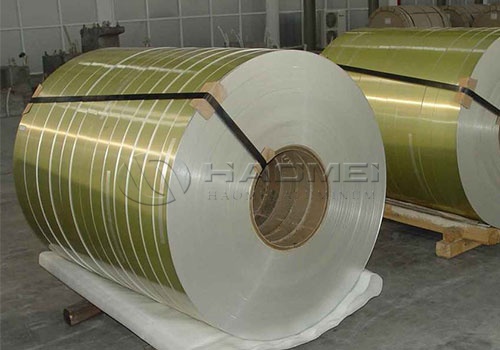
| Packaging | Eye-to-wall or eye-to-sky wooden pallet packing |
Implementation Standards
Color Coated 1050 Aluminum Strip can be produced and inspected according to international or customer-specified standards. For export projects, standards are often combined: one for alloy chemistry, one for dimensional tolerance, and another for coating performance.
| Standard | Scope |
|---|---|
| ASTM B209 | Aluminum and aluminum-alloy sheet and plate requirements |
| EN 485 | Mechanical properties, tolerances, and general sheet or strip requirements |
| EN 573-3 | Chemical composition and designation of aluminum alloys |
| GB/T 3880 | Aluminum and aluminum alloy plates, sheets, and strips |
| GB/T 3190 | Chemical composition of wrought aluminum and aluminum alloys |
| EN 1396 | Coil coated aluminum and aluminum alloy sheet and strip |
| ISO 2409 | Cross-cut adhesion test for coating |
| ASTM D3359 | Tape adhesion test method |
| ASTM B117 | Neutral salt spray corrosion test |
| ASTM D523 or ISO 2813 | Gloss measurement |
Chemical Composition of 1050 Aluminum
The high aluminum content is the foundation of 1050 alloy performance. The following composition is a typical reference based on common 1050 or EN AW-1050A requirements.
| Element | Content, % |
|---|---|
| Aluminum, Al | 99.50 min |
| Silicon, Si | 0.25 max |
| Iron, Fe | 0.40 max |
| Copper, Cu | 0.05 max |
| Manganese, Mn | 0.05 max |
| Magnesium, Mg | 0.05 max |
| Zinc, Zn | 0.05 max |
| Titanium, Ti | 0.03 max |
| Other each | 0.03 max |
| Other total | 0.15 max |
Alloy Tempering Conditions and Mechanical Data
Temper selection has a direct effect on bending radius, hardness, tensile strength, and processing behavior. Soft tempers are preferred for deep drawing and complex bending, while harder tempers are selected for flatness, stiffness, and narrow strip stability.
| Temper | Typical Tensile Strength, MPa | Elongation, % | Main Processing Benefit |
|---|---|---|---|
| O | 60 to 95 | 20 to 35 | Best ductility for deep drawing and severe bending |
| H12 | 70 to 105 | 8 to 20 | Light hardening with good formability |
| H14 | 85 to 125 | 5 to 15 | Balanced strength and bending performance |
| H16 | 100 to 145 | 3 to 10 | Higher stiffness for profiles and trims |
| H18 | 120 to 160 | 2 to 6 | Maximum strain-hardened strength for flat parts |
| H24 | 85 to 125 | 6 to 16 | Partially annealed, stable for forming and coating |
Values are typical reference ranges. Final mechanical properties should be confirmed by mill test certificate, product thickness, standard, and customer specification.
Coating Performance Data
Paint selection depends on the service environment. PE coating is economical and widely used indoors. PVDF coating offers stronger weather resistance for outdoor architectural and signage products. Epoxy or polyurethane systems may be used for special adhesion, chemical resistance, or functional requirements.
| Test Item | Common Requirement |
|---|---|
| Coating adhesion | Grade 0 to Grade 1 by cross-cut test |
| Pencil hardness | HB to 2H, depending on coating type |
| Gloss | 10% to 90%, customized |
| Color difference | Usually Delta E <= 1.5 to 2.0 by agreed sample |
| T-bend flexibility | 0T to 3T, based on coating and temper |
| Impact resistance | No cracking or peeling under agreed test condition |
| Salt spray resistance | 500 h to 1000 h or higher for selected systems |
| Weather resistance | PE for indoor or mild outdoor use, PVDF for long outdoor exposure |
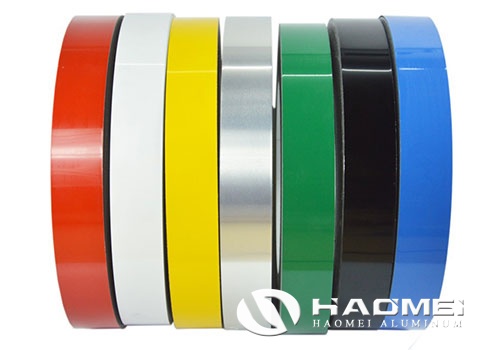
Manufacturing and Quality Control
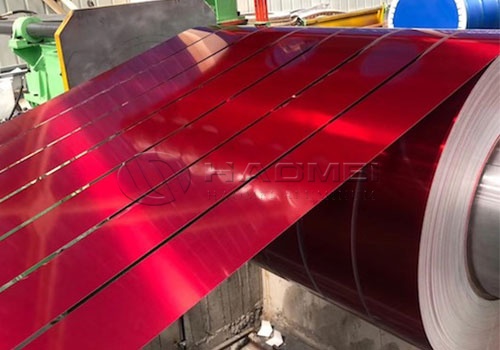
Production usually starts with cold-rolled 1050 aluminum strip. The substrate is degreased, chemically pretreated, dried, coated, baked, cooled, and then slit to the required width. Proper pretreatment is essential because it improves coating adhesion and long-term corrosion resistance.
During inspection, manufacturers pay close attention to thickness tolerance, width tolerance, coating thickness, color difference, gloss, surface defects, burr height, coil telescoping, and packing protection. For automatic stamping or roll forming lines, uniform coil tension and clean slit edges are especially important.
| Quality Check | Customer Benefit |
|---|---|
| Thickness and width control | Stable feeding and assembly dimensions |
| Coating thickness test | Predictable durability and appearance |
| Adhesion test | Lower risk of peeling during bending |
| Color matching | Consistent appearance across batches |
| Burr inspection | Safer handling and smoother automated processing |
| Coil packing inspection | Lower transport damage risk |
Selection Tips for Buyers
When purchasing Color Coated 1050 Aluminum Strip, confirm the end-use environment first. Indoor decoration usually requires good color consistency and smooth appearance, while outdoor signage or building trims need stronger UV resistance and corrosion performance. For tight bending, select softer tempers and confirm T-bend results before mass production. For high-speed stamping, discuss burr direction, coil weight, inner diameter, and lubrication or protective film requirements.
A well-specified order should include alloy, temper, thickness, width, coating system, top and back paint thickness, color code or sample, gloss, coating performance requirements, coil ID, packing method, and applicable standards. With these details confirmed, Color Coated 1050 Aluminum Strip can deliver efficient fabrication, attractive appearance, and dependable service in a wide range of industrial and decorative products.