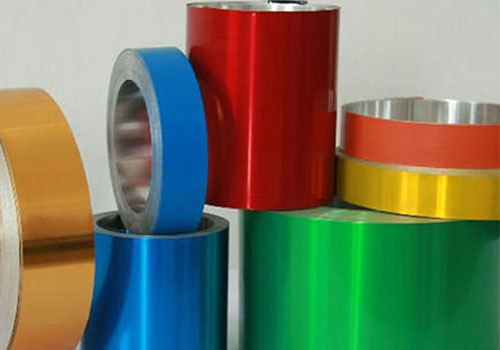
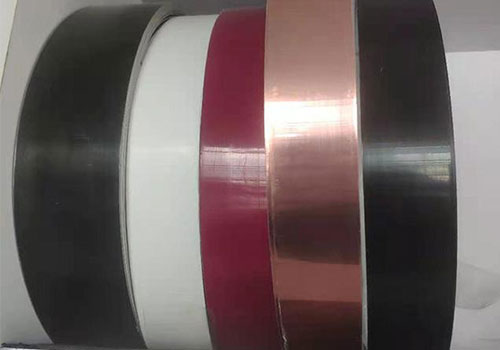
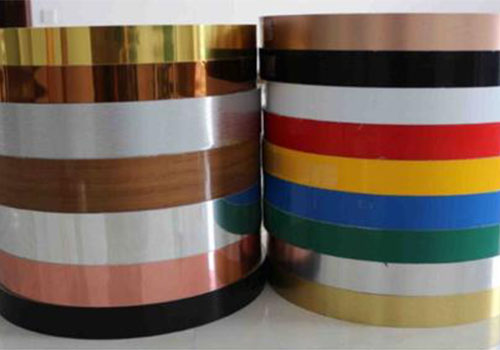
Aluminum Strip PVDF Coated Sheets - Decoration Material
Aluminum strip PVDF coated sheets are premium decorative metal materials designed for buildings and manufactured products exposed to demanding environments. Combining lightweight aluminum with a high-performance polyvinylidene fluoride coating, these sheets offer long-lasting color, excellent weather resistance, and a clean architectural appearance.
They are widely used in exterior wall panels, curtain walls, roofing edges, ceilings, shutters, composite panels, signage, appliance trim, and interior decorative systems. The aluminum substrate is easy to cut, bend, stamp, roll-form, and fabricate, while the PVDF finish protects the visible surface from sunlight, rain, airborne pollutants, and daily wear.

Decorative Performance Built for Long-Term Exposure
PVDF is a fluorocarbon resin coating valued for its stable chemical structure. When applied to aluminum strip, it forms a durable surface layer with strong resistance to ultraviolet radiation, oxidation, moisture, and many chemicals. This makes PVDF coated sheets particularly suitable for decoration projects where appearance must remain consistent over many years.
Compared with ordinary painted metal, PVDF coated aluminum is less likely to suffer rapid fading, chalking, peeling, or gloss loss in outdoor service. It performs well in strong sunlight, wet climates, coastal areas, industrial zones, and locations with large temperature changes. The coating also provides a smooth, dense surface that is easier to clean than many porous decorative materials.
For projects requiring a reliable exterior finish, PVDF Coated Aluminum Strip provides a practical balance of appearance, durability, and processing flexibility.
Material Structure
A typical PVDF coated aluminum strip sheet consists of several functional layers. Each layer contributes to corrosion protection, coating adhesion, and visual quality.
| Layer | Function | Typical Feature |
|---|---|---|
| Aluminum substrate | Provides strength, formability, and low weight | Alloy 1050, 1060, 1100, 3003, 3004, 3105, or 5052 |
| Surface pretreatment | Improves coating adhesion and corrosion resistance | Chemical cleaning and conversion treatment |
| Primer coating | Supports the topcoat and strengthens bonding | Epoxy or polyurethane-based primer |
| PVDF topcoat | Delivers color, gloss, weather resistance, and decoration | Commonly based on 70% PVDF resin systems |
| Back coating | Protects the reverse side during fabrication and service | Polyester or protective back coat |
The exact paint system can be adjusted according to installation conditions, expected service life, color requirements, gloss level, and forming method. For highly visible building facades, a two-coat or three-coat PVDF system is commonly selected to achieve richer color depth and stronger exterior durability.
Typical Technical Specifications
| Parameter | Common Range | Notes |
|---|---|---|
| Aluminum alloy | 1050, 1060, 1100, 3003, 3004, 3105, 5052 | Selected according to strength and forming needs |
| Temper | H14, H16, H18, H24, H26, H32 | Softer tempers support deep forming; harder tempers improve rigidity |
| Thickness | 0.20-2.00 mm | Custom thicknesses may be available |
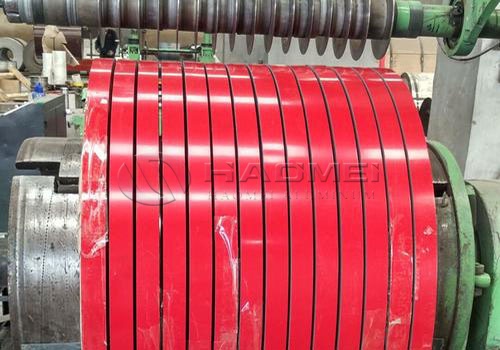
| Strip width | 20-1,600 mm | Slit coils can be supplied for roll forming and stamping |
| PVDF coating thickness | 20-35 microns | Higher coating weight is often used for exterior exposure |
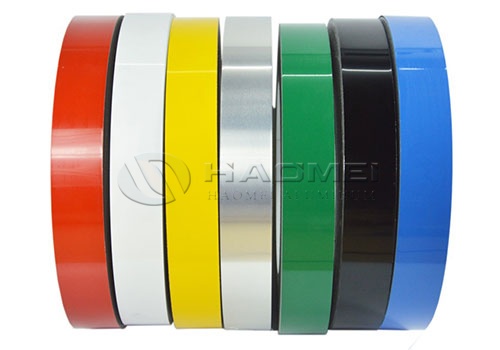
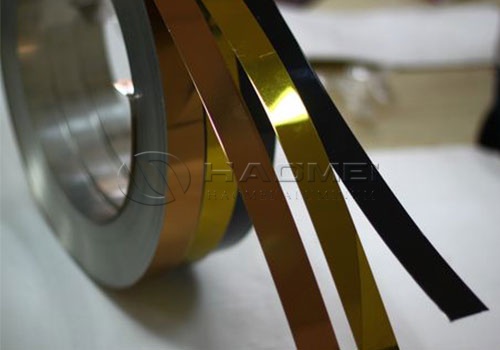
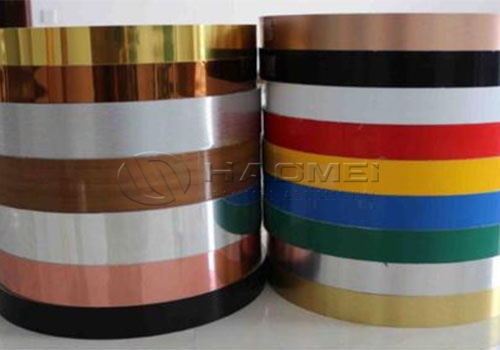
| Color | RAL, Pantone, custom samples | Solid, metallic, matte, glossy, pearlescent, and special effects |
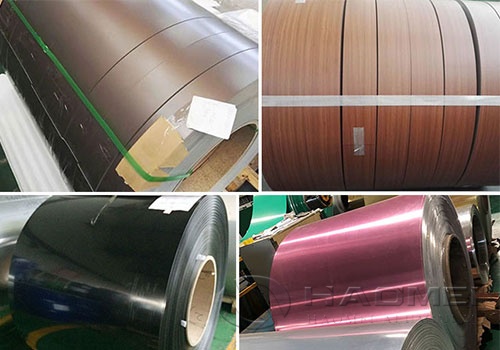
| Surface finish | Smooth, embossed, brushed, wood grain, stone pattern | Decorative treatments depend on application |
| Coil inner diameter | 150 mm, 300 mm, 405 mm, 505 mm | Determined by processing equipment |
Aluminum Substrate Chemical Properties
Alloy selection affects corrosion resistance, mechanical strength, and fabrication behavior. The 3000 series is frequently used for coated decorative aluminum because manganese improves strength while retaining good formability.
| Alloy | Main Chemical Composition | Suitable Decorative Uses |
|---|---|---|
| 1050 | Aluminum minimum 99.5% | General interior trim, lighting parts, simple profiles |
| 1060 | Aluminum minimum 99.6% | Reflective decoration, ceiling components, lightweight panels |
| 1100 | Aluminum minimum 99.0% | Formed parts, signage, architectural accessories |
| 3003 | Aluminum with manganese approximately 1.0-1.5% | Wall panels, roofing trim, gutters, composite panel skins |
| 3004 | Aluminum with manganese and magnesium | Higher-strength panels and formed architectural components |
| 3105 | Aluminum with manganese and magnesium | Siding, shutters, roofing, and roll-formed profiles |
| 5052 | Aluminum with magnesium approximately 2.2-2.8% | Coastal projects, marine-adjacent decoration, robust fabricated parts |
Features That Support Modern Decoration
Color retention and gloss stability are major advantages of PVDF coated sheets. The fluorocarbon finish helps decorative surfaces resist fading under prolonged ultraviolet exposure. This is valuable for facades, canopies, store signs, and exterior cladding where color consistency influences the overall visual effect.
Corrosion resistance protects the aluminum surface from rainwater, condensation, and common atmospheric contaminants. When the proper alloy and coating system are selected, PVDF coated aluminum can serve effectively in humid, coastal, and urban industrial environments.
Lightweight construction reduces structural load compared with many stone, ceramic, and steel decorative materials. It also improves handling efficiency during transport, lifting, and installation. This can be especially beneficial for curtain wall panels, ceiling systems, and renovation projects.
Excellent formability allows the strip to be processed into folded edges, curved panels, cassette panels, corrugated shapes, louvers, trims, and roll-formed profiles. Properly matched coating and temper help prevent cracking during fabrication.
Low-maintenance surfaces support economical long-term use. In many applications, periodic washing with clean water and mild neutral detergent is sufficient to remove dust and maintain the intended appearance.
Applications Across Architectural and Industrial Decoration
PVDF coated aluminum strip sheets are a preferred material for curtain wall cladding. Their flatness, color selection, and weathering performance allow architects to create clean, continuous facade surfaces. Metallic, matte, high-gloss, and textured finishes can be selected to match different building styles.
For roofing and rainwater systems, coated aluminum is used for roof edging, fascia, gutters, downpipes, flashing, and canopy details. Aluminum does not add excessive weight to the structure, and the PVDF finish helps preserve the surface in exposed outdoor conditions.
In ceiling and interior systems, the material can be perforated, embossed, or formed into strips and tiles. It is suitable for commercial spaces, airports, offices, retail areas, hotels, hospitals, and public transport stations. Interior-grade coating systems may be chosen when extreme weather resistance is not required.
For doors, windows, shutters, and blinds, PVDF coated aluminum provides a decorative outer surface with dependable corrosion protection. It can be slit into narrow widths for roll forming and shaped into profiles with controlled dimensions.
The material also supports signage, display panels, appliance housings, transportation trim, and composite panel production. When appearance and durability must work together, Color Coated Aluminum Strip offers broad color and finish possibilities for production-oriented decoration.
Selection Considerations
Choosing the right PVDF coated aluminum strip starts with the environment. Coastal, high-UV, polluted, and high-humidity locations generally require a more robust coating system and corrosion-resistant alloy. For indoor decorative uses, thickness and finish can be optimized for appearance and forming economy.
Panel geometry also matters. Deep bending, sharp corners, embossed patterns, and complex roll-formed profiles require suitable aluminum temper and coating flexibility. A pre-production forming test is recommended for demanding fabrication designs.
Color should be evaluated under the intended lighting conditions. Metallic and pearlescent finishes can show different visual effects depending on viewing angle and daylight. For large facade projects, production should be controlled by approved color samples and batch consistency standards.
Handling and Maintenance
PVDF coated aluminum sheets should be stored in a dry, ventilated place and protected from direct water exposure before installation. Protective film, when supplied, should be removed promptly after fabrication or installation to avoid adhesive residue caused by prolonged heat exposure.
During processing, use clean rollers, dies, and work surfaces to prevent scratches or pressure marks. Avoid contact with strong acids, strong alkalis, abrasive cleaners, and incompatible sealants. Routine cleaning with water, soft cloths, and mild detergent will help maintain the decorative finish for years.
Aluminum strip PVDF coated sheets deliver a refined decorative surface with the practical benefits of low weight, corrosion resistance, stable color, and efficient fabrication. From modern building envelopes to detailed architectural accessories, they provide a dependable material solution for projects that demand both visual impact and lasting performance.