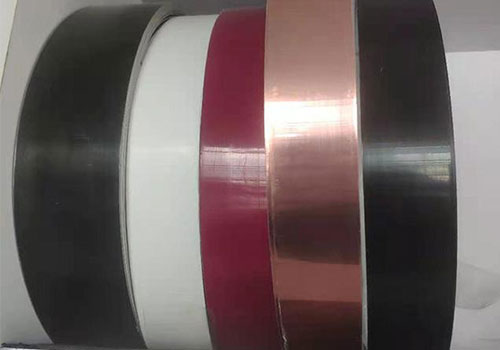
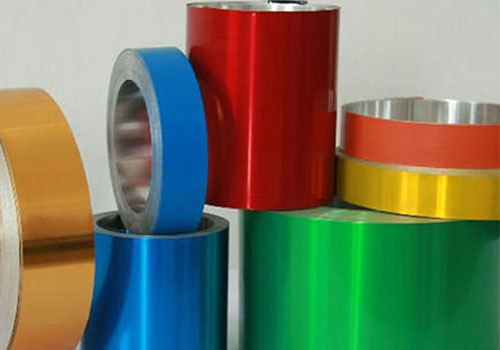
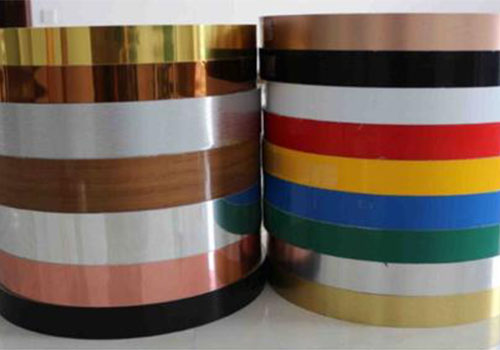
Customized Color Aluminum Strips for Channel
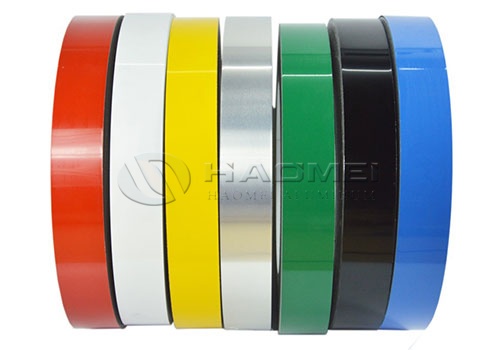
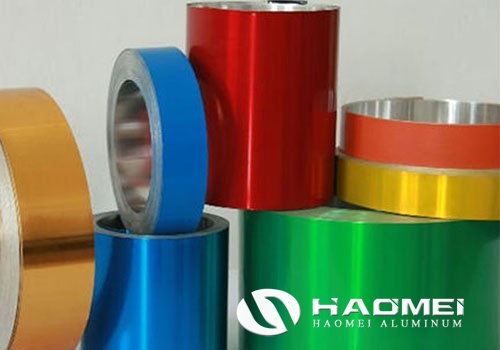
Customized color aluminum strips for channel are precision-slit, pre-painted aluminum coils designed for channel letters, decorative channels, edging systems, lighting housings, display frames, and architectural trim. They combine low weight, formability, corrosion resistance, and stable color performance, helping manufacturers reduce processing time while improving product appearance.
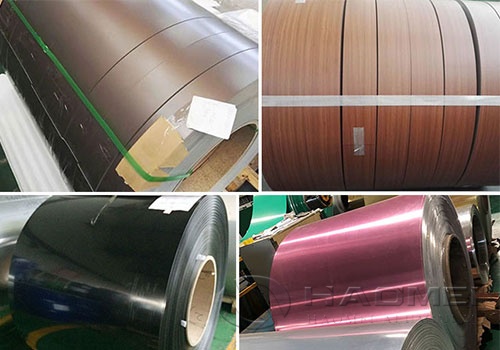
Unlike bare aluminum strip that needs post-painting, color coated strip is supplied with a finished surface, protective film if required, and controlled width tolerance for efficient bending, roll forming, punching, riveting, and adhesive bonding. For sign makers and channel profile producers, it supports fast fabrication with cleaner edges and consistent color matching across batches.
What the Product Does
Customized color aluminum strip acts as both a structural and visual material. In channel applications, it forms the side wall, decorative border, return edge, or retaining frame of a finished product. The strip must be flexible enough to bend around curves, strong enough to hold shape, and stable enough to resist fading, chalking, cracking, and corrosion.
| Function | Customer Benefit | Typical Requirement |
|---|---|---|
| Channel forming | Smooth bending for letters, logos, frames, and U-channels | Good elongation and controlled temper |
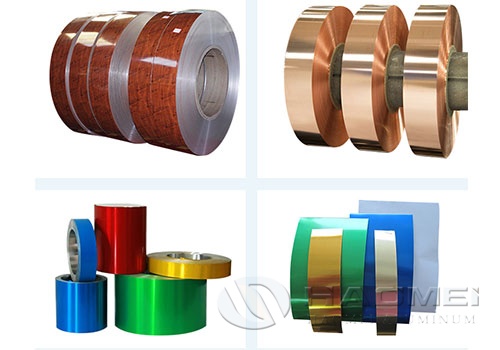
| Surface decoration | Finished color without extra painting | RAL, Pantone, metallic, matte, gloss, wood grain options |
| Weather protection | Longer service life outdoors | PE, HDPE, PVDF, or FEVE coating systems |
| Edge stability | Cleaner cutting and less burr risk | Precision slitting and deburred edges |
| Lightweight structure | Easier installation and lower transport cost | Density about 2.70 g/cm3 |
| Electrical sign compatibility | Suitable for LED channel letters | Non-sparking, corrosion-resistant aluminum base |
For projects requiring stable coating adhesion and customized dimensions, Color Coated Aluminum Strip is commonly selected for sign channels, decorative trims, and profile wrapping.
Common Applications
Customized color aluminum strips are widely used where appearance, bendability, and corrosion resistance must work together. The material is especially popular in sign and display manufacturing because it can be slit to narrow widths and supplied in coils for continuous production.
| Application Area | Product Use | Recommended Coating |
|---|---|---|
| Channel letters | Side returns for illuminated signs | PE for indoor, PVDF for outdoor |
| Advertising signage | Logo borders, display frames, sign edges | PE, HDPE, PVDF |
| Architectural trim | Decorative wall channels, ceiling edging, façade accents | PVDF or FEVE |
| Lighting channels | LED strip housings, linear lamp frames | Polyester or PVDF |
| Furniture and cabinet trim | Edge bands, decorative channels, color accents | PE or powder-compatible coating |
| Transport and appliance parts | Lightweight trim and formed strips | PE, HDPE, or anodized-look coating |
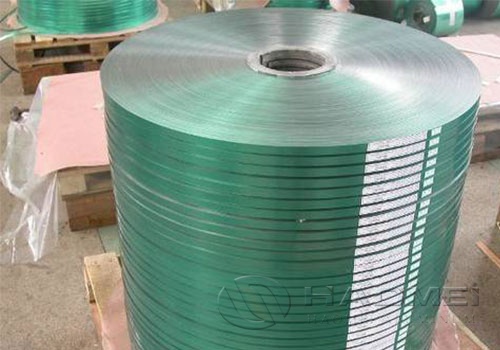
Main Technical Specifications
The strip can be produced according to customer drawings, coil processing lines, and final channel forming equipment. Width, thickness, coil weight, surface gloss, color, coating type, and protective film can be adjusted for the project.
| Parameter | Common Range | Custom Option |
|---|---|---|
| Alloy | 1050, 1060, 1100, 3003, 3004, 3105, 5052 | Other alloys by agreement |
| Temper | O, H12, H14, H16, H18, H22, H24, H26 | Temper matched to bending radius |
| Thickness | 0.20-3.00 mm | Narrow tolerance available |
| Width | 10-600 mm | Precision slit narrow strip available |
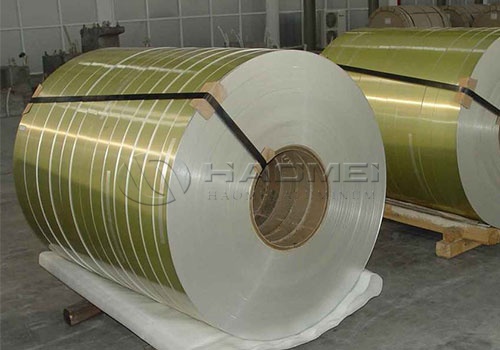
| Coil inner diameter | 150 mm, 300 mm, 405 mm, 505 mm | As machine requirement |
| Coil outer diameter | 600-1,500 mm | Based on coil weight |
| Coating thickness | 15-35 microns typical | Higher build for severe exposure |
| Paint system | PE, HDPE, PVDF, FEVE | Primer plus topcoat, back coat optional |
| Gloss | 10-90 GU | Matte, satin, high gloss |
| Color | RAL, Pantone, custom sample | Metallic, brushed, embossed, wood grain |
| Surface protection | Optional PE protective film | Laser film or easy-peel film |
Alloy and Temper Selection
The right alloy and temper depend on the channel shape, bending radius, exposure environment, and required strength. Softer tempers bend more easily, while harder tempers offer better shape retention.
| Alloy | Temper | Performance Character | Typical Channel Use |
|---|---|---|---|
| 1050 / 1060 | O, H14, H24 | Excellent ductility, high corrosion resistance | Indoor signs, simple trim |
| 1100 | H14, H24 | Good formability and smooth surface | Decorative channels, light-duty signage |
| 3003 | H14, H24, H26 | Good strength, good bending, reliable coating base | Channel letters, U-channels, frames |
| 3004 | H24, H26 | Higher strength than 3003, good outdoor durability | Larger signage and structural trims |
| 3105 | H24, H26 | Balanced strength, paintability, corrosion resistance | Building trim, sign returns, roll-formed channels |
| 5052 | H32, H34 | Higher strength and marine corrosion resistance | Outdoor frames, coastal-area channels |
For most channel letter applications, 3003 H24 and 3105 H24 provide a practical balance of bending performance, rigidity, and coating adhesion. For tight curves and complex shapes, O or H14 temper may be preferred.
Chemical Composition Reference
Chemical composition affects strength, corrosion resistance, formability, and coating compatibility. Values are typical limits based on common aluminum standards and may vary by mill certificate.
| Alloy | Si | Fe | Cu | Mn | Mg | Zn | Al |
|---|---|---|---|---|---|---|---|
| 1050 | 0.25 max | 0.40 max | 0.05 max | 0.05 max | 0.05 max | 0.05 max | 99.50 min |
| 1060 | 0.25 max | 0.35 max | 0.05 max | 0.03 max | 0.03 max | 0.05 max | 99.60 min |
| 1100 | Si+Fe 0.95 max | Si+Fe 0.95 max | 0.05-0.20 | 0.05 max | - | 0.10 max | 99.00 min |
| 3003 | 0.60 max | 0.70 max | 0.05-0.20 | 1.00-1.50 | - | 0.10 max | Balance |
| 3004 | 0.30 max | 0.70 max | 0.25 max | 1.00-1.50 | 0.80-1.30 | 0.25 max | Balance |
| 3105 | 0.60 max | 0.70 max | 0.30 max | 0.30-0.80 | 0.20-0.80 | 0.40 max | Balance |
| 5052 | 0.25 max | 0.40 max | 0.10 max | 0.10 max | 2.20-2.80 | 0.10 max | Balance |
Mechanical Properties
Mechanical data should be confirmed through the material certificate, especially when the strip will be bent into small-radius letters or roll-formed into narrow channels.
| Alloy Temper | Tensile Strength MPa | Yield Strength MPa | Elongation % | Recommended Use |
|---|---|---|---|---|
| 1060 O | 60-95 | 20 min | 25 min | Very tight bending |
| 1100 H14 | 105-145 | 95 min | 3-8 | Light decorative strip |
| 3003 H14 | 140-180 | 115 min | 3-10 | General channel forming |
| 3003 H24 | 145-195 | 115 min | 4-10 | Sign channels and frames |
| 3105 H24 | 150-205 | 120 min | 4-9 | Outdoor channels and trim |
| 5052 H32 | 210-260 | 130 min | 8-12 | Strong outdoor structures |
Coating Systems and Color Performance
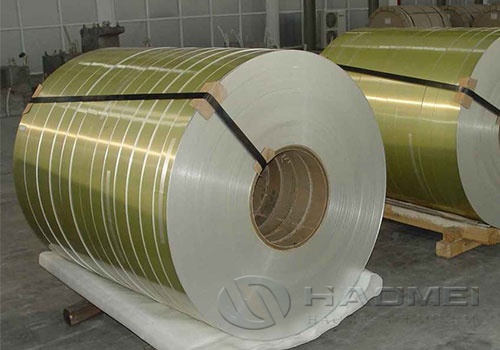
The coating is usually applied by continuous coil coating. After degreasing and chemical pretreatment, primer and topcoat are baked onto the aluminum substrate to create a dense and uniform film.
| Coating Type | Typical Film Thickness | Main Advantage | Suitable Environment |
|---|---|---|---|
| PE polyester | 15-25 microns | Cost-effective, rich colors, easy processing | Indoor signs, short to medium outdoor use |
| HDPE high-durability polyester | 20-30 microns | Better UV and weather resistance than standard PE | Outdoor signage and commercial trim |
| PVDF fluorocarbon | 25-35 microns | Excellent color retention, anti-chalking, high weatherability | Exterior architectural channels |
| FEVE | 25-35 microns | High gloss, strong UV resistance, vivid color options | Premium exterior decoration |
| Back coat | 5-12 microns | Improves corrosion resistance and bonding | Channel assembly and adhesive areas |
Implementation Standards and Testing
Production and inspection can follow international aluminum strip and coil coating standards. Custom project specifications may be added for color matching, bending, salt spray, and film adhesion.
| Item | Common Standard | Inspection Focus |
|---|---|---|
| Aluminum sheet and strip | ASTM B209, EN 485, GB/T 3880 | Alloy, temper, thickness, mechanical properties |
| Coil coating quality | EN 1396, ASTM D4145, AAMA 2603, AAMA 2604, AAMA 2605 | Coating adhesion, flexibility, weatherability |
| Color difference | ASTM D2244 | Delta E color control |
| Gloss | ASTM D523 | Gloss unit consistency |
| Pencil hardness | ASTM D3363 | Surface hardness |
| Salt spray | ASTM B117 | Corrosion resistance |
| T-bend | ASTM D4145 | Coating flexibility after bending |
| Cross-hatch adhesion | ASTM D3359 | Paint adhesion to substrate |
Tolerance and Processing Details
Precision control is important because channel equipment often feeds narrow strip continuously. Poor slitting accuracy may cause unstable bending, edge scratches, or assembly gaps.
| Control Item | Typical Tolerance | Notes |
|---|---|---|
| Thickness tolerance | +/-0.01 to +/-0.05 mm | Depends on thickness range |
| Width tolerance | +/-0.05 to +/-0.20 mm | Narrow strip can be controlled tightly |
| Camber | Max 2 mm per meter typical | Important for automatic channel letter machines |
| Burr height | Minimized by precision slitting | Deburring available if required |
| Color difference | Delta E <= 1.5-2.0 typical | Based on agreed sample |
| Coating adhesion | Grade 0-1 cross-hatch | Subject to coating system |
| Bend performance | No cracking after specified T-bend | Depends on alloy, temper, and coating |
Purchasing Notes for Custom Orders
To speed up production and avoid mismatched material, customers should provide the intended channel type, strip width, thickness, alloy or required bending performance, color sample or RAL code, coating type, gloss level, coil ID, coil weight, and whether protective film is needed. For outdoor signage, PVDF or HDPE coating is usually safer than standard PE, especially in high-UV, coastal, industrial, or humid environments.
Customized color aluminum strips for channel deliver a ready-to-form, attractive, and durable material solution for modern signage and trim manufacturing. With proper alloy selection, stable coating quality, accurate slitting, and verified testing standards, the strip helps manufacturers create clean channel shapes, consistent colors, and reliable long-term performance.