Color Coating 1060 Aluminum Strips
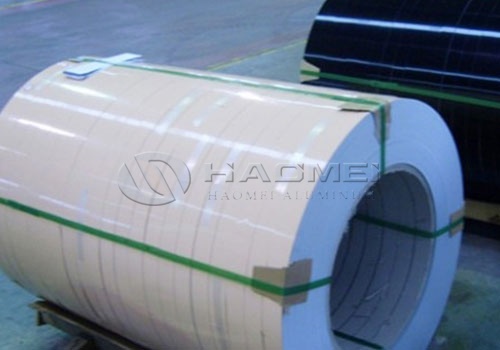
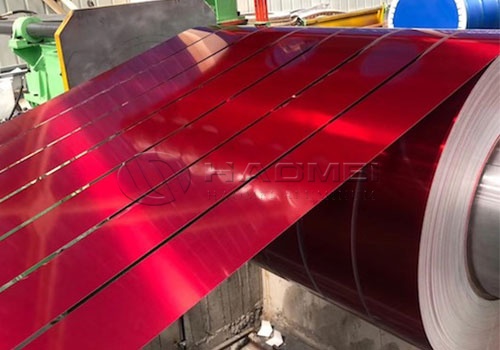
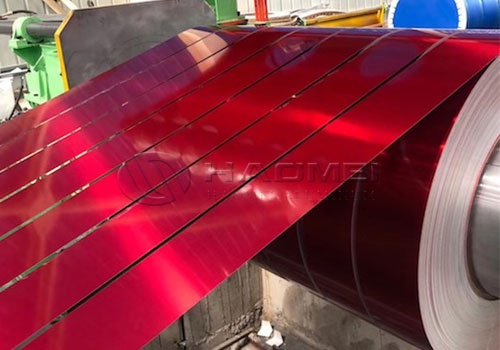
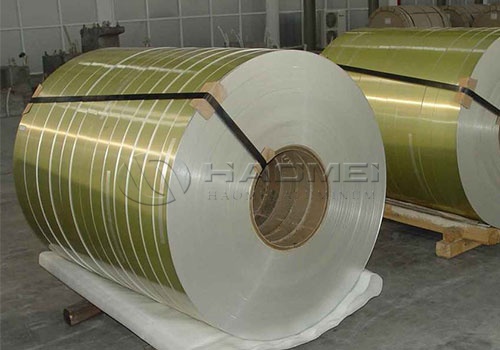
Color Coating 1060 Aluminum Strips are made from commercially pure 1060 aluminum alloy, then finished with a controlled paint system to create a smooth, colorful, corrosion-resistant surface. With aluminum content above 99.60%, this material combines excellent ductility, high thermal conductivity, clean surface quality, and stable coating adhesion. It is widely used where lightweight metal, attractive appearance, and reliable processing performance are required.
Compared with ordinary bare aluminum strip, the color coating layer gives the strip better resistance to moisture, fingerprints, mild chemicals, ultraviolet exposure, and daily abrasion. For customers producing signs, channel letters, decorative edging, blinds, ceilings, closures, and electrical parts, it offers a practical balance of formability, appearance, and cost.
What Makes 1060 Aluminum Suitable for Color Coating
1060 aluminum is a non-heat-treatable pure aluminum alloy. Its low alloying content gives it a soft metallic structure, making it easy to slit, stamp, bend, roll form, and deep draw. The uniform substrate surface helps coating systems spread evenly, reducing orange peel, color variation, and pinhole risk.
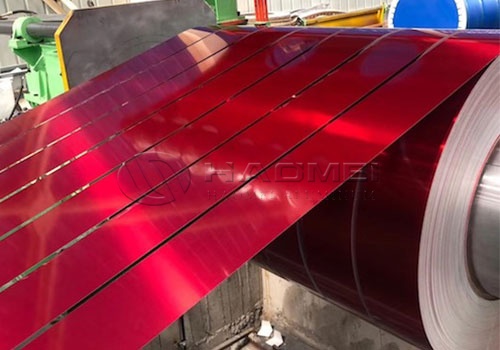
The material is especially suitable for continuous coil coating. After cleaning and chemical pretreatment, primer and top paint are applied by roller coating and baked at controlled temperatures. The result is a finished strip that can be delivered directly to downstream production without extra painting.
For customers comparing coated products, Color Coated Aluminum Strip based on 1060 alloy is often selected when clean color, flexible forming, and economical production matter more than high structural strength.
Main Functions
| Function | Customer Benefit | Typical Use Value |
|---|---|---|
| Decorative color surface | Improves product appearance without secondary painting | Signs, trims, display panels |
| Corrosion protection | Coating isolates aluminum from moisture and pollutants | Indoor and outdoor components |
| Easy forming | 1060 substrate bends and rolls smoothly | Channel letters, edging, profiles |
| Lightweight design | Reduces finished product weight | Transportable panels, ceiling systems |
| Thermal conductivity | Transfers heat better than many coated steels | Heat-related light industrial parts |
| Electrical conductivity | Retains conductive aluminum base when coating is removed at contact points | Electrical accessories and shielding parts |
| Clean processing | Pre-painted surface improves production efficiency | Continuous slitting, stamping, assembly |
Chemical Composition of 1060 Aluminum
The composition of 1060 aluminum is controlled to keep high purity and stable forming behavior. Values may be adjusted according to selected standard and purchase specification.
| Element | Content, % |
|---|---|
| Aluminum, Al | 99.60 min |
| Silicon, Si | 0.25 max |
| Iron, Fe | 0.35 max |
| Copper, Cu | 0.05 max |
| Manganese, Mn | 0.03 max |
| Magnesium, Mg | 0.03 max |
| Zinc, Zn | 0.05 max |
| Titanium, Ti | 0.03 max |
| Vanadium, V | 0.05 max |
| Other elements, each | 0.03 max |
Technical Specifications
Color Coating 1060 Aluminum Strips can be customized for thickness, width, color, coating type, coil size, and surface finish. The following ranges are common for commercial production.
| Parameter | Common Range or Option |
|---|---|
| Alloy | 1060 |
| Temper | O, H12, H14, H16, H18, H22, H24, H26 |
| Base metal thickness | 0.10 mm to 3.00 mm |
| Finished strip width | 10 mm to 1600 mm |
| Coil inner diameter | 150 mm, 300 mm, 405 mm, 505 mm, 508 mm |
| Coil outer diameter | According to order and packing method |
| Coating type | PE, HDPE, PVDF, epoxy, polyester modified systems |
| Top coating thickness | 12 microns to 30 microns typical |
| Back coating thickness | 5 microns to 15 microns typical |
| Surface finish | Glossy, matte, embossed, wood grain, stone pattern, metallic color |
| Color system | RAL, Pantone, customer sample matching |
| Protective film | Optional PE film for fabrication protection |
| Edge condition | Slit edge, deburred edge available on request |
Tempering Conditions and Mechanical Properties
1060 alloy cannot be strengthened by heat treatment. Its strength is controlled mainly by cold working and partial annealing. Softer tempers are selected for deep bending and shaping, while harder tempers are used for flatter panels and parts requiring better rigidity.
| Temper | Condition Description | Tensile Strength, MPa | Elongation, % Typical | Common Use |
|---|---|---|---|---|
| O | Annealed, soft | 60 to 95 | 20 to 35 | Deep drawing, tight bending |
| H12 | Quarter hard | 70 to 105 | 12 to 25 | Light forming and trimming |
| H14 | Half hard | 85 to 120 | 6 to 15 | Channel letters, signs, general parts |
| H16 | Three-quarter hard | 100 to 135 | 4 to 10 | Flat decorative components |
| H18 | Full hard | 120 to 160 | 2 to 6 | Slats, stiff narrow strips |
| H24 | Strain hardened and partly annealed | 85 to 120 | 8 to 18 | Balanced bending and flatness |
| H26 | Harder partly annealed | 100 to 135 | 5 to 12 | Roll-formed profiles |
Actual values depend on strip thickness, coil processing route, and agreed standard. For severe bending after coating, O, H12, H14, or H24 are usually preferred.
Coating Performance Data
The coating system is selected according to service environment. PE coating is economical and suitable for indoor or mild outdoor use. PVDF coating provides higher weather resistance, making it suitable for building exterior and long-term outdoor exposure.
| Test Item | PE Coating Typical Result | PVDF Coating Typical Result | Test Reference |
|---|---|---|---|
| Pencil hardness | HB to 2H | F to 2H | ASTM D3363 |
| T-bend | 1T to 3T | 1T to 3T | ASTM D4145 |
| Impact resistance | 50 kg.cm pass | 50 kg.cm pass | ASTM D2794 |
| Adhesion | Grade 0 or 5B | Grade 0 or 5B | GB/T 9286, ASTM D3359 |
| MEK rubs | 50 to 100 double rubs | 100 plus double rubs | ASTM D5402 |
| Salt spray resistance | 500 to 1000 hours | 1000 to 2000 hours | ASTM B117 |
| UV resistance | Good | Excellent | ASTM G154 |
| Gloss range | 10% to 90% | 10% to 80% | ASTM D523 |
Implementation Standards
Production and inspection can follow Chinese, American, European, or customer-designated standards. Mill certificates and coating test reports can be provided according to order requirements.
| Category | Standard | Scope |
|---|---|---|
| Aluminum alloy composition | GB/T 3190 | Chemical composition of wrought aluminum alloys |
| Aluminum strip dimensions | GB/T 3880 | Plate, sheet, and strip tolerances |
| Aluminum sheet and strip | ASTM B209 | Aluminum and aluminum-alloy sheet and plate |
| European aluminum products | EN 485 | Aluminum sheet, strip, and plate requirements |
| Paint adhesion | ASTM D3359, GB/T 9286 | Cross-cut adhesion testing |
| Coating hardness | ASTM D3363 | Pencil hardness testing |
| Coating flexibility | ASTM D4145 | T-bend testing |
| Salt spray | ASTM B117 | Corrosion resistance evaluation |
| Color difference | ASTM D2244 | Color measurement by instrument |
Typical Applications
Color Coating 1060 Aluminum Strips are valued in industries where appearance and fabrication efficiency are closely connected. Because the strip is supplied in coil form, it fits high-speed slitting, roll forming, punching, and automatic feeding lines.
| Application Field | Product Examples | Recommended Temper and Coating |
|---|---|---|
| Advertising signs | Channel letters, light box edges, sign borders | H14 or H24, PE or PVDF |
| Interior decoration | Ceiling strips, wall trims, furniture edging | H12 to H24, PE |
| Window covering | Venetian blind slats, curtain accessories | H18 or H26, PE |
| Packaging and closures | Caps, seals, cosmetic packaging parts | O to H14, epoxy or PE |
| Electrical industry | Cable wrapping, shielding strips, transformer accessories | O or H14, coating by contact design |
| Building components | Flashing, fascia strips, gutters, decorative profiles | H24 or H26, PVDF |
| Household products | Lamp parts, appliance trim, craft materials | H14, PE or metallic finish |
Surface and Color Options
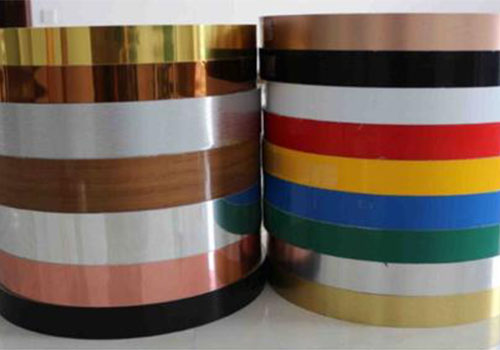
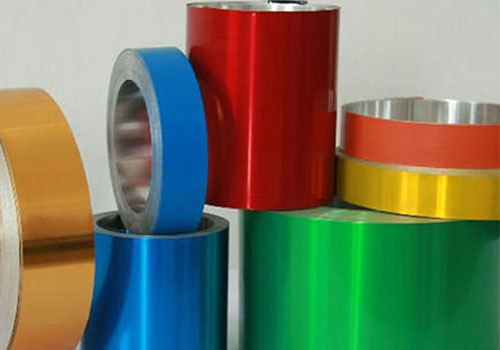
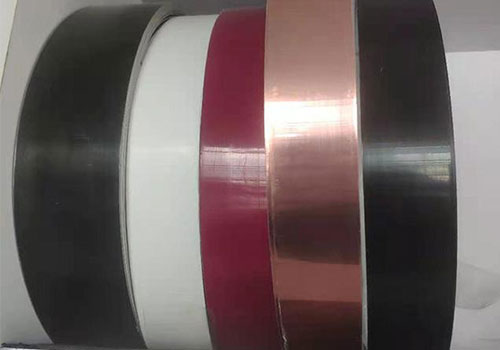
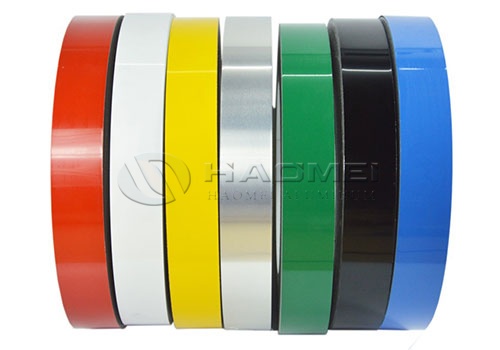
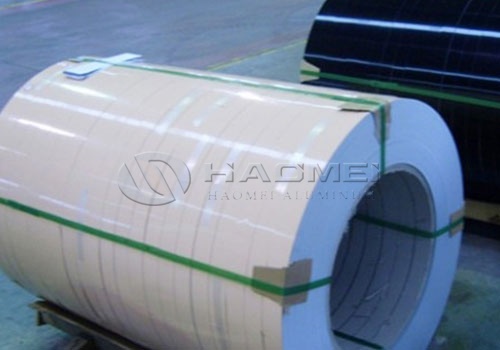
Customers can select solid colors such as white, black, red, blue, yellow, green, gray, and gold, as well as decorative patterns. Smooth glossy coatings are popular for signs and advertising materials, while matte finishes reduce glare for ceilings and interior panels. Metallic and embossed finishes add texture for premium trim and display applications.
Color control is normally managed by spectrophotometer. For repeat orders, color difference can be controlled by agreed Delta E tolerance, helping customers maintain consistent product appearance across batches.
| Surface Option | Visual Effect | Common Application |
|---|---|---|
| High gloss | Bright and reflective | Signs, decorative edging |
| Matte | Soft, low-glare finish | Ceilings, interior trim |
| Embossed | Textured surface | Blinds, wall decoration |
| Metallic | Premium metal appearance | Appliance trim, displays |
| Wood grain | Natural decorative look | Furniture and interior systems |
| Protective film | Scratch protection during fabrication | Stamping, bending, transport |
Processing Notes for Better Results
Before production, confirm bending radius, coating type, gloss, color tolerance, and end-use environment. For tight bending, the paint system should be tested with the selected temper and thickness. Slitting blades must be sharp to avoid burrs and coating flaking at the edge. During storage, coils should be kept dry, ventilated, and away from acidic or alkaline materials.
For outdoor applications, PVDF coating is recommended when strong sunlight, rain, salt air, or industrial atmosphere is expected. For indoor decoration and general fabrication, PE coating provides a cost-effective and attractive finish.
Ordering Information
| Item to Confirm | Example Requirement |
|---|---|
| Alloy and temper | 1060 H24 |
| Thickness and width | 0.60 mm x 80 mm |
| Coating system | PE top coat, primer, back coat |
| Color | RAL 9016 white or custom sample |
| Gloss | 30%, 60%, or 80% |
| Coil size | ID 508 mm, OD as agreed |
| Surface protection | With or without protective film |
| Packing | Eye-to-wall or eye-to-sky wooden pallet |
| Test documents | Mill certificate, coating report, color report |
Color Coating 1060 Aluminum Strips deliver a strong combination of pure aluminum workability, vivid surface design, and dependable coating performance. With proper alloy temper, coating selection, and dimensional control, they help manufacturers produce attractive finished parts with less painting work, lower weight, and stable batch quality.