Aluminum Strip Foil Packs for Capsule Tablet Packaging
Aluminum strip foil packs for capsule tablet packaging are designed to do far more than create a clean, metallic appearance. Their real role is to preserve the medicine inside a controlled micro-environment. A properly selected aluminum foil structure blocks light, moisture, oxygen, odors, and external contamination while supporting efficient high-speed packaging on blister or strip-pack machines.
For pharmaceutical producers, foil is not simply a consumable material. It is an active part of dosage-form stability. Capsules with gelatin shells can become brittle in dry conditions or soft in high humidity. Tablets containing hygroscopic ingredients may lose hardness, dissolve prematurely, or show reduced efficacy when exposed to water vapor. Aluminum foil packs create a dependable barrier between the product and the outside atmosphere.
Foil as a Protective Wall for Each Dose
The strongest advantage of aluminum foil is its near-total barrier performance. Unlike many plastic films, aluminum does not rely on thickness alone to resist oxygen or water vapor transmission. Even a thin pharmaceutical foil layer can provide excellent protection when its surface is free from pinholes, cracks, oil residues, and coating defects.
In capsule and tablet packaging, aluminum strip foil is commonly used in several formats:
- Push-through blister lidding foil, where tablets or capsules are pressed through the foil to remove one dose
- Strip-pack foil, where two foil webs are heat-sealed together around each product
- Cold-form blister foil, used when high moisture and oxygen protection are required
- Sachet and unit-dose packaging for tablets, effervescent products, and sensitive solid medicines
Blister lidding foil usually combines aluminum foil with a heat-seal lacquer. It is sealed to a formed plastic web such as PVC, PVDC-coated PVC, PET, or PP. Strip packaging normally requires a stronger sealing system because two foil layers must bond securely while allowing controlled opening by the patient.
The useful distinction is that the aluminum strip performs as the barrier body, while the lacquer, primer, ink, and laminated films determine how the pack seals, prints, opens, and runs on equipment. A foil pack succeeds only when all layers work together.
Common Alloy Choices and Temper Conditions
Pharmaceutical packaging foil is frequently produced from 8011 aluminum alloy because it offers a practical balance of strength, ductility, surface quality, corrosion resistance, and rolling performance. For selected packaging structures, 8079 and 1235 alloys may also be used. High-purity grades such as 1050 and 1060 can serve applications requiring excellent formability and cleanliness, depending on the packaging design.
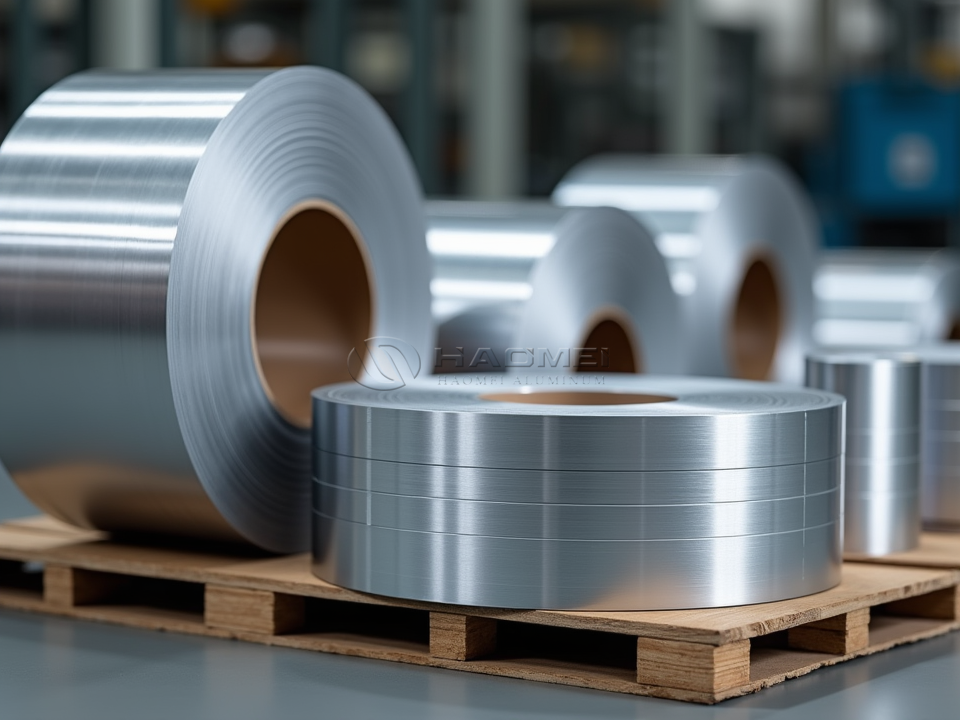
8011 Aluminum Strip is widely selected for blister lidding and strip packaging because its controlled iron and silicon content supports reliable mechanical properties after rolling and annealing. Where a softer, high-purity substrate is required, 1050 / 1060 Aluminum Strip can be evaluated for compatible foil-converting processes.
Typical tempers include O, H18, H19, and H22. Temper selection is closely connected to pack function:
| Temper | General Condition | Typical Packaging Role |
|---|---|---|
| O | Fully annealed, soft | Deep drawing, laminating, cold-form structures |
| H22 | Strain hardened and partially annealed | Balanced flexibility and handling strength |
| H18 | Full hard | Blister lidding foil requiring stiffness and clean push-through behavior |
| H19 | Extra hard | Applications requiring higher rigidity and reduced deformation |
Hard foil gives better handling on high-speed lines and can produce a crisp push-through opening. Softer foil improves forming performance, especially in cold-form blister cavities. The correct choice depends on whether the foil must be pierced, peeled, folded, deeply drawn, or sealed to another foil layer.
Typical Parameters for Pharmaceutical Foil Strips
The final specification should be matched with the packaging machine, medicine sensitivity, sealing substrate, and regulatory requirements. Common working ranges are shown here:
| Parameter | Typical Range or Requirement |
|---|---|
| Alloy | 8011, 8079, 1235, 1050, 1060 |
| Foil thickness | 0.016 mm to 0.040 mm for lidding and strip foil |
| Cold-form foil thickness | Commonly 0.045 mm to 0.060 mm before lamination |
| Strip width | Customized, often 50 mm to 1,250 mm before slitting |
| Coil inner diameter | 76 mm, 150 mm, 152 mm, or customized |
| Coil outer diameter | According to machine loading limits |
| Surface | One bright side and one matte side, or both sides treated for coating |
| Pinholes | Controlled according to thickness and applicable standard |
| Wetting tension | Commonly at least 32 dynes/cm before coating or lamination |
| Heat-seal coating | PVC, PVDC, PP, PET, or aluminum-to-aluminum compatible lacquer |
Thickness tolerance matters because small variations can affect tension control, sealing consistency, embossing, and push-through force. For thin pharmaceutical foil, stable gauge control is often more valuable than simply choosing a thicker material. Excess thickness can increase cost and make opening harder, while insufficient thickness may raise pinhole risk or reduce rigidity.
Chemical Composition and Its Packaging Influence
The chemistry of the aluminum alloy influences rolling behavior, strength, intermetallic particle distribution, and surface quality. In pharmaceutical foil, composition must be controlled carefully to reduce defects that may become visible after rolling, coating, or printing.
| Element | 8011 Aluminum Alloy, Typical Mass Fraction % | Functional Influence |
|---|---|---|
| Aluminum | Balance | Provides low density, formability, and corrosion resistance |
| Iron, Fe | 0.60-1.00 | Improves strength and supports foil rolling characteristics |
| Silicon, Si | 0.50-0.90 | Works with iron to influence structure and mechanical response |
| Copper, Cu | 0.10 max | Controlled to maintain corrosion behavior |
| Manganese, Mn | 0.20 max | Helps manage strength and grain structure |
| Magnesium, Mg | 0.05 max | Kept low for standard 8011 foil applications |
| Zinc, Zn | 0.10 max | Limited to avoid unwanted property changes |
| Titanium, Ti | 0.08 max | Can assist grain refinement at controlled levels |
Aluminum naturally forms a thin oxide layer in air. This passive oxide contributes to corrosion resistance, but it also makes surface preparation important before applying lacquer or adhesive. Pharmaceutical foil is therefore cleaned, degreased, and coated under controlled conditions. Residual rolling oil, dust, or uneven oxide characteristics can weaken adhesion and cause sealing defects.
Standards, Safety, and Quality Control
Aluminum strip foil for medicinal packaging should be produced and converted under a documented quality system. Relevant standards may include EN 546 for aluminum foil, ASTM B479 for annealed aluminum foil, ASTM B373 for aluminum foil used in packaging-related applications, and customer-specific pharmaceutical specifications. Packaging materials intended for drug contact must also meet applicable regional requirements, such as FDA regulations in the United States, EU food-contact framework requirements where relevant, and pharmacopeial or medicinal-packaging rules established by the destination market.
A dependable inspection plan commonly covers thickness, width, edge quality, tensile properties, elongation, pinhole count, surface cleanliness, coating weight, heat-seal strength, print adhesion, and residual solvent levels. For printed pharmaceutical foil, visual inspection also checks registration accuracy, legibility, batch coding space, and color consistency.
Applications Beyond Standard Blister Packs
The value of aluminum strip foil becomes especially clear when medicines face challenging storage conditions. Moisture-sensitive probiotics, herbal tablets, enzyme formulations, effervescent products, and soft gelatin capsules can benefit from foil-based packaging with elevated barrier performance. Individually sealed doses also support hospital dispensing, travel packs, clinical trials, and compliance-oriented calendars.
For child-resistant or senior-friendly designs, the foil can be paired with peel-push laminates or structured opening systems. In these packs, the foil must provide protection without making the dose inaccessible. This is why coating selection, foil temper, and seal geometry deserve the same attention as alloy selection.
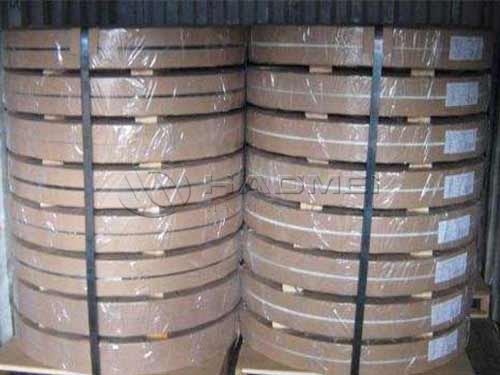
Aluminum strip foil packs for capsule tablet packaging provide a compact engineering solution: a thin metal layer that protects each dose, supports automated processing, carries product information, and delivers a controlled opening experience. When alloy, temper, thickness, coating, and inspection standards are aligned, the foil becomes a reliable guardian of medicine quality from production line to patient use.