Aluminum Strip Aluminum Tape Temper H12 H22 H14
Aluminum strip and aluminum tape in H12, H22, and H14 tempers provide a practical balance of formability, surface quality, corrosion resistance, and controlled strength. These tempers are widely selected for packaging, insulation, cable shielding, construction trims, heat exchangers, appliance parts, stamping, and coated decorative products.
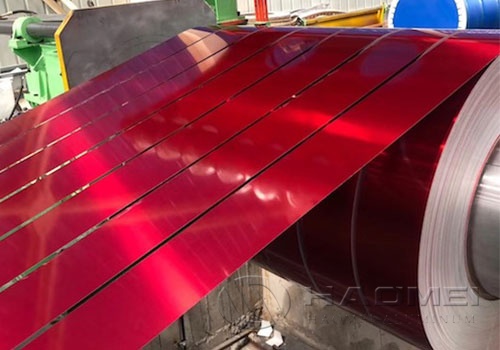
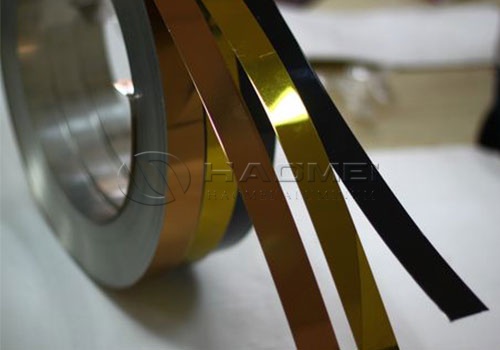
The material is normally slit from aluminum coil into narrow widths, then supplied as bare strip, coated strip, embossed strip, or adhesive-backed aluminum tape. Selecting the right temper matters because it directly affects bending behavior, stamping performance, springback, and handling during automated production.
What H12, H22, and H14 Mean
The H temper designation applies mainly to non-heat-treatable aluminum alloys. The first digit, H, identifies strain hardening. The second digit indicates the processing route, while the final digit reflects the degree of hardness.
| Temper | Processing Condition | Relative Hardness | Forming Behavior | Typical Use |
|---|---|---|---|---|
| H12 | Strain hardened, quarter hard | Low to medium | Very good bending and drawing capability | Flexible tape, deep bends, light stamping |
| H22 | Strain hardened and partially annealed, quarter hard | Low to medium | Smooth forming with reduced residual stress | Formed trims, coated strip, shaped tape |
| H14 | Strain hardened, half hard | Medium | Good for moderate forming and higher rigidity | Cable strip, fin stock, appliance parts |
H12 and H22 often deliver similar nominal hardness, but their metallurgical routes differ. H12 gains its strength directly from cold rolling. H22 is cold worked and then partially annealed, which can improve ductility and help reduce springback during shaping. H14 has a higher work-hardening level and is preferred where better dent resistance and structural stability are needed.
Alloy Options and Chemical Composition
The alloy determines corrosion resistance, conductivity, strength, weldability, and coating compatibility. Pure aluminum grades such as 1060 and 1100 are common for electrical, reflective, and general tape uses. Alloy 3003 is frequently chosen for improved strength, while 5052 offers stronger corrosion performance in humid or marine-adjacent environments.
| Alloy | Si | Fe | Cu | Mn | Mg | Zn | Al | Common Characteristics |
|---|---|---|---|---|---|---|---|---|
| 1060 | 0.25 max | 0.35 max | 0.05 max | 0.03 max | 0.03 max | 0.05 max | 99.60 min | High conductivity, excellent formability |
| 1070 | 0.20 max | 0.25 max | 0.04 max | 0.03 max | 0.03 max | 0.04 max | 99.70 min | High-purity aluminum for electrical and chemical uses |
| 1100 | Si + Fe 0.95 max | Included | 0.05-0.20 | 0.05 max | - | 0.10 max | 99.00 min | Soft, corrosion resistant, easy to fabricate |
| 3003 | 0.60 max | 0.70 max | 0.05-0.20 | 1.0-1.5 | - | 0.10 max | Balance | Better strength than 1xxx series, good workability |
| 5052 | 0.25 max | 0.40 max | 0.10 max | 0.10 max | 2.2-2.8 | 0.10 max | Balance | Strong corrosion resistance and higher fatigue performance |
Chemical values are typical composition limits in weight percent. Actual mill certificates should govern purchase requirements.
Mechanical and Physical Performance
Mechanical values depend on alloy, thickness, rolling reduction, and applicable standard. The figures shown are commonly used reference ranges for aluminum strip production planning rather than guaranteed values for every gauge.
| Alloy and Temper | Tensile Strength, MPa | Yield Strength, MPa | Elongation, % | Typical Forming Level |
|---|---|---|---|---|
| 1060 H12 | 75-95 | 55 min | 8-18 | Excellent |
| 1060 H22 | 75-95 | 50 min | 10-20 | Excellent |
| 1060 H14 | 95-120 | 75 min | 4-12 | Good |
| 1100 H12 | 75-95 | 55 min | 8-18 | Excellent |
| 1100 H14 | 95-120 | 75 min | 4-12 | Good |
| 3003 H12 | 95-125 | 75 min | 6-16 | Good |
| 3003 H14 | 120-150 | 105 min | 3-10 | Moderate to good |
| 5052 H14 | 190-240 | 140 min | 4-12 | Moderate |
| Property | Typical Aluminum Value | Production Relevance |
|---|---|---|
| Density | 2.70 g/cm³ | Supports lightweight finished products |
| Melting range | Approx. 630-660°C | Important for welding and thermal processing |
| Electrical conductivity, 1060 | Approx. 55-62% IACS | Suitable for electrical shielding and conductive components |
| Thermal conductivity, 1060 | Approx. 220-235 W/m·K | Effective for heat transfer and thermal barriers |
| Thermal expansion | Approx. 23.0 × 10⁻⁶ /°C | Consider in building and temperature-cycling assemblies |
| Corrosion behavior | Good to excellent | Enhanced by clean surfaces and suitable coatings |
Aluminum Strip and Aluminum Tape Functions
Bare aluminum strip is used where the metal itself performs a mechanical, conductive, reflective, or thermal role. It can be stamped into clips, drawn into shells, folded into channels, or wound into electrical and shielding components.
Aluminum tape usually refers to aluminum strip converted with an adhesive layer, release liner, or special surface treatment. It acts as a vapor barrier, heat reflector, joint-sealing material, protective wrap, or electromagnetic interference shield. Acrylic adhesive systems are common for HVAC foil tape and general sealing. Butyl adhesive offers stronger moisture sealing for roofing, duct joints, and construction flashing applications.
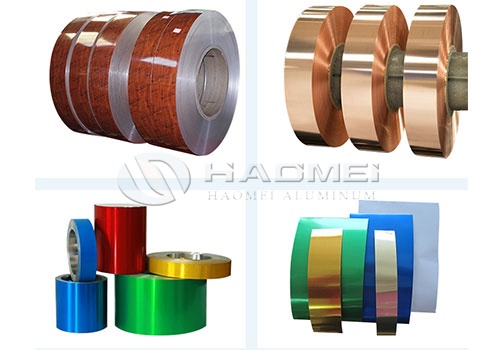
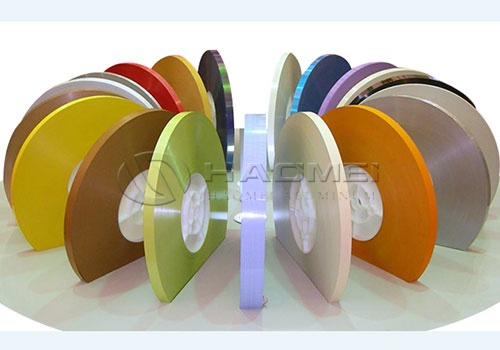
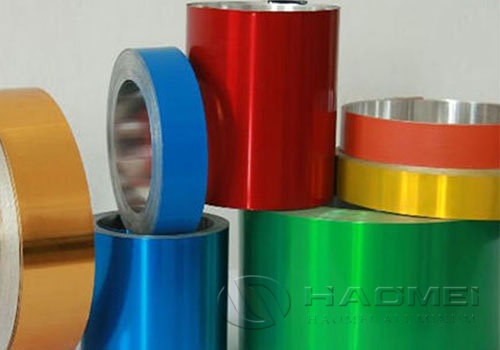
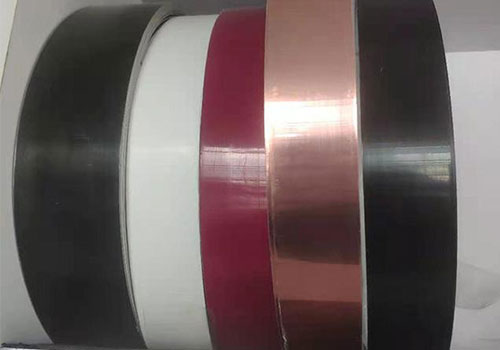
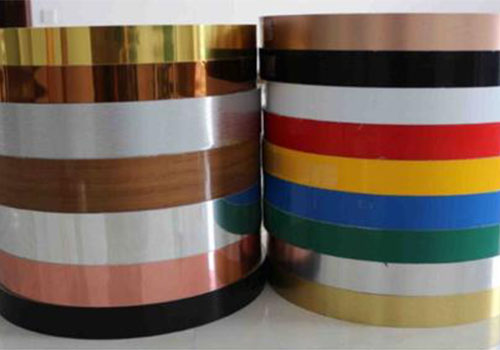
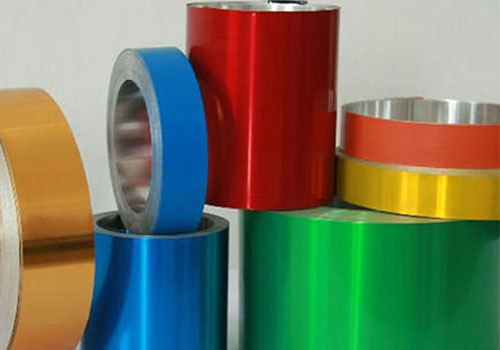
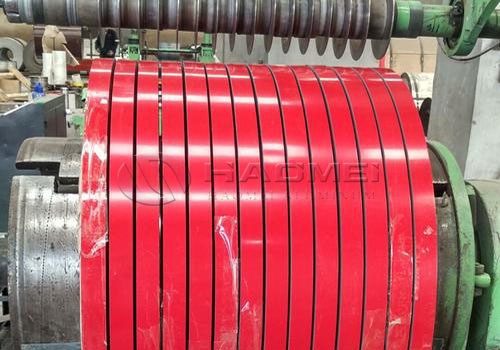
For products requiring decorative color, weather protection, or improved surface durability, Color Coated Aluminum Strip can combine H12, H22, or H14 base material with PE or PVDF paint systems.
Typical Dimensions and Supply Conditions
Aluminum strip can be produced in a wide range of gauges and slit widths. Narrow tape widths require careful edge control to prevent burrs, telescoping, and inconsistent winding tension.
| Item | Common Range | Notes |
|---|---|---|
| Thickness | 0.02-3.00 mm | Foil tape is usually thinner; stamped strip is often thicker |
| Width | 5-1,600 mm | Slit widths can be customized for converters and press lines |
| Coil inner diameter | 150 mm, 300 mm, 400 mm, 500 mm | Selected to match equipment mandrels |
| Coil outer diameter | Up to 1,800 mm | Controlled by weight and safe transportation limits |
| Coil weight | 50-8,000 kg | Small coils suit tape conversion; large coils suit industrial processing |
| Surface finish | Mill finish, bright, brushed, embossed, coated | Chosen according to appearance and end-use requirements |
| Edge condition | Mill edge, slit edge, deburred edge | Deburred edges help protect operators and sensitive equipment |
Implementation Standards and Quality Control
Production and inspection may follow international standards according to the destination market and customer specification. Material certificates commonly report alloy, temper, dimensions, mechanical results, chemical composition, coil number, and inspection status.
| Standard | Scope |
|---|---|
| ASTM B209 | Aluminum and aluminum-alloy sheet and plate requirements, commonly referenced for strip material |
| EN 485-2 | Mechanical properties for wrought aluminum sheet, strip, and plate |
| EN 573-3 | Chemical composition and alloy designation for wrought aluminum |
| JIS H4000 | Japanese requirements for aluminum and aluminum alloy sheet, strip, and plate |
| GB/T 3880 | Chinese standard covering aluminum and aluminum-alloy sheet and strip |
| ISO 9001 | Quality management system commonly applied in aluminum processing facilities |
Quality checks normally include thickness measurement, width tolerance, flatness, edge burr inspection, surface cleanliness, coil winding quality, tensile testing, and chemical analysis. For adhesive aluminum tape, further tests may include peel adhesion, tack, holding power, moisture resistance, and aging performance.
Choosing the Right Temper
H12 is suitable when the strip must fold sharply, wrap irregular surfaces, or pass through deeper forming operations. H22 is a strong option for coated and shaped components where a more relaxed material response is beneficial. H14 is often selected for parts that need better stiffness, cleaner handling, and resistance to deformation during transport or assembly.
A precise selection should consider alloy, thickness, bend radius, adhesive or coating system, service temperature, and the intended forming method. With matched temper and alloy, aluminum strip aluminum tape can provide efficient processing, dependable surface performance, and long service life across demanding industrial applications.