Gloss White Color Aluminum Strip Panel
A gloss white color aluminum strip panel is more than a bright decorative metal surface. It is a carefully balanced material system in which aluminum alloy, temper, pretreatment, paint chemistry, coating thickness, and forming method all affect the final appearance. The white finish may look simple, but it makes every surface detail visible. Small dents, waviness, roller marks, uneven gloss, and poor edge quality are easier to notice on glossy white than on darker or textured colors.
For this reason, gloss white aluminum strip is often selected by projects that need a crisp, clean visual language: ceiling systems, wall cladding, shutters, appliance housings, insulated panel skins, signage, cleanroom partitions, trailer panels, and architectural trim. A well-made panel reflects light evenly while retaining enough flexibility for bending, roll forming, stamping, or profiling.
Why Gloss White Requires More Control
White coating has a high light-reflection value. On a gloss finish, reflected light acts almost like an inspection lamp, revealing minor flaws that could remain hidden on matte grey, brown, or black surfaces. This changes the purchasing focus. Instead of judging only color, buyers should consider flatness, gloss consistency, coil cleanliness, coating adhesion, and film hardness.
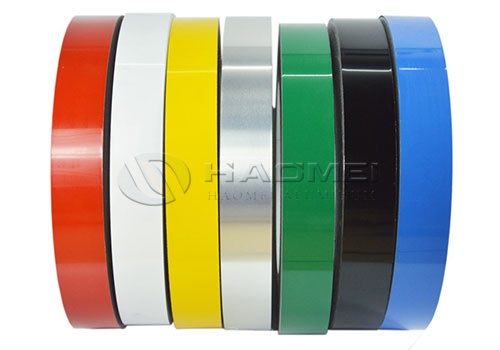
Gloss white is commonly supplied in shades such as RAL 9016 Traffic White, RAL 9003 Signal White, or customized white formulations. Although two products may both be described as white, they can differ in undertone. Some whites appear cool and slightly blue, while others are warmer or creamier. For projects requiring adjacent panels from different production batches, color tolerance should be agreed in advance, normally by Delta E measurement or approved sample comparison.
The coating system also determines whether the panel is intended for indoor decoration, general exterior use, or demanding outdoor environments. A standard polyester finish is practical for many interior and sheltered applications. For stronger UV resistance and color retention, PE Coated Aluminum Strip is widely used for economical architectural and industrial panel production. Projects in high-sunlight, coastal, or chemically exposed environments may require a fluorocarbon system.
Typical Product Parameters
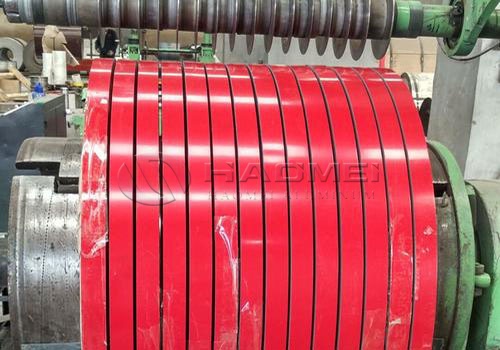
Gloss white color aluminum strip panels are generally produced from pre-painted aluminum coil and slit into required widths. The strip can then be roll formed, pressed, laminated, corrugated, or fabricated into finished panel components.
| Parameter | Common Range or Requirement |
|---|---|
| Base metal alloy | 1050, 1060, 1100, 3003, 3105, 5052 |
| Temper | H14, H16, H18, H24, H26, H32 |
| Thickness | 0.20 mm to 1.20 mm |
| Strip width | 20 mm to 1,600 mm |
| White color | RAL 9016, RAL 9003, RAL 9001, custom white |
| Surface gloss | Usually 60 to 85 GU at 60-degree angle |
| Coating type | Polyester, SMP, HDP, PVDF, epoxy-polyester |
| Front coating thickness | Typically 18 to 30 microns for PE; higher for PVDF systems |
| Back coating | 5 to 12 microns, or service-specific primer |
| Protective film | Optional PE film, commonly 30 to 80 microns |
| Coil inner diameter | Usually 405 mm or 505 mm |
| Coil outer diameter | Normally up to 1,800 mm, subject to weight limits |
Actual tolerances should be specified with the order. Thickness tolerance, width tolerance, camber, edge burr condition, coil weight, and allowable color difference can influence automated production efficiency. For panels with narrow folds or precision roll-forming profiles, a smooth slit edge is particularly important because burrs may scratch the white paint during forming.
Alloy Selection and Temper Conditions
The alloy should match the panel's manufacturing route rather than being selected only by price. Pure aluminum grades such as 1050 and 1060 offer excellent corrosion resistance and good formability. They suit lightweight decorative products but have lower strength than manganese-containing alloys.
Alloy 3003 is a popular choice for general-purpose panels because manganese improves strength while preserving workable forming behavior. Alloy 3105 is frequently used for painted building products, roofing accessories, ceiling panels, and siding-related components. It combines adequate strength, paint compatibility, and reliable roll-forming performance.
| Alloy and Temper | Typical Use | Forming Behavior | Relative Strength |
|---|---|---|---|
| 1050 H14 | Decorative trim, interior panels | Very good | Low |
| 1060 H18 | Simple flat panels, reflectors | Moderate | Low to medium |
| 3003 H14 | Wall panels, profiles, signage | Good | Medium |
| 3003 H24 | Pressed and bent components | Good | Medium |
| 3105 H14 | Ceiling, cladding, roll-formed panels | Good | Medium |
| 5052 H32 | Higher-demand exterior or marine panels | Moderate | Medium to high |
H14 and H24 tempers are widely selected where bending and profiling are required. H18 gives a firmer surface and improved dent resistance, but tight-radius bending becomes more difficult. If a gloss white panel will be deeply drawn, sharply folded, or embossed, a softer temper and appropriate bend-radius test should be confirmed before full production.
Chemical Composition of Common Base Alloys
The following table shows typical composition limits in percent by weight. Exact values may vary according to the applicable material specification.
| Element | 1050 | 3003 | 3105 | 5052 |
|---|---|---|---|---|
| Aluminum | Balance | Balance | Balance | Balance |
| Silicon + Iron | 0.40 max | 0.70 max | 1.00 max | 0.45 max |
| Copper | 0.05 max | 0.05 to 0.20 | 0.30 max | 0.10 max |
| Manganese | 0.05 max | 1.00 to 1.50 | 0.30 to 0.80 | 0.10 max |
| Magnesium | 0.05 max | 0.05 max | 0.20 to 0.80 | 2.20 to 2.80 |
| Chromium | - | - | 0.20 max | 0.15 to 0.35 |
| Zinc | 0.05 max | 0.10 max | 0.40 max | 0.10 max |
| Titanium | 0.03 max | - | 0.10 max | - |
The chemical composition affects more than strength. Magnesium-rich 5052 offers strong corrosion performance, while 3003 and 3105 deliver a good balance for pre-painted architectural sheet. The choice should also account for contact with dissimilar metals, moisture exposure, forming intensity, and required service life.
Coating Structure and Implementation Standards
A dependable gloss white finish starts with surface pretreatment. Aluminum is cleaned, chemically converted, primed, top-coated, and oven cured in a continuous coil-coating line. Pretreatment improves paint adhesion and helps protect the substrate at cut edges and formed areas.
A common gloss white construction includes a conversion layer, corrosion-resistant primer, white topcoat, and removable protective film. The reverse side may receive a wash coat, service coat, or matching back paint depending on bonding, insulation, or fabrication needs. For outdoor panel systems with high UV exposure, PVDF Coated Aluminum Strip offers stronger resistance to fading, chalking, and weathering than standard polyester finishes.
Relevant implementation standards may include ASTM B209 for aluminum sheet and strip, EN 485 for mechanical properties and tolerances, EN 573 for aluminum alloy composition, and EN 1396 for coil-coated aluminum products used in building applications. Coating performance may also be evaluated against AAMA 2603, AAMA 2604, or AAMA 2605, depending on the required exterior durability level.
Quality control commonly covers coating thickness, 60-degree gloss, pencil hardness, T-bend, impact resistance, cross-hatch adhesion, solvent resistance, color difference, and neutral salt spray performance. For glossy white products, visual inspection under controlled lighting remains essential because instrument readings alone cannot identify every surface imperfection.
Fabrication and Handling Considerations
Gloss white panels should be handled with clean gloves and non-marking tools. Metal chips, adhesive residue, and dirty press rollers can leave visible marks on the reflective surface. Protective film should remain in place through fabrication when possible, then be removed soon after installation. Excessive heat or prolonged outdoor storage may make film removal more difficult.
During bending, use a suitable inside radius for the selected alloy and temper. Avoid dragging formed parts across one another, as even a fine scratch can be highly visible on white gloss coating. If panels will be bonded with foam, adhesive, or insulation cores, confirm compatibility with the rear coating and curing temperature.
A gloss white color aluminum strip panel performs best when its visual finish and mechanical role are specified together. Selecting the correct alloy, temper, coating system, and inspection criteria produces a panel that stays bright, forms cleanly, and gives buildings or products a polished appearance for years.