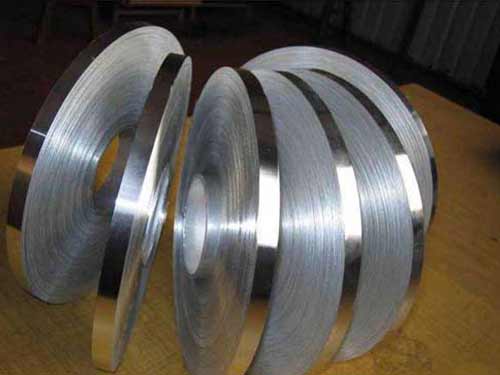
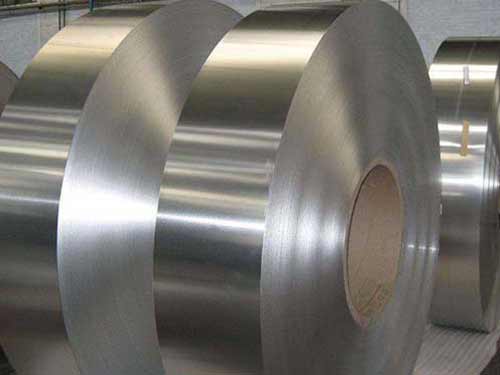
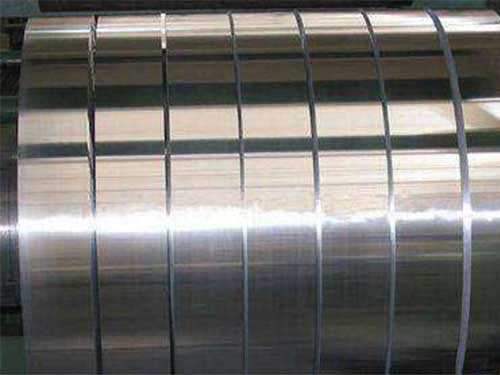
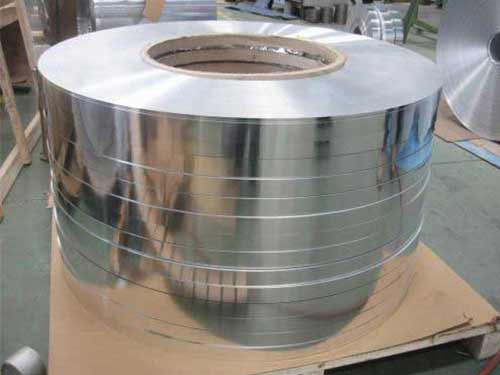
5052 6061 3003 1060 Aluminum Strip
Aluminum strip is often selected not by appearance, but by what happens after it enters a production line. Will it carry current efficiently? Can it survive bending, stamping, drawing, moisture, salt exposure, or structural loading? The practical difference between 5052, 6061, 3003, and 1060 aluminum strip lies in how each alloy responds to these working demands.
A useful way to choose aluminum strip is to view the material as a production tool. 1060 is designed for conductivity and easy forming. 3003 adds manganese for improved strength and daily corrosion resistance. 5052 uses magnesium to perform in wet, marine, and chemically exposed environments. 6061 is heat-treatable and selected where stiffness and mechanical strength are more important than deep drawing.
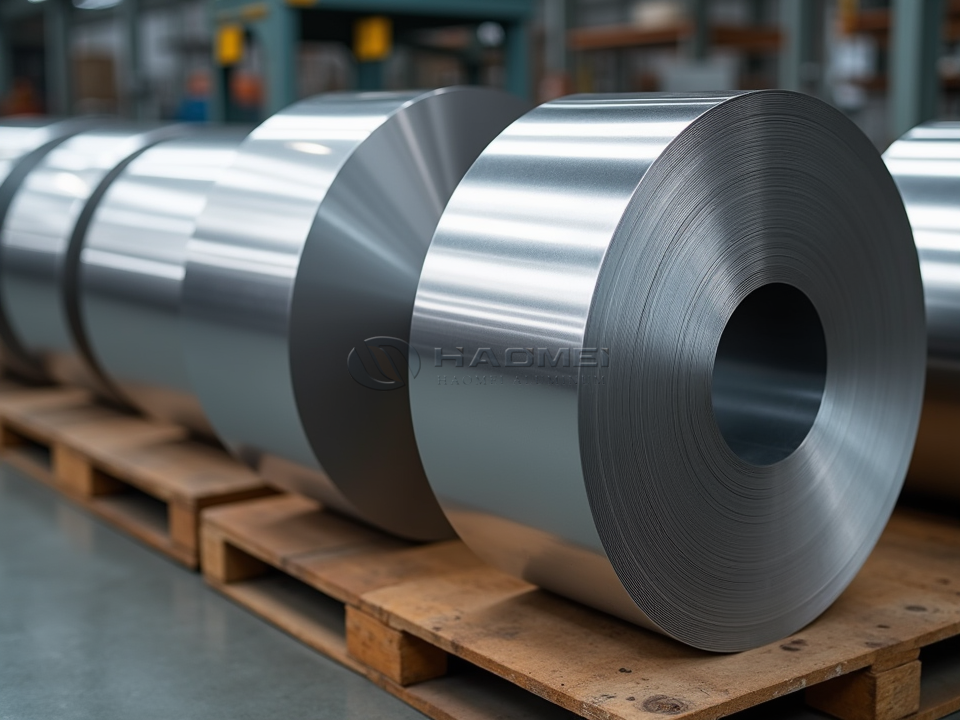
Four Alloys, Four Production Roles
1060 aluminum strip contains at least 99.60% aluminum. Its soft texture, high electrical conductivity, high thermal conductivity, and excellent ductility make it a common material for transformer windings, cable shielding, heat-transfer parts, lamp caps, and deep-drawn products. It is easily bent and stamped, although its mechanical strength is relatively low.
For electrical projects, 1050 / 1060 Aluminum Strip is frequently chosen when conductivity, surface quality, and stable coil slitting are more important than high load-bearing capacity.
3003 aluminum strip is an aluminum-manganese alloy. Manganese provides higher strength than pure aluminum while retaining good formability. It is well suited to roofing accessories, insulation cladding, cooking utensils, radiators, shutters, storage tanks, packaging components, and stamped hardware. It performs especially well where a component needs repeated bending without the higher cost of stronger marine-grade alloys.
3003 Aluminum Strip is also widely used for fin stock and general fabrication because it combines economical processing with dependable atmospheric corrosion resistance.
5052 aluminum strip is an aluminum-magnesium alloy known for corrosion resistance, fatigue performance, and medium-to-high strength in non-heat-treated aluminum products. It is used in fuel tanks, marine fittings, electronic housings, appliance panels, traffic signs, vehicle components, and chemical processing equipment. When moisture, salt spray, or outdoor service is a major concern, 5052 is often a more secure choice than 3003.
6061 aluminum strip belongs to the aluminum-magnesium-silicon family. It can be strengthened through solution heat treatment and artificial aging, especially in T4 and T6 tempers. Compared with 1060, 3003, and 5052, 6061 offers greater structural capability. It is suitable for frames, brackets, automotive parts, machinery guards, solar mounting components, rail equipment, and precision fabricated parts. Its formability in T6 is lower than in annealed or T4 condition, so bending radius and stamping design require more attention.
Chemical Composition and What It Means
The alloy chemistry determines whether the strip behaves more like a conductor, a forming material, a corrosion-resistant sheet, or a structural component.
| Alloy | Main Chemical Composition, % | Functional Effect |
|---|---|---|
| 1060 | Al ≥ 99.60%, Si + Fe ≤ 0.35%, Cu ≤ 0.05%, Mn ≤ 0.03% | High conductivity, excellent ductility, easy drawing and spinning |
| 3003 | Mn 1.0-1.5%, Cu 0.05-0.20%, Si + Fe ≤ 0.70%, Al balance | Better strength than pure aluminum, good weldability and forming |
| 5052 | Mg 2.2-2.8%, Cr 0.15-0.35%, Si + Fe ≤ 0.40%, Al balance | Strong corrosion resistance, fatigue resistance, good marine performance |
| 6061 | Mg 0.8-1.2%, Si 0.4-0.8%, Cu 0.15-0.40%, Cr 0.04-0.35%, Al balance | Heat-treatable strength, rigidity, machining performance |
Small composition variations are controlled by applicable standards and mill specifications. For critical applications, purchasers should confirm the material certificate, heat number, temper, dimensional tolerance, and mechanical-property range before production.
Temper Conditions: The Difference Made After Rolling
Temper describes the processing condition of aluminum strip. The same alloy can perform very differently in O, H, or T conditions.
| Temper | Meaning | Typical Application Consideration |
|---|---|---|
| O | Annealed, soft condition | Suitable for deep drawing, severe bending, spinning, and complex stamping |
| H12 / H14 | Strain hardened to quarter-hard or half-hard condition | Used for general forming, cladding, lighting, and moderate-strength parts |
| H18 | Full-hard strain-hardened condition | Chosen for rigid profiles, shutters, fins, and applications needing higher surface hardness |
| H32 / H34 | Strain hardened and stabilized | Common for 5052 strip requiring corrosion resistance with stable medium strength |
| T4 | Solution heat-treated and naturally aged | Suitable for 6061 parts requiring later forming or fabrication |
| T6 | Solution heat-treated and artificially aged | Used for 6061 structural components requiring high strength and stiffness |
For 1060 and 3003, O, H14, and H18 are frequent choices. 5052 commonly appears in H32 and H34. 6061 is commonly supplied in O, T4, or T6, depending on whether the customer prioritizes fabrication or final mechanical strength.
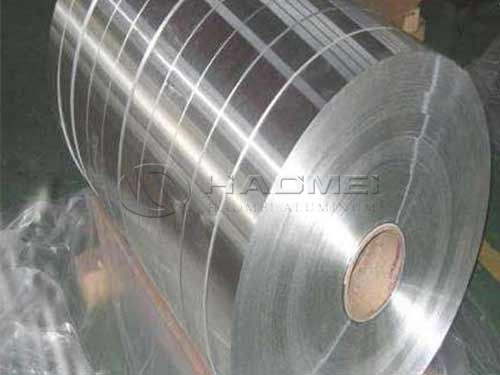
Typical Parameters for Aluminum Strip Supply
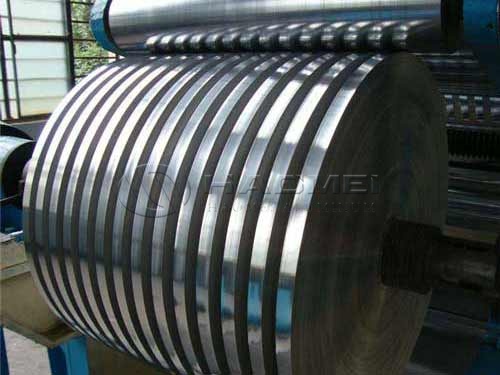
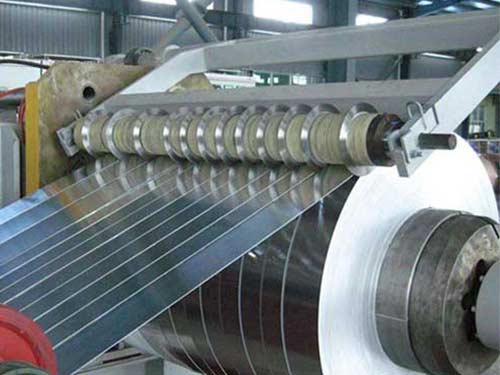
Aluminum strip is usually slit from wider coil, and its final quality depends on width control, burr condition, flatness, coil tightness, surface cleanliness, and edge shape.
| Parameter | Common Supply Range |
|---|---|
| Thickness | 0.15 mm to 6.0 mm |
| Width | 10 mm to 1,600 mm, subject to slitting capability |
| Coil inner diameter | Commonly 150 mm, 300 mm, 400 mm, 500 mm, or 505 mm |
| Surface finish | Mill finish, bright, brushed, coated, embossed, or protective-film covered |
| Edge condition | Mill edge, slit edge, deburred edge, rounded edge by agreement |
| Coil weight | Customized according to handling equipment and production requirements |
Thin strip for transformer winding needs tight thickness tolerance, clean edges, and controlled burr height. Strip for stamping requires stable mechanical properties throughout the coil. Decorative or coated strip requires consistent surface appearance. Structural 6061 strip may require a specified tensile strength, yield strength, elongation, and hardness range.
Implementation Standards and Quality Control
5052, 6061, 3003, and 1060 aluminum strip can be produced in accordance with international standards such as ASTM B209, EN 485, EN 573, GB/T 3880, JIS H4000, and customer-specific technical agreements.
ASTM B209 is commonly referenced for aluminum and aluminum-alloy sheet and plate products. EN 573 focuses on chemical composition and alloy designation, while EN 485 addresses mechanical properties and tolerances for wrought aluminum products. GB/T 3880 is widely applied for aluminum and aluminum-alloy plates, sheets, and strips in industrial supply.
Inspection commonly covers thickness, width, diagonal tolerance, flatness, edge burr, coil telescoping, surface scratches, oil marks, tensile properties, elongation, chemical composition, and packaging condition. For electrical-grade 1060 strip, resistivity or conductivity can also be specified. For 5052 and 6061, corrosion performance and mechanical-property verification may be essential.
Choosing the Right Strip for the Job
Choose 1060 when the product must transfer electricity or heat, or when deep forming is the dominant requirement. Choose 3003 for economical, corrosion-resistant fabricated parts with moderate strength. Choose 5052 for humid, marine, outdoor, chemical, or vehicle environments where fatigue resistance matters. Choose 6061 when the strip must act as a strong, rigid part after heat treatment.
The best aluminum strip is not simply the strongest alloy. It is the alloy and temper that reduces forming defects, supports the final service environment, and keeps manufacturing stable from the first coil to the last.