Aluminium Strip Foil for Phamaceutical Packaging
Aluminium strip foil for pharmaceutical packaging is a precision-rolled, slit aluminium material designed to preserve the stability, safety, and dosage integrity of medicines. Used as blister lidding foil, cold-form blister foil, sachet foil, strip-pack foil, and laminated pouch material, it forms a highly effective barrier against moisture, oxygen, light, odor transfer, and external contamination.
For tablets, capsules, powders, granules, and selected medical devices, the foil is often the final protective layer between a sensitive product and the outside environment. Its clean surface, controlled thickness, stable mechanical behavior, and excellent printability support efficient high-speed packaging operations while helping brands meet demanding quality expectations.
Functions in Medicine Packaging
Pharmaceutical foil performs more than a sealing role. In a laminated structure, it delivers barrier performance while the heat-seal lacquer, primer, printing ink, and polymer films provide sealing, identification, and forming functions. The alloy and temper must suit the package format, converting method, and required shelf life.
| Function | Packaging Benefit | Typical Use |
|---|---|---|
| Moisture barrier | Helps protect hygroscopic tablets and capsules from humidity | Blister lidding, strip packs, sachets |
| Oxygen barrier | Limits oxidation of sensitive active ingredients | Powder pouches, multilayer laminates |
| Light shielding | Protects photosensitive formulations from UV and visible light | Blisters, sachets, diagnostic packs |
| Heat-seal support | Bonds reliably to PVC, PVDC, PET, PP, or coated substrates | Push-through and peelable blister packs |
| Mechanical protection | Resists puncture, pinholes, and handling damage | Cold-form foil, unit-dose packs |
| Print surface | Supports batch codes, instructions, branding, and anti-counterfeit graphics | Lidding foil and strip packaging |
Common Pharmaceutical Packaging Applications
Blister lidding foil is normally a hard-temper material, frequently produced from AA 8011. It is coated on the sealing side and printed or primed on the outer side. The foil must deliver predictable push-through behavior, so patients can remove a tablet without uncontrolled tearing of the pack.
Cold-form blister foil is thicker and softer. It is laminated with polyamide and PVC or similar films, then deep drawn into cavities. This structure is selected when exceptionally high barrier performance is needed for moisture-sensitive or oxygen-sensitive medicines.
Strip packs use foil laminates sealed around individual tablets or capsules. Sachets and pouches rely on aluminium foil laminates for powders, oral rehydration salts, effervescent products, topical formulations, and single-dose healthcare products.
For consistent lidding performance, 8011 Aluminum Strip is widely specified because it combines good rolling quality, strength, corrosion resistance, and stable processing behavior.
Suitable Alloys and Temper Conditions
Alloy selection depends on the desired foil gauge, laminate design, forming depth, and sealing application. AA 8011 is the dominant choice for pharmaceutical lidding foil. AA 1235 can be used for flexible packaging laminates, while AA 8021 is often selected for deep-drawing cold-form applications.
| Alloy | Typical Temper | Main Characteristics | Suitable Pharmaceutical Format |
|---|---|---|---|
| AA 8011 | H18, H19, H22, H24 | Good strength, clean rolling surface, strong barrier capability | Blister lidding, strip packs, sachets |
| AA 1235 | O, H18 | High aluminium content, good flexibility, suitable for lamination | Flexible pouches and light-gauge laminates |
| AA 8021 | O | Excellent formability and deeper drawing performance | Cold-form blister foil |
| AA 8079 | O, H18 | Good strength and pinhole resistance at fine gauges | Flexible pharmaceutical laminates |
Hard tempers such as H18 and H19 are generally used where stiffness, controlled tear behavior, and efficient machine handling are required. Annealed O temper is preferred for cold-form foil because it must stretch and draw into deep cavities without cracking. H22 and H24 provide intermediate hardness where moderate forming and improved handling strength are both needed.
Chemical Composition
Chemical composition is controlled to maintain rolling consistency, corrosion resistance, mechanical strength, and surface quality. Values may be specified according to EN 573-3, ASTM requirements, or customer-approved material specifications.
| Alloy | Si % | Fe % | Cu % | Mn % | Mg % | Zn % | Ti % | Al % |
|---|---|---|---|---|---|---|---|---|
| AA 8011 | 0.50-0.90 | 0.60-1.00 | 0.10 max | 0.20 max | 0.05 max | 0.10 max | 0.08 max | Remainder |
| AA 1235 | Si + Fe 0.65 max | Si + Fe 0.65 max | 0.05 max | 0.05 max | 0.05 max | 0.10 max | 0.06 max | 99.35 min |
| AA 8021 | 0.15 max | 1.00-1.70 | 0.05 max | 0.20 max | 0.05 max | 0.10 max | 0.08 max | Remainder |
| AA 8079 | 0.05-0.30 | 0.70-1.30 | 0.05 max | 0.10 max | 0.05 max | 0.10 max | 0.08 max | Remainder |
Technical Specifications and Quality Controls
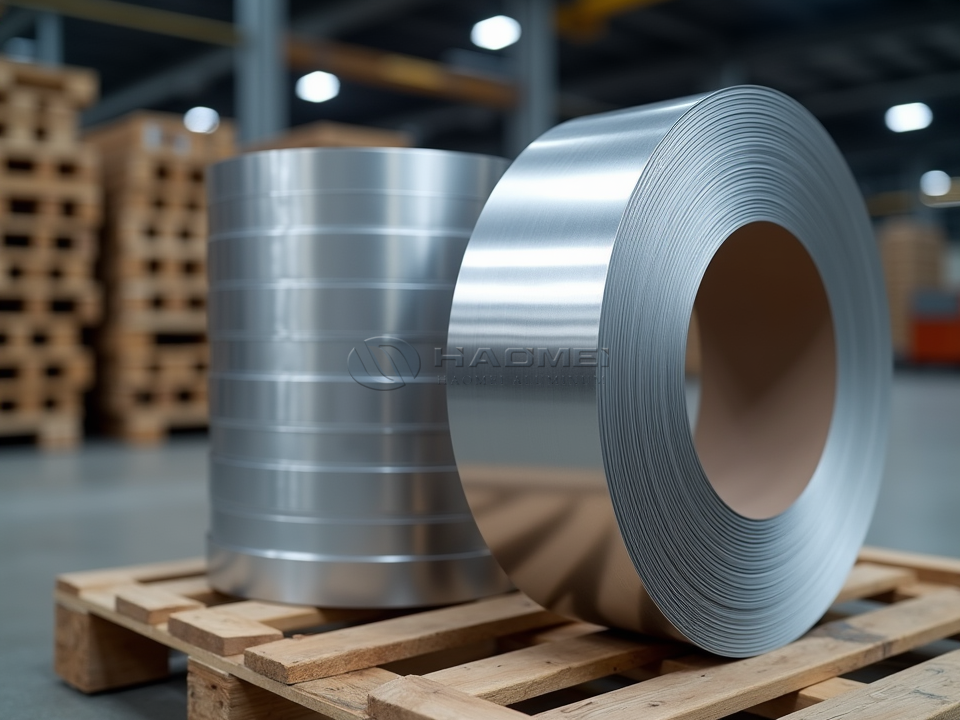
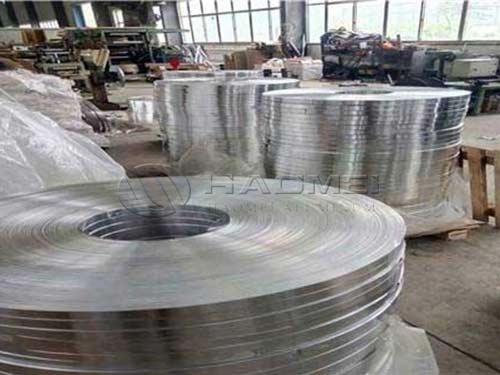
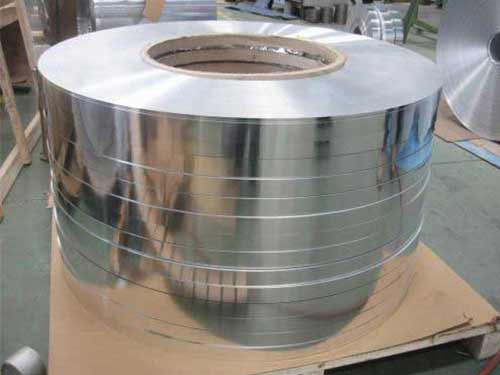
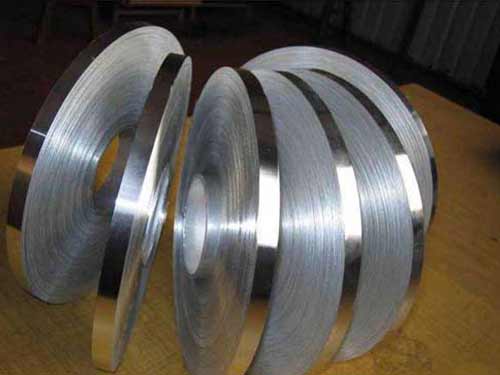
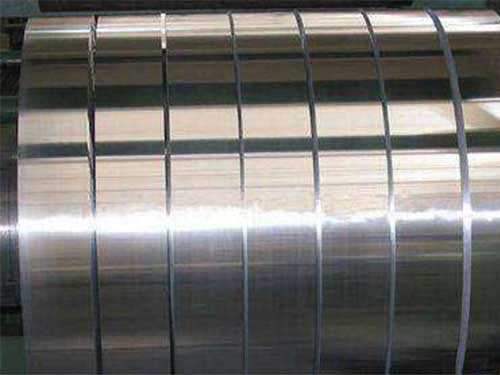
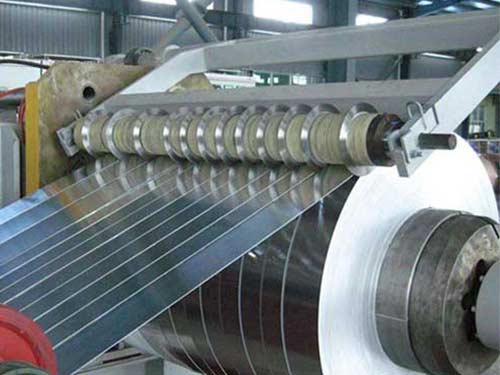
Pharmaceutical aluminium strip foil is supplied in coils after precision slitting. Tight width control and clean slit edges are essential because foil is processed at high speeds on printing, coating, laminating, and blister-packaging lines.
| Parameter | Typical Range or Requirement | Notes |
|---|---|---|
| Foil thickness for lidding | 0.020-0.030 mm | 0.020 mm and 0.025 mm are common selections |
| Foil thickness for cold-form packs | 0.045-0.060 mm | Depends on cavity depth and laminate construction |
| Strip width | 50-1,250 mm | Slit to machine and customer requirements |
| Width tolerance | Typically ±0.5 mm or as agreed | Narrow slit coils may require tighter control |
| Coil inner diameter | 150 mm, 300 mm, 505 mm, or as agreed | Must match converting equipment |
| Coil outer diameter | Up to approximately 1,000 mm | Controlled by weight and handling limits |
| Surface | Mill finish, one-side bright, chemically treated, coated | Surface selected for printing and lamination |
| Pinhole control | Tested according to gauge and end use | Especially important for thin flexible foil |
| Wettability | Commonly 32-38 dynes/cm after treatment | Supports coating, ink, and adhesive anchorage |
| Heat-seal coating | PVC, PVDC, PP, PET, or custom lacquer compatible | Seal layer is selected for the substrate |
Pinhole inspection is particularly important because even a small defect can reduce barrier performance in a laminate. Material should also be checked for oil residues, edge cracks, telescoping, scratches, roll marks, stains, and uneven coating. For printed and coated foil, lacquer weight, seal strength, ink adhesion, and solvent residue are often included in release testing.
Implementation Standards and Compliance Considerations
Pharmaceutical packaging foil must be selected as part of a complete packaging system. The finished laminate, coating, adhesive, inks, and sealant require suitability assessment for the target medicine, storage period, and destination market.
| Standard or Regulation | Relevance to Pharmaceutical Foil |
|---|---|
| EN 546 | Defines requirements for aluminium and aluminium alloy foil, including mechanical properties and tolerances |
| EN 573-3 | Specifies chemical composition for wrought aluminium alloys |
| ASTM B479/B479M | Covers annealed aluminium and aluminium-alloy foil for flexible barrier and related applications |
| ISO 15378 | Provides GMP principles for primary packaging materials for medicinal products |
| EU Regulation (EC) No 1935/2004 | Framework for materials intended to contact food; often referenced where indirect-contact packaging compliance is required |
| EU Regulation (EC) No 2023/2006 | Good manufacturing practice requirements for materials and articles intended to contact food |
| FDA 21 CFR | Relevant when coatings, adhesives, or packaging components are supplied for applicable U.S. contact uses |
Compliance documentation may include a certificate of analysis, certificate of conformity, alloy declaration, dimensional inspection report, coating specification, and traceability records. For regulated medicine packs, buyers should confirm migration, extractables, seal integrity, and stability performance on the finished package rather than evaluating foil alone.
Selecting the Right Foil Construction
A practical selection starts with the drug's sensitivity profile. Products affected by humidity usually need a high-water-vapor-barrier laminate. Light-sensitive formulations require opaque foil coverage. Products packed in deep cavities require annealed cold-form material, while standard push-through blisters typically use hard 8011 lidding foil with a compatible heat-seal lacquer.
Reliable pharmaceutical aluminium strip foil combines alloy control, precise tempering, tight slitting tolerances, clean surfaces, and verified coating compatibility. When these factors are matched to the package design, the result is dependable machine performance and durable protection throughout distribution and storage.