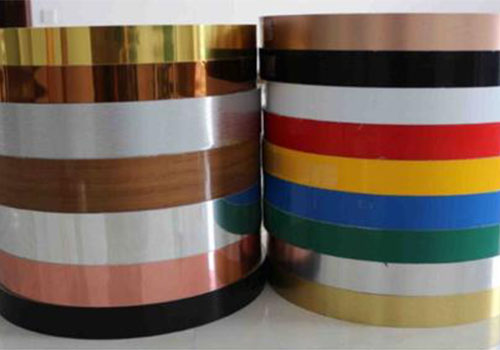
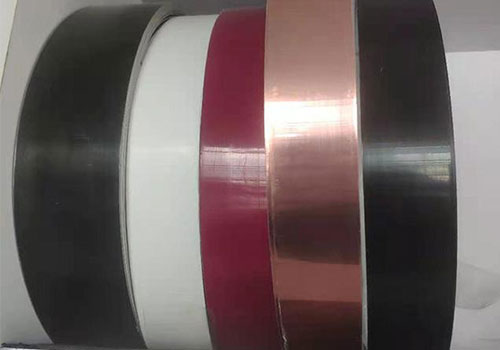
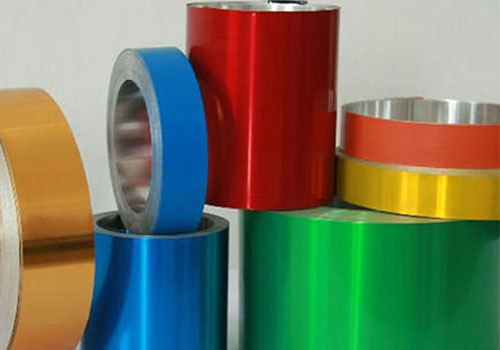
Stable Factory RAL Colors Aluminum Strips
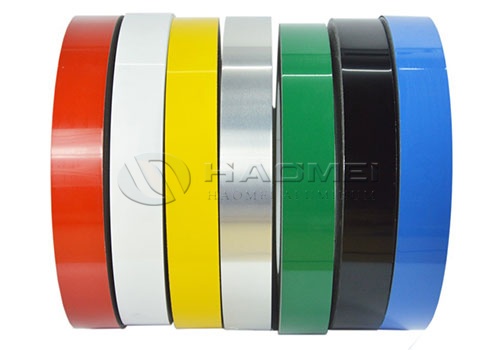
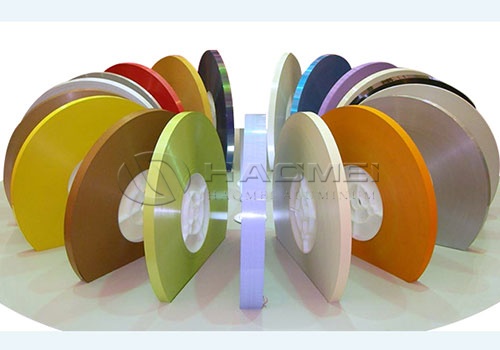
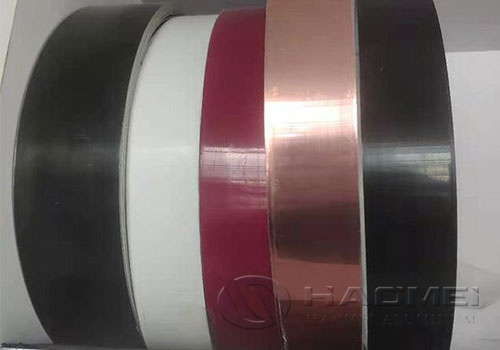
Color is not merely decorative in industrial aluminum strip production. A stable RAL finish can identify a product line, support architectural design requirements, improve appliance appearance, and maintain visual consistency across long production cycles. For buyers who need repeatable color, controlled coating thickness, and dependable mechanical properties, Stable Factory RAL Colors Aluminum Strips provide a practical balance between appearance and engineered performance.
Haomei Aluminum CO., LTD., Inc. supplies color-coated aluminum strip with controlled raw material selection, coil preparation, coating formulation, and curing conditions. The result is a metal strip designed to retain a consistent tone from coil to coil while remaining suitable for bending, stamping, slitting, roll forming, and fabrication.
Why RAL Color Stability Matters
RAL colors are widely specified in construction, transportation, electrical equipment, signage, household appliances, insulation systems, and decorative components. However, matching a RAL code at the beginning of production is only part of the requirement. A reliable coated strip must maintain close color control between batches, production dates, and different coil widths.
Color variation may be influenced by pigment concentration, paint viscosity, coating weight, oven temperature, line speed, substrate surface quality, and curing time. Stable production requires these factors to be monitored together. A slight change in substrate brightness or coating thickness can affect the final visual impression, especially on white, silver, gray, metallic, dark blue, and deep red RAL shades.
For this reason, quality control commonly includes visual inspection under standard lighting, gloss measurement, coating thickness testing, adhesion testing, and color difference evaluation. Delta E color tolerance can be agreed between buyer and supplier according to project requirements. Lower Delta E values indicate closer visual matching between samples and production material.
Aluminum Strip Parameters for Coated RAL Products
Stable RAL color aluminum strips can be produced in a broad range of dimensions and coating systems. Final parameters should be selected according to forming method, environmental exposure, and appearance expectations.
| Parameter | Typical Range or Option |
|---|---|
| Alloy | 1050, 1060, 1070, 1100, 3003, 3105, 3004, 5052 |
| Temper | O, H12, H14, H16, H18, H24, H26, H32, H34 |
| Thickness | 0.20 mm to 3.00 mm |
| Strip Width | 10 mm to 1,600 mm |
| Coil Inner Diameter | 150 mm, 300 mm, 405 mm, 505 mm, 508 mm |
| Coil Weight | Customized according to handling equipment |
| Coating Type | PE, HDPE, SMP, PVDF, epoxy primer systems |
| Top Coat Thickness | Usually 10 to 30 microns |
| Back Coat Thickness | Usually 5 to 15 microns |
| Surface Finish | Glossy, matte, high gloss, textured, embossed, brushed-look |
| RAL Color | Standard RAL chart colors or approved custom samples |
For indoor applications such as ceiling systems, appliance trims, cable wrapping, decorative channels, and lighting parts, PE coating often offers an economical and attractive finish. A PE Coated Aluminum Strip can provide good flexibility, clean color presentation, and practical processing performance.
For curtain wall components, roofing accessories, exterior cladding, shutters, rainwater systems, and sun-exposed products, stronger weather resistance is usually required. In these applications, a PVDF Coated Aluminum Strip is often selected for its long-term resistance to ultraviolet exposure, fading, chalking, and harsh atmospheric conditions.
Alloy and Temper Selection for Different Processing Needs
The aluminum alloy is the structural base behind the color coating. Although the coating creates the visible surface, alloy composition and temper determine how the strip behaves during fabrication.
Alloy 1050 and 1060 are common for applications that need high aluminum purity, excellent corrosion resistance, and good formability. They are suitable for decorative strips, insulation jacketing, lighting reflectors, and general fabricated profiles. Temper O is soft and highly formable, while H14 offers a firmer condition for improved handling.
Alloy 3003 contains manganese and offers higher strength than the 1xxx series while preserving good workability. It is widely used in decorative panels, appliance parts, roofing accessories, heat-transfer components, and formed channels. Alloy 3105 is also popular for painted aluminum products because it combines good bending ability with stable coating compatibility.
Alloy 5052 is selected when better strength and corrosion resistance are required, especially for marine-adjacent environments, transport equipment, equipment housings, and demanding fabricated parts. It can be supplied in H32 or H34 temper where moderate strength and forming capability are both needed.
| Alloy | Main Alloying Element | Typical Temper | Practical Characteristics |
|---|---|---|---|
| 1050 | Aluminum purity | O, H14, H24 | Soft, corrosion resistant, easy to form |
| 1060 | Aluminum purity | O, H14, H18 | Good conductivity, smooth processing performance |
| 1100 | Aluminum purity | O, H14 | Strong formability and good corrosion resistance |
| 3003 | Manganese | H14, H24 | Improved strength with reliable bending performance |
| 3105 | Manganese, magnesium | H14, H24 | Suitable for painted building and appliance components |
| 5052 | Magnesium | H32, H34 | Higher strength and enhanced corrosion resistance |
Chemical Composition Requirements
Chemical composition affects strength, corrosion resistance, forming behavior, and final application suitability. The following table presents typical maximum or nominal composition values in percent for commonly used aluminum strip alloys. Actual material certification should follow the agreed standard and mill test report.
| Alloy | Si | Fe | Cu | Mn | Mg | Cr | Zn | Al |
|---|---|---|---|---|---|---|---|---|
| 1050 | 0.25 | 0.40 | 0.05 | 0.05 | 0.05 | - | 0.05 | 99.50 min |
| 1060 | 0.25 | 0.35 | 0.05 | 0.03 | 0.03 | - | 0.05 | 99.60 min |
| 1100 | Si+Fe 0.95 max | - | 0.05-0.20 | 0.05 | - | - | 0.10 | 99.00 min |
| 3003 | 0.60 | 0.70 | 0.05-0.20 | 1.0-1.5 | - | - | 0.10 | Balance |
| 3105 | 0.60 | 0.70 | 0.30 | 0.30-0.80 | 0.20-0.80 | 0.20 | 0.40 | Balance |
| 5052 | 0.25 | 0.40 | 0.10 | 0.10 | 2.2-2.8 | 0.15-0.35 | 0.10 | Balance |
Coating Process and Implementation Standards
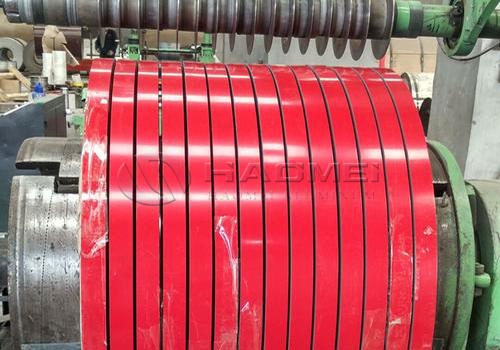
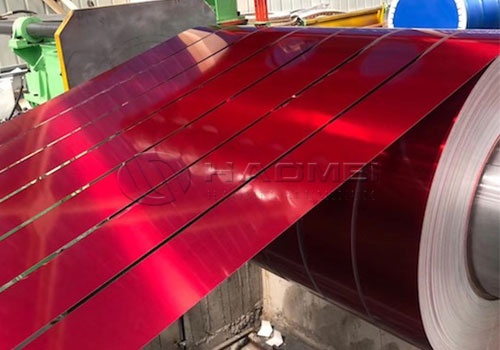
Color-coated aluminum strip is commonly produced through continuous coil coating. The aluminum substrate is cleaned and chemically pretreated before primer application. The top coating is then roll-coated at a controlled thickness and cured in an oven. This continuous process helps achieve a more even finish than many post-fabrication painting methods.
Relevant implementation standards may include ASTM B209 for aluminum and aluminum-alloy sheet and strip, EN 485 for wrought aluminum products, EN 1396 for coil-coated aluminum sheet and strip used in general applications, and GB/T 3880 for aluminum and aluminum alloy sheet and strip. Coating performance can be evaluated through tests such as ASTM D3359 for adhesion, ASTM D2794 for impact resistance, ASTM D523 for gloss, and ASTM D2244 for color difference.
Practical Purchasing Considerations
A RAL code should be supported by more than a color name on an order sheet. Buyers should confirm the reference sample, gloss range, coating type, thickness tolerance, alloy, temper, protective film requirement, coil direction, and inspection criteria. If the strip will be deeply drawn, sharply bent, or stamped into narrow radii, coating flexibility and bend performance should be verified before volume production.
Stable Factory RAL Colors Aluminum Strips are most effective when color, substrate, temper, coating, and end-use conditions are treated as one connected specification. This approach helps purchasers receive aluminum strip that looks consistent on the finished product and performs reliably throughout fabrication and service life.