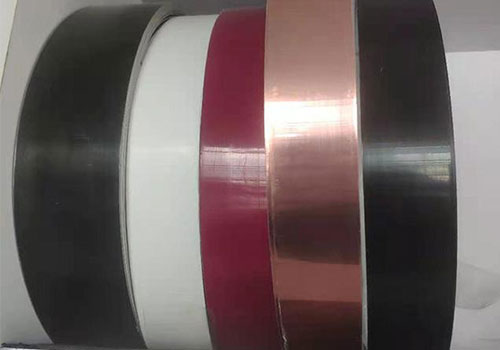
3mm 4mm PVDF Aluminium Strip Sheet
A 3mm 4mm PVDF Aluminium strip sheet is more than a colored metal panel. It works like a protective skin: light enough for easy fabrication, rigid enough for flat visual lines, and coated to resist sunlight, rain, salt, dust, and urban pollution. For customers choosing material for facades, ceilings, roofing trims, transportation panels, signage, or industrial cladding, the real value is not only the thickness. It is the balance between aluminium alloy, temper, coating system, surface tolerance, and long-term color stability.
PVDF, short for polyvinylidene fluoride, is widely used when outdoor durability matters. Compared with ordinary polyester coating, PVDF coating has stronger resistance to ultraviolet radiation, chalking, fading, and chemical attack. That is why a 3mm or 4mm PVDF aluminium strip sheet is often selected for buildings that must keep a clean appearance for many years.
Why 3mm and 4mm Thicknesses Are Popular
The 3mm thickness is often chosen when the project needs reduced weight, easier bending, and cost control. It is suitable for wall cladding, interior decorative panels, canopy parts, signboards, and formed trim sections. The 4mm thickness brings higher stiffness and better resistance to panel deformation, making it suitable for larger modules, exposed facades, column covers, and areas where wind load or impact resistance is more important.
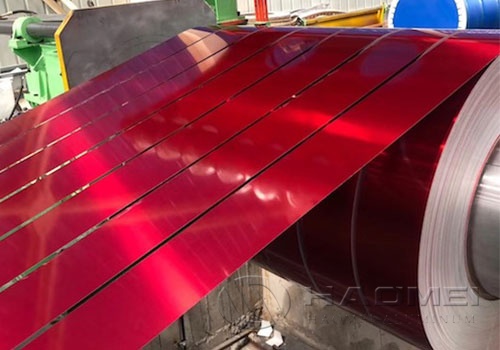
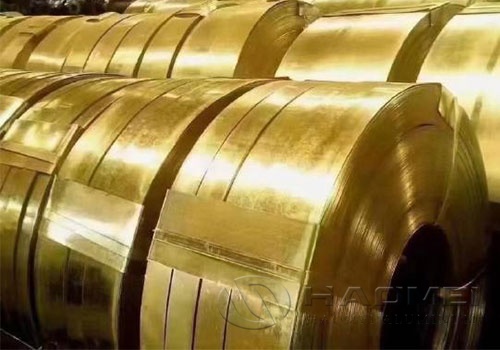
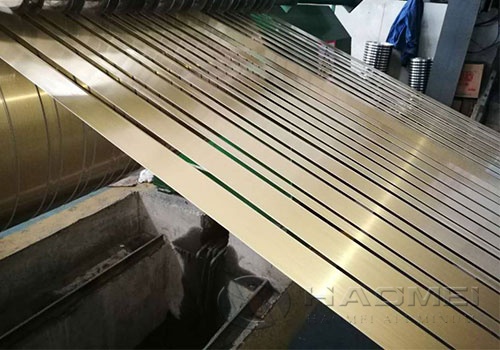
In strip form, the material can be supplied in coils or slit widths for continuous processing. In sheet form, it is ready for cutting, grooving, punching, bending, and assembly. Many buyers use the term strip sheet because they need the coating quality of architectural sheet and the width control of aluminium strip production.
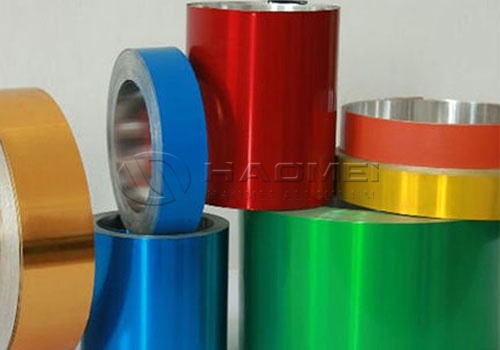
For projects requiring continuous coil processing, our PVDF Coated Aluminum Strip range can be matched with custom thickness, width, alloy, and color requirements.
Typical Product Parameters
| Item | Common Specification |
|---|---|
| Product name | 3mm 4mm PVDF Aluminium strip sheet |
| Base metal | Aluminium alloy sheet or strip |
| Common alloys | 3003, 3004, 3105, 5005, 5052 |
| Temper | H24, H26, H32, H34, O by request |
| Thickness | 3.0mm, 4.0mm, custom tolerance by agreement |
| Width range | Commonly 100mm-1600mm, wider sizes negotiable |
| Length | Coil, cut-to-length sheet, or project size |
| Coating type | PVDF two-coat or three-coat system |
| Coating thickness | Usually 25um-35um, depending on finish and standard |
| Gloss | Matte, low gloss, medium gloss, or custom |
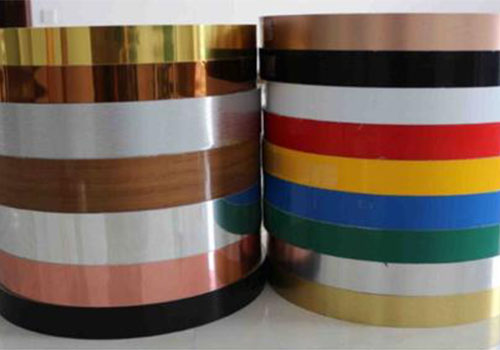
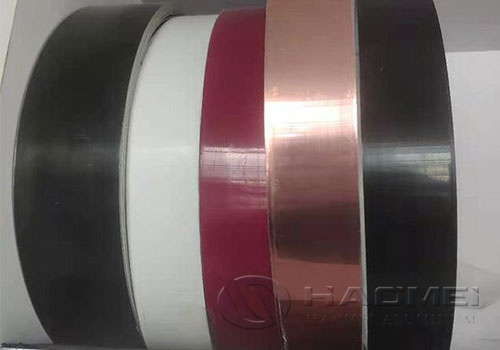
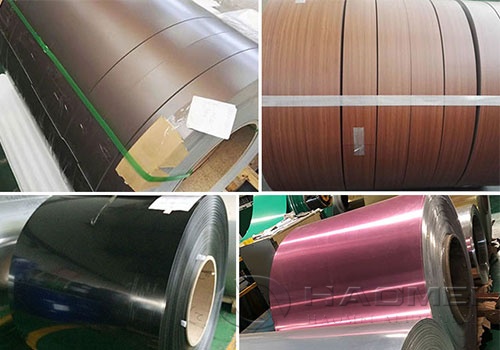
| Colors | Solid color, metallic, stone effect, wood grain by order |
| Surface | Smooth, embossed, brushed effect, protective film optional |
| Packaging | Eye-to-wall or eye-to-sky coil, wooden pallet, moisture barrier |
Alloy and Temper Selection
Alloy 3003 is a practical choice for general architectural panels because it offers good corrosion resistance and easy forming. Alloy 3004 and 3105 provide improved strength and are often used in coated building materials. Alloy 5005 is appreciated for decorative surfaces and stable anodizing-like appearance, while 5052 gives higher strength and better marine atmosphere resistance due to its magnesium content.
Temper is just as important as alloy. H24 is widely used because it provides a good mix of strength and bendability. H26 offers higher hardness for flatter panels and improved handling resistance. H32 and H34 are common for magnesium-containing alloys such as 5052, especially where strength and corrosion resistance are both needed. O temper is softer and easier to form, but it may not be ideal for applications requiring high panel stiffness.
When a panel must be bent, grooved, or roll-formed, customers should confirm inner bending radius, coating flexibility, and temper before mass production. A beautiful coating is only successful when the metal underneath is matched to the forming process.
Chemical Composition Reference
The values shown are typical reference ranges based on common aluminium alloy standards. Final composition should follow the agreed mill certificate.
| Alloy | Si | Fe | Cu | Mn | Mg | Cr | Zn | Ti | Al |
|---|---|---|---|---|---|---|---|---|---|
| 3003 | 0.60 max | 0.70 max | 0.05-0.20 | 1.00-1.50 | 0.05 max | - | 0.10 max | - | Balance |
| 3004 | 0.30 max | 0.70 max | 0.25 max | 1.00-1.50 | 0.80-1.30 | - | 0.25 max | - | Balance |
| 3105 | 0.60 max | 0.70 max | 0.30 max | 0.30-0.80 | 0.20-0.80 | 0.20 max | 0.40 max | 0.10 max | Balance |
| 5005 | 0.30 max | 0.70 max | 0.20 max | 0.20 max | 0.50-1.10 | 0.10 max | 0.25 max | - | Balance |
| 5052 | 0.25 max | 0.40 max | 0.10 max | 0.10 max | 2.20-2.80 | 0.15-0.35 | 0.10 max | - | Balance |
Standards and Testing Conditions
Production and inspection can follow internationally recognized standards such as ASTM B209 for aluminium sheet and plate, EN 485 for aluminium sheet strip tolerances and properties, EN 573 for chemical composition, EN 515 for temper designation, GB/T 3880 for wrought aluminium sheet and strip, and AAMA 2605 for high-performance exterior organic coatings. For coated architectural products, coating adhesion, pencil hardness, impact resistance, solvent resistance, color difference, gloss, salt spray resistance, and accelerated weathering may be tested according to project demand.
PVDF coating systems usually contain a primer and a PVDF color coat. For higher appearance depth or metallic colors, a clear topcoat may be added. A high-grade PVDF coating often uses resin with strong fluorocarbon content, helping the surface resist UV degradation and atmospheric corrosion. In coastal or industrial environments, pretreatment quality is critical. Chrome-free or chromate pretreatment can improve coating adhesion and corrosion resistance before primer application.
Performance from the Surface Inward
A good PVDF aluminium strip sheet starts with flat base metal. Thickness tolerance, width tolerance, diagonal accuracy, and surface cleanliness affect the final result. After degreasing and chemical pretreatment, the coating must be applied evenly. If the coating is too thin, durability may suffer. If it is too thick, flexibility during bending may decrease. That is why coil coating lines control paint viscosity, oven temperature, line speed, and film thickness together.
The finished surface should show uniform color, stable gloss, no obvious pinholes, no peeling, no blistering, and no serious scratches. For visible architectural areas, color difference should be controlled between batches, especially for metallic, champagne, grey, black, silver, and custom facade colors. Buyers who need design flexibility can also compare finishes in our Color Coated Aluminum Strip product range.
Application Thinking for Buyers
For exterior facades, 4mm PVDF aluminium sheet often gives a stronger visual plane and better stiffness. For curved trim, column wrapping, edge banding, sign frames, and processed strip parts, 3mm material may reduce forming stress and installation weight. If the project is near the sea, 5052 or a carefully pretreated 5005 alloy may be preferred. For general commercial buildings, 3003, 3004, and 3105 can provide reliable performance at a balanced cost.
Storage and installation also influence service life. Sheets should be kept dry, ventilated, and away from alkaline or acidic chemicals. Protective film should not remain on the surface for too long under strong sunlight, because adhesive residue may become difficult to remove. During cutting or bending, equipment should be clean to avoid metal chips scratching the PVDF surface.
A Practical Material for Long-Term Appearance
The strength of 3mm 4mm PVDF Aluminium strip sheet lies in its layered design: selected aluminium alloy for structure, suitable temper for forming and rigidity, chemical pretreatment for adhesion, and PVDF coating for weather resistance. When these parts are matched correctly, the material offers a clean surface, low maintenance, corrosion resistance, and stable color for demanding architectural and industrial use.
For purchasing, the best specification is not simply the thickest sheet or the hardest temper. It is the combination that fits the environment, forming method, appearance target, and budget. With the right alloy, coating thickness, tolerance, and testing standard, PVDF aluminium strip sheet becomes a dependable material for projects that need both performance and visual confidence.