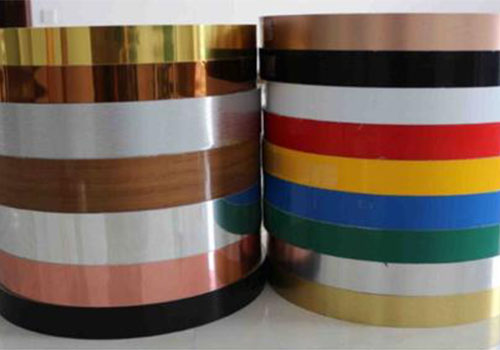
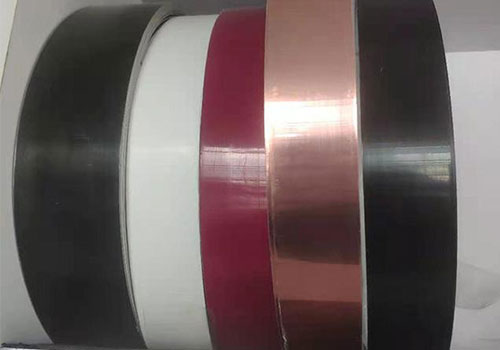
Ral Colors Aluminium Strip
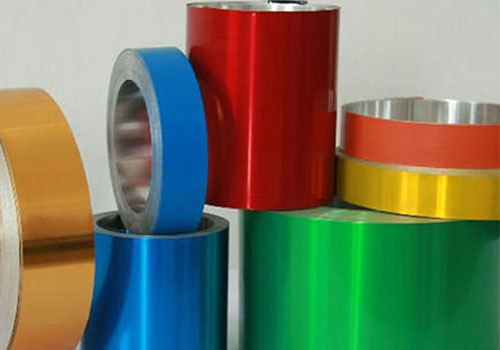
RAL colors aluminium strip is not simply aluminium painted in a chosen shade. It is a formed, coated engineering material where color consistency, coating adhesion, alloy selection, and coil flatness must work together. For roofing trim, shutters, ceiling systems, signage, appliance components, cable wrapping, and decorative profiles, the visible finish is only one part of the performance story.
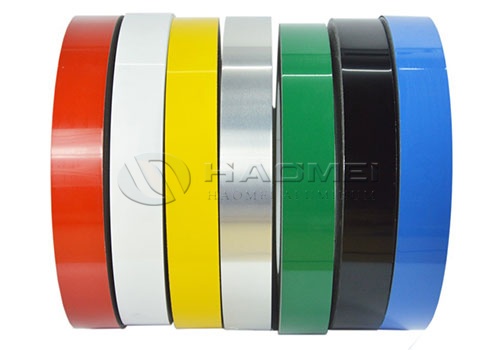
The RAL system gives designers and buyers a shared color language. A requested RAL 9016 Traffic White, RAL 7016 Anthracite Grey, RAL 3005 Wine Red, or RAL 6005 Moss Green can be reproduced through controlled coil-coating processes. Yet a RAL reference is a target color, not a complete material specification. The gloss level, paint chemistry, viewing angle, substrate alloy, texture, and lighting conditions can all change the final visual impression.
Why RAL Color Control Matters on Aluminium Strip
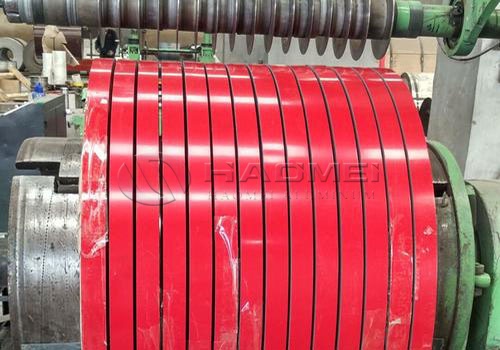
Aluminium strip is often processed after delivery. It may be slit, roll formed, stamped, folded, laminated, or wrapped around insulation. This makes pre-painted material especially valuable: it provides an even finish before fabrication while reducing liquid-paint operations at the customer site.
A RAL color should therefore be specified together with gloss, coating type, thickness, surface texture, and permitted color tolerance. A matte RAL 9005 Jet Black and a high-gloss RAL 9005 may use the same color code but create entirely different visual effects. For projects where coils from different batches will be installed side by side, batch control and sample approval are highly recommended.
A properly engineered Color Coated Aluminum Strip combines a cleaned and chemically pretreated aluminium substrate with primer and finish coats. The coating is oven cured to form a continuous film with dependable flexibility during bending and profiling.
Common Product Parameters
RAL colors aluminium strip can be tailored to the fabrication process and application environment. Typical commercial ranges are shown here.
| Parameter | Typical Range or Option |
|---|---|
| Alloy | 1050, 1060, 1100, 3003, 3105, 3004, 5052 |
| Temper | O, H14, H16, H18, H24, H26, H32 |
| Thickness | 0.20 mm to 2.00 mm |
| Width | 20 mm to 1,600 mm before slitting |
| Coil inner diameter | 150 mm, 300 mm, 405 mm, 505 mm, 508 mm |
| Coil weight | Customized according to handling equipment |
| Coating system | PE, SMP, HDP, PVDF, epoxy primer systems |
| Top coating thickness | Commonly 15 to 30 μm, higher on request |
| Back coating thickness | Commonly 5 to 12 μm |
| Gloss | Matte, semi-gloss, high gloss, typically 10 to 90 GU |
| Surface | Smooth, textured, embossed, brushed-look, stucco-compatible |
| Color reference | RAL Classic, approved customer sample, or custom color |
Thickness should be selected with bending radius in mind. Thin strips are efficient for edge trim and insulation cladding, while thicker gauges improve dent resistance and profile stability. Width tolerance, burr control, and edge condition matter especially for automated roll-forming lines and narrow slitting applications.
Alloy and Temper Selection
The metal beneath the RAL finish determines how the strip behaves during processing. Alloy 1050 and 1060 offer high aluminium purity, excellent corrosion resistance, and good formability. They are frequently used for decorative trim, insulation jacketing, and general-purpose coated strip.
Alloy 3003 contains manganese and provides higher strength than the 1xxx series while retaining good workability. It is a practical choice for building components, channel letters, louver systems, and shaped profiles. Alloy 3105 is widely used in painted architectural coil because it balances strength, formability, and coating suitability.
For applications requiring greater strength or better resistance in humid and mildly corrosive conditions, 3004 or 5052 can be considered. Alloy 5052 is especially suitable where vibration, repeated forming, or more demanding service conditions are expected.
Temper defines the hardness state. O temper is soft and highly formable, suitable for deep drawing or tight bends. H14 and H16 are common for moderate forming with improved stiffness. H18 provides a harder surface but has less bendability. H24, H26, and H32 tempers are selected when strain-hardened material needs partial annealing and a balanced combination of strength and forming performance.
Typical Chemical Composition of Aluminium Strip Alloys
The values in this table are standard maximum or range values in percent by weight. Final chemistry should be confirmed against the applicable material certificate and purchase specification.
| Alloy | Si | Fe | Cu | Mn | Mg | Zn | Ti | Al |
|---|---|---|---|---|---|---|---|---|
| 1050 | 0.25 max | 0.40 max | 0.05 max | 0.05 max | 0.05 max | 0.07 max | 0.05 max | Balance |
| 1060 | 0.25 max | 0.35 max | 0.05 max | 0.03 max | 0.03 max | 0.05 max | 0.03 max | Balance |
| 1100 | Si + Fe 0.95 max | Included | 0.05 to 0.20 | 0.05 max | - | 0.10 max | - | Balance |
| 3003 | 0.60 max | 0.70 max | 0.05 to 0.20 | 1.00 to 1.50 | - | 0.10 max | - | Balance |
| 3105 | 0.60 max | 0.70 max | 0.30 max | 0.30 to 0.80 | 0.20 to 0.80 | 0.40 max | 0.10 max | Balance |
| 5052 | 0.25 max | 0.40 max | 0.10 max | 0.10 max | 2.20 to 2.80 | 0.10 max | - | Balance |
Coating Systems for RAL Colors
PE coating is a cost-effective option for indoor products and moderate outdoor exposure. It offers broad color availability, good processing flexibility, and an attractive finish for ceiling channels, appliance trims, and interior decorative components. A PE Coated Aluminum Strip is often selected where economy and color variety are more important than extreme weathering resistance.
PVDF coating is preferred for demanding exterior architecture, façade elements, roofing accessories, and coastal or high-UV climates. Its fluoropolymer chemistry helps preserve color and gloss for longer exposure periods. SMP and HDP systems occupy the middle ground, offering stronger weathering performance than conventional PE in many building applications.
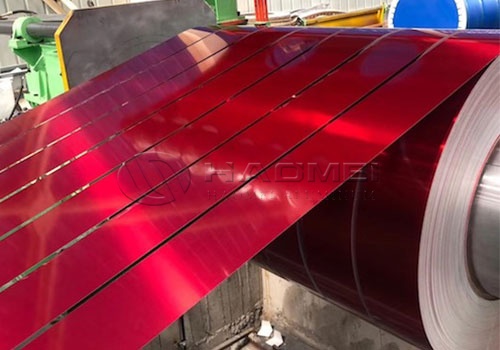
The coating build normally includes a conversion layer, primer, topcoat, and optional back coat. Pretreatment is essential because aluminium naturally forms an oxide layer. A controlled pretreatment improves adhesion and helps resist under-film corrosion. The reverse side may receive a service coating, protective lacquer, or adhesive-compatible finish depending on the final use.
Standards and Quality Conditions
Material requirements can be aligned with EN 573-3 for aluminium alloy chemical composition, EN 485 for wrought aluminium sheet and strip mechanical properties and tolerances, and EN 1396 for continuously organic-coated aluminium coil and sheet used in building applications. ASTM B209 may be referenced for aluminium and aluminium-alloy sheet and plate requirements in markets using ASTM specifications.
For coated performance, EN 13523 test methods are commonly used to assess gloss, color difference, coating thickness, pencil hardness, flexibility, impact resistance, adhesion, solvent resistance, and corrosion behavior. Customers can request inspection data such as film thickness readings, color measurements in Delta E, T-bend results, cupping performance, and salt-spray test records.
Selecting the Right Strip for the Finished Product
The most reliable purchasing approach begins with the final fabrication route. A sharply folded flashing profile needs a flexible coating and suitable temper. A flat decorative panel needs visual uniformity over large areas. A narrow strip for automated wrapping needs stable coil tension, accurate width, smooth edges, and dependable unwind behavior.
Specify the RAL code, gloss range, alloy, temper, thickness, width tolerance, coating system, coating thickness, protective film requirement, and intended environment. This transforms a color request into a functional material specification. RAL colors aluminium strip then becomes more than a painted coil: it becomes a durable, process-ready surface designed to retain its appearance from the production line to the finished installation.