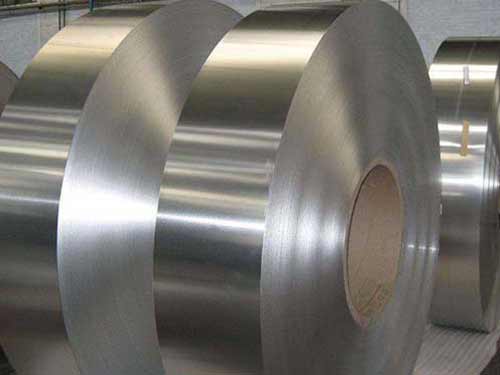
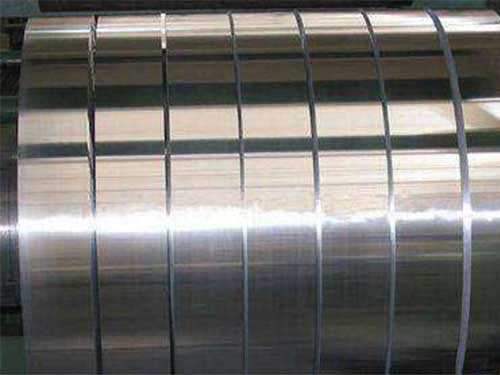
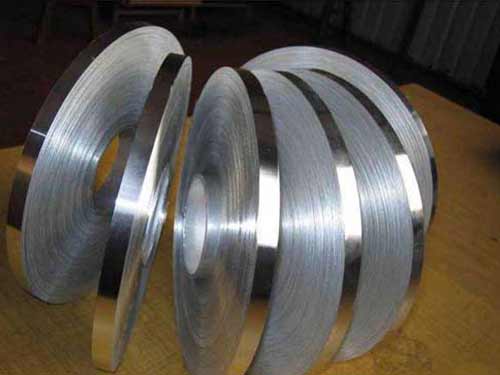
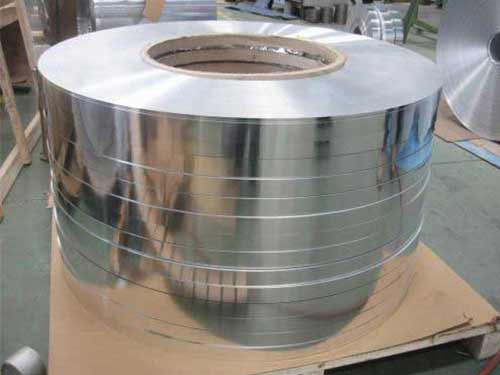
H24 0.1mm 1050 1060 Aluminum Strip for Furniture Application
Furniture materials are often judged by the surfaces people touch first: a cabinet edge, a drawer trim, a lamp-frame detail, or the narrow metallic line around a glass door. H24 0.1mm 1050 and 1060 aluminum strip is designed for precisely these light, visual, and formable applications. Rather than acting as a heavy structural member, this ultra-thin strip works as a functional skin that improves edge protection, appearance, reflectivity, and fabrication efficiency.
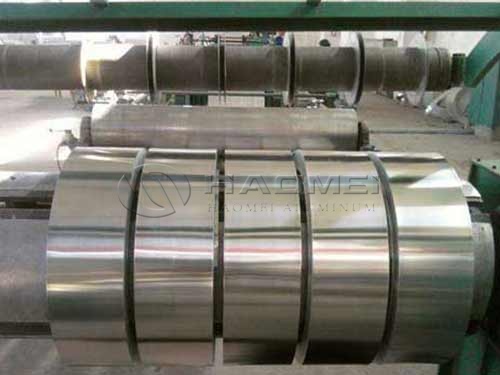
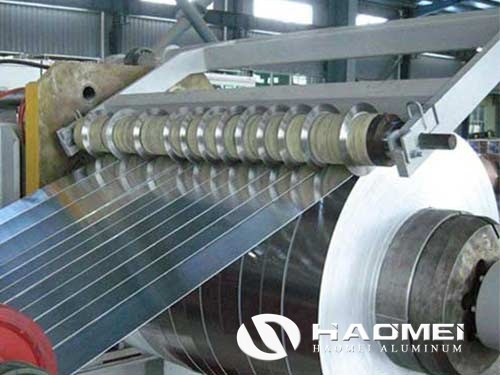
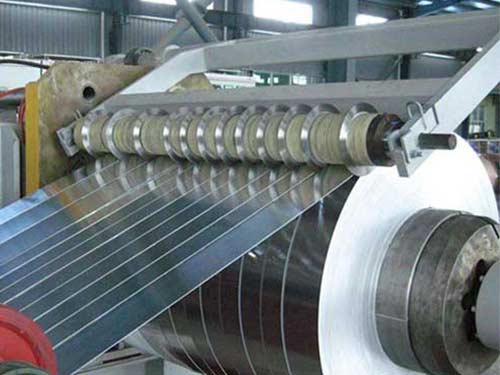
At only 0.1mm thick, the material behaves differently from conventional aluminum sheet. It can be slit into narrow widths, wound into compact coils, stamped with controlled force, laminated to wood-based boards, or folded around profiles without adding noticeable bulk. This makes it particularly suitable for modern furniture manufacturing, where clean lines and low material weight matter as much as durability.
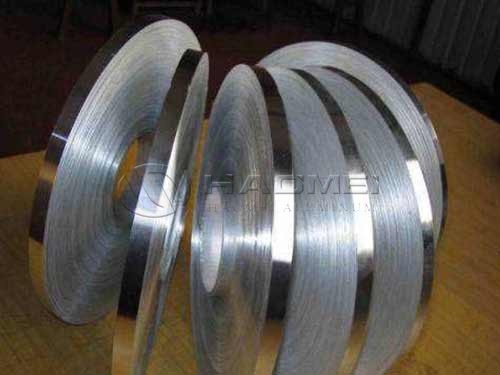
Why H24 Temper Fits Furniture Processing
H24 identifies a strain-hardened and partially annealed temper. In practical furniture production, this condition provides a useful balance: it is firmer than fully soft O-temper material but remains sufficiently workable for bending, roll forming, embossing, and shallow stamping.
For decorative edge banding and narrow trim, H24 temper helps the strip keep a straight profile after slitting and forming. For stamped furniture accessories, such as corner covers, label plates, drawer accents, and lamp components, it offers better resistance to handling deformation than softer material. The partial annealing stage also reduces the risk of uncontrolled cracking during normal bending operations.
The 0.1mm gauge should be understood as a precision-facing material. Small thickness variation can affect coil feeding, adhesive lamination, stamping depth, and the final visual consistency of a furniture surface. Buyers should therefore define thickness tolerance, width tolerance, burr direction, coil ID, and surface requirements before production.
1050 and 1060: Similar Appearance, Different Purity Levels
Both 1050 and 1060 belong to the commercially pure aluminum family. Their high aluminum content provides excellent corrosion resistance, thermal conductivity, electrical conductivity, and natural brightness. For indoor furniture, these properties support long-term visual performance in wardrobes, office desks, kitchen cabinets, retail displays, and decorative partitions.
1050 aluminum contains at least 99.50% aluminum, while 1060 contains at least 99.60%. The difference may appear small, yet it can influence conductivity, softness, surface behavior, and material selection for sensitive finishing processes. In most furniture trims, either alloy can perform well. The final choice often depends on required surface quality, forming route, coating system, and purchasing specification.
For projects requiring stable decorative performance and reliable slit-edge quality, 1050 / 1060 Aluminum Strip provides an appropriate material category for furniture-facing applications. Where design teams need to compare broader composition and strength options, Alloy Aluminum Strip can support selection across several alloy families.
Typical Product Parameters
| Parameter | Typical Range or Condition |
|---|---|
| Alloy | AA 1050, AA 1060 |
| Temper | H24, strain hardened and partially annealed |
| Nominal thickness | 0.10mm |
| Common thickness tolerance | Subject to agreed standard and order specification |
| Width | Narrow slit widths or custom widths, commonly 10mm to 1,250mm before slitting |
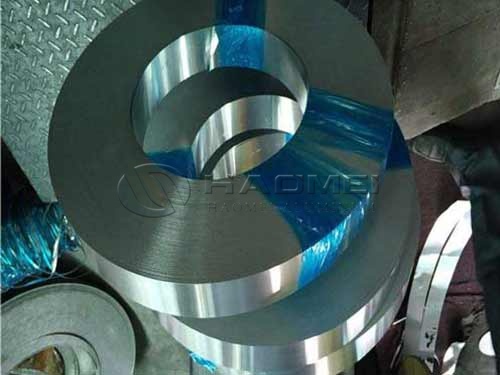
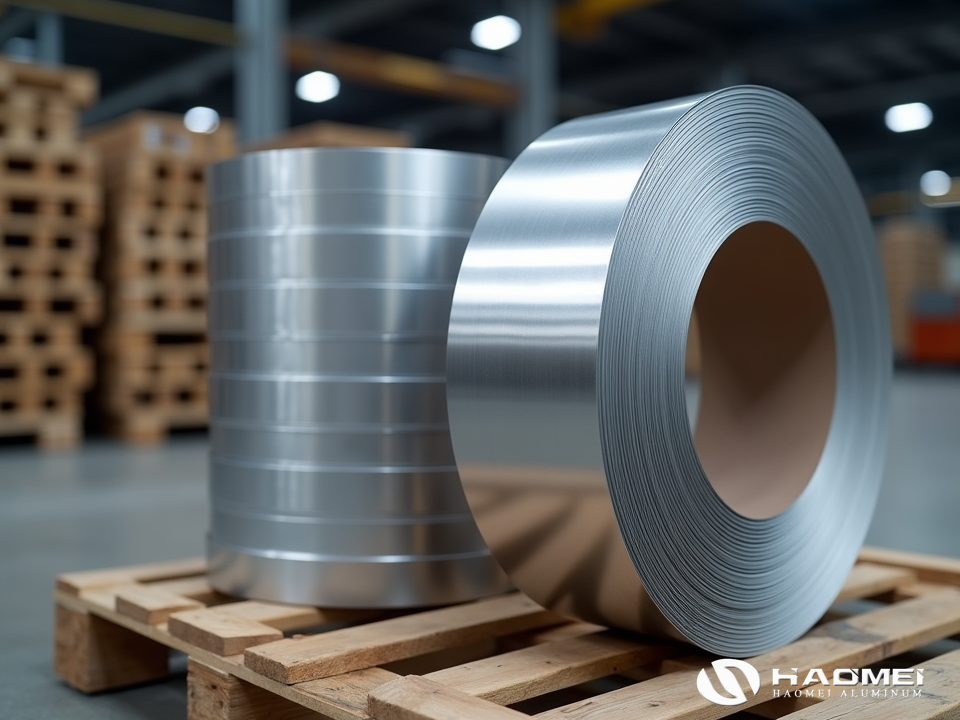
| Coil form | Coil, slit coil, traverse-wound coil where required |
| Coil ID | Commonly 150mm, 300mm, 400mm, or customized |
| Surface | Mill finish, bright finish, brushed, embossed, coated, laminated, or color-coated |
| Edge condition | Mill edge, slit edge, deburred edge, rounded edge on request |
| Main uses | Edge banding, decorative strips, cabinet trim, drawer parts, furniture panels, lamp furniture details |
For thin-gauge furniture strip, width accuracy is often as important as thickness. A strip used in automated edge-wrapping equipment must track consistently. Excessive camber, telescoping, loose winding, oil residue, or sharp burrs can interrupt feeding and create visible defects after lamination.
Chemical Properties of 1050 and 1060 Aluminum Strip
The following values represent common composition limits for standard 1050 and 1060 aluminum alloys. Actual mill certificates should be used for contractual confirmation.
| Element | 1050 Aluminum, % | 1060 Aluminum, % |
|---|---|---|
| Aluminum, Al | 99.50 min | 99.60 min |
| Silicon, Si | 0.25 max | 0.25 max |
| Iron, Fe | 0.40 max | 0.35 max |
| Copper, Cu | 0.05 max | 0.05 max |
| Manganese, Mn | 0.05 max | 0.03 max |
| Magnesium, Mg | 0.05 max | 0.03 max |
| Zinc, Zn | 0.05 max | 0.05 max |
| Titanium, Ti | 0.03 max | 0.03 max |
| Other elements, each | 0.03 max | 0.03 max |
| Other elements, total | 0.10 max | 0.10 max |
High aluminum purity gives these strips a naturally protective oxide film. For indoor furniture, this helps resist ordinary moisture exposure and reduces the risk of surface staining. Where the strip will contact cleaning agents, humid kitchen environments, or adhesive chemicals, coating compatibility should be tested with the finished assembly rather than the bare metal alone.
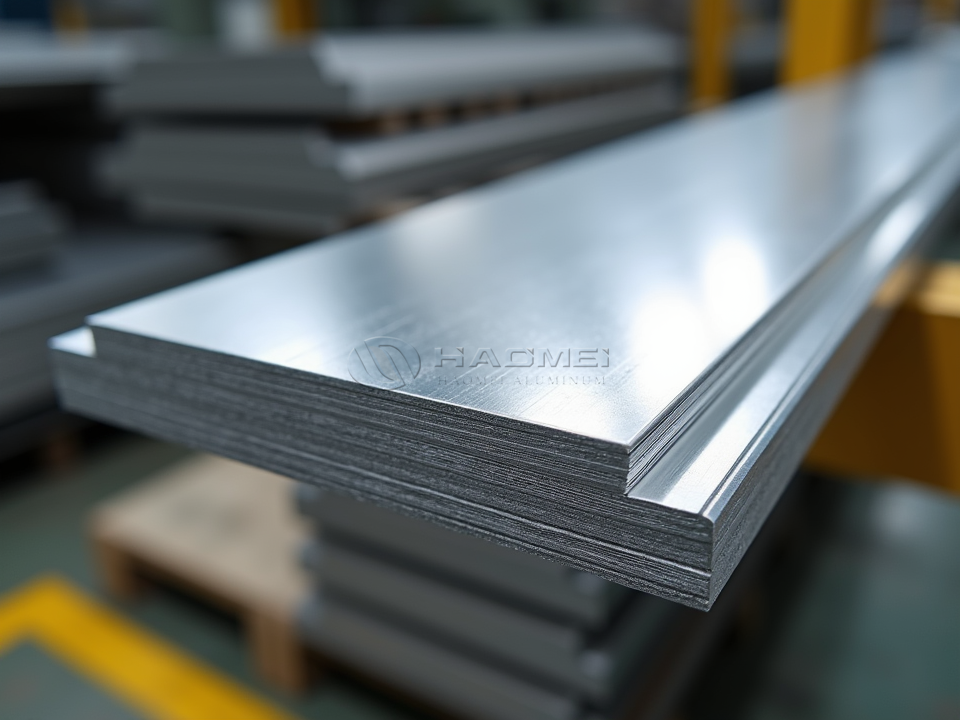
Mechanical Performance and Forming Behavior
Mechanical values for H24 material vary with alloy, thickness, production route, and applicable standard. For 0.1mm 1050 or 1060 H24 aluminum strip, tensile strength is commonly controlled within a range suitable for light forming and decorative fabrication, often around 75-105 MPa. Elongation is lower than in O-temper material, but the strip remains appropriate for moderate bends, roll forming, shallow embossing, and controlled stamping.
Furniture plants should avoid treating 0.1mm H24 strip as a deep-drawing grade. Tight-radius folds, sharp tooling, and repeated reverse bending can create cracking, especially when the bend line runs across a work-hardened direction. Larger bend radii, polished tooling, steady lubrication where permissible, and correct burr orientation improve forming reliability.
The strip can be processed through several routes:
- Adhesive bonding to MDF, plywood, particleboard, PVC profiles, and composite panels
- Roll forming into decorative channels, narrow U-profiles, and edge caps
- Stamping for ornaments, nameplates, protective covers, and hardware details
- Embossing for texture, anti-slip feel, or visual depth
- Anodizing, painting, film lamination, and brush finishing for color and surface styling
Standards and Quality Conditions
H24 0.1mm 1050 and 1060 aluminum strip can be supplied in accordance with commonly requested international standards, depending on destination market and customer requirements. ASTM B209 is frequently used for aluminum and aluminum-alloy sheet and plate products, including strip supplied from rolled material. EN 485-2 covers mechanical properties for aluminum and aluminum alloy sheet, strip, and plate, while EN 573-3 is commonly referenced for chemical composition. GB/T 3880 may also be specified for aluminum and aluminum alloy sheets and strips.
A purchase specification for furniture strip should state the alloy, temper, thickness, width, allowable thickness deviation, surface type, coil weight, coil ID, edge condition, and packaging method. For exposed decorative parts, additional inspection terms may include oil-free surface, absence of roll marks, color consistency, flatness, camber limits, and protection film requirements.
Furniture Applications That Benefit Most
This material performs especially well where furniture needs metallic character without the weight or fabrication difficulty of thicker metal. Cabinet edge banding uses the strip to protect vulnerable board edges while creating a refined silver, brushed, black, champagne, or coated finish. Sliding-door trims benefit from its low mass and corrosion resistance. Drawer fronts, shelf borders, mirror frames, display counters, and office furniture panels gain a crisp visual boundary from thin aluminum detailing.
It also serves furniture lighting systems. Thin 1050 or 1060 strip can act as a reflective layer behind LED elements or as a decorative face in lamp-integrated cabinets and retail fixtures. Its thermal conductivity can assist heat distribution when used within an engineered lighting assembly, although it should not replace a dedicated heat sink where high-power LEDs are involved.
H24 0.1mm 1050 1060 aluminum strip is therefore more than a narrow metal coil. It is a finishing material that connects surface design with industrial repeatability, allowing furniture makers to create lighter, cleaner, and more durable decorative components at scale.