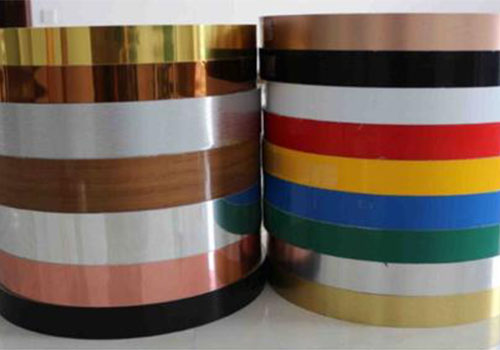
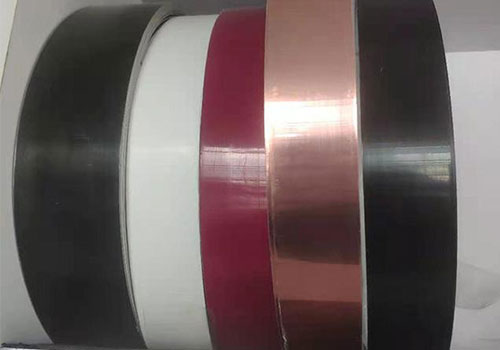
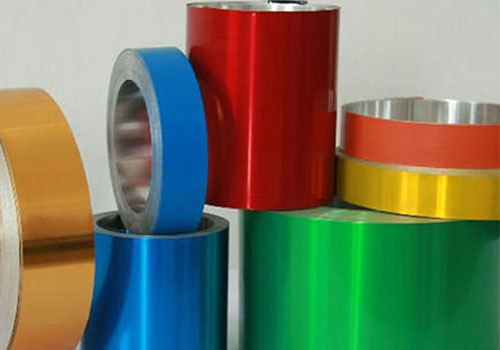
Color Prepainted Aluminum Strip Coil
Color prepainted aluminum strip coil is best understood as a material that arrives with its final skin already engineered. Instead of treating painting as a late-stage decoration, this product moves color, corrosion resistance, surface texture, and forming performance into the coil itself. For manufacturers, that means fewer finishing steps, cleaner workshops, faster assembly, and more consistent visual quality from batch to batch.
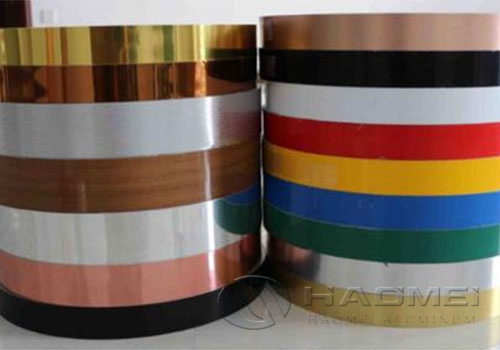
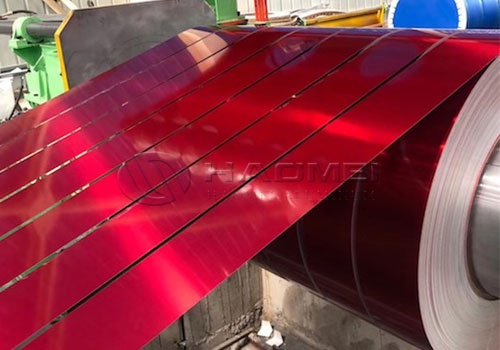
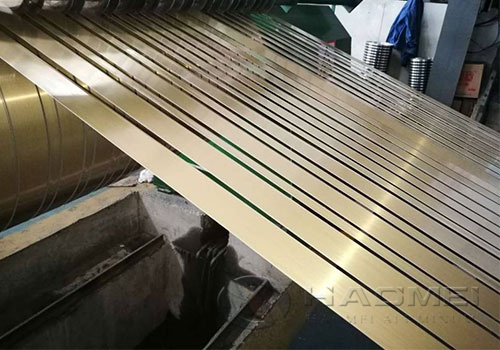
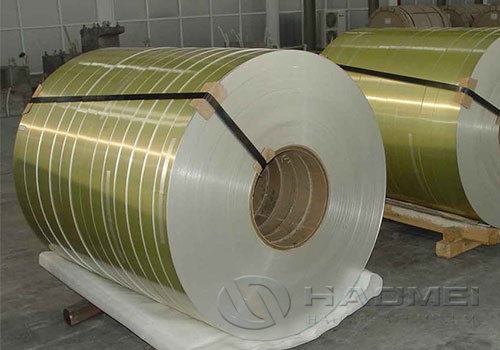
The strip starts as aluminum alloy coil, then passes through cleaning, chemical conversion, primer coating, color coating, baking, cooling, and recoiling. The result is a narrow or slit-width aluminum strip with a controlled paint film on one or both sides. It can be stamped, roll formed, bent, punched, laminated, or assembled directly into finished components.
What the Material Really Does
The most visible function is color, but the working value goes further. Color prepainted aluminum strip coil acts as a lightweight protective shell. The aluminum base provides low density, ductility, and natural oxide protection, while the coating system adds weather resistance, chemical stability, scratch control, and brand identity.
In a building product, it protects edges, channels, ceiling strips, blinds, gutters, panels, and trim from moisture and sunlight. In appliances, it offers a smooth decorative surface that can withstand cleaning agents and daily handling. In packaging or closures, it gives metal parts a repeatable appearance while supporting high-speed forming.
Compared with post-painted components, prepainted strip reduces paint waste and helps avoid color differences between small batches. The coil coating line applies film under controlled speed, temperature, viscosity, and curing conditions, so gloss, thickness, adhesion, and color tolerance remain more stable than workshop spraying.
For projects requiring a ready-to-process painted surface, Color Coated Aluminum Strip is often selected when appearance and medium outdoor durability must be balanced with cost.
Typical Product Parameters
| Item | Common Range or Option |
|---|---|
| Base alloy | 1050, 1060, 1100, 3003, 3004, 3105, 5052 |
| Temper | O, H12, H14, H16, H18, H22, H24, H26, H32, H34 |
| Thickness | 0.12 mm-3.00 mm, depending on alloy and use |
| Width | 10 mm-1600 mm, slit strip available |
| Coil ID | 300 mm, 405 mm, 505 mm, 508 mm |
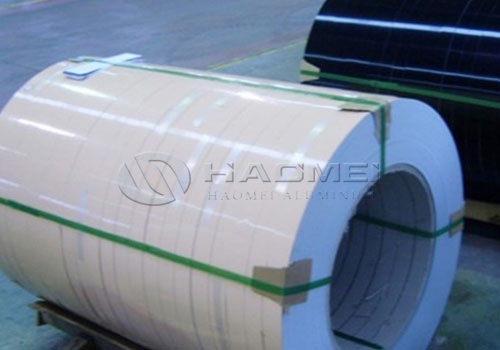
| Coil weight | Customized, often 0.5-3.0 tons per coil |
| Paint type | PE, HDPE, SMP, FEVE, PVDF, epoxy backing paint |
| Top coating thickness | 12-30 microns for PE, 20-35 microns for PVDF systems |
| Back coating thickness | 5-15 microns, or as specified |
| Gloss | Matte, low gloss, satin, high gloss |
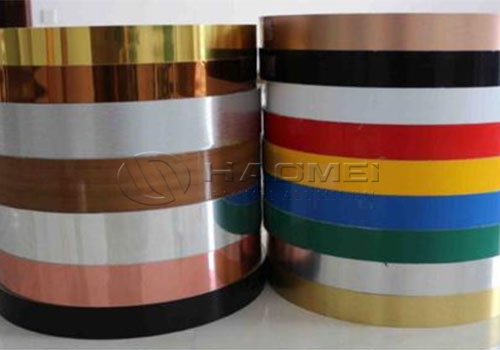
| Color system | RAL, Pantone, custom color matching |
| Surface finish | Smooth, embossed, brushed effect, wood grain, stone effect |
These ranges are adjustable because the correct specification depends on the forming radius, exposure environment, expected service life, and final part geometry.
Alloy and Temper Selection as a Design Choice
Alloy selection is not only a purchasing item; it decides how the strip behaves under tools. Pure aluminum grades such as 1050, 1060, and 1100 are soft, highly formable, and suitable for decorative strips, lighting parts, labels, caps, and flexible trim. They are easy to bend and have excellent corrosion resistance in mild environments.
3003 is a manganese alloy with better strength while keeping good workability. It is widely used for roofing accessories, ceiling systems, venetian blind strips, sign materials, and heat-exchange parts. 3004 and 3105 offer improved strength and are common in construction trims, gutter systems, shutter strips, and coated building components.
5052 contains magnesium, giving higher strength and improved resistance to marine or industrial atmospheres. It is often chosen where the strip must survive both forming stress and a tougher environment.
Temper is equally important. O temper is soft and best for deep forming. H14 and H24 provide a half-hard condition for bending and roll forming. H18 and H28 are harder and flatter, suited for straight trim, panels, or parts requiring stiffness. H32 and H34 are frequently used with 5052 where strength and controlled formability must meet.
Chemical Composition Reference
The table shows typical composition limits for common aluminum alloys used in prepainted strip coil. Final supply should follow the confirmed standard and mill certificate.
| Alloy | Si | Fe | Cu | Mn | Mg | Cr | Zn | Ti | Al |
|---|---|---|---|---|---|---|---|---|---|
| 1050 | 0.25 max | 0.40 max | 0.05 max | 0.05 max | 0.05 max | - | 0.05 max | 0.03 max | 99.50 min |
| 1060 | 0.25 max | 0.35 max | 0.05 max | 0.03 max | 0.03 max | - | 0.05 max | 0.03 max | 99.60 min |
| 1100 | Si+Fe 0.95 max | - | 0.05-0.20 | 0.05 max | - | - | 0.10 max | - | 99.00 min |
| 3003 | 0.60 max | 0.70 max | 0.05-0.20 | 1.00-1.50 | - | - | 0.10 max | - | Remainder |
| 3004 | 0.30 max | 0.70 max | 0.25 max | 1.00-1.50 | 0.80-1.30 | - | 0.25 max | - | Remainder |
| 3105 | 0.60 max | 0.70 max | 0.30 max | 0.30-0.80 | 0.20-0.80 | 0.20 max | 0.40 max | 0.10 max | Remainder |
| 5052 | 0.25 max | 0.40 max | 0.10 max | 0.10 max | 2.20-2.80 | 0.15-0.35 | 0.10 max | - | Remainder |
Coating Systems and Their Practical Meaning
PE coating is economical and flexible. It is suitable for indoor ceilings, appliance parts, signage, furniture trim, and decorative strips. It offers good color variety and processing performance.
HDPE and SMP coatings improve hardness, chalking resistance, and outdoor performance. They are useful for building accessories that need better durability than standard PE without reaching the cost level of premium systems.
PVDF coating is chosen for stronger sunlight, coastal air, industrial pollution, and long-term exterior use. It resists fading, chalking, and chemical attack better than ordinary polyester systems. For demanding outdoor architecture, PVDF Coated Aluminum Strip offers a stronger coating option for projects that need long service life and stable color.
Primer and conversion treatment also matter. A well-prepared substrate helps paint bond tightly to aluminum. Poor pretreatment can cause peeling during bending, even when the top paint looks acceptable at first inspection.
Standards and Test Conditions
Color prepainted aluminum strip coil can be supplied according to ASTM B209, EN 485, EN 573, EN 515, JIS H4000, GB/T 3880, and related aluminum strip standards. Coating performance may be tested with reference to AAMA 2603, AAMA 2604, AAMA 2605, ASTM D3359 adhesion, ASTM D2794 impact resistance, ASTM B117 salt spray, ASTM D2247 humidity resistance, ASTM D523 gloss, and ASTM D4214 chalking.
Common inspection items include thickness tolerance, width tolerance, camber, burr condition, color difference, gloss tolerance, coating thickness, pencil hardness, T-bend performance, MEK rubbing, impact resistance, and protective film adhesion when film is applied.
Applications Where Prepainted Strip Saves Work
In construction, it is used for roof edging, gutter coil, downspout strip, window spacer decoration, suspended ceiling strips, honeycomb panel edge material, roller shutter components, sunshade systems, and wall trim. The advantage is fast installation with finished color already present.
In home appliances, it can become refrigerator trim, air-conditioner parts, washing machine decoration, range hood strips, and small appliance shells. The strip offers a clean surface and avoids separate spraying after forming.
In lighting, the aluminum base supports heat dissipation while the coating gives reflectivity, contrast, or decorative style. In signage and display systems, it allows consistent color for channels, frames, nameplates, and retail fixtures. In packaging, caps and closure strips benefit from corrosion resistance, printability, and controlled forming.
Buying Notes for Faster Specification
Before ordering, confirm the alloy, temper, thickness, width, coating type, color code, gloss, coil ID, coil weight, protective film requirement, and final application. For tight bending, request T-bend data and choose a softer temper or a coating with higher flexibility. For outdoor exposure, ask for weathering requirements and expected color retention. For high-speed stamping, check burr direction, strip flatness, lubrication compatibility, and surface hardness.
Color prepainted aluminum strip coil is not simply aluminum with paint. It is a pre-engineered surface material that combines metal strength, forming behavior, chemical protection, and design color in one continuous coil. When alloy, temper, coating, and standards are matched correctly, it helps factories produce cleaner, faster, and more durable finished products.