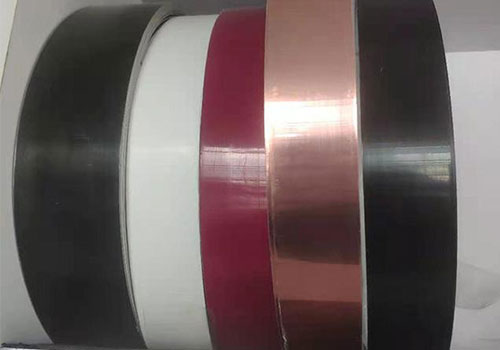
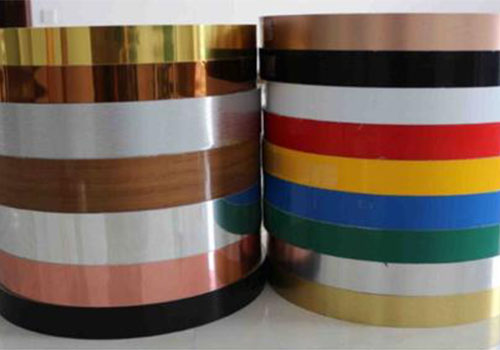
Color PVDF Painted Aluminum Strip
Color PVDF painted aluminum strip looks simple at first glance: a narrow metal coil, a stable color, a clean edge. In real use, it behaves more like a weather record written in metal. Sunlight, salt air, rainwater, bending stress, and installation scratches all test the strip every day. The reason PVDF-coated material is chosen for demanding exterior work is that it keeps its surface calm while the environment keeps changing.
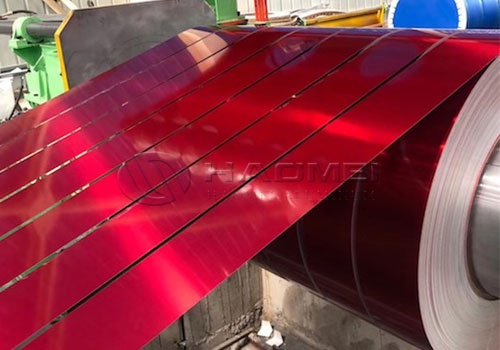
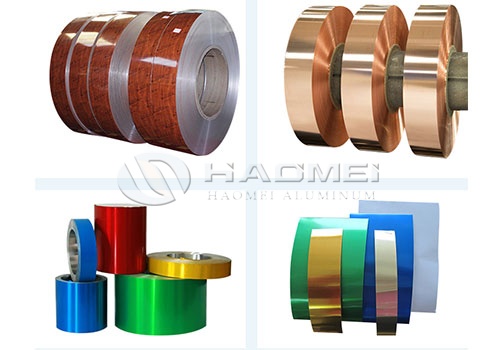
The base is aluminum strip, usually slit from coated coil after continuous pretreatment, primer coating, PVDF top coating, baking, cooling, and precision slitting. The coating is not only color decoration. It is a fluorocarbon protective skin, often based on 70% PVDF resin, designed to resist ultraviolet degradation, chalking, corrosion, and color drift. Compared with ordinary polyester finishes, PVDF Coated Aluminum Strip is better suited for roofing edges, rain gutters, facade trimming, ceiling systems, advertising profiles, shutters, blinds, and other parts exposed to long-term outdoor weather.
What Makes PVDF Paint Different
PVDF means polyvinylidene fluoride. Its carbon-fluorine bond is extremely stable, which gives the coating excellent resistance to UV light, acid rain, airborne pollution, and salt fog. When applied correctly, the coating does not rely on thickness alone. Performance comes from the full system: aluminum alloy, conversion film, primer, PVDF color coat, baking temperature, and coil tension during processing.
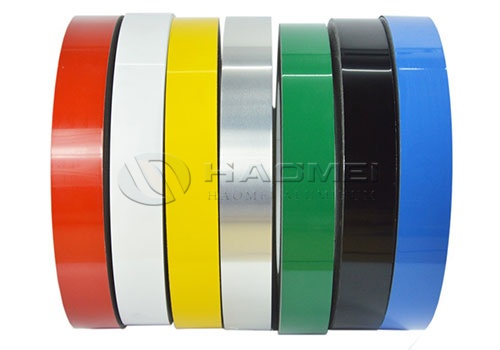
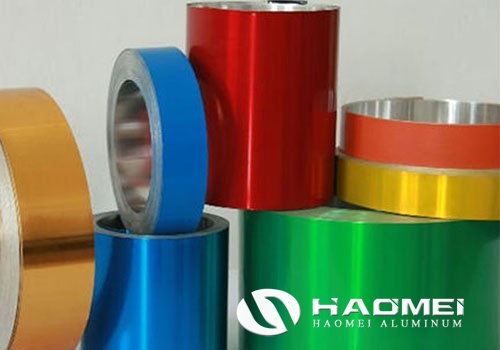
A good color PVDF painted aluminum strip should show smooth gloss, even color, strong adhesion, and clean slit edges without burrs that damage the coating during forming. For projects requiring a broader palette or indoor and outdoor matching, Color Coated Aluminum Strip can also be selected in PE, HDPE, SMP, or PVDF systems according to service life and budget.
Typical Product Parameters
| Item | Common Range or Requirement |
|---|---|
| Base alloy | 1050, 1060, 1100, 3003, 3004, 3105, 5005, 5052 |
| Temper | O, H12, H14, H16, H18, H22, H24, H26 |
| Thickness | 0.20 mm to 3.00 mm, custom tolerance available |
| Width | 15 mm to 1600 mm after slitting |
| Coil inner diameter | 405 mm, 505 mm, or customer design |
| Top coating thickness | 20 microns to 35 microns typical for PVDF |
| Back coating thickness | 5 microns to 15 microns, or service coating |
| Gloss | 20% to 80%, matte, satin, or high gloss |
| Color system | RAL, Pantone, custom sample matching |
| Surface | Smooth, embossed, brushed effect, wood grain, stone pattern optional |
| Protective film | Optional, low tack or medium tack |
| Service temperature | About -50°C to 120°C depending on design |
For narrow strips, tolerance control is especially important. A strip used for channel letters, spacer bars, or louver blades may need stable width and flatness more than decorative gloss. A strip for roofing accessories may need better T-bend performance, because cracked coating at the bend becomes the first place for corrosion to begin.
Alloy and Temper Selection
The alloy is the personality of the strip. Pure aluminum grades such as 1050, 1060, and 1100 offer excellent formability and corrosion resistance. They are easy to bend and suitable for decorative trim, lampshade parts, and soft forming work. 3003 and 3105 add manganese for better strength while keeping good workability, making them popular for gutters, roofing accessories, shutters, and ceiling strips. 5052 has magnesium, giving higher strength and better marine atmosphere resistance, but forming radius should be checked carefully.
Temper decides how the strip responds when bent or roll-formed. O temper is soft and forgiving. H14 and H24 are balanced choices for many building applications. H18 is harder and flatter but less tolerant of deep bending. For PVDF painted aluminum strip, the ideal temper is not always the strongest one. It is the temper that bends without micro-cracking the coating while holding the installed shape.
| Application | Suggested Alloy | Suggested Temper | Reason |
|---|---|---|---|
| Gutter and downspout strip | 3003, 3105 | H24, H26 | Good strength and weather resistance |
| Channel letter strip | 1050, 1060, 1100 | O, H12, H14 | Easy hand or machine bending |
| Roofing edge and flashing | 3003, 3004, 3105 | H24 | Balanced rigidity and formability |
| Exterior facade trim | 3003, 5005, 5052 | H24, H26 | Better surface stability and durability |
| Blind and shutter components | 3003, 3105 | H16, H18 | Flatness and spring-back control |
Chemical Composition of Common Base Alloys
Values are typical maximum or range percentages by weight. Aluminum is the balance.
| Alloy | Si | Fe | Cu | Mn | Mg | Zn | Ti | Al |
|---|---|---|---|---|---|---|---|---|
| 1050 | 0.25 | 0.40 | 0.05 | 0.05 | 0.05 | 0.05 | 0.03 | 99.50 min |
| 1060 | 0.25 | 0.35 | 0.05 | 0.03 | 0.03 | 0.05 | 0.03 | 99.60 min |
| 1100 | Si+Fe 0.95 | 0.95 | 0.05-0.20 | 0.05 | - | 0.10 | - | 99.00 min |
| 3003 | 0.60 | 0.70 | 0.05-0.20 | 1.00-1.50 | - | 0.10 | - | Balance |
| 3004 | 0.30 | 0.70 | 0.25 | 1.00-1.50 | 0.80-1.30 | 0.25 | - | Balance |
| 3105 | 0.60 | 0.70 | 0.30 | 0.30-0.80 | 0.20-0.80 | 0.40 | 0.10 | Balance |
| 5052 | 0.25 | 0.40 | 0.10 | 0.10 | 2.20-2.80 | 0.10 | - | Balance |
Coating Chemistry and Surface Performance
| Property | PVDF Painted Aluminum Strip Behavior |
|---|---|
| Resin base | Polyvinylidene fluoride, commonly 70% PVDF in high-grade architectural paint |
| Chemical bond advantage | Strong C-F bond supports UV and chemical resistance |
| Pretreatment | Chrome-free or chromate conversion film improves adhesion and corrosion protection |
| Primer role | Bridges aluminum surface and PVDF top coat, improves flexibility |
| Solvent resistance | Better than PE coating after full baking and curing |
| Salt spray resistance | Often 1000 hours or more, depending on coating system and edge exposure |
| Color retention | Excellent for outdoor use, especially in medium and low gloss finishes |
| Chalking resistance | Strong resistance under UV exposure when pigment quality is matched |
| Formability | T-bend commonly 2T to 3T, depending on alloy, temper, and coating thickness |
Common Implementation Standards
Reliable production usually follows international substrate and coating test methods. Aluminum strip substrate may be produced according to ASTM B209, EN 485, EN 573, or GB/T 3880. Coated aluminum products are often evaluated with EN 1396, EN 13523 series, AAMA 2605 for high-performance exterior fluorocarbon coatings, and related GB/T color-coated aluminum specifications.
Testing may include ASTM D3359 for adhesion, ASTM D3363 for pencil hardness, ASTM D4145 for T-bend, ASTM D2244 for color difference, ASTM D523 for gloss, ASTM B117 for salt spray, and MEK rub testing for curing degree. For architectural use, many buyers also request accelerated weathering, impact resistance, boiling water adhesion, and coating thickness reports.
How Customers Should Read a Specification
A purchasing specification should not only say color and size. It should mention alloy, temper, thickness tolerance, coating type, top and back coating thickness, gloss range, color standard, surface protection, coil weight, inner diameter, packing method, and end use. If the strip will be roll-formed, the bend radius and forming direction should be shared before production. If it will be used near the sea, edge sealing, alloy choice, and salt spray demand should be discussed early.
Color control also deserves attention. PVDF paint can be matched to RAL or a physical sample, but metallic colors, matt colors, and deep reds may show visual difference under different light angles. For repeat orders, it is better to keep the same paint system and agree on Delta E tolerance before mass production.
Packing, Storage, and Handling
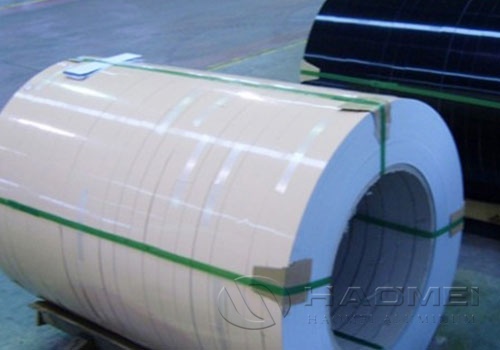
Color PVDF painted aluminum strip is usually packed eye-to-wall or eye-to-sky with moisture-proof paper, plastic film, corner protection, steel or wooden pallets, and export seaworthy packaging. Coils should be stored indoors, away from rain, acid, alkali, cement dust, and direct ground contact. If protective film is applied, it should be removed within the recommended period, especially after outdoor installation, to avoid adhesive residue.
The real value of color PVDF painted aluminum strip is its ability to combine light weight, clean forming, stable color, and long weather resistance in one continuous material. For builders, fabricators, and distributors, it offers a practical way to turn a thin metal ribbon into durable architectural detail.