Painting White Color Thin Aluminum Strip
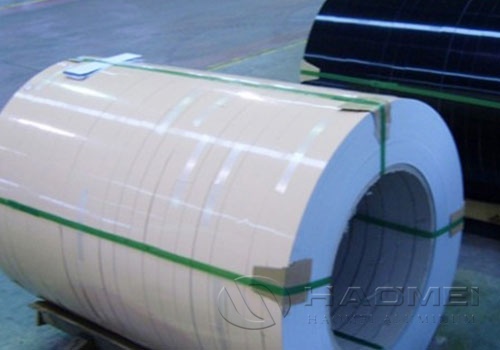
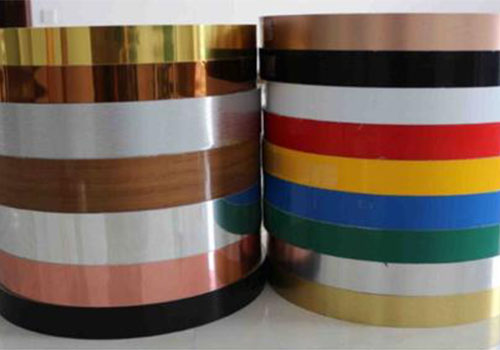
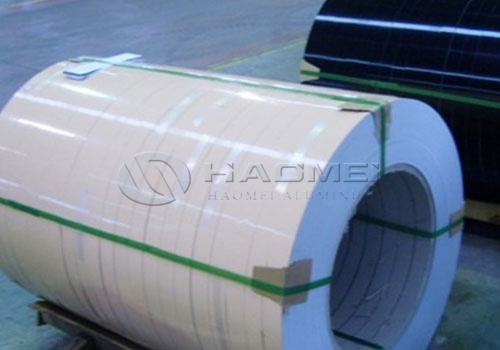
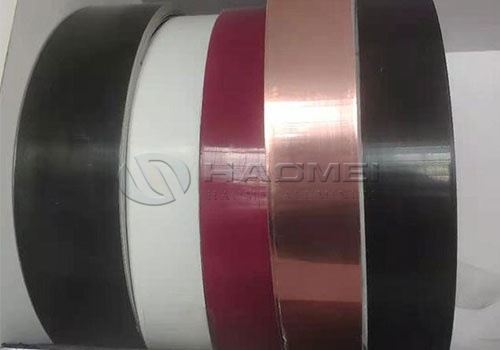
Painting white color thin aluminum strip is a pre-finished aluminum material supplied in narrow coil form with a smooth white coating on one or both sides. It combines the light weight and formability of aluminum with a clean decorative surface, making it suitable for products that require appearance, corrosion resistance, and efficient fabrication.
Unlike post-painted components, the strip is coated before slitting or forming. This helps customers reduce painting steps, improve surface consistency, and control production cost. White finishes such as RAL 9003, RAL 9010, RAL 9016, and warm white tones are widely used because they reflect light well, match modern product designs, and provide a neutral surface for indoor and outdoor applications.
Product Character
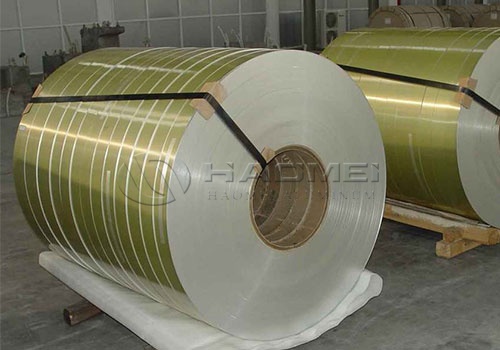
White painted thin aluminum strip is produced from aluminum coil through cleaning, chemical pretreatment, primer coating, finish painting, baking, cooling, and precision slitting. The result is a coil strip with stable thickness, tight width tolerance, strong paint adhesion, and a flat, attractive white surface.
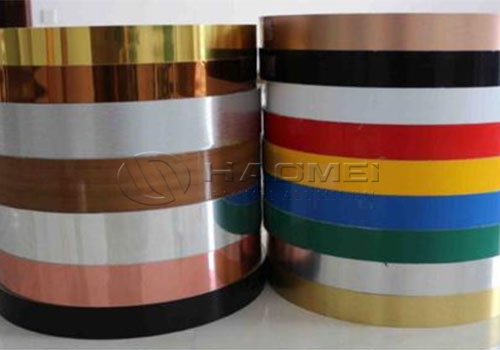
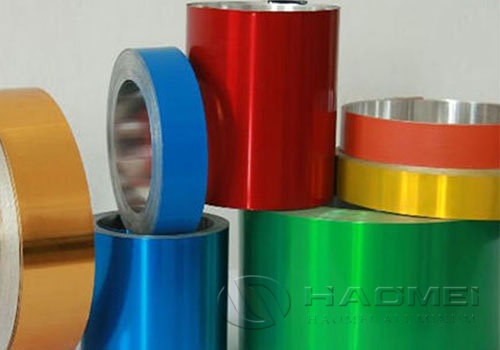
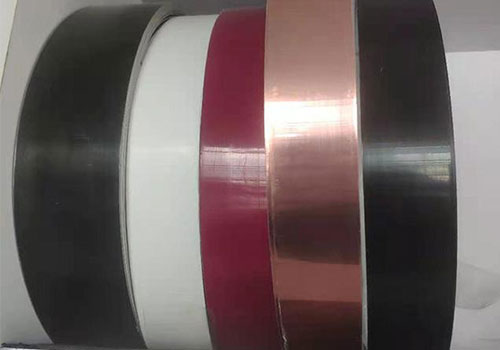
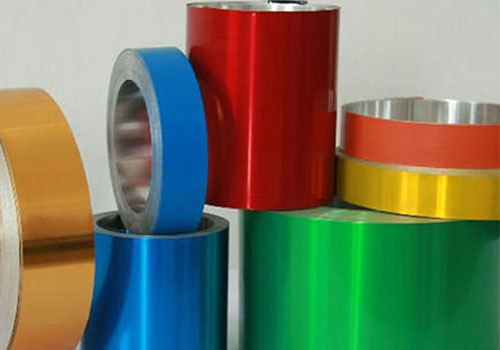
It can be supplied as Color Coated Aluminum Strip for decorative use or as more specialized grades for higher weather resistance. The coating system is selected according to forming demand, exposure environment, surface gloss, and service life.
| Item | Typical Description |
|---|---|
| Base metal | 1000, 3000, or 5000 series aluminum alloy |
| Surface color | White, pure white, warm white, ivory white, custom RAL color |
| Coating options | PE, HDPE, PVDF, epoxy, polyester modified coating |
| Supply form | Narrow strip coil, slit coil, pancake coil, traverse wound coil |
| Surface style | Smooth, matte, semi-gloss, high gloss, embossed optional |
| Coating side | Single-side or double-side painting |
| Processing suitability | Bending, stamping, roll forming, punching, lamination |
Chemical Composition of Common Base Alloys
The aluminum alloy determines strength, corrosion behavior, forming response, and cost. For thin white painted strip, 1050 and 1060 offer excellent softness and conductivity, 1100 provides balanced workability, 3003 improves strength, while 5052 gives better corrosion resistance for demanding environments.
| Alloy | Si | Fe | Cu | Mn | Mg | Zn | Al |
|---|---|---|---|---|---|---|---|
| 1050 | 0.25 max | 0.40 max | 0.05 max | 0.05 max | 0.05 max | 0.05 max | 99.50 min |
| 1060 | 0.25 max | 0.35 max | 0.05 max | 0.03 max | 0.03 max | 0.05 max | 99.60 min |
| 1100 | Si+Fe 0.95 max | Included | 0.05-0.20 | 0.05 max | - | 0.10 max | 99.00 min |
| 3003 | 0.60 max | 0.70 max | 0.05-0.20 | 1.00-1.50 | - | 0.10 max | Balance |
| 5052 | 0.25 max | 0.40 max | 0.10 max | 0.10 max | 2.20-2.80 | 0.10 max | Balance |
Technical Specifications
Thin aluminum strip must run smoothly through customer equipment. For this reason, coil shape, burr control, paint hardness, surface cleanliness, and winding tension are just as important as alloy and thickness.
| Parameter | Common Range | Notes |
|---|---|---|
| Thickness | 0.10-1.50 mm | Tighter tolerance available by request |
| Width | 10-600 mm | Narrow slitting for small profiles and trim parts |
| Coil inner diameter | 150 mm, 300 mm, 405 mm, 505 mm | Matched to decoiler system |
| Coil weight | 50-2000 kg | Depends on width, thickness, and packing method |
| Paint thickness, PE | 15-25 microns | Economical indoor and general outdoor use |
| Paint thickness, PVDF | 25-35 microns | Higher UV and weather resistance |
| Primer thickness | 5-8 microns | Supports adhesion and corrosion protection |
| Gloss | 10-90 GU | Matte, satin, and glossy finishes |
| Color tolerance | Delta E typically within 1.5 | Controlled by sample or RAL standard |
| Width tolerance | +/-0.05 to +/-0.30 mm | According to strip width and application |
Mechanical Properties
Mechanical properties vary with alloy, temper, thickness, and coating system. Softer tempers are preferred for deep bending and edge folding, while harder tempers support flatness and dimensional stability.
| Alloy and Temper | Tensile Strength MPa | Yield Strength MPa | Elongation % | Typical Use |
|---|---|---|---|---|
| 1060-O | 60-95 | 20-40 | 20-35 | Soft forming, insulation wrap, flexible trim |
| 1060-H24 | 105-145 | 75-115 | 4-12 | Light roll forming, decorative strip |
| 1100-H14 | 95-125 | 75-105 | 3-10 | Appliance parts, panels, nameplates |
| 3003-H24 | 145-185 | 115-155 | 3-8 | Trim, channels, ceiling systems |
| 5052-H32 | 210-260 | 160-215 | 5-12 | Marine, outdoor, stronger formed parts |
Coating Performance
The white paint layer is more than decoration. It protects the aluminum surface, improves cleanability, and gives the strip a finished appearance immediately after forming. A well-controlled coating line gives uniform color from coil to coil, which is important for long production runs.
| Test Item | Typical Result | Customer Benefit |
|---|---|---|
| Pencil hardness | HB-2H | Resists handling marks and light abrasion |
| T-bend flexibility | 0T-3T depending on coating | Supports bending without paint cracking |
| Cross-cut adhesion | Grade 0 or Grade 1 | Paint remains bonded during forming |
| Salt spray resistance | 500-1500 hours | Better service life in humid environments |
| Boiling water resistance | No blistering after test | Stable adhesion after moisture exposure |
| UV resistance | PE for general use, PVDF for long exposure | Helps white surface stay bright |
| Solvent resistance | Good after full curing | Suitable for cleaning and assembly lines |
For harsh sunlight, coastal air, or long outdoor service, PVDF Coated Aluminum Strip is often selected because it offers stronger resistance to chalking, fading, and coating degradation.
Why White Paint Is Popular
White is practical as well as attractive. It reflects heat and light, making it useful in lighting fixtures, air-conditioning parts, ceiling systems, and insulated assemblies. It also gives product designers a clean visual base that works with many colors and materials.
| White Finish Advantage | Practical Value |
|---|---|
| High reflectivity | Improves brightness in lighting and display components |
| Neutral appearance | Matches appliances, interiors, signs, and architectural details |
| Clean surface | Easy to wipe and maintain |
| Heat reflection | Helps reduce surface heat absorption compared with dark colors |
| Print compatibility | Suitable for logos, labels, protective films, and secondary marking |
Common Applications
Painting white color thin aluminum strip is used wherever a narrow, clean, corrosion-resistant, and easy-forming metal strip is required. Because it arrives pre-painted, fabricators can stamp, roll form, cut, and assemble directly.
| Application Field | Example Products | Recommended Alloy or Coating |
|---|---|---|
| Appliance manufacturing | Refrigerator trim, washing machine parts, air-conditioner covers | 1100, 3003, PE coating |
| Lighting industry | LED strip housings, reflector edges, lamp frames | 1060, 1100, high-gloss white |
| Building decoration | Ceiling strips, edge trim, blinds, decorative channels | 3003, PE or PVDF coating |
| Signage and display | Sign borders, advertising frames, display rails | 1100, 3003, matte or gloss white |
| Packaging and closure | Cosmetic caps, bottle closures, decorative bands | 8011, 1060, food-safe coating if required |
| Electrical and insulation | Cable wrap, transformer insulation parts, shielding strips | 1060, 1050, customized back coating |
| Transportation | Interior trim, lightweight panels, caravan accessories | 3003, 5052, durable coating |
Processing and Fabrication Notes
White painted aluminum strip should be handled with clean gloves and protected from metal chips during slitting, stamping, or bending. For visible surfaces, customers often request protective film to prevent scratches during fabrication and installation.
| Processing Step | Recommendation |
|---|---|
| Slitting | Use sharp circular knives and proper clearance to reduce burrs |
| Bending | Confirm minimum bend radius based on coating flexibility |
| Stamping | Keep dies clean to avoid paint pickup and surface dents |
| Roll forming | Control roller pressure to prevent coating abrasion |
| Storage | Keep coils dry, ventilated, and away from chemical vapor |
| Packing | Use moisture-proof paper, plastic film, edge guards, and wooden pallets |
Selecting the Right Grade
The best specification depends on the final product. If the strip will be used indoors with moderate bending, PE-coated 1100 or 3003 is often cost-effective. If stronger forming is required, a softer temper such as O or H14 may be preferred. If the strip will face sun, rain, or coastal humidity, PVDF or high-durability polyester is the safer choice.
| Requirement | Suggested Choice |
|---|---|
| Lowest weight with soft forming | 1060-O or 1100-O |
| Better strength and shape retention | 3003-H24 |
| Outdoor weathering | PVDF white coating |
| High brightness | Gloss white PE or PVDF finish |
| Scratch control during installation | Protective film plus harder coating |
| Cost-sensitive indoor parts | PE-coated 1100 or 3003 strip |
Value for Customers
Painting white color thin aluminum strip helps manufacturers shorten production flow, reduce paint shop investment, and improve finished product consistency. The pre-coated surface gives stable color, controlled gloss, and reliable corrosion protection, while the thin aluminum base keeps parts light and easy to form.
For buyers producing trim, lighting parts, signs, appliance components, or decorative profiles, this material offers a strong balance of appearance, process efficiency, and service performance. With the right alloy, temper, coating type, and packing method, white painted thin aluminum strip can move directly from coil to production line and into finished products with minimal secondary finishing.