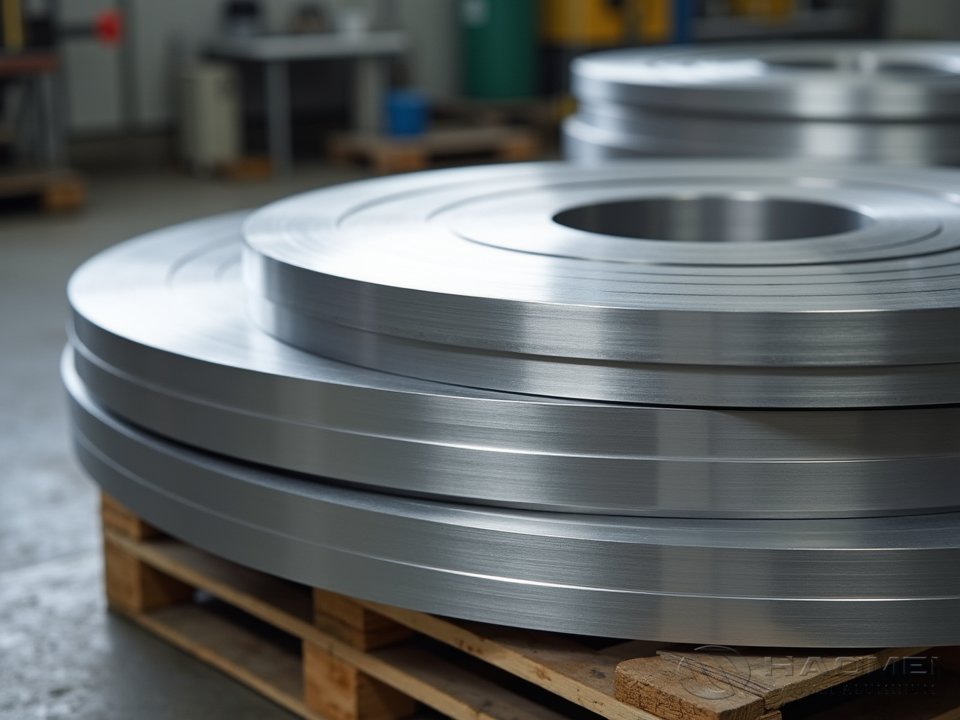
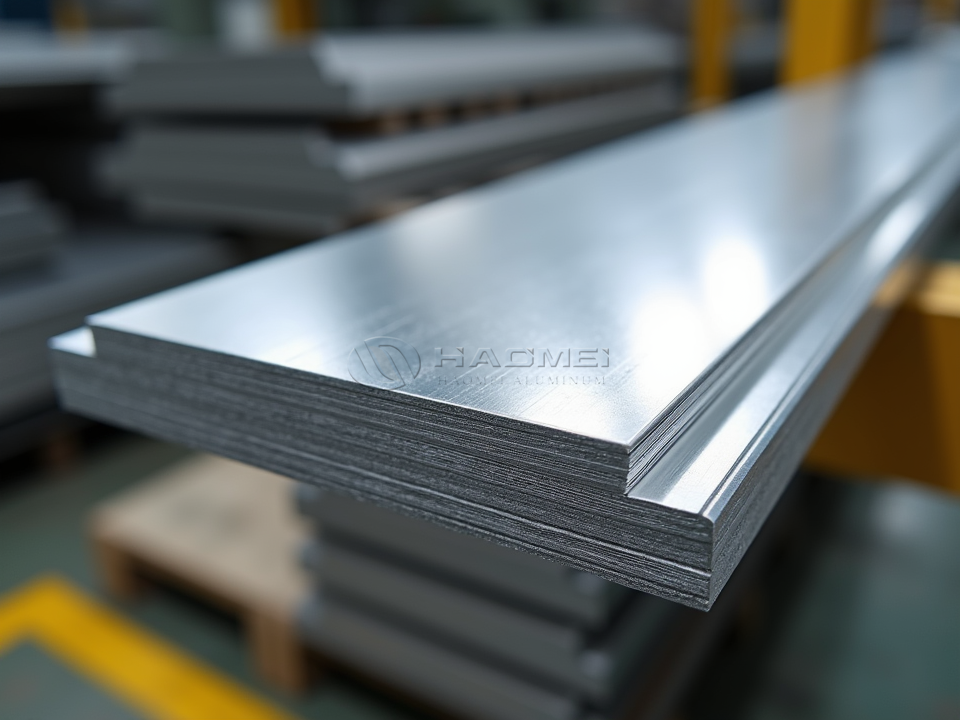
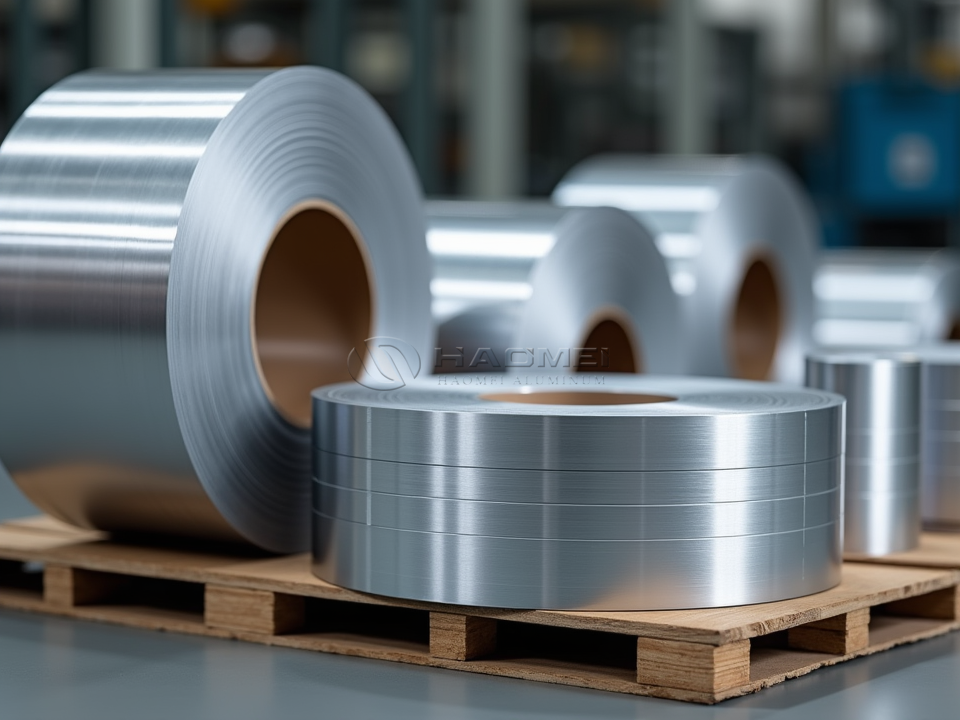
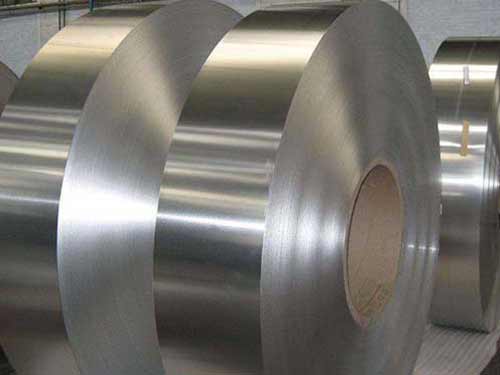
Custom Made High Demand Aluminium Strip
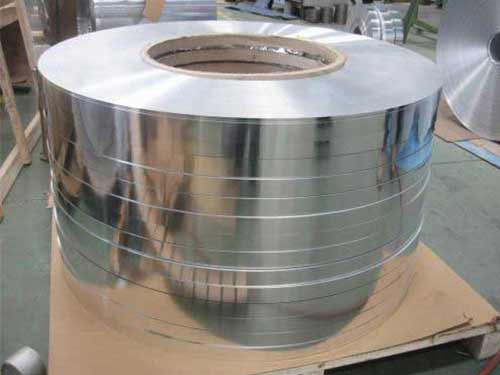
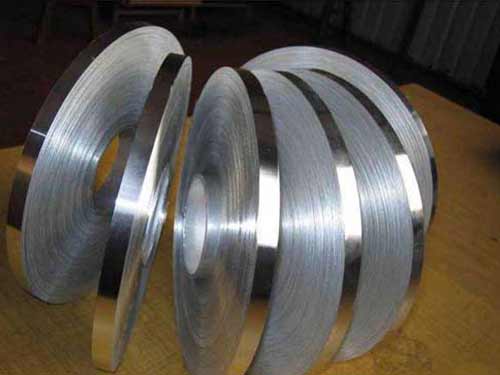
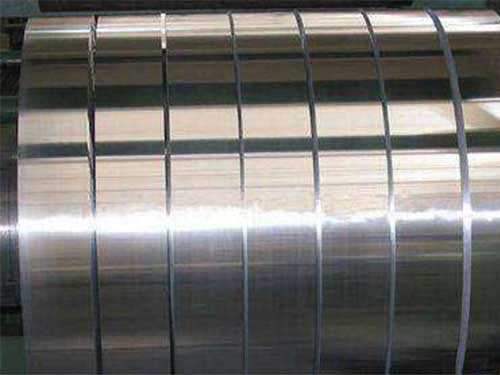
Custom Made High Demand Aluminium Strip is engineered for manufacturers that require dependable coil quality, precise dimensions, and alloy performance matched to a specific process. Produced from rolled aluminium coil and slit to customer requirements, this material supports high-speed stamping, deep drawing, electrical winding, cable shielding, lamp-cap forming, packaging, and general fabrication.
Rather than forcing one standard coil into every application, custom strip production aligns alloy grade, temper, thickness, width, surface condition, edge quality, coil weight, and packaging with the end-use requirement. This reduces downstream trimming, minimizes press interruptions, and improves finished-part consistency.
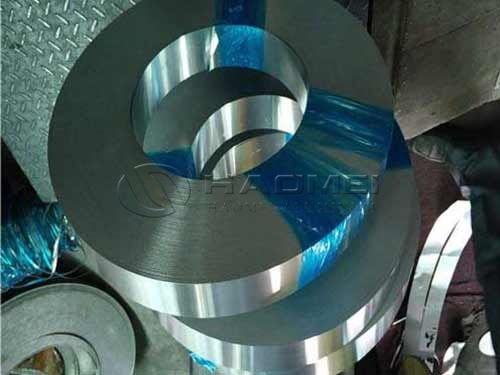
Built for Demanding Production Lines
Aluminium strip offers a valuable balance of low density, corrosion resistance, thermal conductivity, electrical conductivity, and forming capability. Material can be supplied in commercial-purity 1xxx alloys for conductivity and excellent workability, manganese-containing 3xxx alloys for stronger general-purpose performance, magnesium alloys for improved corrosion resistance, or heat-treatable 6xxx grades where structural strength is required.
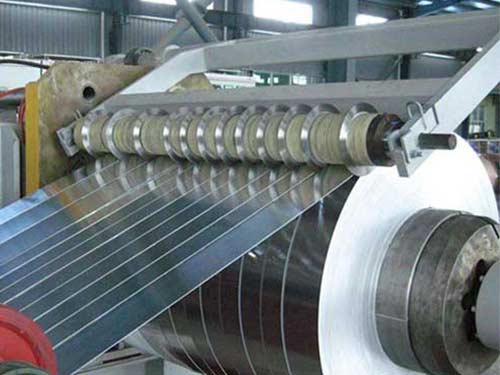
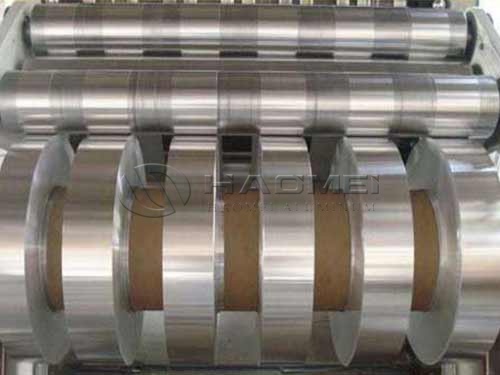
The strip is processed with controlled rolling and precision slitting practices to achieve stable width, smooth winding, low burr edges, and consistent mechanical behavior from the outer wraps to the inner wraps. This is especially important on automated equipment, where irregular camber, telescoping, excessive edge burr, or variable thickness can cause feeding problems and unnecessary scrap.
| Customer Requirement | Custom Production Response | Production Benefit |
|---|---|---|
| Fine electrical winding | High-conductivity alloy, smooth surface, tight thickness control | Stable winding and reduced electrical loss |
| Stamping and pressing | Temper selected for bendability and drawability | Lower cracking risk and cleaner formed parts |
| Deep drawing | Soft annealed temper, clean surface, controlled elongation | Better cup and shell forming performance |
| Cable shielding | Thin-gauge strip with reliable edge condition | Efficient wrapping and consistent coverage |
| Decorative or visible parts | Bright or mill finish with protective interleaving | Improved appearance and fewer handling marks |
| Corrosive environments | Magnesium-bearing alloy selection | Longer service life in humid or outdoor conditions |
Available Alloy Families and Chemistry
Alloy selection should reflect the balance between conductivity, strength, forming behavior, and environmental exposure. Commercial-purity aluminium is often preferred for transformer windings and reflective components. 3003 is widely used for formed components and general industrial strip because manganese improves strength while retaining good workability. Magnesium grades such as 5052 and 5754 are suitable for applications needing stronger corrosion resistance.
For conductivity-focused programs, 1050 / 1060 Aluminum Strip provides a practical material choice with excellent formability and reliable electrical behavior. For formed industrial components, 3003 Aluminum Strip offers a proven combination of strength and processing flexibility.
| Alloy Grade | Principal Alloying Elements, wt.% | Typical Characteristics | Suitable Uses |
|---|---|---|---|
| 1050 | Al 99.50 min. | Excellent conductivity, high ductility | Transformer strip, lighting, chemical equipment |
| 1060 | Al 99.60 min. | Very good conductivity and forming | Electrical parts, cable wrap, drawn products |
| 1100 | Al 99.00 min., Cu 0.05-0.20 | Soft, corrosion resistant, easily formed | Packaging, nameplates, deep drawing |
| 3003 | Mn 1.0-1.5, Cu 0.05-0.20 | Moderate strength, good workability | Stamping, heat-transfer and formed parts |
| 3004 | Mn 1.0-1.5, Mg 0.8-1.3 | Higher strength than 3003 | Can stock, industrial forming |
| 5052 | Mg 2.2-2.8, Cr 0.15-0.35 | Strong corrosion resistance, good fatigue behavior | Marine, transport, enclosures |
| 5754 | Mg 2.6-3.6 | Good weldability and corrosion resistance | Automotive, building, panel applications |
| 6061 | Mg 0.8-1.2, Si 0.4-0.8 | Heat-treatable strength potential | Structural and machined components |
Chemical ranges are representative and may be adjusted to applicable ASTM, EN, JIS, GB, or customer-controlled specifications.
Precision Dimensions and Supply Formats
Each coil can be configured for the customer's press, winding machine, recoiler, or automated feeder. Narrow strip requires careful slitting because edge quality has a direct effect on safety, tool wear, insulation integrity, and dimensional stability. Wider strip can also be supplied for customers that perform secondary slitting in-house.
| Parameter | Custom Supply Range | Typical Control Considerations |
|---|---|---|
| Thickness | 0.10-6.00 mm | Defined by alloy, temper, and application tolerance |
| Width | 10-1,600 mm | Precision slit widths available for narrow coil programs |
| Inner diameter | 150 mm, 300 mm, 400 mm, 500 mm, 508 mm | Matched to customer mandrel or decoiler |
| Coil outer diameter | Up to approximately 2,000 mm | Controlled by handling equipment and transport limits |
| Coil weight | 50-10,000 kg | Available in light, medium, or jumbo coils |
| Edge condition | Mill edge, slit edge, deburred edge | Selected for feeding, winding, or exposed-part needs |
| Surface finish | Mill finish, bright finish, brushed, coated on request | Chosen for appearance, lubrication, or protection |
| Packaging | Eye-to-wall, eye-to-sky, export seaworthy packing | Protects coils during storage and shipment |
Mechanical Performance by Temper
Temper selection has a strong influence on press performance. Soft tempers improve bending and drawing capability, while strain-hardened tempers increase strength for parts that must resist deformation. The most appropriate temper depends on bend radius, forming depth, springback limits, and final service conditions.
| Alloy and Temper | Tensile Strength, MPa | Yield Strength, MPa | Elongation, % | Typical Processing Suitability |
|---|---|---|---|---|
| 1050-O | 60-95 | 20 min. | 25 min. | Deep drawing and electrical winding |
| 1060-H14 | 95-135 | 75 min. | 5-12 | General fabrication and moderate forming |
| 1100-O | 75-110 | 20 min. | 25 min. | Deep drawn shells and reflective parts |
| 3003-H14 | 130-170 | 115 min. | 3-10 | Stamping, bending, general industrial parts |
| 3004-H24 | 220-260 | 180 min. | 4-10 | Higher-strength formed components |
| 5052-H32 | 195-245 | 130 min. | 7-15 | Corrosion-resistant panels and brackets |
| 5754-H22 | 180-240 | 100 min. | 10-18 | Transport and architectural fabrications |
Mechanical values are typical references. Final values depend on thickness, temper, governing standard, and agreed inspection conditions.
Application Value Across Industries
Electrical manufacturers use aluminium strip in transformer windings, busbar components, capacitor parts, and cable shielding because low-density aluminium can reduce component mass while providing practical conductivity. Smooth surfaces and tightly managed edges help protect insulation layers during winding.
Packaging and consumer-goods producers use thin-gauge strip for closures, caps, decorative bands, and formed containers. Soft 1xxx grades and selected 3xxx grades can maintain clean forming behavior, reducing the chance of tearing around radii or drawn corners.
Automotive, HVAC, construction, and appliance sectors benefit from the corrosion resistance and strength of 3xxx and 5xxx alloys. These materials can be stamped into covers, trim, brackets, panels, heat-transfer elements, and protective housings. Aluminium's light weight also supports efficient handling and reduced overall assembly mass.
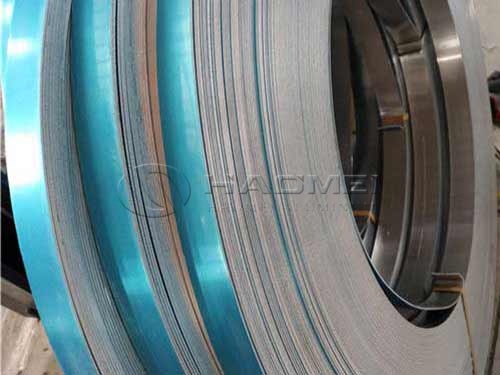
Quality Controls That Protect Your Process
A high-demand strip program depends on more than nominal dimensions. Incoming material inspection, chemistry verification, rolling control, slit-width measurement, thickness checks, visual surface inspection, coil geometry review, and packaging verification work together to support repeatable production.
| Inspection Item | Control Purpose | Customer Impact |
|---|---|---|
| Chemical composition | Confirms alloy compliance | Predictable corrosion, conductivity, and strength |
| Thickness and width | Verifies dimensional accuracy | Better tooling fit and lower scrap |
| Burr and edge quality | Limits sharp edges and feeder damage | Safer handling and smoother conversion |
| Surface condition | Detects scratches, oil marks, and inclusions | Improved appearance and forming reliability |
| Coil winding quality | Controls telescoping and loose wraps | Stable decoiling at production speed |
| Mechanical testing | Confirms temper performance | Reduced cracking and springback variation |
Custom Made High Demand Aluminium Strip delivers a practical route to higher material efficiency: the right alloy, the right temper, the right dimensions, and the right coil presentation for the process that matters most. Whether the requirement is a narrow transformer winding strip, a deep-drawing feedstock, a corrosion-resistant panel material, or a precision stamping coil, custom configuration helps convert aluminium performance into measurable manufacturing value.