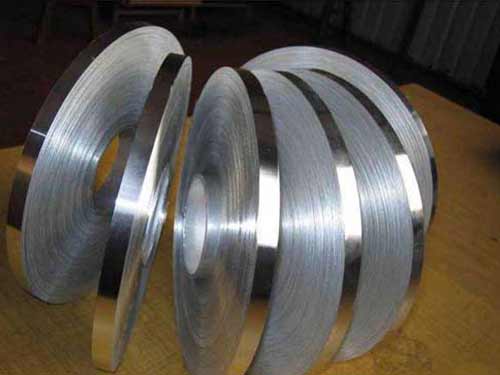
Aluminum Fin Strip (Radiators 1060)
1060 aluminum fin strip is a high-purity aluminum material designed for efficient heat-transfer components. With an aluminum content of at least 99.60%, it combines excellent thermal conductivity, soft forming behavior, low density, and dependable corrosion resistance. These qualities make it a practical choice for radiator fins, condenser fins, evaporator components, HVAC coils, and other heat-exchange assemblies.
In a radiator, the fin is not merely a thin metal layer. It creates a large surface area that transfers heat from tubes or plates into moving air. The fin material must therefore conduct heat rapidly, tolerate high-speed stamping or corrugating, maintain a clean surface, and form stable mechanical or metallurgical bonds with the tube system. 1060 aluminum fin strip meets these demands with an effective balance of purity, workability, and production consistency.
Material Characteristics
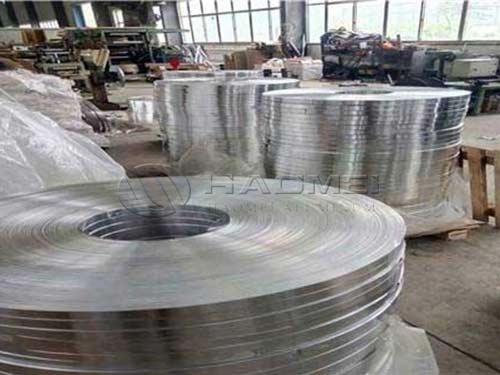
The 1060 alloy belongs to the 1xxx aluminum series. It is primarily aluminum with only small controlled amounts of silicon, iron, copper, manganese, magnesium, zinc, and titanium. Its relatively simple composition supports strong thermal and electrical conductivity while preserving excellent ductility.
Compared with higher-strength aluminum alloys, 1060 aluminum fin strip is easier to bend, wave, emboss, pierce, and roll into thin fin geometry. It is particularly suitable when the part design requires narrow fin pitch, delicate louvers, repeated folds, or thin wall sections. Common tempers include O, H14, H16, H18, and H24, selected according to forming depth, fin rigidity, and processing route.
| Property | Typical Characteristic | Value or Requirement |
|---|---|---|
| Alloy | Commercially pure aluminum | AA 1060 |
| Aluminum content | Minimum aluminum purity | 99.60% |
| Density | Lightweight heat-transfer metal | Approximately 2.70 g/cm³ |
| Thermal conductivity | Efficient heat movement | Approximately 230 W/m·K |
| Electrical conductivity | High conductivity | Approximately 62% IACS |
| Corrosion resistance | Suitable for many atmospheric conditions | Good to excellent |
| Formability | Suitable for fin stamping and corrugation | Excellent |
| Weldability | Applicable to suitable joining processes | Good |
| Surface condition | Clean, smooth, oil-controlled | Available by agreement |
Chemical Composition
Strict composition control contributes to uniform rolling performance and stable fin forming. Silicon and iron are maintained at low levels to preserve ductility and thermal conductivity, while other elements remain tightly limited.
| Element | Chemical Content, % |
|---|---|
| Aluminum, Al | 99.60 min |
| Silicon, Si | 0.25 max |
| Iron, Fe | 0.35 max |
| Copper, Cu | 0.05 max |
| Manganese, Mn | 0.03 max |
| Magnesium, Mg | 0.03 max |
| Zinc, Zn | 0.05 max |
| Titanium, Ti | 0.03 max |
| Other elements, total | 0.03 max |
Why 1060 Works Well in Radiator Fins
The most important function of a fin strip is to spread heat quickly and release it efficiently to the surrounding air. The high aluminum purity of 1060 supports this process by reducing the resistance to heat flow through the fin body. When formed into corrugated, louvered, or folded profiles, the strip creates a large active surface without adding excessive weight to the complete radiator.
Its low density is valuable in automotive cooling modules, commercial refrigeration equipment, battery cooling systems, and compact air-conditioning units. A lighter heat exchanger can reduce equipment mass while maintaining a generous heat-dissipation area.
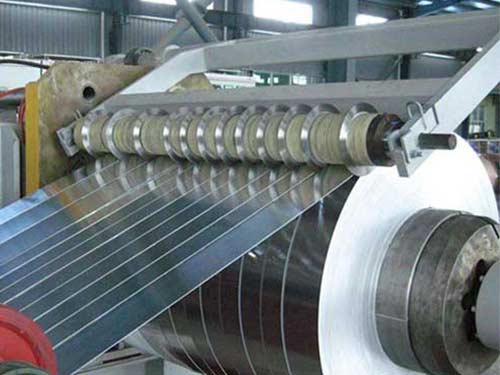
Forming performance is equally important. During high-speed production, fin strip may be slit, lubricated, stamped, pierced, louvered, and assembled in continuous operations. Soft annealed material is appropriate for demanding shapes, while H14 to H18 tempers can provide greater stiffness for fins that need to retain profile geometry after forming. Clean edges, controlled burr level, flat coil shape, and consistent thickness all help prevent tooling interruptions and fin damage.
For projects requiring alternate thicknesses or wider coil formats, 1050 / 1060 Aluminum Strip provides a related material range for general forming and heat-transfer fabrication.
Standard Supply Range
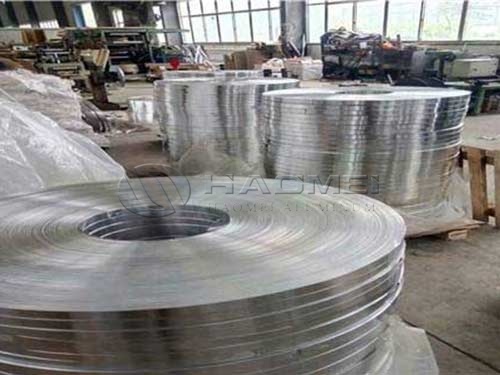
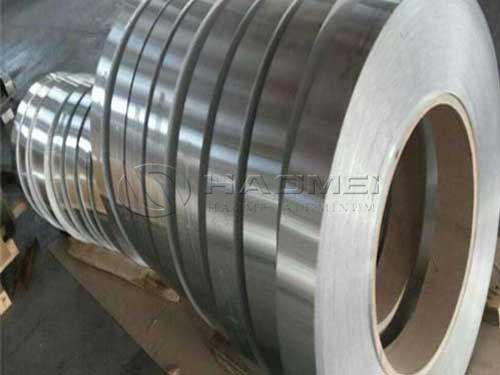
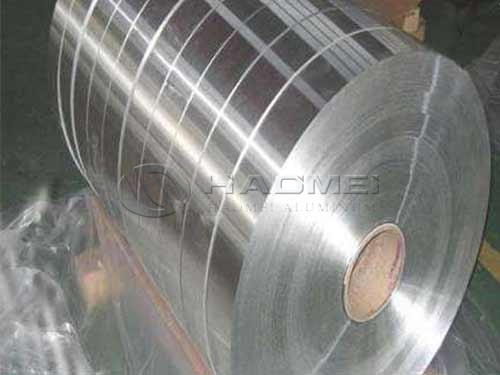
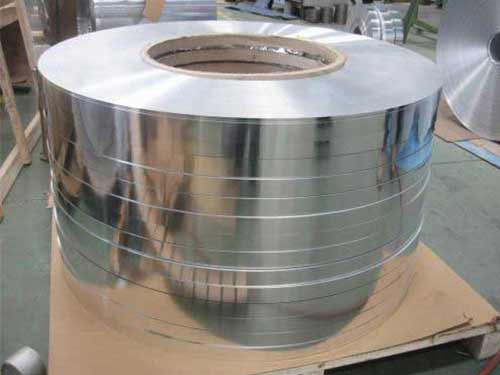
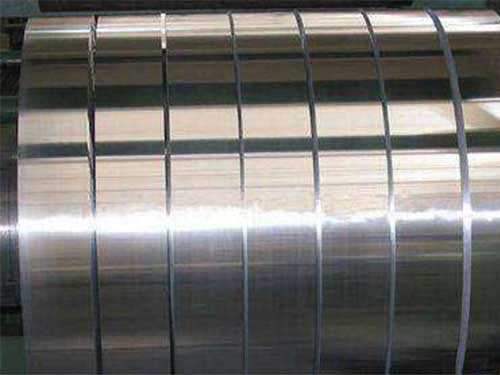
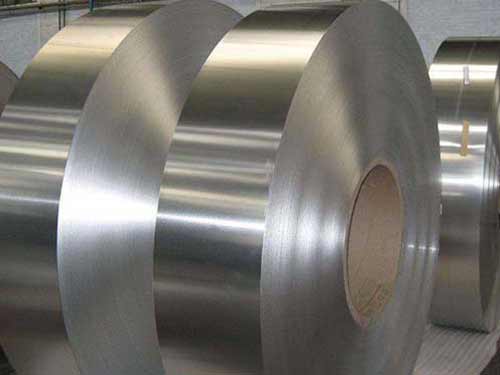
1060 aluminum fin strip can be supplied as slit coil, edge-trimmed coil, or sheet depending on production equipment. Final dimensions should be selected based on fin tooling, die design, tube spacing, coating process, and coil-handling capacity.
| Parameter | Common Supply Range |
|---|---|
| Thickness | 0.08-1.20 mm |
| Width | 10-1,600 mm |
| Coil inner diameter | 150 mm, 300 mm, 405 mm, 505 mm, or as agreed |
| Coil outer diameter | According to weight and handling limits |
| Coil weight | Customized for press-line loading requirements |
| Temper | O, H14, H16, H18, H24 |
| Edge condition | Mill edge, slit edge, trimmed edge |
| Surface finish | Mill finish, degreased, lightly oiled, coated options |
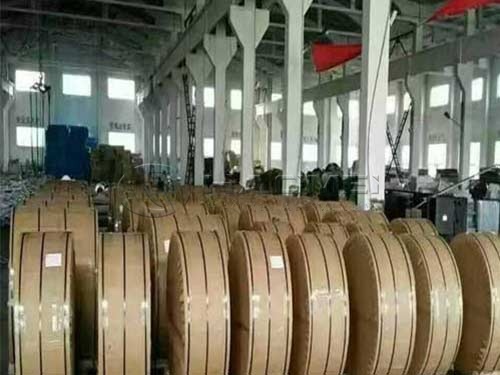
| Packaging | Moisture-resistant export coil packaging |
Surface and Processing Considerations
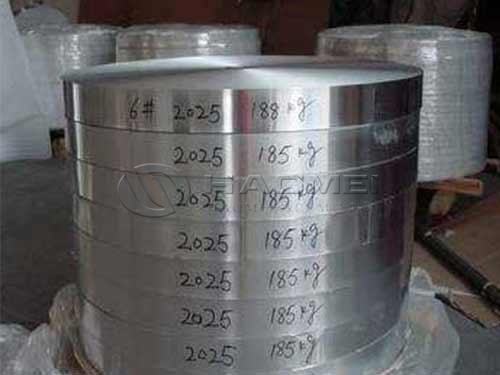
Surface quality has a direct influence on fin production and final heat-exchanger performance. A smooth, uniform strip surface supports stable lubricant distribution during stamping and helps reduce die pickup. For brazed radiator assemblies, surface cleanliness is especially important because oil residue, moisture, oxide condition, and contamination can affect flux behavior and joint consistency.
1060 fin strip may also be supplied for coated applications. Protective coatings can improve resistance to condensate, salt-containing air, industrial atmospheres, or chemical exposure. Hydrophilic coatings are frequently used in HVAC evaporator fins to improve drainage and reduce water bridging. Depending on the design, coating selection must account for operating temperature, fin pitch, corrosion environment, and brazing sequence.
Although 1060 provides strong corrosion resistance in ordinary environments, demanding automotive, marine, and industrial conditions may require specialized coating systems or a higher-strength alloy. In such cases, 3003 Aluminum Strip can be considered where improved mechanical strength and corrosion performance are required.
Typical Applications
1060 aluminum fin strip serves across a broad range of thermal-management equipment. In automotive radiators, it forms thin fins that surround flat tubes or round tubes and increase air-side heat release. In air-conditioning condensers and evaporators, it is shaped into louvered fin patterns that guide airflow and enlarge the available heat-transfer surface.
It is also used in refrigerator condensers, oil coolers, charge-air coolers, industrial ventilation units, transformer cooling structures, household appliance heat exchangers, and compact electronic cooling assemblies. The material is well suited to equipment where low weight, rapid heat transfer, and high-volume press forming are needed.
For battery thermal systems, 1060 aluminum strip can be used in non-structural cooling components where conductivity and lightweight construction are more important than high mechanical strength. In HVAC systems, the strip supports efficient cooling and heating cycles while allowing manufacturers to produce thin, closely spaced fins that improve air contact.
Quality Control for Reliable Fin Production
A radiator fin strip should be evaluated beyond basic alloy certification. Thickness tolerance affects fin height and stamping repeatability. Width tolerance influences feed accuracy. Camber, coil set, edge burr, flatness, and surface cleanliness can all affect the performance of automated fin presses.
Reliable 1060 aluminum fin strip is produced with attention to chemical composition, rolling reduction, annealing response, slitting accuracy, coil winding tension, and packaging protection. Material should arrive dry, protected from mechanical damage, and clearly identified by alloy, temper, dimensions, and coil traceability.
For radiator and heat-exchanger manufacturers, 1060 aluminum fin strip remains a dependable material for producing lightweight, highly formable, thermally efficient fin structures. Its purity-driven conductivity and flexible processing window make it well suited to both conventional radiator designs and modern compact cooling equipment.