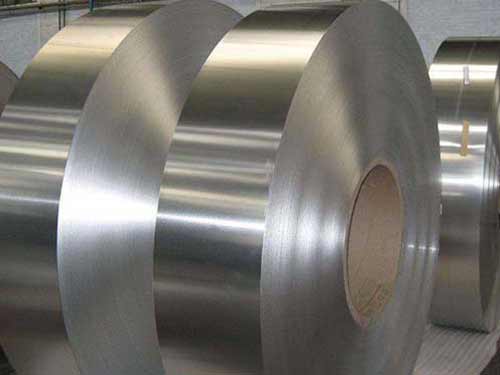
Chinese Provides Polished Mirror Aluminum Strip
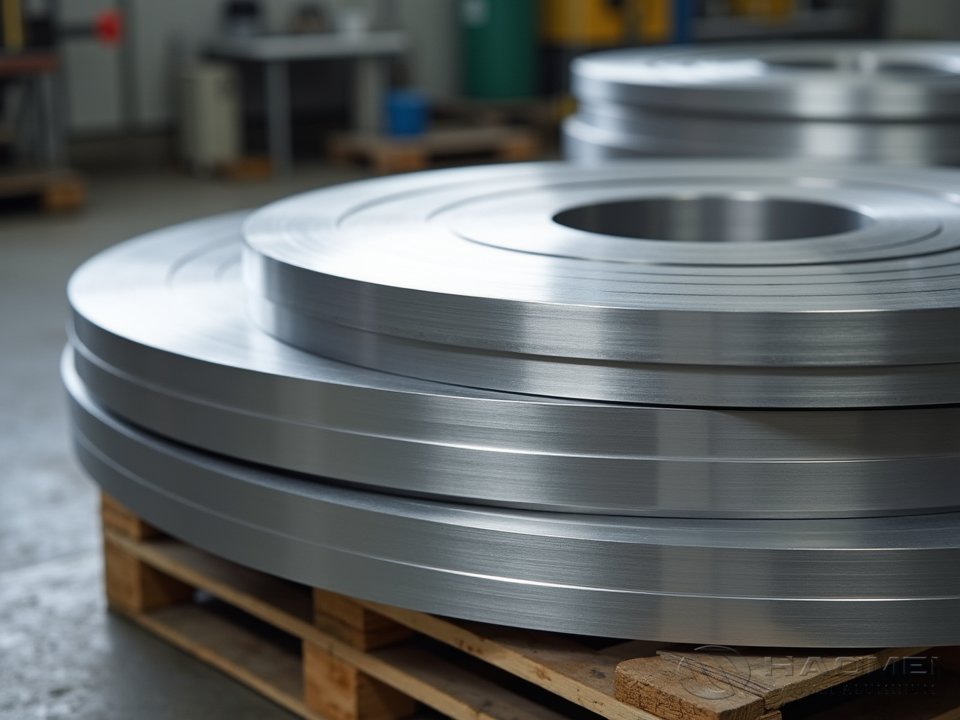
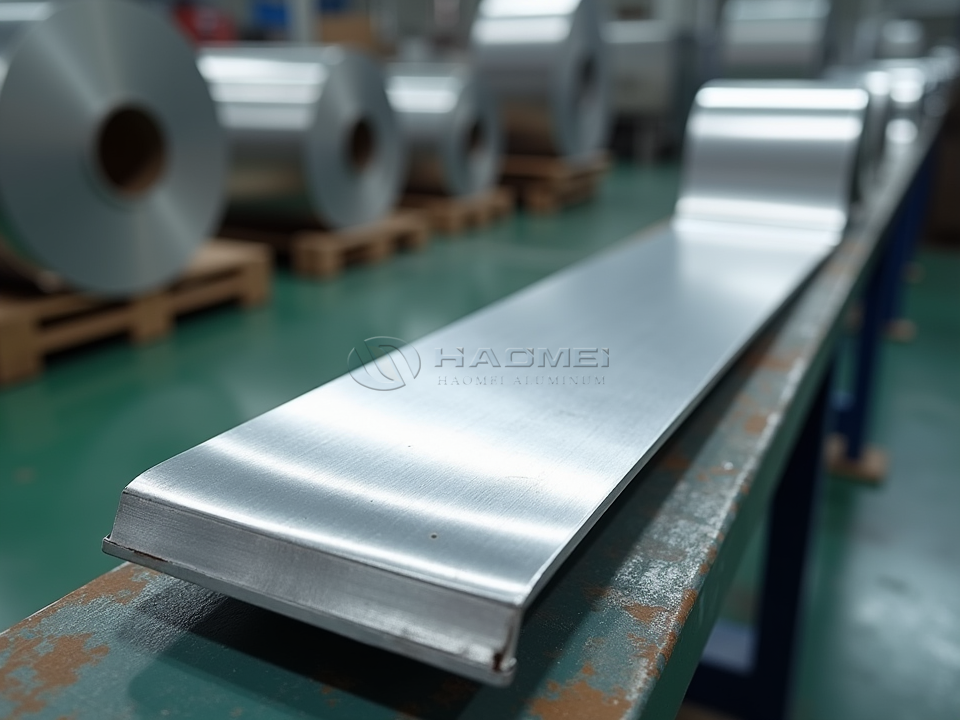
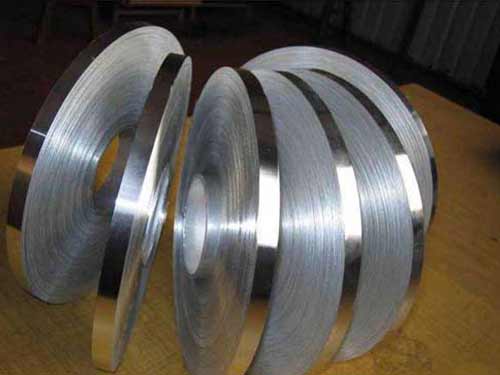
Polished mirror aluminum strip is more than a bright metal coil. Its surface acts as a controlled optical layer, directing light, improving visual depth, and giving finished products a clean metallic appearance. Chinese polished mirror aluminum strip is widely selected by manufacturers of lamp reflectors, decorative trims, signage, appliance panels, solar reflectors, and packaging components because it combines high reflectivity with low weight, good formability, and dependable coil processing.
The practical value of mirror aluminum lies in the balance between surface brilliance and substrate performance. A strip can look highly reflective but still fail in stamping, bending, or long-term service if alloy selection, temper, flatness, edge quality, and protective treatment are not matched to the final process. For this reason, polished mirror aluminum should be evaluated as a functional material rather than simply a decorative finish.
How the mirror surface creates functional value
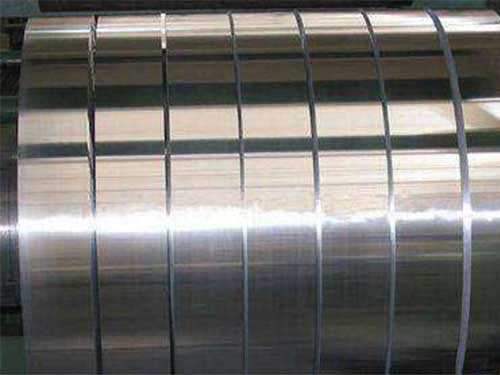
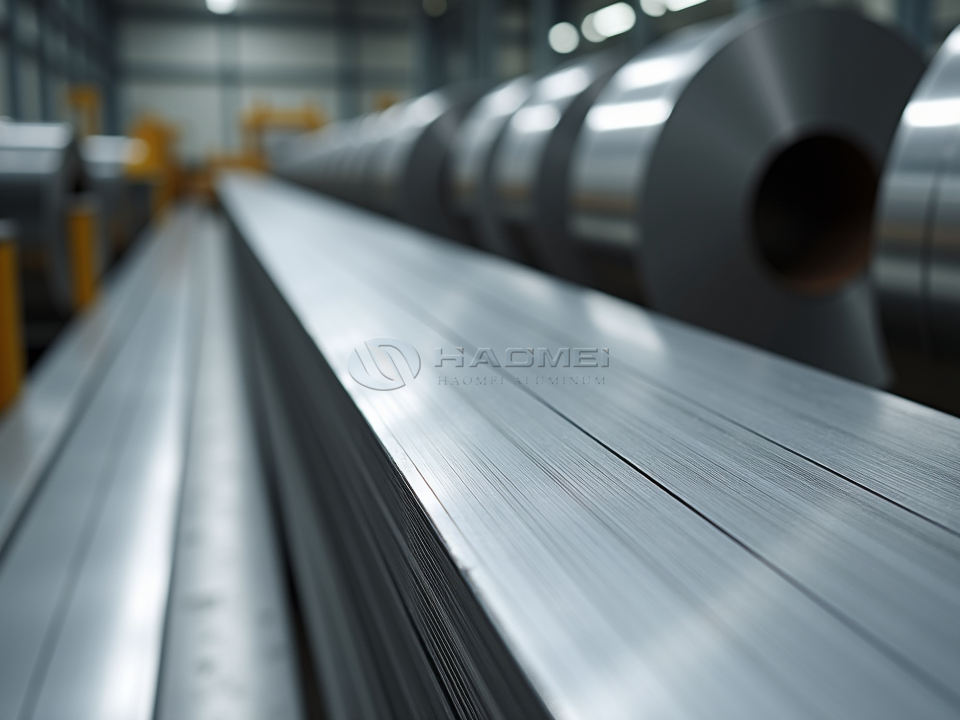
The reflective effect is created through precision rolling, polishing, brushing, chemical brightening, or anodizing. A high-quality mirror surface has low roughness and consistent reflectance across the coil width. It can redirect visible light efficiently in lighting housings, reduce the number of lamps needed in certain fixtures, and enhance the perceived brightness of interior spaces.
For decorative fabrication, the polished surface creates a stainless-steel-like visual effect at a much lower weight. This makes mirror aluminum strip suitable for ceiling trims, furniture edging, elevator accessories, advertising frames, cosmetic packaging, and appliance decorations. In thermal and optical equipment, the material can also reflect radiant energy, depending on the surface finish and coating system.
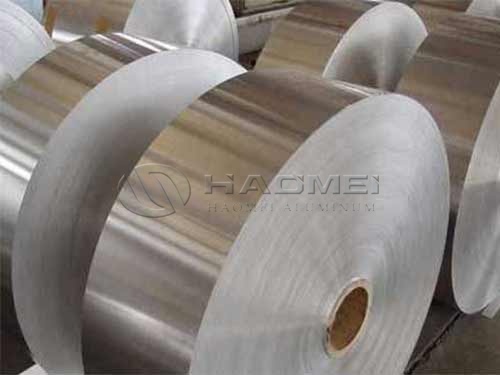
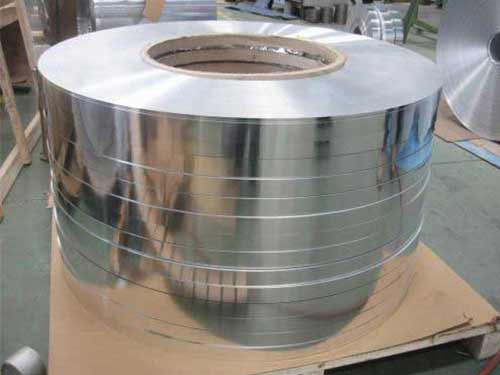
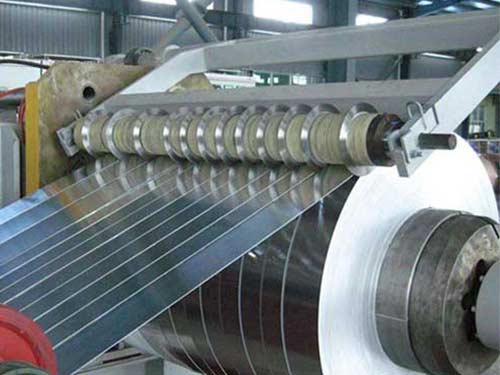
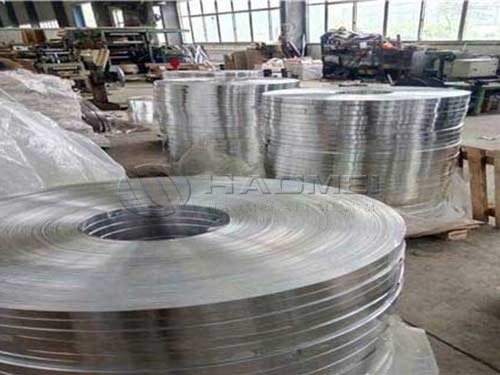
A polished surface is usually protected by a transparent PVC film, paper interleaf, or lacquer layer. This protection is especially important for narrow slit coils because friction between turns can create scratches, pressure marks, or transfer lines during transport and unwinding.
Typical product parameters
| Property | Common Range or Condition |
|---|---|
| Alloy | 1050, 1060, 1070, 1100, 3003, 3105, 5052 |
| Thickness | 0.10 mm to 3.00 mm |
| Width | 10 mm to 1,600 mm |
| Coil inner diameter | 150 mm, 300 mm, 400 mm, 505 mm or customized |
| Coil weight | 100 kg to 5,000 kg, depending on thickness and handling method |
| Surface finish | Polished, high-gloss mirror, brushed mirror, anodized mirror, coated mirror |
| Reflectivity | Commonly 80% to 95% for visible-light applications, depending on finish |
| Protective film | PVC film, PE film, paper interleaf, or no film |
| Edge condition | Mill edge, slit edge, deburred edge |
| Flatness | Controlled according to end-use requirements |
Mirror aluminum strips for deep drawing or complex stamping generally use softer tempers. Panels and rigid trims may use harder tempers to maintain shape and resist handling marks.
Alloy and temper selection for polished strip
The 1xxx aluminum family is the common choice when reflectivity, corrosion resistance, and ductility are the main priorities. Alloy 1060 offers high aluminum content, stable polishing behavior, and excellent workability. It is frequently used in lamp cups, reflector sheets, decorative strips, and small stamped components. Buyers looking for high-purity reflective material can review 1050 / 1060 Aluminum Strip options for different thicknesses and coil conditions.
Alloy 1070 provides even higher aluminum purity and is valued in applications requiring strong conductivity and bright surface response. Alloy 1100 contains a controlled amount of copper, offering slightly higher strength while retaining good forming behavior.
For products that need more mechanical strength, 3003 aluminum strip is often a practical alternative. Its manganese addition improves strength and corrosion resistance, making it suitable for decorative panels, appliance parts, building trims, and stamped components. A polished 3003 Aluminum Strip can be selected when a balance of mirror appearance and structural stability is required.
| Alloy | Si + Fe | Cu | Mn | Mg | Zn | Al |
|---|---|---|---|---|---|---|
| 1050 | 0.40% max | 0.05% max | 0.05% max | 0.05% max | 0.05% max | 99.50% min |
| 1060 | 0.35% max | 0.05% max | 0.03% max | 0.03% max | 0.05% max | 99.60% min |
| 1070 | 0.20% max | 0.04% max | 0.03% max | 0.03% max | 0.04% max | 99.70% min |
| 1100 | 0.95% Si + Fe max | 0.05% to 0.20% | 0.05% max | - | 0.10% max | 99.00% min |
| 3003 | 0.60% max | 0.05% to 0.20% | 1.00% to 1.50% | - | 0.10% max | Remainder |
Chemical values may vary slightly according to the applicable standard and order agreement.
Temper conditions and fabrication behavior
O temper is fully annealed and provides the highest ductility. It is appropriate for deep drawing, embossing, spinning, and complex bends. H14 and H16 tempers offer medium strength and are commonly used for decorative trims, reflector parts, and general stamping. H18 provides a harder strip with improved dent resistance, but it has lower elongation and should not be chosen for severe forming.
For mirror-finish material, temper also affects appearance after fabrication. A soft strip can stretch around a die without cracking, yet excessive deformation may slightly reduce the visual uniformity of the reflective surface. A harder strip holds a crisp profile but may show stress marks if bend radii are too tight. Matching the temper to the tooling design helps preserve both shape and brightness.
Standards and inspection requirements
Chinese polished mirror aluminum strip can be produced in accordance with GB/T 3880 for aluminum and aluminum alloy sheet and strip, ASTM B209 for aluminum alloy sheet and plate, and EN 485 for European mechanical-property and tolerance requirements. Export orders may also specify RoHS, REACH, or customer-defined substance-control requirements for decorative, electrical, and consumer-product uses.
Inspection normally includes alloy composition, thickness tolerance, width tolerance, coil weight, tensile properties, elongation, surface reflectance, flatness, burr level, and film adhesion. Surface inspection should be performed under controlled lighting because small defects, such as roller marks, oil stains, pinholes, scratches, or color variation, become more visible on a mirror finish than on ordinary mill-finish aluminum.
Applications where the strip performs beyond decoration
In lighting, polished mirror aluminum strip is formed into reflector cups, lamp housings, LED channels, and louver systems that distribute light more efficiently. In architecture, it serves as trim coil, ceiling edging, wall accents, signage frames, and interior decorative bands. In household appliances, it supports control-panel details, refrigerator trims, cooker hoods, and display components.
Automotive and transportation products use mirror aluminum for ornamental strips, interior accents, luggage hardware, and lightweight reflective components. Packaging converters may use narrow polished strips for caps, labels, premium gift containers, and cosmetic details. When anodized or coated, the surface gains greater resistance to fingerprints, oxidation, and cleaning chemicals.
Chinese polished mirror aluminum strip delivers its strongest value when the finish is specified alongside alloy, temper, protective film, and fabrication method. A bright coil is only the starting point; the real performance appears after slitting, stamping, bending, assembling, and years of visible service.