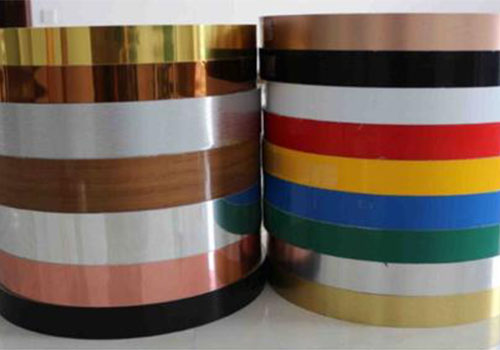
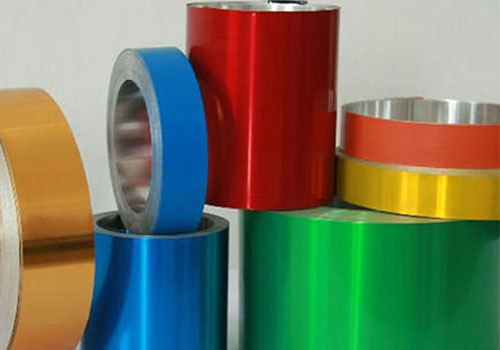
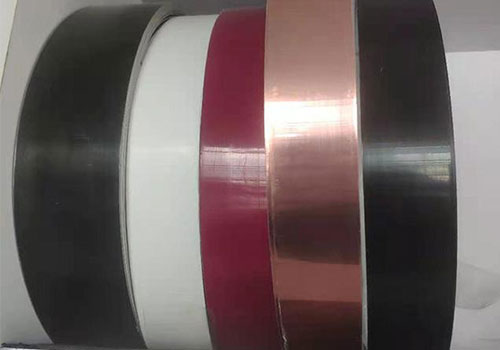
Solid Colors Aluminum Strip
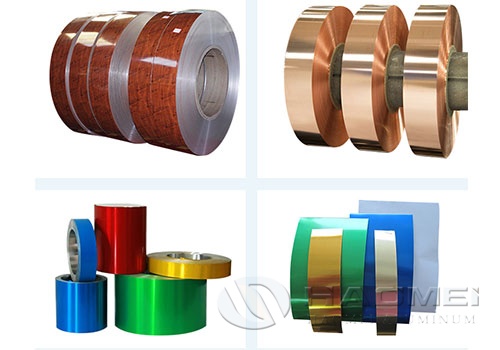
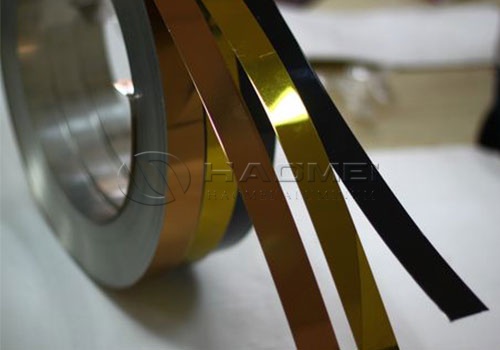
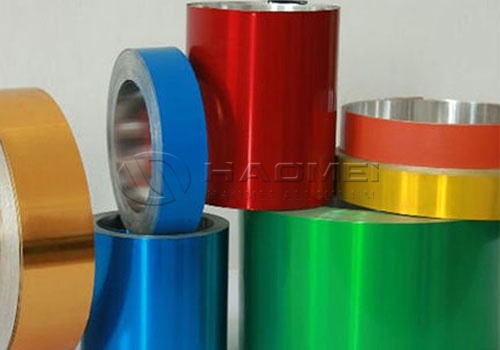
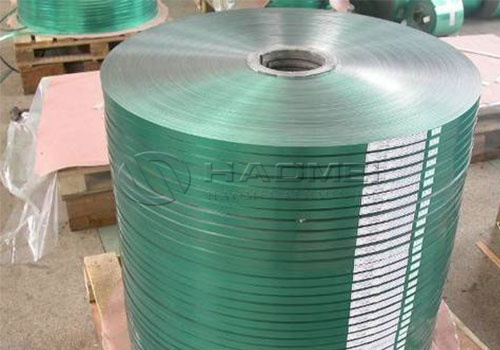
Solid colors aluminum strip is a pre-painted aluminum product designed for projects that require consistent appearance, low weight, corrosion resistance, and reliable forming performance. It combines aluminum coil strip with a continuous color-coating system, producing a clean, even surface in white, black, red, green, yellow, gray, blue, brown, and custom color options.
Compared with post-painting fabricated parts, pre-coated strip helps manufacturers reduce processing steps, minimize paint waste, and maintain more stable color from coil to coil. It is widely used in architectural trim, gutters, roller shutters, ceilings, appliance panels, lighting components, signage, insulation cladding, and decorative profiles.
Product Functions and Material Benefits
Solid colors aluminum strip provides both a decorative outer layer and a protective barrier. The aluminum substrate contributes lightweight strength and natural corrosion resistance, while the coating improves appearance, weather performance, stain resistance, and surface durability.
| Function | Performance Contribution | Customer Value |
|---|---|---|
| Decorative finishing | Smooth, uniform solid-color surface | Creates a clean and consistent visual effect |
| Corrosion protection | Aluminum substrate plus primer and topcoat | Extends service life in humid or outdoor conditions |
| Forming support | Suitable for bending, stamping, roll forming, and profiling | Reduces cracking risk during fabrication when proper temper is selected |
| Lightweight construction | Aluminum density is about 2.70 g/cm³ | Lowers handling, transport, and structural load |
| Thermal reflection | Light colors can reflect a portion of solar radiation | Helps support cooler exterior surfaces |
| Processing efficiency | Delivered in coil or slit-strip form | Supports continuous production and reduced finishing work |
For projects requiring a broad paint-system selection, Color Coated Aluminum Strip can be specified with PE, SMP, HDP, or PVDF coatings according to service conditions.
Common Applications
The right alloy, temper, coating system, and thickness depend on the forming method and exposure environment. Softer tempers are generally preferred for deep drawing or tight bending, while harder tempers suit flat panels and parts requiring greater rigidity.
| Application Area | Typical Alloy and Temper | Recommended Coating | Common Colors |
|---|---|---|---|
| Roof edging, fascia, gutters | 3003 H24, 3105 H24 | PE, HDP, PVDF | White, brown, black, gray |
| Roller shutters and slats | 3105 H24, 5052 H32 | PE, SMP | White, beige, dark red, green |
| Ceiling and wall trim | 1060 H24, 3003 H24 | PE | White, silver, black, yellow |
| Appliance and electrical panels | 1050 H24, 3003 H24 | PE, polyester | White, gray, blue, black |
| Signage and display frames | 3003 H14, H24 | PE, PVDF | Custom solid colors, high-gloss shades |
| Insulation jacketing | 1060 H14, 3003 H14 | Polyester, moisture-resistant coating | White, silver, gray |
| Decorative roll-formed profiles | 3003 H24, 3105 H24 | PE, HDP, PVDF | RAL and customized colors |
Technical Specifications
Solid colors aluminum strip is usually supplied as slit coils. Width, thickness, hardness, coil weight, paint color, and surface gloss can be adjusted to match forming equipment and end-use requirements.
| Parameter | Standard Range | Custom Capability |
|---|---|---|
| Aluminum alloy | 1050, 1060, 1100, 3003, 3105, 5052 | Other grades upon agreement |
| Thickness | 0.20-1.50 mm | 0.15-3.00 mm, depending on alloy and coating |
| Strip width | 10-1,600 mm | Precision slitting available |
| Width tolerance | ±0.10 to ±0.50 mm | Based on strip width and order specification |
| Coil inner diameter | 150 mm, 300 mm, 405 mm, 505 mm | Customized core sizes |
| Coil outer diameter | Up to about 1,800 mm | Subject to transport and equipment limits |
| Coil weight | 0.5-8.0 metric tons | Adjustable for production lines |
| Surface finish | Glossy, matte, semi-matte, textured | Embossed or protective-film options |
| Color system | RAL, Pantone reference, customer sample | Color matching available |
| Protective film | Optional PE film | Common for stamping and decorative surfaces |
Alloy Tempering Conditions and Mechanical Data
Temper selection strongly affects bendability, strength, springback, and surface behavior. H14 and H24 are commonly selected for general fabrication. H16, H18, H32, and H34 provide greater hardness where higher panel stiffness is needed.
| Alloy | Common Tempers | Typical Tensile Strength, MPa | Typical Yield Strength, MPa | Elongation | Suitable Processing |
|---|---|---|---|---|---|
| 1060 | H14, H24, H18 | 95-135 | 75 min. | 3-10% | Light forming, cladding, decorative trim |
| 3003 | H14, H24, H26 | 145-185 | 115 min. | 3-10% | Roll forming, bending, roofing accessories |
| 3105 | H14, H24, H26 | 150-200 | 130 min. | 2-8% | Shutters, siding, building profiles |
| 5052 | H32, H34 | 210-260 | 160 min. | 5-12% | Higher-strength formed components |
Mechanical values are indicative and can vary with thickness, temper, testing method, and applicable standard.
Chemical Composition of Typical Aluminum Substrates
The chemical composition influences corrosion resistance, strength, weldability, and forming response. 3003 and 3105 are frequently selected for painted architectural strip because manganese improves strength while retaining workable formability. 5052 offers increased magnesium-based strength and marine-atmosphere resistance.
| Alloy | Si | Fe | Cu | Mn | Mg | Cr | Zn | Al |
|---|---|---|---|---|---|---|---|---|
| 1060 | 0.25 max. | 0.35 max. | 0.05 max. | 0.03 max. | 0.03 max. | - | 0.05 max. | 99.60 min. |
| 3003 | 0.60 max. | 0.70 max. | 0.05-0.20 | 1.00-1.50 | 0.05 max. | - | 0.10 max. | Balance |
| 3105 | 0.60 max. | 0.70 max. | 0.30 max. | 0.30-0.80 | 0.20-0.80 | 0.20 max. | 0.40 max. | Balance |
| 5052 | 0.25 max. | 0.40 max. | 0.10 max. | 0.10 max. | 2.20-2.80 | 0.15-0.35 | 0.10 max. | Balance |
Values are expressed as mass percentages. Other elements are controlled according to the selected material standard.
Coating Construction and Surface Performance
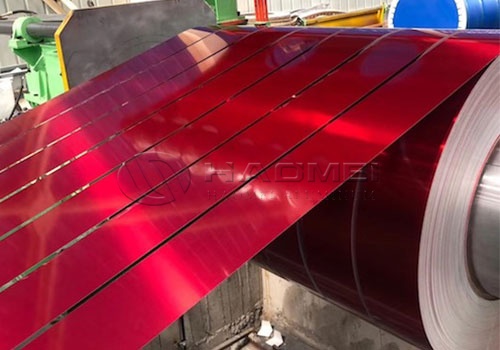
A typical solid-color coating line includes cleaning, chemical pretreatment, primer application, topcoat application, oven curing, cooling, inspection, and recoiling. Pretreatment improves adhesion between aluminum and paint, while the primer enhances corrosion resistance and coating stability.
| Coating System | Topcoat Thickness | Typical Use | Weather Resistance | Gloss Range |
|---|---|---|---|---|
| PE polyester | 15-25 μm | Interior panels, gutters, general trim | Good | 10-90 GU |
| SMP silicon-modified polyester | 20-30 μm | Roofing and exterior cladding | Very good | 15-80 GU |
| HDP high-durability polyester | 20-30 μm | Long-life architectural components | Very good | 15-80 GU |
| PVDF fluorocarbon | 25-35 μm | Demanding façades and outdoor exposure | Excellent | 15-60 GU |
| Back coat | 5-10 μm | Rear-side protection | Good | Matte |
| Surface Test | Typical Requirement | Purpose |
|---|---|---|
| Coating adhesion | No detachment after cross-hatch test | Confirms paint bonding quality |
| Pencil hardness | HB to 2H, coating dependent | Indicates scratch resistance |
| T-bend performance | 0T to 3T, alloy and temper dependent | Evaluates flexibility during bending |
| Impact resistance | No cracking or peeling at specified impact | Verifies coating toughness |
| Salt spray resistance | Commonly 500-1,000 hours or project requirement | Assesses corrosion protection |
| Color difference | Controlled against approved sample | Maintains batch-to-batch color consistency |
Implementation Standards and Quality Control
Production can be aligned with recognized aluminum and coil-coating standards. The final specification should state the applicable standard, alloy, temper, thickness tolerance, coating type, color reference, gloss level, and testing requirements.
| Standard | Scope |
|---|---|
| ASTM B209 | Aluminum and aluminum-alloy sheet and plate requirements |
| EN 485 | Tolerances, mechanical properties, and technical delivery conditions for aluminum sheet and strip |
| EN 573 | Chemical composition and designation of aluminum alloys |
| EN 13523 | Test methods for coil-coated metals |
| AAMA 2604 | Performance requirements for high-performance organic coatings |
| AAMA 2605 | Performance requirements for fluoropolymer coating systems |
| ISO 9001 | Quality management system framework |
Solid colors aluminum strip should be stored indoors in a dry, ventilated area. Coils should remain wrapped until use, protected from condensation, corrosive chemicals, direct standing water, and abrasion. During fabrication, clean rollers, suitable bend radii, and compatible lubricants help preserve the painted surface and achieve a consistent finished product.