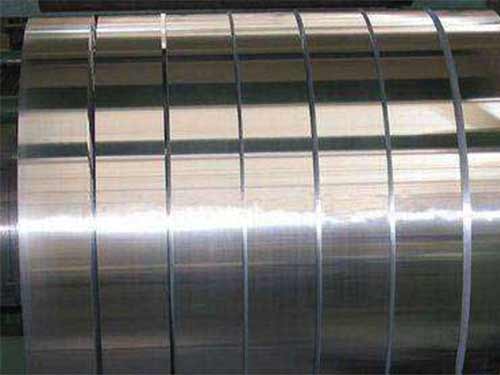
Modern High-End Interior Aluminum Strips
Modern high-end interior aluminum strips bring precision, light, and visual rhythm to contemporary spaces. Used as decorative trim, transition profiles, inlay channels, edge protection, and LED housings, these narrow aluminum products create clean lines across walls, ceilings, floors, cabinetry, doors, and retail displays.
Compared with bulky molding materials, aluminum strips provide a slim architectural appearance while retaining excellent strength, corrosion resistance, and dimensional stability. Their surface can be brushed, polished, anodized, powder coated, sandblasted, or laminated to coordinate with stone, timber, glass, ceramic tile, and painted panels.
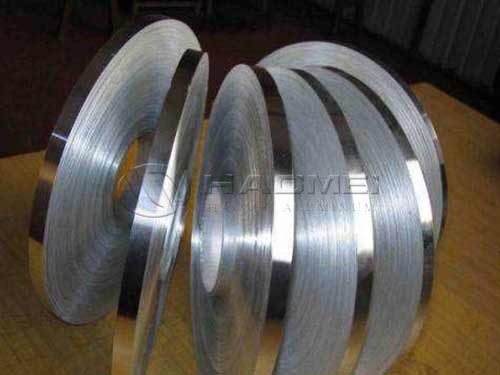
Design Functions in Premium Interiors
Interior aluminum strips are more than decorative accents. They solve practical installation challenges while improving the finished appearance of an interior assembly. Narrow strip formats can create shadow gaps, conceal panel joints, protect exposed corners, or form a durable frame around mirrors and wall features.
| Function | Interior Benefit | Typical Installation Location |
|---|---|---|
| Decorative inlay | Adds metallic contrast and linear visual detail | Wall panels, stone slabs, cabinet doors |
| Joint cover | Hides expansion gaps and panel seams | Ceiling systems, partitions, flooring transitions |
| Edge protection | Reduces wear and impact damage | Tile edges, furniture corners, door surrounds |
| LED channel support | Holds light diffusers and improves heat dissipation | Ceilings, wardrobes, display cabinets |
| Divider profile | Creates clean separation between finish materials | Wood-to-stone, tile-to-glass, panel-to-panel joints |
| Frame and trim | Produces a crisp border with low visual weight | Mirrors, artwork walls, elevator panels |
A well-selected strip creates a controlled, consistent reveal line. This is particularly valuable in hotels, luxury residences, offices, boutiques, and hospitality spaces, where small alignment details strongly influence perceived quality.
Suitable Alloys and Temper Conditions
Alloy selection depends on required formability, hardness, surface quality, and service environment. Commercially pure 1050 and 1060 alloys are preferred for soft decorative profiles and deeply formed sections. 3003 offers improved strength while maintaining good bending and stamping behavior. For demanding moisture exposure or higher structural requirements, 5052 is often selected.
For decorative roll-formed profiles and trim components, 3003 Aluminum Strip offers a balanced combination of workability, corrosion resistance, and dependable surface finishing performance.
| Alloy | Main Characteristics | Common Tempers | Recommended Interior Uses |
|---|---|---|---|
| 1050 | High aluminum purity, excellent formability, bright finish potential | O, H14, H18 | Soft trim, reflective decorative strips, lamp profiles |
| 1060 | Good conductivity, corrosion resistance, easy processing | O, H14, H16, H18 | Ceiling strips, light channels, general decoration |
| 1100 | Good ductility and weldability | O, H14, H24 | Formed edging, wall trim, furniture components |
| 3003 | Manganese-strengthened, good bending and stamping performance | O, H14, H24 | Decorative profiles, cabinet trim, partition strips |
| 5052 | Higher strength and strong resistance to humid conditions | H32, H34 | Bathrooms, kitchens, marine-inspired interiors |
| 6061 | Higher mechanical strength, suitable for machined trim | T4, T6 | Premium frames, rigid architectural components |
Temper selection affects both fabrication and appearance. O temper is soft and suitable for deep drawing, complex bends, and tight radii. H14 and H24 tempers provide medium hardness for general roll forming and decorative edging. H32 and H34 offer higher strength where impact resistance or stable flatness is required. T6 material is generally selected for rigid extruded or machined components rather than tight-bend strip applications.
Chemical Composition Reference
The following values are typical maximum or controlled composition ranges in accordance with common aluminum alloy designations. Final certification should follow the purchase specification and applicable standard.
| Alloy | Al | Mn | Mg | Si | Fe | Cu | Other Elements |
|---|---|---|---|---|---|---|---|
| 1050 | 99.50 min | 0.05 max | 0.05 max | 0.25 max | 0.40 max | 0.05 max | 0.03 max each |
| 1060 | 99.60 min | 0.03 max | 0.03 max | 0.25 max | 0.35 max | 0.05 max | 0.03 max each |
| 1100 | 99.00 min | 0.05 max | - | Si + Fe 0.95 max | Included | 0.05-0.20 | 0.05 max each |
| 3003 | Balance | 1.0-1.5 | - | 0.60 max | 0.70 max | 0.05-0.20 | 0.05 max each |
| 5052 | Balance | 0.10 max | 2.2-2.8 | 0.25 max | 0.40 max | 0.10 max | Cr 0.15-0.35 |
| 6061 | Balance | 0.15 max | 0.8-1.2 | 0.4-0.8 | 0.70 max | 0.15-0.40 | Cr 0.04-0.35 |
Typical Technical Specifications
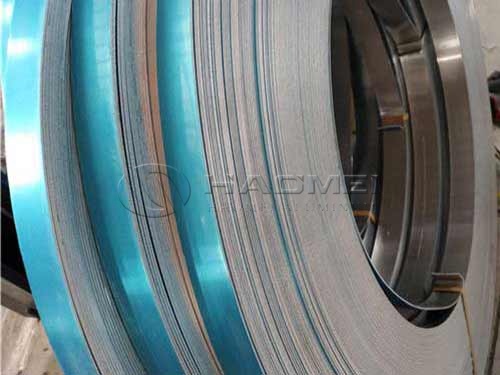
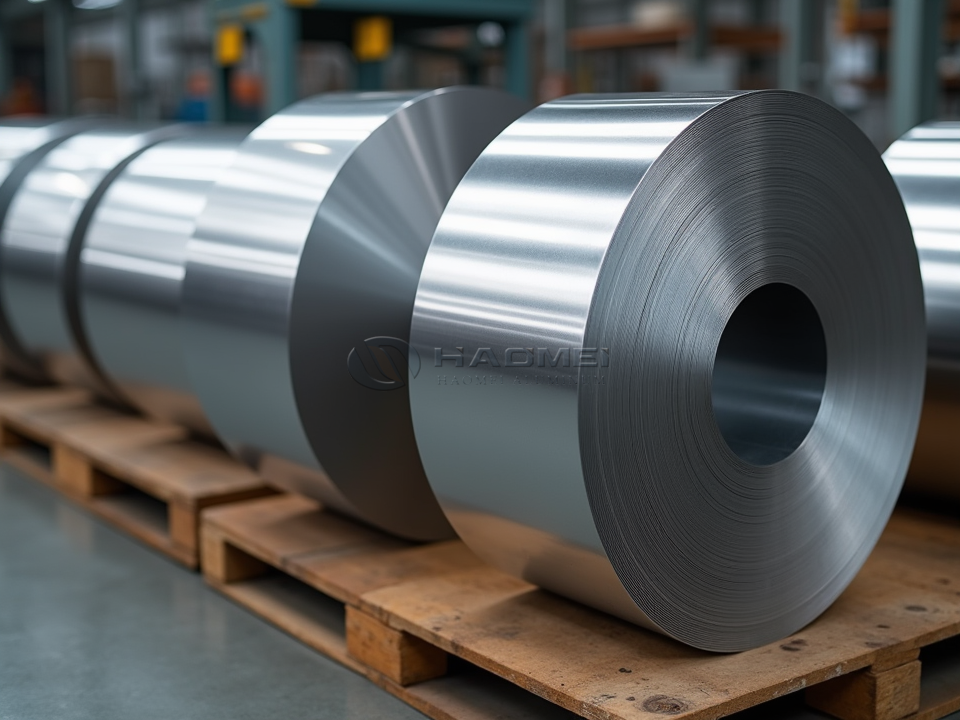
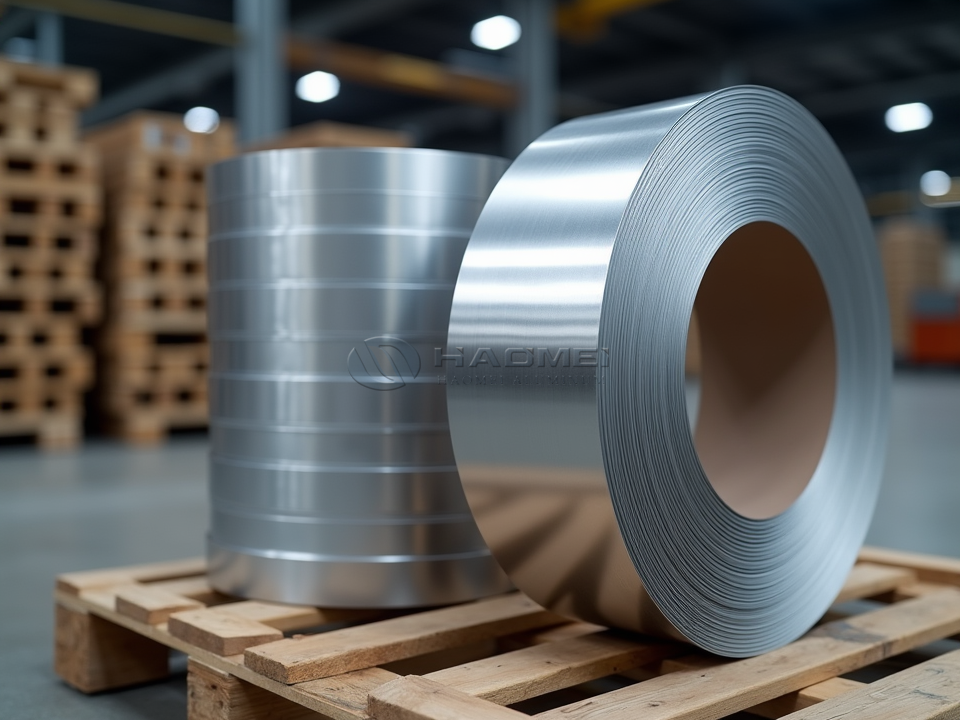
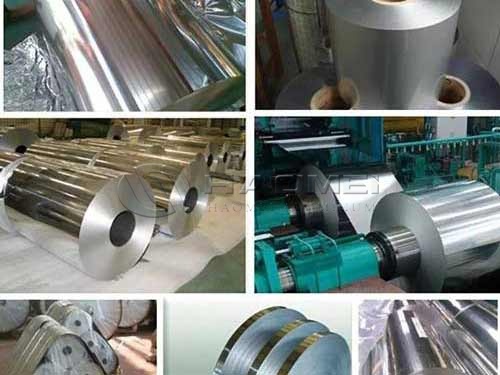
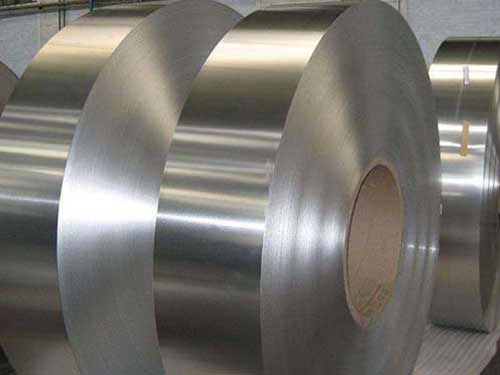
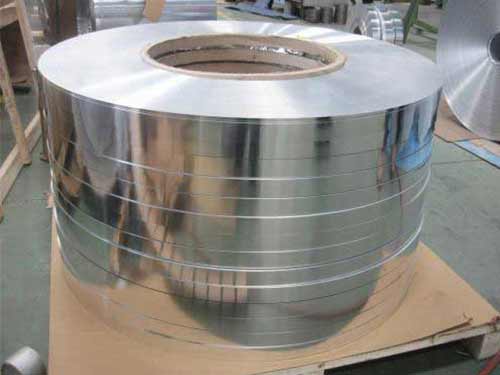
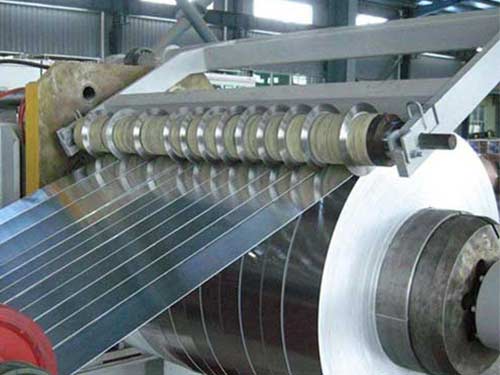
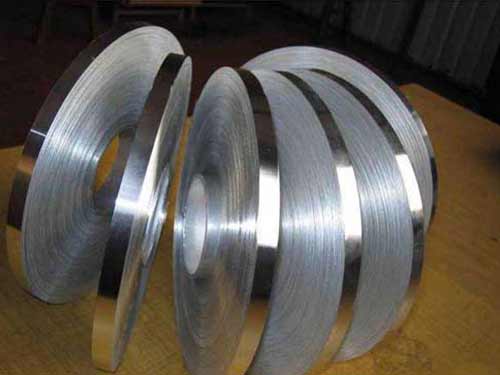
Interior aluminum strips are normally supplied as slit coil, straight strip, or custom-cut lengths. Dimensions should match the fabrication method, whether the material will be folded, stamped, laminated, bonded, or inserted into a profile system.
| Parameter | Typical Range | Notes |
|---|---|---|
| Thickness | 0.20-3.00 mm | Thinner gauges suit trim and bends; thicker gauges suit rigid profiles |
| Width | 10-1,600 mm | Narrow slit widths are widely used for decorative strips |
| Coil inner diameter | 150 mm, 300 mm, 405 mm, 508 mm | Selected to suit forming equipment |
| Coil outer diameter | Up to 1,800 mm | Subject to weight and shipping limits |
| Coil weight | 0.5-8.0 tonnes | Custom coil weights available for production lines |
| Surface finish | Mill, brushed, mirror, anodized, coated, embossed | Finish should be confirmed with approved samples |
| Flatness | Controlled by thickness and temper | Important for visible wall and ceiling details |
| Edge condition | Mill edge, slit edge, deburred edge | Deburred edges improve handling safety |
| Mechanical Property | 1050-H14 | 3003-H14 | 5052-H32 | 6061-T6 |
|---|---|---|---|---|
| Tensile strength, MPa | 95-125 | 120-160 | 210-260 | 260-310 |
| Yield strength, MPa | 75 min | 115 min | 160 min | 240 min |
| Elongation, % | 2-10 | 3-10 | 7-14 | 8-12 |
| Density, g/cm³ | 2.71 | 2.73 | 2.68 | 2.70 |
| Melting range, °C | 646-657 | 643-654 | 607-649 | 582-652 |
Values are indicative and vary with thickness, temper, test direction, and governing material standard.
Surface Treatments for High-End Visual Impact
Surface treatment determines how the aluminum strip interacts with light, fingerprints, and surrounding finishes. Brushed finishes offer a calm satin appearance that complements stainless steel, walnut veneer, and matte stone. Mirror-polished strips deliver strong reflection for feature walls and boutique displays, but require careful handling during installation. Anodizing forms a hard oxide layer that improves wear resistance and provides silver, champagne, bronze, black, or custom-toned finishes.
Powder coating is suitable when the design requires exact color matching with doors, furniture, or ceiling grids. PVDF coating can be specified for interiors with strong UV exposure near glazing. Protective film should remain on visible surfaces throughout cutting, bending, transport, and installation.
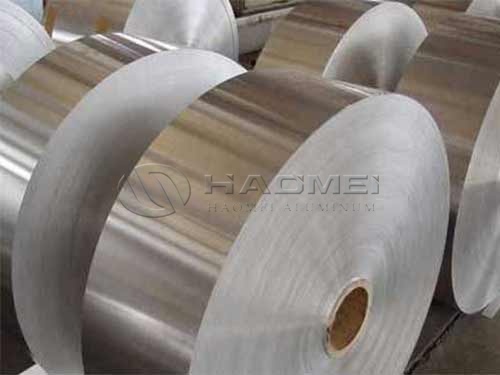
Standards and Quality Control
High-end interior projects benefit from clearly defined inspection requirements. Material certificates, dimensional checks, surface inspection, and finish sample approval help prevent variation between batches.
| Standard | Scope |
|---|---|
| ASTM B209 | Aluminum and aluminum-alloy sheet and plate requirements |
| EN 485 | Tolerances, mechanical properties, and technical delivery conditions for rolled aluminum products |
| EN 573 | Aluminum alloy chemical composition and alloy designation system |
| GB/T 3880 | Aluminum and aluminum alloy sheets, strips, and plates |
| ISO 9001 | Quality management system control for production and traceability |
| AAMA 611 | Architectural anodized aluminum finish guidance where applicable |
Quality inspection commonly includes thickness measurement, width tolerance verification, edge burr evaluation, coil camber assessment, surface scratch inspection, color consistency review, and adhesion testing for coated products. For anodized or brushed decorative strips, approved visual samples are especially important because lighting conditions can alter the perceived shade and texture.
Installation Considerations
Aluminum strips should be installed on clean, dry, level substrates. Depending on profile design, fixing methods may include structural adhesive, concealed clips, countersunk screws, silicone sealant, or mechanical interlocking. Allow small movement gaps where long strips meet, especially near windows, heating zones, or large wall panels.
For moisture-prone locations, use corrosion-compatible fasteners and avoid direct contact with wet cement, untreated timber, or dissimilar metals that may create galvanic staining. Protective film should be removed only after adjacent finishing work is complete. With the correct alloy, temper, finish, and installation method, modern high-end interior aluminum strips provide lasting architectural detail with a precise and polished appearance.