Building Material Aluminum Strip Cei Tile
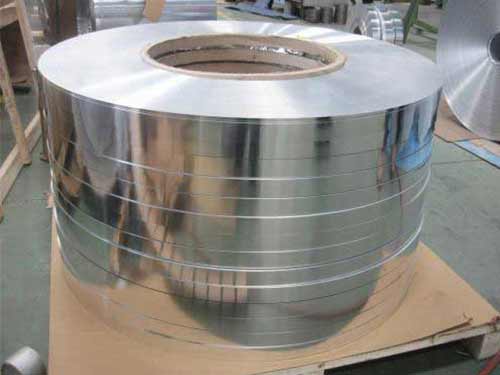
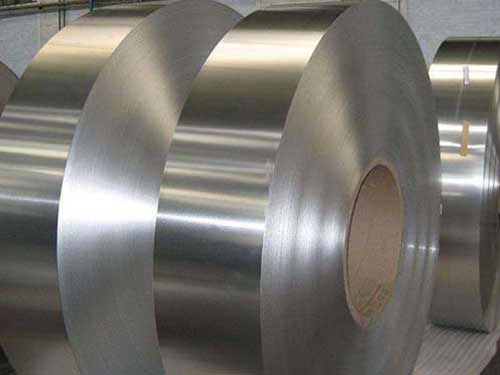
A building material aluminum strip CEI tile is more than a thin metal panel. It is the starting coil material behind many suspended ceiling tiles, clip-in panels, lay-in tiles, baffle ceilings, perforated acoustic panels, and decorative ceiling systems. Its real value is often felt during production: a stable strip bends cleanly, accepts paint evenly, stays flat after punching, and gives installers panels with consistent edges and dimensions.
For ceiling tile manufacturers, aluminum strip should be selected as a forming material rather than simply a lightweight sheet. The coil must tolerate blanking, roll forming, stamping, corner folding, perforating, and surface finishing without visible defects. A ceiling may look simple after installation, but its quality is determined much earlier by alloy chemistry, temper, thickness tolerance, flatness, and coating compatibility.
Why Aluminum Strip Performs Well in Ceiling Tile Production
Aluminum has a density of approximately 2.70 g/cm³, much lower than steel. This reduces the load on ceiling grids and suspension structures while making handling easier on site. It also forms a natural oxide film that improves corrosion resistance in normal indoor environments.
For commercial buildings, offices, hospitals, retail spaces, airports, and residential interiors, aluminum ceiling strips offer a useful balance of low weight, formability, fire performance, and visual freedom. They can be supplied mill finish, pre-painted, anodized, brushed, embossed, laminated, or perforated. Polyester and PVDF-coated surfaces are common where color consistency, stain resistance, and decorative life are important.
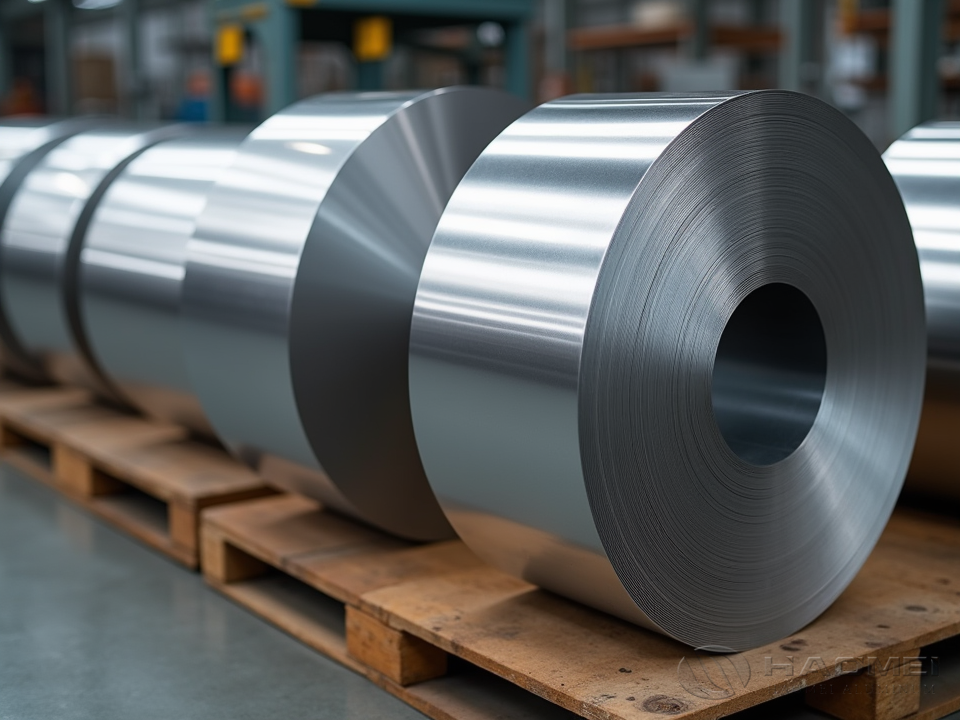
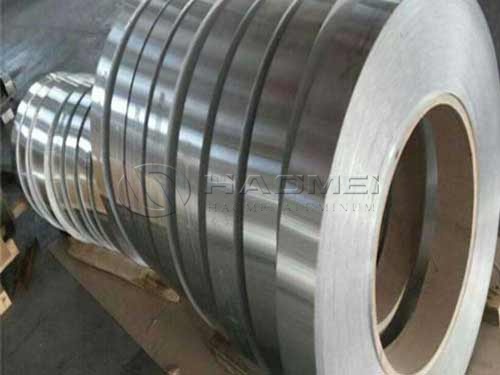
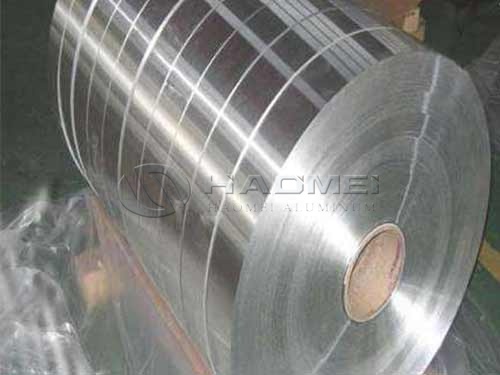
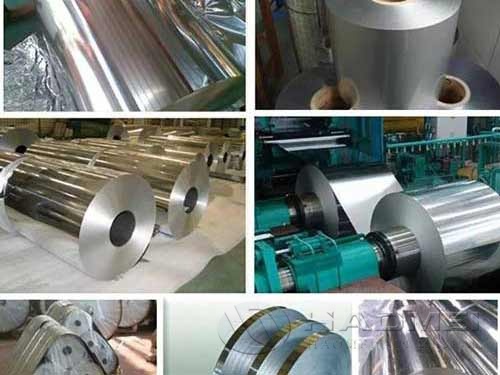
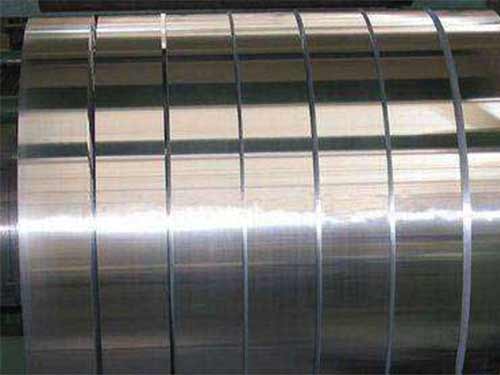
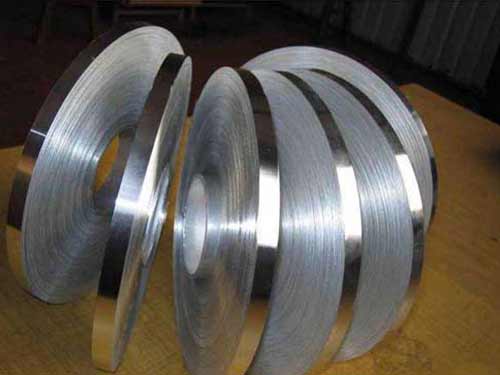
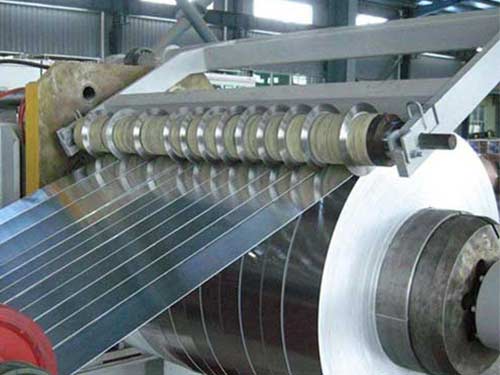
The coil format is equally important. Aluminum strip can be slit to the exact width required by a tile press or roll-forming line. This lowers edge trimming waste and supports smoother continuous production. A properly slit coil with controlled burrs also helps prevent coating scratches, tool wear, and poor folded edges.
Recommended Alloys for Aluminum Ceiling Tiles
The most common alloys for building material aluminum strip CEI tile are 1100, 3003, and 3105. Each responds differently to forming and service conditions.
1100 aluminum strip is commercially pure aluminum with excellent ductility and corrosion resistance. It is suitable for simple ceiling tiles, highly decorative panels, and applications requiring deep drawing or soft folding. Its strength is lower than manganese-containing alloys, so it is less suitable where panel stiffness is a priority.
3003 aluminum strip contains manganese, providing higher strength than 1100 while preserving good formability. It is a widely used choice for perforated tiles, lay-in panels, clip-in systems, and painted ceiling products. For many production lines, 3003 Aluminum Strip offers a practical balance between stiffness and reliable processing.
3105 aluminum strip is often selected for coated architectural products. Its strength and corrosion resistance make it especially suitable for pre-painted ceiling panels, long linear ceiling components, and tiles that need better shape retention after bending. 3105 Aluminum Strip is frequently specified when a painted surface and stable formed profile are both required.
Typical Product Parameters
| Property | Common Range for Ceiling Tile Strip |
|---|---|
| Alloy | 1100, 3003, 3105, 5052 by application |
| Temper | O, H14, H16, H18, H22, H24, H26 |
| Thickness | 0.30 mm to 1.20 mm |
| Common thickness for tiles | 0.45 mm to 0.80 mm |
| Strip width | 20 mm to 1,600 mm, customized by slitting |
| Coil inner diameter | 150 mm, 300 mm, 405 mm, 508 mm, or customized |
| Coil weight | Typically 1 to 8 metric tons |
| Surface | Mill finish, painted, anodized, brushed, embossed, laminated |
| Edge condition | Slit edge, deburred edge, smooth edge |
| Coating options | PE, polyester, PVDF, powder coating, protective film |
Thickness selection depends on tile geometry, tile size, perforation ratio, and suspension method. A 600 mm × 600 mm lay-in panel may use 0.45 mm to 0.70 mm material, while large perforated panels or long linear profiles can require thicker strip for improved rigidity. Excessive thickness increases weight and forming load, while insufficient thickness can lead to oil-canning, edge waviness, or deformation during installation.
Temper Selection and Forming Behavior
Temper describes the hardness condition of the strip after rolling or annealing. It has a direct influence on how the aluminum behaves on a ceiling tile production line.
O temper is fully annealed and soft. It is preferred for complex profiles, deep drawing, tight-radius folding, and heavily embossed decorative panels. Its drawback is lower strength, so the finished panel may require ribs, returns, or reinforcement to stay flat.
H14 and H24 tempers are common for ceiling tiles because they provide moderate strength with good forming capacity. H14 is useful where smoother folding is needed. H24 provides slightly greater strength and is often chosen for standard panels requiring better flatness after punching or perforation.
H16, H18, and H26 are harder conditions. They can improve rigidity but may crack at sharp bends if the forming radius is too small. These tempers are better suited to shallow shapes, straight linear ceilings, or applications where profile stiffness matters more than severe forming.
A practical rule is to match temper to the tightest bend and the largest unsupported panel area. Soft strip favors demanding geometry, while harder strip favors shape retention.
Chemical Composition of Common Ceiling Tile Alloys
The values in this table are typical maximum or specified ranges by mass percentage. Exact requirements should follow the ordered standard and material certificate.
| Alloy | Si | Fe | Cu | Mn | Mg | Zn | Other Elements | Al |
|---|---|---|---|---|---|---|---|---|
| 1100 | Si + Fe 0.95 max | Si + Fe 0.95 max | 0.05-0.20 | 0.05 max | - | 0.10 max | 0.05 each, 0.15 total | 99.00 min |
| 3003 | 0.60 max | 0.70 max | 0.05-0.20 | 1.00-1.50 | - | 0.10 max | 0.05 each, 0.15 total | Balance |
| 3105 | 0.60 max | 0.70 max | 0.30 max | 0.30-0.80 | 0.20-0.80 | 0.40 max | 0.05 each, 0.15 total | Balance |
| 5052 | 0.25 max | 0.40 max | 0.10 max | 0.10 max | 2.20-2.80 | 0.10 max | 0.05 each, 0.15 total | Balance |
Manganese in 3003 improves strength without sacrificing practical workability. Magnesium in 3105 and 5052 contributes additional strength and corrosion resistance. For ordinary indoor ceiling tiles, 3003 and 3105 are often sufficient. For humid zones, coastal interiors, swimming pool facilities, or chemically demanding spaces, 5052 may deserve consideration.
Standards and Quality Control
Building material aluminum strip for CEI tile can be produced according to ASTM B209, EN 485, EN 573, GB/T 3880, or project-specific requirements. These standards address chemical composition, mechanical properties, dimensions, tolerances, and delivery condition.
For completed ceiling systems, project specifications may also refer to ASTM C635 for metal suspension systems, ASTM C636 for installation practice, EN 13964 for suspended ceilings, and fire-related test requirements applicable to the building location. Material compliance and installed-system compliance are not the same thing, so both should be verified.
A dependable order specification should state alloy, temper, thickness tolerance, width tolerance, coil ID, maximum coil weight, surface condition, coating system, color reference, protective film requirement, and permitted edge burr. For pre-painted strip, customers should also confirm coating thickness, gloss level, pencil hardness, adhesion, impact resistance, and salt-spray expectations when relevant.
The best aluminum strip for ceiling tiles is not automatically the hardest or the thickest option. It is the coil that fits the panel design, forming route, coating requirement, and installation environment. When alloy, temper, and dimensional tolerances work together, the result is a ceiling tile that remains clean, flat, accurately shaped, and visually consistent for years.