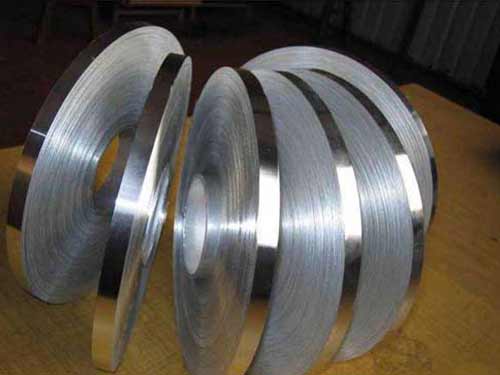
Full Hard Aluminium Strip Coil
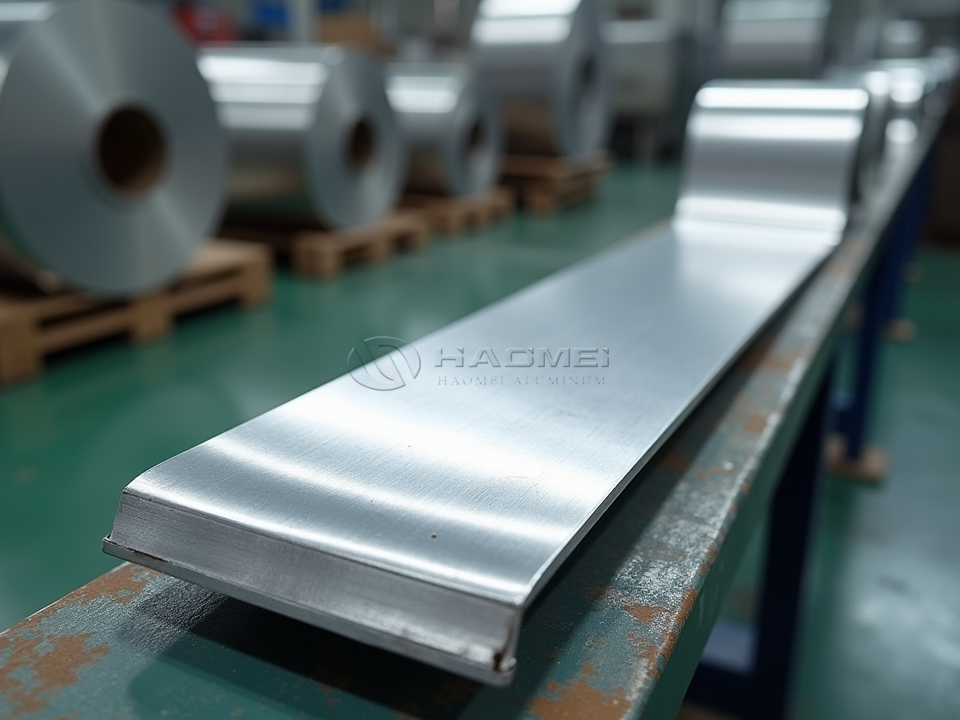
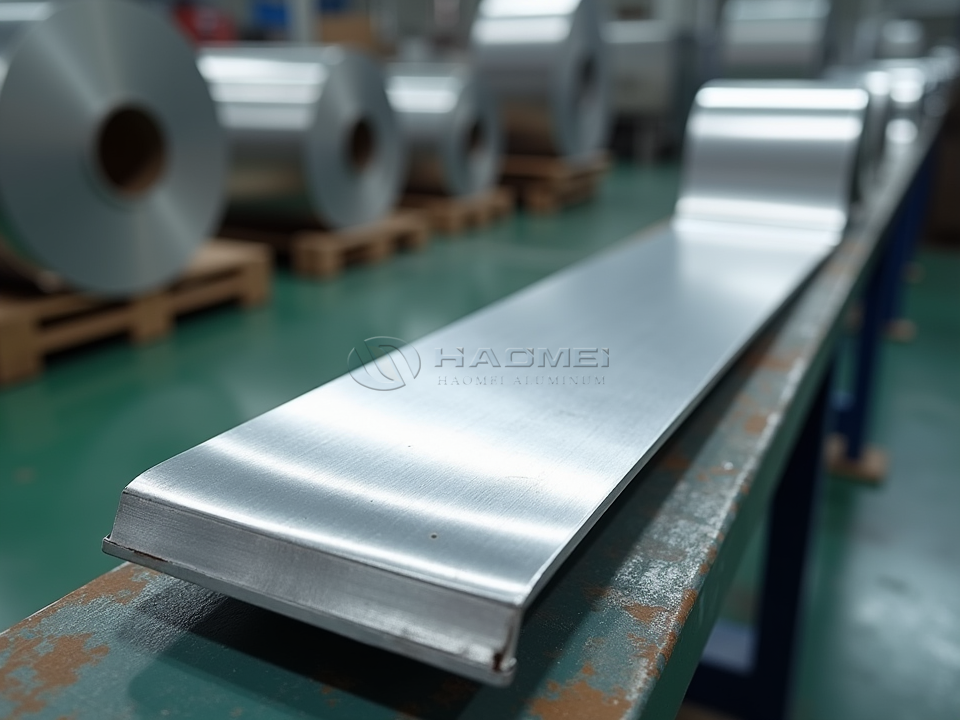
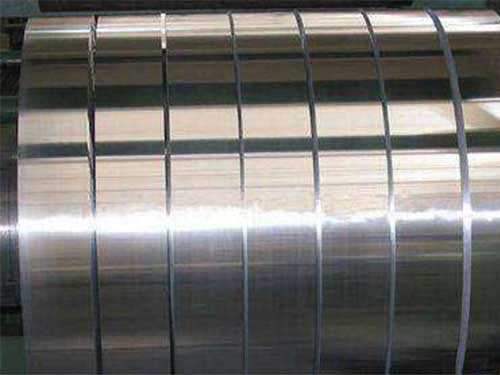
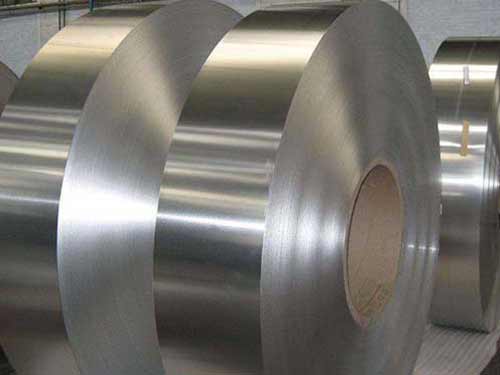
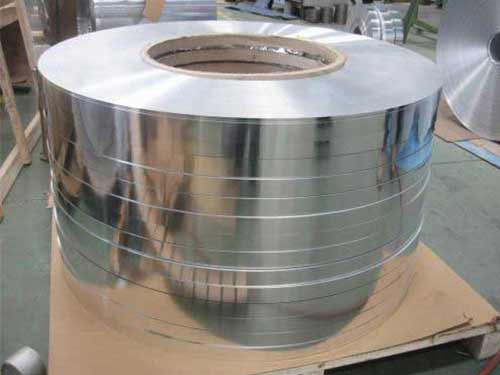
Full hard aluminium strip coil is designed for applications where the material must hold its shape rather than stretch easily. It is the practical choice when manufacturers need a thin metal strip with high hardness, stable dimensions, clean edges, and dependable coil winding performance.
The term full hard generally refers to aluminium that has been cold rolled to its maximum practical strain-hardened condition without an intermediate annealing treatment. For many non-heat-treatable alloys, this temper is identified as H18, also called full hard. The rolling process compresses the grain structure, raising tensile strength and hardness while reducing elongation. In simple terms, the strip becomes stronger because it has been worked harder.
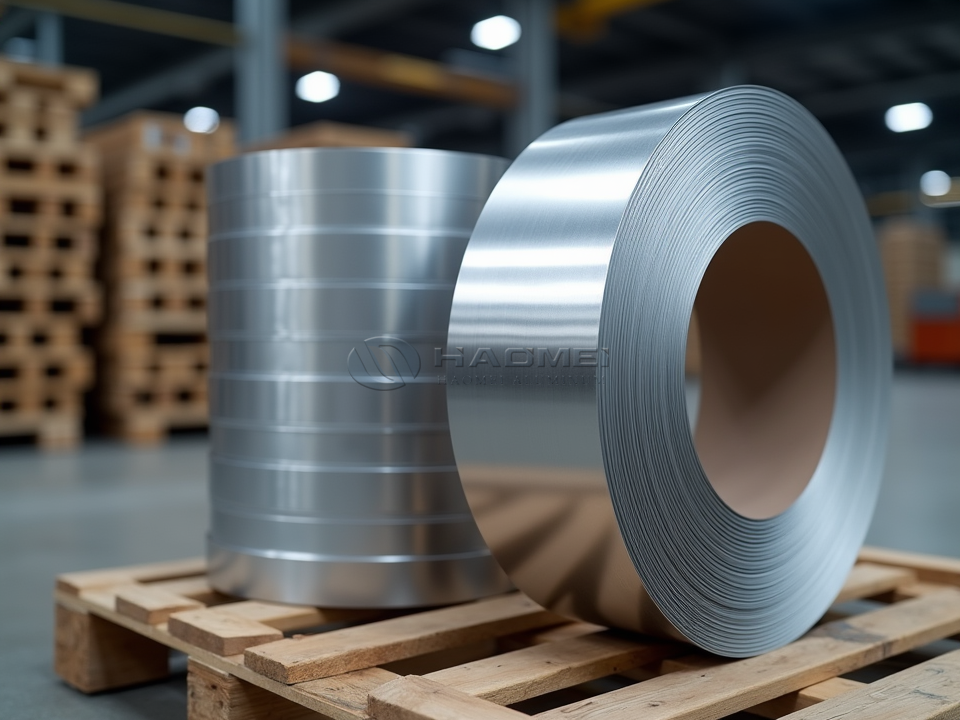
Why Full Hard Temper Changes Production Results
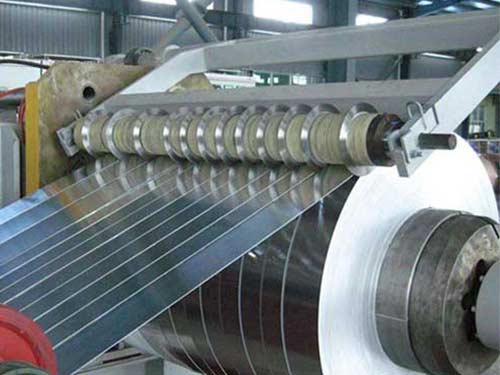
A full hard aluminium strip coil behaves differently from soft O temper or semi-hard H14 strip. It resists bending, denting, and deformation more effectively. This makes it especially valuable for products that must retain a crisp profile after roll forming, slitting, stamping, folding, or wrapping.
The trade-off is formability. H18 strip has limited elongation, so it is not normally selected for deep drawing or severe stretching. Instead, it performs best in controlled forming operations with suitable bend radii, accurate tooling, and clean coil feeding systems. For high-speed press lines, its consistency can reduce distortion and help produce repeatable parts.
Full hard aluminium strip is often used for cable armor, transformer components, packaging closures, lamp caps, fins, shutters, building accessories, insulation jacketing, stamped hardware, and rigid consumer-product parts. The correct alloy depends on whether the final product prioritizes electrical conductivity, corrosion resistance, strength, or surface appearance.
Available Alloys and Tempers
Commercially pure 1xxx series aluminium is widely used when conductivity, light weight, and corrosion resistance matter most. Grades such as 1050, 1060, 1070, and 1100 can be supplied in H18 temper for rigid strip applications. For requirements involving added strength, manganese-bearing 3003 and 3004 alloys are common choices.
For example, 1050 / 1060 Aluminum Strip is suitable for many electrical, lighting, and general fabrication uses due to its high aluminium content and good conductivity. Where stronger performance is required, 3003 Aluminum Strip offers improved strength through manganese addition while retaining useful corrosion resistance.
Typical temper conditions include:
| Temper | Meaning | Typical Use Direction |
|---|---|---|
| H14 | Half hard, strain hardened | Moderate forming and general stamping |
| H16 | Three-quarter hard | Increased rigidity with some workable bend capacity |
| H18 | Full hard, strain hardened | Rigid profiles, high-strength strip, controlled stamping |
| H19 | Extra hard, where available | Highly rigid specialty applications |
| H38 | Strain hardened and stabilized | Often applied to selected 5xxx alloy products |
Temper selection should be based on the actual operation, not only the highest strength value. A strip that is too hard for a tight-radius bend can crack at the edge, while a softer strip may lose profile definition. Matching the temper to the tooling is often more important than simply specifying the strongest grade.
Common Product Parameters
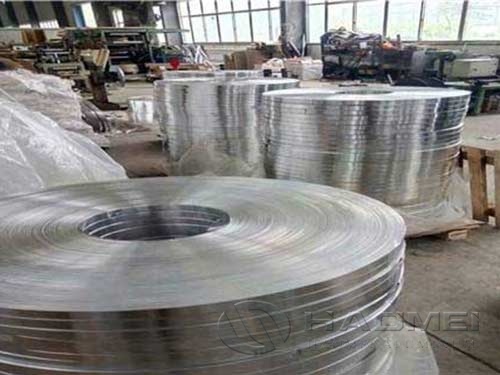
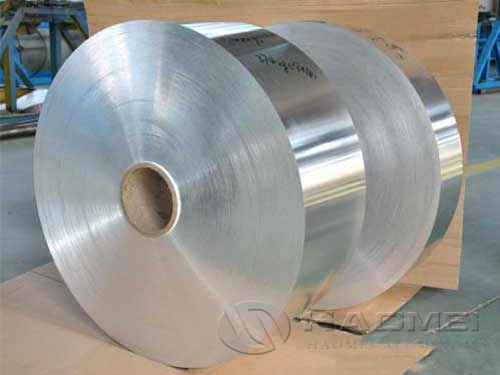
Full hard aluminium strip coil can be produced in a broad range of dimensions according to alloy, mill capability, and end-use tolerance requirements.
| Parameter | Typical Range or Condition |
|---|---|
| Alloy | 1050, 1060, 1070, 1100, 3003, 3004, 3105, 5052, 8011 |
| Temper | H18, H19, H38, or customer-specified hard temper |
| Thickness | 0.10 mm to 3.00 mm |
| Width | 10 mm to 1,600 mm before or after slitting |
| Coil inner diameter | 150 mm, 300 mm, 405 mm, 505 mm, or customized |
| Coil weight | Small slit coils to large master coils, as agreed |
| Surface | Mill finish, bright finish, degreased, coated, embossed, or treated |
| Edge condition | Mill edge, slit edge, deburred edge, or rounded edge |
| Winding | Eye-to-wall or eye-to-sky, with controlled coil tightness |
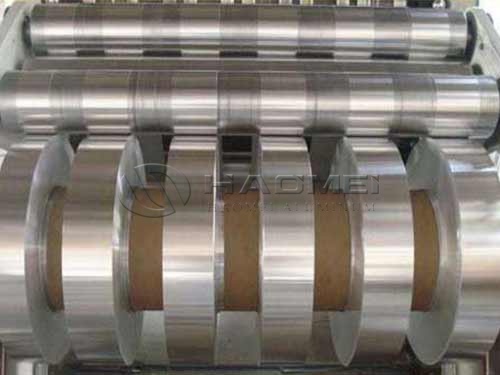
Thickness and width tolerance should be confirmed before ordering. Narrow strips used in automatic stamping equipment often require particularly close width tolerance, low burr height, and stable camber control. These details affect feeding accuracy as much as the aluminium alloy itself.
Chemical Properties by Alloy
Chemical composition determines how the strip responds to rolling, corrosion, electrical current, and forming stress. The values in this table are typical maximum or nominal limits based on common international alloy definitions. Exact requirements should follow the agreed product specification.
| Alloy | Si | Fe | Cu | Mn | Mg | Zn | Ti | Al |
|---|---|---|---|---|---|---|---|---|
| 1050 | 0.25 | 0.40 | 0.05 | 0.05 | 0.05 | 0.05 | 0.03 | 99.50 min |
| 1060 | 0.25 | 0.35 | 0.05 | 0.03 | 0.03 | 0.05 | 0.03 | 99.60 min |
| 1070 | 0.20 | 0.25 | 0.04 | 0.03 | 0.03 | 0.04 | 0.03 | 99.70 min |
| 1100 | Si + Fe 0.95 max | - | 0.05-0.20 | 0.05 max | - | 0.10 max | - | 99.00 min |
| 3003 | 0.60 max | 0.70 max | 0.05-0.20 | 1.0-1.5 | - | 0.10 max | - | Balance |
| 3004 | 0.30 max | 0.70 max | 0.25 max | 1.0-1.5 | 0.8-1.3 | 0.25 max | - | Balance |
All values are expressed as mass percentage. The remaining content is aluminium and permitted trace elements. Manganese in 3003 and 3004 is especially important because it improves strength without sacrificing the naturally protective oxide film that gives aluminium its corrosion resistance.
Mechanical Performance and Processing Notes
Mechanical properties vary with alloy, thickness, width, and production route. As a general reference, 1050-H18 strip commonly offers tensile strength around 130-165 MPa, while 3003-H18 can reach approximately 170-220 MPa. Elongation is usually low in full hard material, often around 1-4 percent depending on gauge and testing direction.
This low elongation is not a defect. It is the defining characteristic of a full hard coil. Buyers should consider it a design condition: use adequate bending radii, aligned dies, polished contact surfaces, and correct press pressure. Burr direction should also be considered during stamping because a sharp slit edge can become the starting point for a crack under aggressive forming.
Implementation Standards and Quality Control
Full hard aluminium strip coil may be produced and inspected according to standards such as ASTM B209/B209M, EN 485-2, EN 573-3, GB/T 3880, and applicable customer drawings. These standards help define alloy chemistry, temper designation, dimensional tolerances, and test methods.
Quality inspection commonly includes thickness measurement, width verification, tensile testing, chemical analysis, surface inspection, coil geometry checks, and packaging inspection. For precision slit coil, additional controls may include edge burr, camber, telescoping, coil tightness, and strip flatness.
A well-specified full hard aluminium strip coil is more than a strong roll of metal. It is a controlled production input that supports steady feeding, clean conversion, reduced scrap, and durable finished goods. By selecting the right alloy, H18 temper, dimensions, edge condition, and standard, manufacturers can turn the hardness of the strip into an operational advantage.