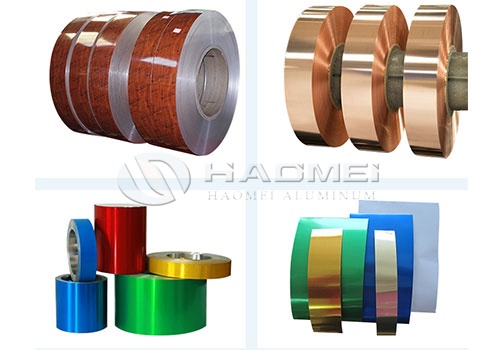
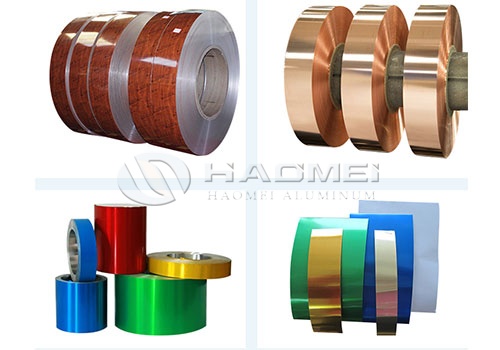
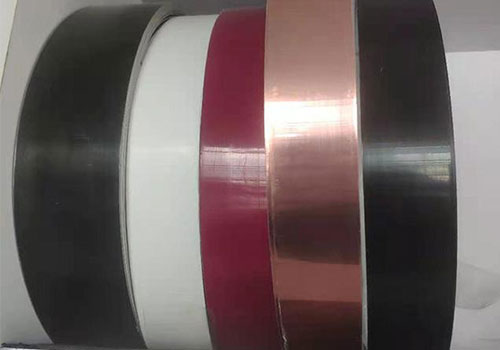
Coated Aluminium Strip 1070 1050 1060 1100 Pure Aluminum
Coated aluminium strip made from 1070, 1050, 1060, and 1100 pure aluminum alloys combines the light weight and forming performance of commercial pure aluminum with a decorative and protective painted surface. It is widely selected for insulation cladding, lighting components, building trim, channels, shutters, electrical parts, signage, packaging, and general fabrication.
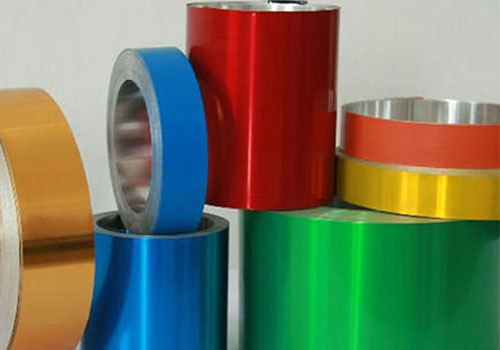
These alloys belong to the 1xxx aluminum series. Their high aluminum content provides excellent corrosion resistance, thermal conductivity, electrical conductivity, and reflectivity. After surface pretreatment, the strip can receive PE, PVDF, polyester, epoxy, or customized functional coatings in a broad range of colors and finishes.
Material Characteristics
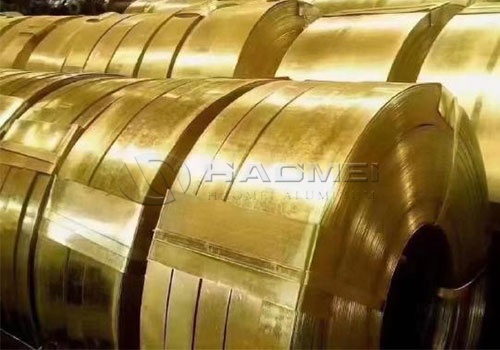
The base metal is soft, ductile, and easy to process by slitting, bending, stamping, roll forming, drawing, and shallow pressing. Compared with higher-strength aluminum alloys, pure aluminum strip offers lower mechanical strength but better workability and a clean surface suitable for coil coating.
| Property | Coated Pure Aluminum Strip Performance | Customer Value |
|---|---|---|
| Density | Approx. 2.71 g/cm³ | Reduces component and transport weight |
| Corrosion resistance | Naturally protected by a dense aluminum oxide film | Suitable for humid and general outdoor environments |
| Formability | Excellent in O, H12, H14, and H24 tempers | Supports bending, folding, stamping, and roll forming |
| Thermal conductivity | Approx. 220-235 W/m·K, alloy dependent | Effective for heat-transfer and insulation-related parts |
| Electrical conductivity | High, especially in 1060 and 1070 | Suitable for electrical and conductive applications |
| Surface finish | Smooth, coated, color-matched, embossed, or brushed | Improves appearance and reduces maintenance |
| Recyclability | Fully recyclable aluminum substrate | Supports material recovery and circular production |
Alloy Grade Comparison
1070, 1050, 1060, and 1100 aluminum strips differ mainly in aluminum purity and allowable amounts of silicon, iron, copper, and other elements. The correct grade depends on forming requirements, conductivity needs, coating appearance, and service environment.
| Alloy | Minimum Aluminum Content | Main Characteristics | Typical Uses |
|---|---|---|---|
| 1070 | 99.70% | Very high purity, high conductivity, excellent softness | Electrical components, reflective parts, decorative strip |
| 1060 | 99.60% | High conductivity and corrosion resistance, economical processing | Cable shields, insulation jacketing, lamp components |
| 1050 | 99.50% | Reliable formability and balanced commercial performance | Building trim, signage, general coated strip |
| 1100 | 99.00% | Slightly higher copper content, good strength and workability | Heat exchangers, deep-drawn parts, decorative products |
Chemical Composition
Values are typical maximum limits unless a range is shown. Exact chemistry can be supplied according to the requested standard, mill certificate, and customer specification.
| Alloy | Al Min. % | Si + Fe Max. % | Cu % | Mn Max. % | Mg Max. % | Zn Max. % | Ti Max. % |
|---|---|---|---|---|---|---|---|
| 1050 | 99.50 | 0.40 | 0.05 | 0.05 | 0.05 | 0.05 | 0.03 |
| 1060 | 99.60 | 0.35 | 0.05 | 0.03 | 0.03 | 0.05 | 0.03 |
| 1070 | 99.70 | 0.20 | 0.04 | 0.03 | 0.03 | 0.04 | 0.03 |
| 1100 | 99.00 | 0.95 | 0.05-0.20 | 0.05 | 0.05 | 0.10 | - |
Available Tempers and Mechanical Data
Temper selection affects bendability, hardness, flatness, and resistance to deformation. Annealed material is preferred for complex forming, while strain-hardened tempers are commonly used where improved stiffness is needed.
| Temper | Condition | Typical Tensile Strength, MPa | Typical Elongation | Recommended Processing |
|---|---|---|---|---|
| O | Fully annealed, soft | 60-95 | 25% or higher | Deep drawing, folding, complex bending |
| H12 | Quarter hard | 75-105 | 12%-20% | Light roll forming and profiling |
| H14 | Half hard | 85-115 | 8%-15% | General construction trims and channels |
| H16 | Three-quarter hard | 100-130 | 4%-10% | Stiffer formed sections |
| H18 | Full hard | 110-145 | 2%-6% | Flat products requiring higher rigidity |
| H24 | Half hard, stabilized where specified | 85-115 | 8%-15% | Coated architectural and decorative strip |
Mechanical figures vary with alloy, thickness, production route, and applicable standard. Material certificates should be used when a project requires guaranteed values.
Coating Structure and Surface Options
The coil-coating process normally includes cleaning, chemical conversion treatment, primer application, top coating, curing, and protective film when requested. Pretreatment improves paint adhesion and corrosion resistance, while the selected paint system determines color retention and weathering performance.
| Coating Type | Typical Front Coating Thickness | Typical Back Coating Thickness | Suitable Environment | Common Finish |
|---|---|---|---|---|
| PE polyester | 15-25 μm | 5-10 μm | Indoor use and moderate outdoor exposure | Glossy, matte, textured |
| HDP polyester | 20-30 μm | 5-10 μm | Building trim and stronger weather exposure | Matte, high gloss, patterned |
| PVDF | 25-35 μm | 5-10 μm | Long-term outdoor architectural use | Solid color, metallic, stone-like |
| Epoxy | 15-25 μm | 5-10 μm | Industrial, interior, and functional applications | Smooth protective finish |
For demanding facades, roofing accessories, and outdoor trim, PVDF Coated Aluminum Strip provides stronger resistance to UV exposure, color fading, chalking, and atmospheric aging than conventional polyester coatings.
Technical Specifications
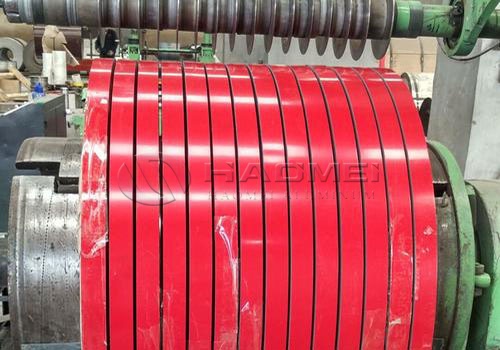
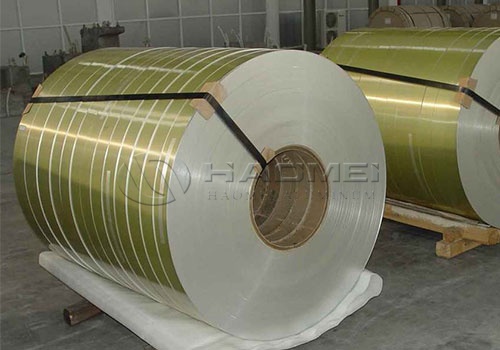
Coated aluminum strip can be supplied as slit coils, narrow coils, sheets, or customized lengths. Dimensional ranges are adjusted according to coil weight, coating line capability, slitting accuracy, and end-use processing equipment.
| Parameter | Typical Supply Range | Notes |
|---|---|---|
| Alloy | 1050, 1060, 1070, 1100 | Other 1xxx grades available by request |
| Thickness | 0.20-3.00 mm | Thinner gauges may be available for special orders |
| Width | 10-1,600 mm | Narrow widths supplied through precision slitting |
| Width tolerance | Typically ±0.10 to ±0.50 mm | Depends on strip width and tolerance agreement |
| Coil inner diameter | 150 mm, 300 mm, 405 mm, 508 mm | Selected to match customer equipment |
| Coil outer diameter | Up to approximately 1,800 mm | Controlled by weight and transport requirements |
| Coil weight | 0.5-8.0 metric tons | Small coils and jumbo coils available |
| Surface protection | PE protective film, interleaf paper, paper wrap | Helps prevent scratches during handling |
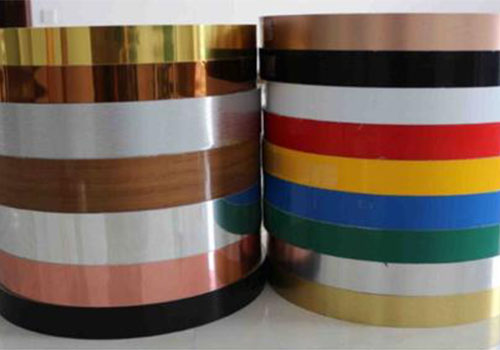
| Color | RAL, Pantone, custom sample matching | Metallic, wood grain, marble, embossed options possible |
Standards and Quality Control
Production and inspection can follow international aluminum and coating standards. The selected standard should be confirmed before ordering, especially when the strip will be used in regulated building, electrical, transportation, or export projects.
| Standard | Scope |
|---|---|
| EN 485 | Tolerances, mechanical properties, and form of wrought aluminum products |
| EN 573-3 | Chemical composition of aluminum alloys |
| EN 515 | Temper designation system for wrought aluminum |
| ASTM B209 | Aluminum and aluminum-alloy sheet and plate requirements, often referenced for strip |
| GB/T 3880 | Wrought aluminum and aluminum alloy sheet, strip, and plate |
| ASTM D3359 | Coating adhesion evaluation by tape test |
| ASTM D2244 | Color difference measurement for coated surfaces |
| ASTM G154 | Accelerated UV exposure testing for coating durability |
Applications Across Industries
Coated 1xxx aluminum strip serves both functional and decorative roles. In building systems, it is used for ceiling edges, rainwater accessories, curtain-wall trim, roller shutters, insulation bands, flashing, and decorative panels. Its low weight makes installation easier while the coating provides stable color and a clean finished appearance.
In electrical and thermal applications, 1060 and 1070 strips are valued for conductivity. They can be used in cable wrapping, transformer-related components, heat reflectors, lamp parts, heat dissipation elements, and protective jacketing. For consumer products, the material is formed into appliance trims, nameplates, caps, packaging components, blinds, and furniture profiles.
For best results, specify alloy, temper, thickness, width, coating system, color, gloss level, film requirement, coil dimensions, and applicable testing standard. This ensures the coated aluminium strip performs reliably from coil processing through final installation.