Aluminum Strip Type Aluminum 3003
Aluminum Strip type Aluminum 3003 is a widely used non-heat-treatable aluminum alloy strip designed for reliable forming, moderate strength, and lasting resistance to atmospheric corrosion. Its manganese addition gives it noticeably better mechanical performance than commercially pure aluminum while preserving the smooth workability demanded by bending, stamping, drawing, roll forming, and spinning operations.
For customers producing heat-transfer parts, building trim, cooking utensils, tanks, roofing accessories, and decorative components, 3003 aluminum strip offers a practical balance between processing efficiency and service life. It is light in weight, easy to fabricate, and available in multiple tempers, dimensions, and surface finishes.
Material Character and Production Benefits
The 3003 alloy belongs to the aluminum-manganese family. Manganese is the primary alloying element, helping the strip achieve greater strength than 1100 aluminum without losing the ductility needed for demanding shapes. Unlike heat-treatable grades such as 6061, 3003 gains strength principally through cold working. Temper selection is therefore important when matching the strip to a fabrication method.
Soft tempers such as O are well suited to deep drawing and severe forming. H14 and H16 tempers offer greater rigidity for panels, fins, channels, and general fabrication. This flexible temper range allows manufacturers to select an appropriate condition for the desired bend radius, surface appearance, and finished-part strength.
| Property | Aluminum 3003 Strip Performance |
|---|---|
| Alloy family | Aluminum-manganese, non-heat-treatable |
| Principal alloying element | Manganese |
| Density | Approximately 2.73 g/cm³ |
| Corrosion behavior | Very good in normal atmospheric and industrial environments |
| Formability | Excellent, especially in O, H12, and H14 tempers |
| Weldability | Good by MIG, TIG, and resistance welding methods |
| Thermal conductivity | Good, suitable for many heat-transfer components |
| Electrical conductivity | Moderate, lower than pure aluminum grades |
| Surface condition | Mill finish, brushed, stucco embossed, coated, or color finished |
Chemical Composition
Controlled chemistry supports consistent forming response, corrosion resistance, and strip quality. The composition is generally produced in accordance with recognized aluminum alloy standards. Actual melt analysis may be supplied with the mill test certificate for each order.
| Element | Typical Specification, % by Weight |
|---|---|
| Aluminum | Remainder |
| Manganese, Mn | 1.0 - 1.5 |
| Copper, Cu | 0.05 - 0.20 |
| Iron, Fe | 0.70 max |
| Silicon, Si | 0.60 max |
| Zinc, Zn | 0.10 max |
| Other elements, each | 0.05 max |
| Other elements, total | 0.15 max |
Manganese contributes to strength and improves resistance to the effects of ordinary service environments. The controlled copper content supports alloy performance while remaining low enough to maintain the strong corrosion behavior expected from 3003 material.
Mechanical Properties by Temper
Mechanical values depend on thickness, width, testing direction, and applicable standard. The values shown are commonly used reference ranges for purchasing and design planning. For critical fabrication programs, the required standard and minimum property values should be confirmed before production.
| Temper | Typical Tensile Strength | Typical Yield Strength | Forming Character |
|---|---|---|---|
| O | 95 - 130 MPa | 35 MPa min | Maximum ductility for deep drawing and complex shapes |
| H12 | 110 - 145 MPa | 70 MPa min | Lightly hardened, easy to bend and form |
| H14 | 145 - 185 MPa | 115 MPa min | Balanced strength and fabrication performance |
| H16 | 170 - 205 MPa | 145 MPa min | Higher rigidity for formed profiles and panels |
| H18 | 185 - 225 MPa | 165 MPa min | High cold-worked strength with reduced ductility |
Sizes, Coils, and Surface Options
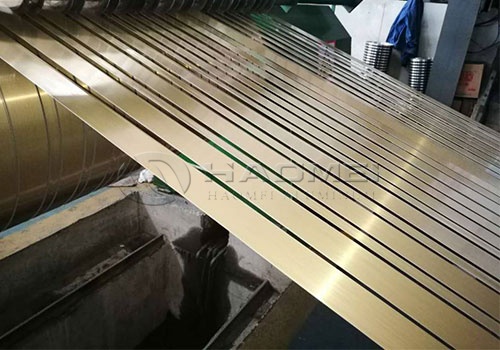
3003 aluminum strip can be slit from coil to suit production equipment, reduce edge-trimming waste, and improve handling efficiency. Narrow precision strip is often chosen for fin stock, cable wrapping, shutters, and stamped parts. Wider strip supports panel processing, roofing details, insulation jacketing, and building accessories.
| Item | Common Supply Range |
|---|---|
| Thickness | 0.20 - 6.00 mm |
| Width | 10 - 1,600 mm |
| Coil inner diameter | 150 mm, 300 mm, 405 mm, 508 mm, or customized |
| Coil weight | According to handling and processing requirements |
| Edge condition | Mill edge, slit edge, deburred edge |
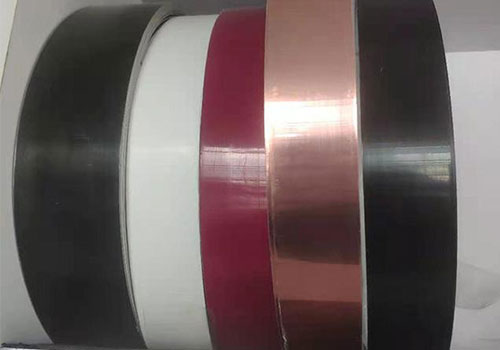
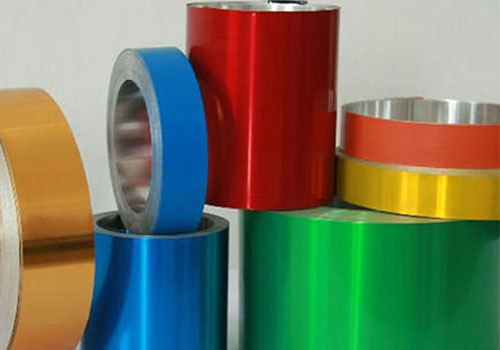
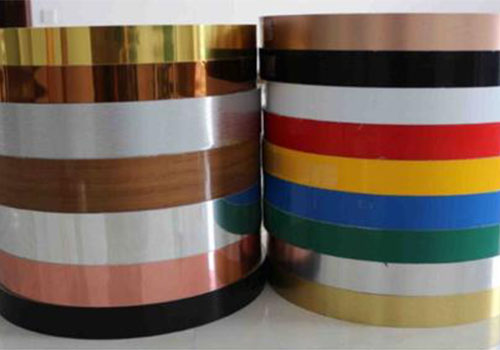
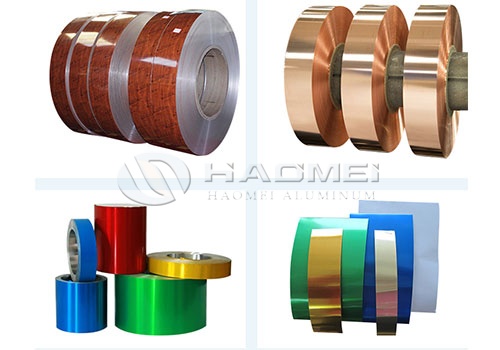
| Surface finish | Mill finish, embossed, brushed, painted, PE coated, PVDF coated |
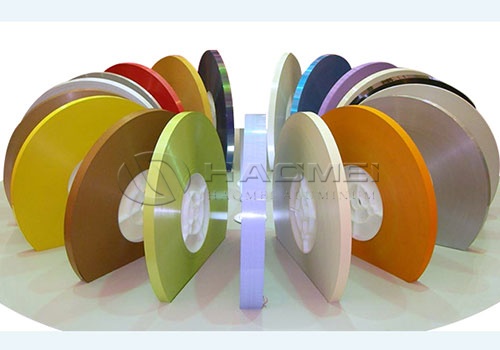
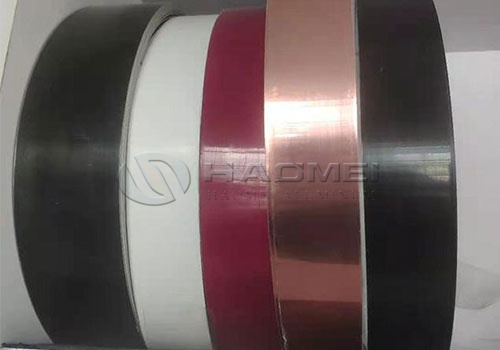
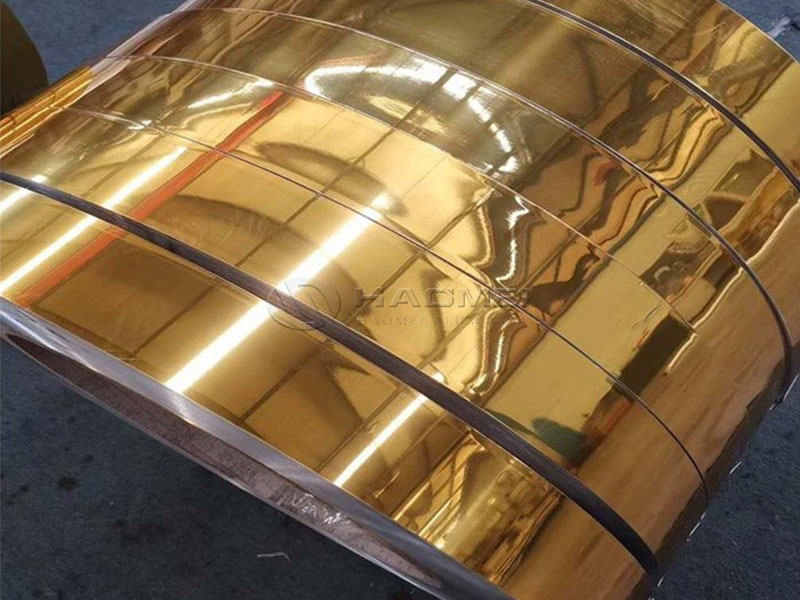
Surface treatment broadens the design possibilities of 3003 strip. For indoor decorative items, appliance trim, signage, and light-duty building parts, a PE Coated Aluminum Strip finish can provide attractive color, improved stain resistance, and economical protection. For exterior architectural systems that face UV exposure, rain, pollution, and temperature swings, PVDF Coated Aluminum Strip solutions offer stronger weathering performance.
Applications Across Fabrication Industries
The combination of moderate strength, low mass, and good corrosion resistance makes Aluminum Strip type Aluminum 3003 appropriate for a broad range of products.
- HVAC and refrigeration: Evaporator parts, condenser components, duct accessories, insulation jackets, and heat-transfer assemblies benefit from its formability and thermal performance.
- Cookware and food equipment: Pots, pans, baking molds, food containers, and kitchen panels use 3003 because it forms smoothly and resists normal moisture exposure.
- Building and construction: Roofing trim, gutters, downspouts, fascia, ceiling systems, wall panels, shutters, and flashing can be produced with mill-finish or coated strip.
- Transportation: Truck body trim, trailer components, fuel tank parts, non-structural panels, and interior fittings gain weight-saving advantages from aluminum construction.
- Packaging and closures: Caps, bottle closures, can components, and lightweight containers can be stamped efficiently from suitable thin-gauge tempers.
- General industrial equipment: Chemical tanks, storage vessels, lamp reflectors, louvers, ducts, and fabricated sheet-metal housings are common end uses.
Processing Guidance
3003 strip is readily cut, punched, bent, rolled, and welded. To obtain clean formed edges, use tooling clearances appropriate for aluminum and maintain sharp, polished tool surfaces. Softer tempers are preferred where severe drawing or tight forming is required. Higher H tempers are better suited to parts that need more stiffness but involve less deformation.
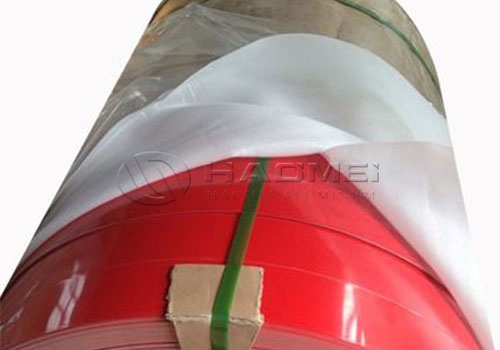
Bending performance depends on thickness and temper. An O-temper strip can generally accommodate smaller bend radii than H18 material. If surface appearance is important, protective film and careful coil handling help prevent scuffs, pressure marks, and contamination during slitting, stamping, and transportation.
For welding, 3003 is commonly joined by TIG, MIG, resistance welding, and brazing methods. Filler alloy selection should match the joint design and service environment. Post-weld cleaning is recommended when visual appearance or corrosion performance is important.
Selecting the Right 3003 Strip
A successful specification should identify alloy, temper, thickness tolerance, width tolerance, coil orientation, surface finish, edge condition, coating requirement, and packaging method. Customers producing visible decorative parts should also define color, gloss, film thickness, and protective-film requirements. Customers operating automated presses or roll-forming lines should confirm coil weight, inner diameter, and allowable camber to maintain stable feeding.
Aluminum Strip type Aluminum 3003 remains a dependable material for products that need easy fabrication, sound corrosion resistance, appealing surface options, and economical long-term performance. With the appropriate temper and finish, it can move efficiently from coil to finished component across a wide variety of industrial and architectural applications.