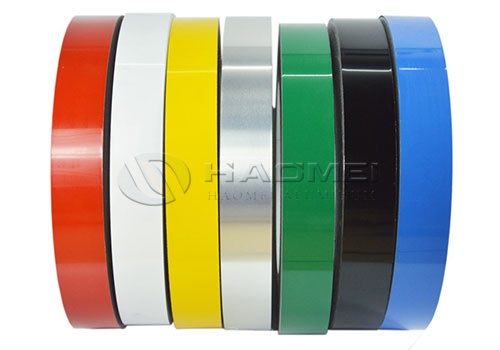
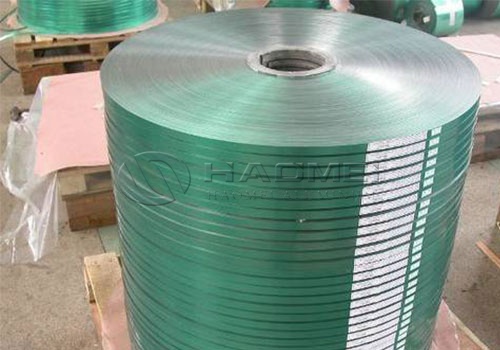
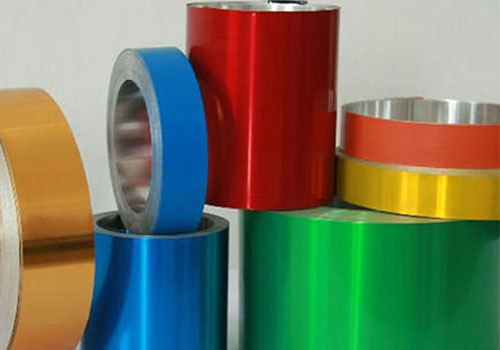
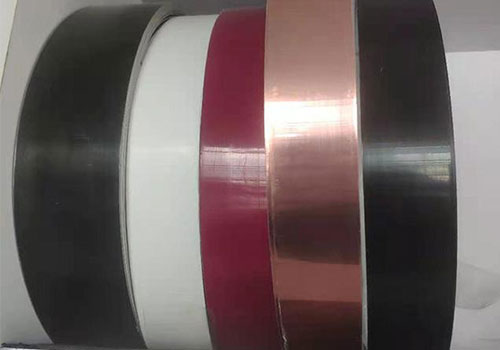
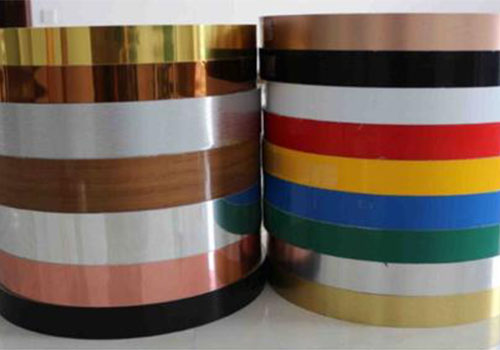
Brushed Color Aluminum Coil Strip
Brushed Color Aluminum Coil Strip can be understood as a metal surface designed to control how light, touch, and durability interact. It is not only a colored aluminum material. It is a narrow, coil-supplied strip with a directional brushed grain, a decorative color layer, and a lightweight aluminum base that can be cut, bent, stamped, laminated, or roll-formed for precise industrial use.
The brushed surface gives the strip a fine linear texture. This texture softens reflections, hides minor fingerprints, and creates a premium visual effect without the heavy weight of stainless steel. When color is added through coating, anodizing, or surface finishing, the material becomes suitable for products that need both appearance and performance.
A Surface That Manages Light and Touch
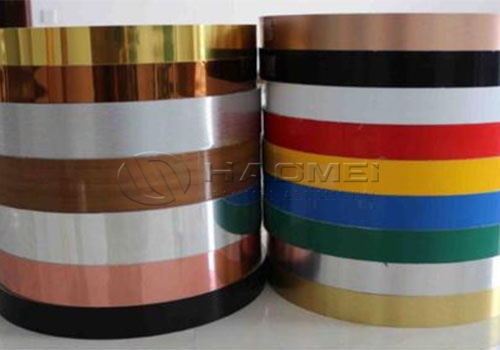
The main function of brushed color aluminum coil strip is surface control. A glossy metal face reflects light strongly and may show scratches clearly. A brushed finish breaks light into fine parallel lines, making the surface look calmer and more refined. This is why it is widely used in appliance panels, ceiling trims, elevator decoration, lighting housings, signage, nameplates, electronic parts, interior trim, and furniture edging.
The brushing direction is important. A straight grain gives a clean architectural feeling. A finer grain is often selected for home appliances and electronics, while a deeper grain may be used for building decoration or display systems. In strip form, the grain direction normally follows the coil length, which helps maintain a continuous visual flow during roll forming or panel assembly.
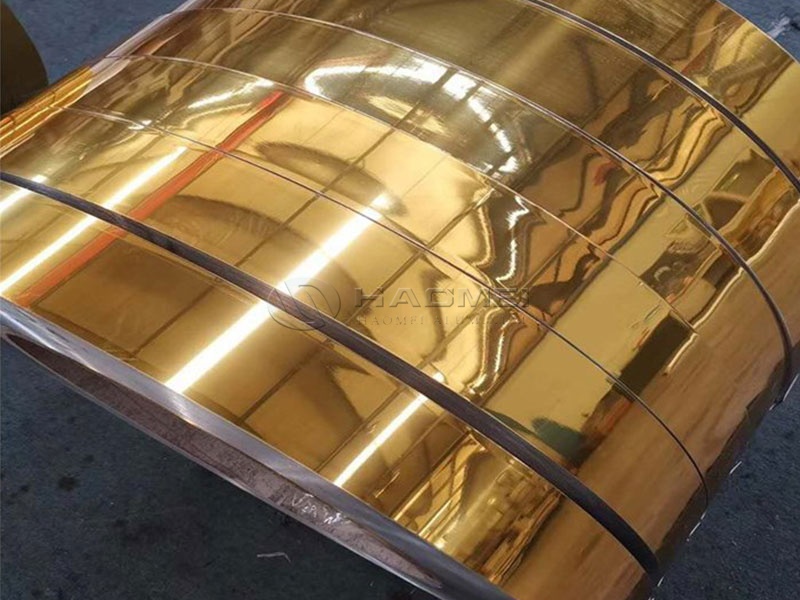
Color adds another layer of function. Silver, champagne, black, gold, red, blue, green, grey, and bronze can communicate brand identity or match surrounding materials. In many applications, the strip works as a design line: thin, bright, durable, and easy to install.
Typical Product Parameters
| Item | Common Range or Condition |
|---|---|
| Base material | 1000, 3000, 5000 series aluminum alloy |
| Thickness | 0.15 mm to 3.0 mm, custom tolerances available |
| Width | 10 mm to 1600 mm, slit strip or wider coil |
| Coil inner diameter | 150 mm, 300 mm, 405 mm, 505 mm, 508 mm |
| Surface | Brushed, colored, coated, anodized, laminated, protective film optional |
| Color system | RAL colors, metallic colors, custom samples |
| Coating type | PE, PVDF, epoxy, acrylic, anodized color layer |
| Brushing grain | Fine, medium, coarse, hairline, straight line |
| Gloss | Matte, semi-matte, satin, low-gloss metallic |
| Protective film | 30 microns to 100 microns, removable |
| Packing | Eye-to-wall or eye-to-sky coil, wooden pallet, moisture protection |
For indoor decorative use, PE coating is often selected because it provides good color, flexibility, and cost efficiency. For exterior architectural use, PVDF Coated Aluminum Strip is preferred because it offers better weather resistance, UV stability, and color retention.
Alloy and Temper Selection
The base alloy decides how the strip behaves during bending, stamping, corrosion exposure, and forming. The temper controls hardness and ductility. A soft temper is easier to shape, while a harder temper improves stiffness and flatness.
| Alloy | Common Temper | Main Character | Typical Uses |
|---|---|---|---|
| 1050 | O, H12, H14, H16, H18 | High purity, excellent workability, good reflectivity | Labels, decorative strips, lighting parts |
| 1060 | O, H14, H18 | Soft, corrosion resistant, easy to process | Electrical parts, trims, signs |
| 1100 | O, H12, H14 | Good formability and surface finish | Appliance panels, nameplates, interior decoration |
| 3003 | O, H14, H24 | Higher strength than 1000 series, good corrosion resistance | Ceiling strips, panels, curtain wall trim |
| 3004 | H24, H26 | Good strength and coating performance | Building decoration, roofing accessories |
| 3105 | H14, H24, H26 | Stable painted surface, good weathering base | Exterior trim, rainwater systems, cladding edges |
| 5052 | O, H32, H34 | Higher strength, better marine corrosion resistance | Transportation trim, marine decoration, equipment panels |
For tight bending, O or H12 temper is normally safer. For straight trim, slitting stability, and flat decorative lines, H14 or H24 is commonly used. When the part requires higher strength and better dent resistance, 5052-H32 or 3004-H24 may be selected.
Chemical Composition Reference
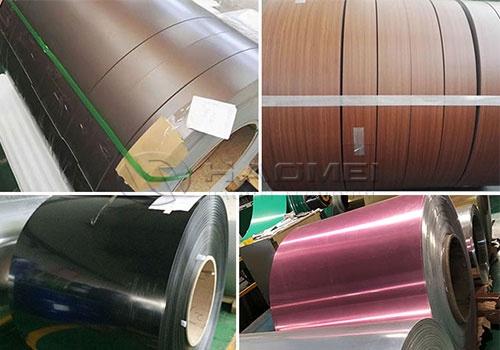
Chemical composition affects corrosion resistance, strength, coating adhesion, and surface uniformity after brushing. The values may vary by standard and mill certificate, so final supply should be confirmed by material test report.
| Alloy | Si | Fe | Cu | Mn | Mg | Zn | Al |
|---|---|---|---|---|---|---|---|
| 1050 | up to 0.25 | up to 0.40 | up to 0.05 | up to 0.05 | up to 0.05 | up to 0.05 | 99.50 min |
| 1060 | up to 0.25 | up to 0.35 | up to 0.05 | up to 0.03 | up to 0.03 | up to 0.05 | 99.60 min |
| 1100 | Si + Fe up to 0.95 | included | 0.05-0.20 | up to 0.05 | up to 0.05 | up to 0.10 | 99.00 min |
| 3003 | up to 0.60 | up to 0.70 | 0.05-0.20 | 1.00-1.50 | up to 0.05 | up to 0.10 | balance |
| 3004 | up to 0.30 | up to 0.70 | up to 0.25 | 1.00-1.50 | 0.80-1.30 | up to 0.25 | balance |
| 3105 | up to 0.60 | up to 0.70 | up to 0.30 | 0.30-0.80 | 0.20-0.80 | up to 0.40 | balance |
| 5052 | up to 0.25 | up to 0.40 | up to 0.10 | up to 0.10 | 2.20-2.80 | up to 0.10 | balance |
High aluminum purity supports a clean decorative finish. Manganese in 3000 series improves strength without making the strip difficult to form. Magnesium in 5052 improves strength and corrosion resistance, especially where moisture or salt may be present.
Implementation Standards and Testing
Brushed color aluminum coil strip can be produced and inspected according to recognized international standards, depending on the purchase requirement and market destination.
| Category | Common Standards |
|---|---|
| Aluminum sheet and strip | ASTM B209, EN 485, GB/T 3880 |
| Dimensional tolerance | EN 485-4, GB/T 3194, ASTM B209 tolerance practice |
| Chemical composition | ASTM B209, EN 573, GB/T 3190 |
| Mechanical properties | EN 485-2, GB/T 3880.2 |
| Coating adhesion | ASTM D3359, ISO 2409 |
| Pencil hardness | ASTM D3363 |
| Salt spray resistance | ASTM B117, ISO 9227 |
| Color difference | ASTM D2244, ISO 7724 |
| Film thickness | ISO 2360, ASTM D7091 |
Practical testing usually focuses on color consistency, brushed grain uniformity, coating adhesion, bending performance, surface cleanliness, and coil edge quality. For strips used in automated production, burr control is also critical because rough edges may affect feeding, lamination, or assembly.
Applications Where the Material Performs Best
In home appliances, brushed color aluminum coil strip is used for refrigerator trims, washing machine panels, range hood decoration, air conditioner details, and control panel frames. It provides a clean metallic look while remaining lighter and easier to form than many alternative metals.
In architecture, it appears in ceiling systems, wall trims, curtain wall edges, door frames, decorative partition lines, and signage. The brushed grain reduces glare in bright indoor spaces and gives exterior details a refined metallic tone. When long-term outdoor exposure is required, products related to Color Coated Aluminum Strip can be specified with suitable coating systems and weathering tests.
In electronics and lighting, the material is valued for thin-gauge accuracy, clean appearance, and stable processing. It can be used in LED light housings, speaker decoration, display frames, power bank shells, and instrument panels. For these uses, thickness tolerance, flatness, and protective film quality are often as important as color.
In transportation, brushed color aluminum strip is found in vehicle interior trim, luggage rack details, bus decoration, railcar panels, and marine cabin fittings. The material provides corrosion resistance, weight reduction, and a high-grade surface that can withstand frequent touch.
Processing Notes for Better Results
During slitting, a sharp blade and proper clearance help reduce burrs. During bending, the bend radius should match alloy and temper. Hard tempers may crack if bent too tightly, especially when the brushed and coated surface is on the outside of the bend. Protective film should remain on the surface during cutting and forming whenever possible.
Color matching should be confirmed under consistent lighting because brushed surfaces reflect light directionally. Two coils with the same color code may appear slightly different if the grain depth, gloss, or viewing angle changes. For visible assemblies, it is wise to keep parts from the same batch and install them with the same grain direction.
Why Customers Choose It
Brushed Color Aluminum Coil Strip is chosen because it combines appearance, workability, and durability in a compact material format. It can be supplied in precise widths, processed at high speed, and adapted to many end products. Its brushed grain gives the surface a controlled metallic character, while the color layer expands design freedom. For manufacturers seeking a lightweight decorative metal that can move smoothly from coil to finished part, it offers a practical balance between performance and visual value.