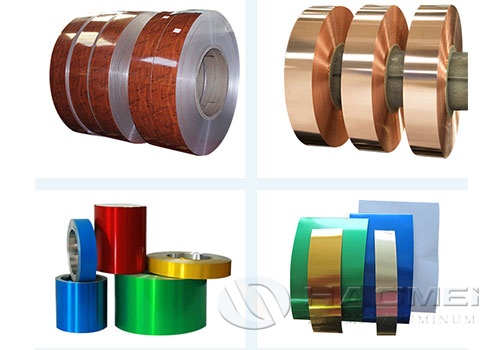
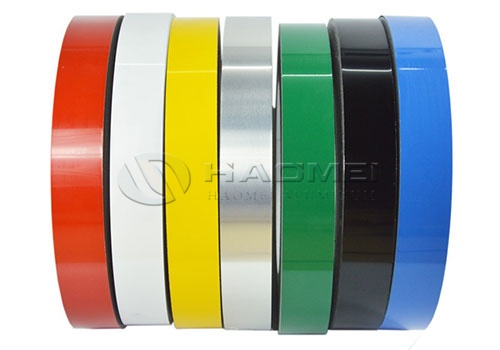
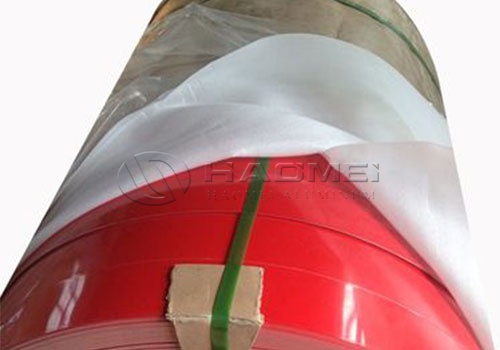
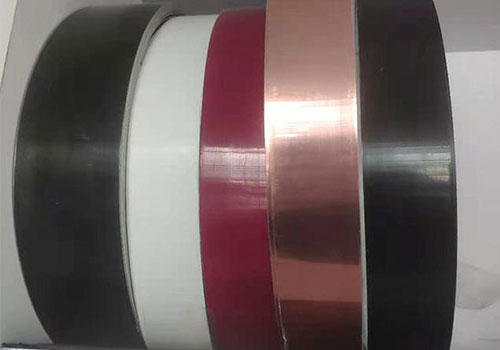
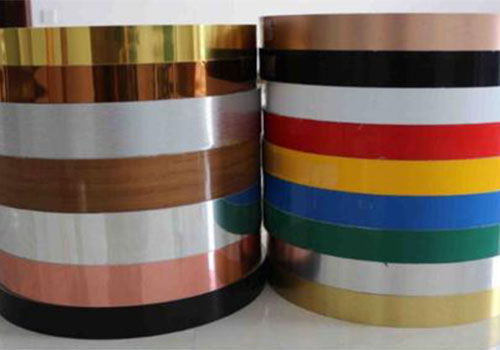
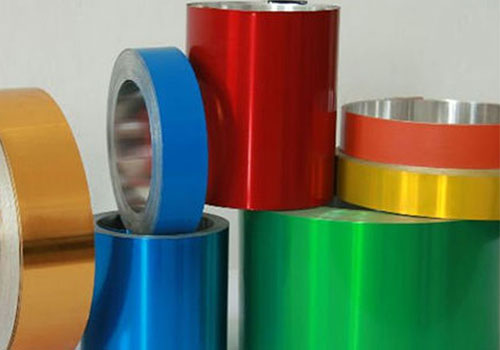
Brushed Coated Aluminum Strip
Brushed coated aluminum strip gives manufactured products a more architectural personality. Rather than hiding aluminum beneath a flat painted surface, this material preserves the visual rhythm of brushed metal while adding a protective coating system. The result is a strip that can look refined, industrial, warm, or premium depending on the brush direction, color tone, gloss level, and coating chemistry.
It is widely used for decorative trims, appliance panels, lighting components, ceiling systems, roller shutters, door frames, HVAC cladding, transportation interiors, packaging accents, and electronic housings. For buyers, the value is not only visual. A well-produced brushed coated strip can reduce secondary finishing work, provide repeatable appearance across production batches, and improve resistance to fingerprints, abrasion, humidity, and outdoor exposure.
The Surface Is More Than a Pattern
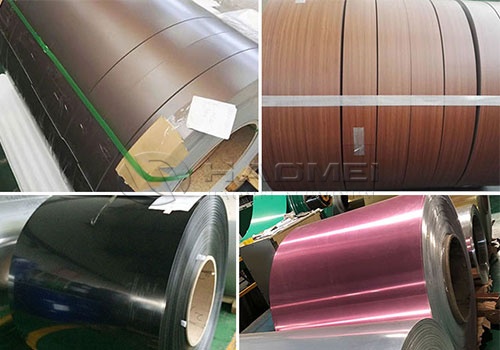
The brushed effect is produced by mechanical abrasion, usually with abrasive belts, nylon wheels, or specialized brushing rolls. This process creates fine, directional lines across the aluminum surface. Depending on the required design, the grain may run along the coil length, across the width, or in a short random pattern.
After brushing, the strip receives pretreatment and coating. This sequence matters. If brushing is too aggressive, the surface can become uneven and consume more coating. If pretreatment is inadequate, moisture may penetrate beneath the paint film and weaken adhesion. High-quality Coated Aluminum Strip production balances texture depth with coating continuity, so the metallic grain remains visible without becoming a corrosion pathway.
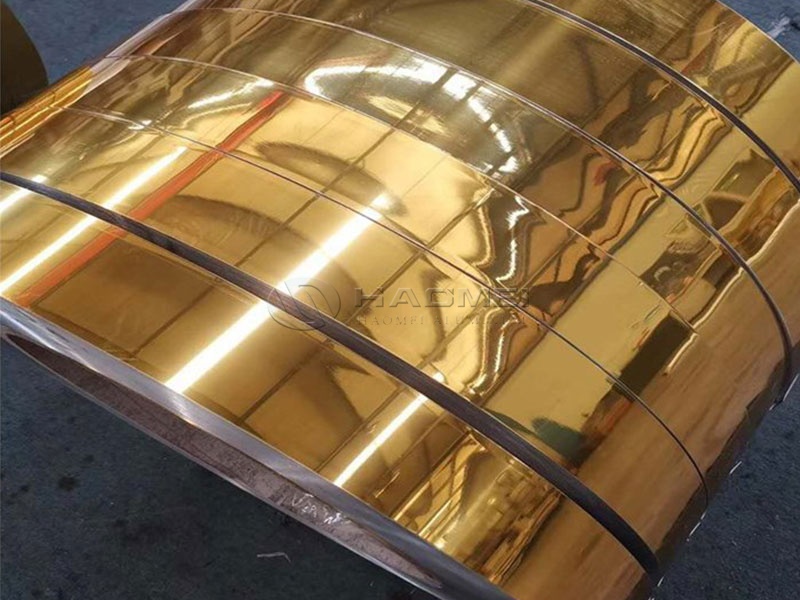
Clear coatings are often selected when customers want a natural silver, champagne, bronze, or gold aluminum appearance. Colored transparent coatings can deepen the brushed pattern, while opaque finishes can create a softer satin-metal effect. Matte coatings are popular for modern interiors because they diffuse light and reduce glare; higher-gloss systems make the grain more pronounced.
Common Parameters for Brushed Coated Aluminum Strip
The right specification should match the forming method, exposure conditions, visual requirements, and end-use tolerances. Typical supply ranges include:
| Parameter | Typical Range or Option |
|---|---|
| Alloy | 1050, 1060, 1100, 3003, 3105, 5052 |
| Temper | H14, H16, H18, H24, H26, H32, H34, O |
| Thickness | 0.20 mm to 2.00 mm |
| Width | 20 mm to 1,600 mm |
| Coil inner diameter | 150 mm, 300 mm, 405 mm, 505 mm, 508 mm |
| Coil weight | Usually 0.5 to 5 metric tons, customized by handling limits |
| Brushed direction | Longitudinal, transverse, short grain, random grain |
| Coating type | PE, HDPE, SMP, PVDF, epoxy, clear varnish |
| Total dry film thickness | Commonly 12 to 35 μm, depending on system |
| Surface finish | Matte, satin, semi-gloss, gloss, transparent metallic |
| Protective film | Optional, usually 30 to 80 μm |
Narrow strips used for trim and shutter profiles often need tight width tolerances and clean slit edges. Wider material for wall panels or appliance sheets may prioritize flatness, color consistency, and matching grain direction. When deep drawing or sharp bending is required, temper selection becomes especially important.
Alloy and Temper Choices That Shape Real-World Performance
Alloy 1050 and 1060 offer excellent formability and a bright aluminum base, making them suitable for indoor decorative products, signage, insulation cladding, and light-duty trim. Their softness helps create crisp bends but may be less suitable where dents and mechanical wear are expected.
Alloy 1100 is also highly workable and is frequently chosen for decorative applications that need reliable brushing quality and moderate corrosion resistance. It is a practical option for stamped accessories and light-gauge profiles.
Alloy 3003 introduces manganese, improving strength while maintaining good workability. It is a dependable choice for roofing accessories, appliance panels, ceiling materials, and general architectural fabrication. Alloy 3105 provides similar advantages and is widely used in coated building products because of its stable processing behavior.
For more demanding environments, 5052 offers significantly higher strength and better resistance to marine or humid industrial conditions. It is often chosen for transport components, premium equipment housings, and coastal installations. The trade-off is that 5052 generally requires more careful forming than softer 1xxx-series alloys.
H14 and H24 are common balanced tempers: firm enough for handling, yet flexible enough for roll forming and moderate bends. H18 is harder and useful where rigidity is preferred, although it is less forgiving during complex forming. O temper provides maximum softness for deep drawing or intricate shaping, but requires careful protection against scratches during fabrication.
Chemical Composition of Frequently Used Alloys
The table presents typical maximum composition limits in percent by mass. Exact limits should be confirmed against the applicable material standard and mill certificate.
| Alloy | Si | Fe | Cu | Mn | Mg | Cr | Zn | Ti | Al |
|---|---|---|---|---|---|---|---|---|---|
| 1050 | 0.25 | 0.40 | 0.05 | 0.05 | 0.05 | - | 0.05 | 0.03 | 99.50 min |
| 1060 | 0.25 | 0.35 | 0.05 | 0.03 | 0.03 | - | 0.05 | 0.03 | 99.60 min |
| 1100 | Si + Fe 0.95 max | - | 0.05-0.20 | 0.05 | - | - | 0.10 | - | 99.00 min |
| 3003 | 0.60 | 0.70 | 0.05-0.20 | 1.0-1.5 | - | - | 0.10 | - | Balance |
| 3105 | 0.60 | 0.70 | 0.30 | 0.30-0.80 | 0.20-0.80 | 0.20 | 0.40 | 0.10 | Balance |
| 5052 | 0.25 | 0.40 | 0.10 | 0.10 | 2.2-2.8 | 0.15-0.35 | 0.10 | - | Balance |
Coating Systems and Environmental Fit
PE coating is economical, flexible, and suitable for many indoor products or short-to-medium exposure applications. It supports a broad color range and bonds well to properly pretreated aluminum. For general decorative fabrication, PE Coated Aluminum Strip is often selected for its processability and cost efficiency.
PVDF coating provides stronger weathering resistance, color retention, and UV stability. It is more appropriate for exterior facades, roofing details, coastal environments, and products expected to retain appearance for long service periods. SMP and HDPE systems can also provide useful durability where improved hardness and weather resistance are needed.
The brushed texture requires special attention during coating selection. A coating that is too thick may soften the visible grain; one that is too thin may not adequately protect the brushed valleys. Clear and semi-transparent systems should be tested for uniform color development, because small variations in metal brightness can become more visible than they would under opaque paint.
Standards, Inspection, and Practical Ordering Notes
Brushed coated aluminum strip may be produced in accordance with ASTM B209, EN 485, EN 573, EN 1396, GB/T 3880, or customer-defined technical agreements. Coating performance may be evaluated using standards such as ASTM D3359 for adhesion, ASTM D2794 for impact resistance, ASTM D3363 for pencil hardness, ASTM D523 for gloss, and ASTM B117 for salt-spray testing.
Inspection should include thickness, width, camber, edge condition, color consistency, gloss, coating thickness, brush direction, adhesion, bend performance, and protective-film quality. Customers should also define whether the decorative face is outward or inward on the coil, because this affects uncoiling and automated processing.
Brushed coated aluminum strip is best specified as a finished visual material rather than merely an aluminum grade with paint. Its success comes from the relationship between alloy, temper, brushing depth, pretreatment, coating chemistry, and forming method. When those elements are aligned, the strip carries both the honest texture of metal and the dependable protection required by modern fabrication.